What is AquaCompat?
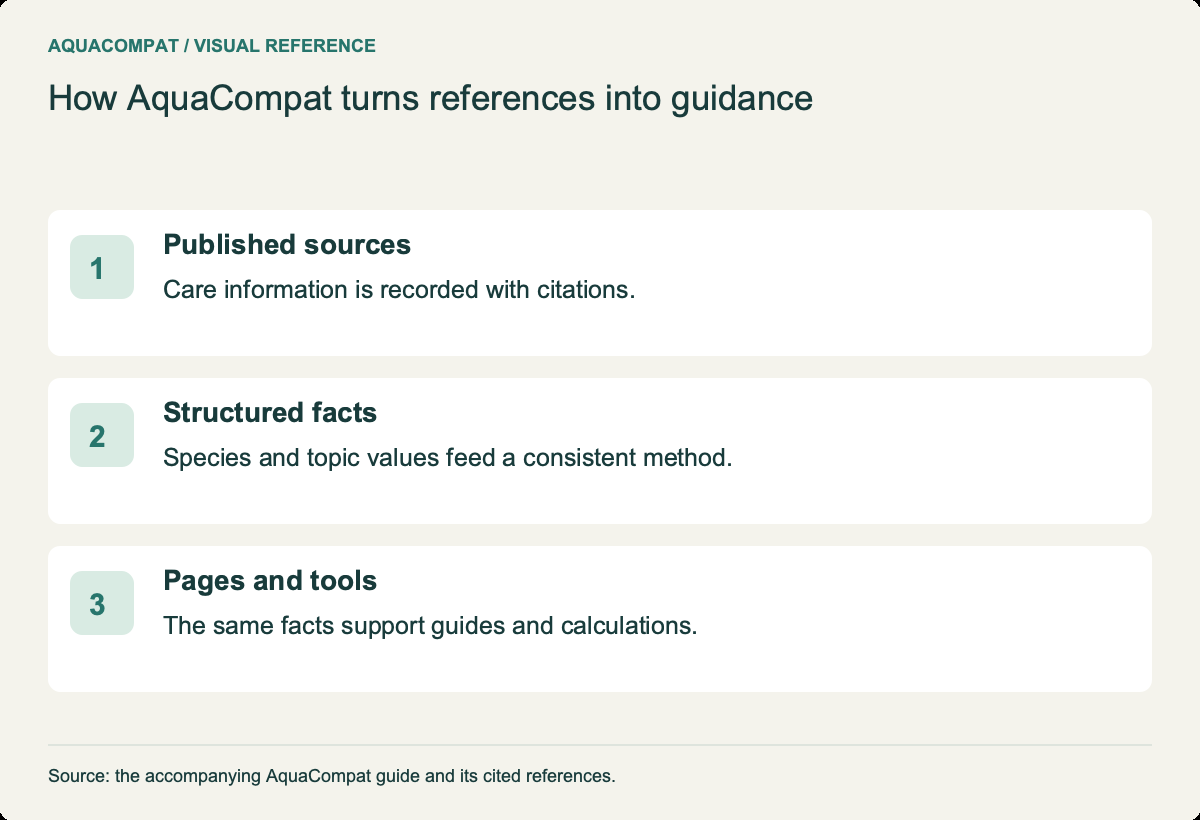
AquaCompat is a structured database of freshwater aquarium species turned into readable pages and two browser tools. Each species has a fact file: temperature, pH and hardness ranges, adult size, minimum tank, group size, temperament, swim level, diet and lifespan, with every value tied to the source it came from. From those files the site scores every pair of species, so a question such as whether a betta can live with guppies gets a verdict, a score out of 10 and the reasons behind it.
The pages built on that database fall into a few groups, listed below in the order most readers use them.
- Compatibility guides answer whether two named species can share water, starting from the fish compatibility guides index.
- Tank mates hubs rank every scored companion for one centrepiece species, gathered under tank mates by species.
- Water and setup guides explain pH, hardness, temperature and the nitrogen cycle, collected in the water chemistry and setup library.
- Health pages cover common diseases and tank problems such as ich and cloudy water, listed under fish diseases and tank problems.
- Buyer guides match heaters, filters, test kits and other equipment to tank sizes using published specifications, indexed under aquarium equipment buyer guides.
The two-species compatibility checker and the aquarium stocking calculator run the same data in your browser, so a pairing you look up in a tool gives the same answer as the matching guide.
Who is AquaCompat for?
AquaCompat is for freshwater aquarium keepers who want structured, sourced compatibility and water-parameter data instead of scattered forum threads. That covers three kinds of reader in particular.
- New keepers planning a first community tank, who need to know which species share a temperature and pH band before buying anything.
- Keepers adding to an existing tank, who want to check a new species against every fish already in the water, including shrimp and snails.
- Experienced hobbyists who want the source behind a figure, see where references disagree and decide for themselves.
The site grew out of a gap in the hobby. Advice about which fish can live together is spread across care sheets, shop labels and discussion threads that often contradict each other, and few of them say where their numbers came from. AquaCompat puts the published numbers side by side, applies one rule set to every pair and shows its working, so a reader can check any answer rather than take it on trust.
What is AquaCompat not?
AquaCompat is not a shop, a forum or a veterinary service, and each of those limits shapes what you will find here.
- Not a store. AquaCompat sells nothing. Buyer guides link to product listings on Amazon, but the site holds no stock, takes no orders and shows no prices.
- Not a forum or community. There are no accounts, comments or user posts. Every page is written and maintained by the editorial team from published sources.
- Not a testing lab. AquaCompat does not keep, breed, treat or observe fish, and it does not test equipment. Verdicts compare published data; product notes compare manufacturers' published specifications.
- Not veterinary advice. Disease pages summarise extension and veterinary references so you can recognise a problem, but a sick fish, an outbreak or a medication question belongs with an aquatic veterinarian.
A verdict on AquaCompat describes how two species compare on paper. Individual fish vary, and the how verdicts are built page lists the method's limits in full.
How does AquaCompat decide whether two fish are compatible?
AquaCompat decides compatibility with a fixed, published formula applied to sourced species data, not with opinion. Each pair is compared on temperature overlap, pH overlap, hardness overlap, temperament, adult size and predation risk, and swim level. The factors are weighted, combined into a score from 1 to 10 and turned into one of three verdicts: compatible, caution or incompatible. A small set of deal-breakers, such as two species with no shared temperature range, overrides the score.
Sources are ranked in a fixed order, starting with FishBase and Seriously Fish, then group-specific references, university extension papers, the Merck Veterinary Manual and established hobby references. Temperature, pH and general hardness each need two independent sources before they count as verified; a value with only one source is shown but marked single-source. When sources disagree, the disagreement is recorded on the species page with who said what.
The full rule set, weights and version history live on the AquaCompat methodology page, which is the single place those rules are explained. Keeping them in one place means a rule change updates every verdict at the next build without leaving outdated explanations scattered across the site.
Who writes AquaCompat?
AquaCompat is written by the AquaCompat Editorial Team, an organisation author rather than a named individual. The team's work is collecting published species, water-chemistry, disease and equipment data, applying the method consistently and citing every source on the page where it is used.
The team does not claim veterinary, biology, aquaculture or other professional credentials, and no page on the site rests on personal experience of keeping a species. That is a deliberate choice: a reader can check a sourced figure against the reference it came from, while a personal anecdote cannot be checked. Every page shows its reference list and the date it was last updated, and the updated date changes only when the content changes.
How is AquaCompat funded?
AquaCompat is funded by commissions from the Amazon Associates program. As an Amazon Associate I earn from qualifying purchases. When a reader follows a product link on a buyer guide or setup page and buys something, Amazon may pay the site a small commission at no extra cost to the reader.
Commissions never affect a compatibility verdict or a score. Those come only from the species fact files and the published formula, and no species page carries a product link that could change its result. Products are chosen by comparing manufacturers' specifications against a tank size or species need, and each product note says who should skip it as well as who it suits. The Amazon affiliate disclosure explains how links are marked and why prices are not shown.
How can you report a wrong figure?
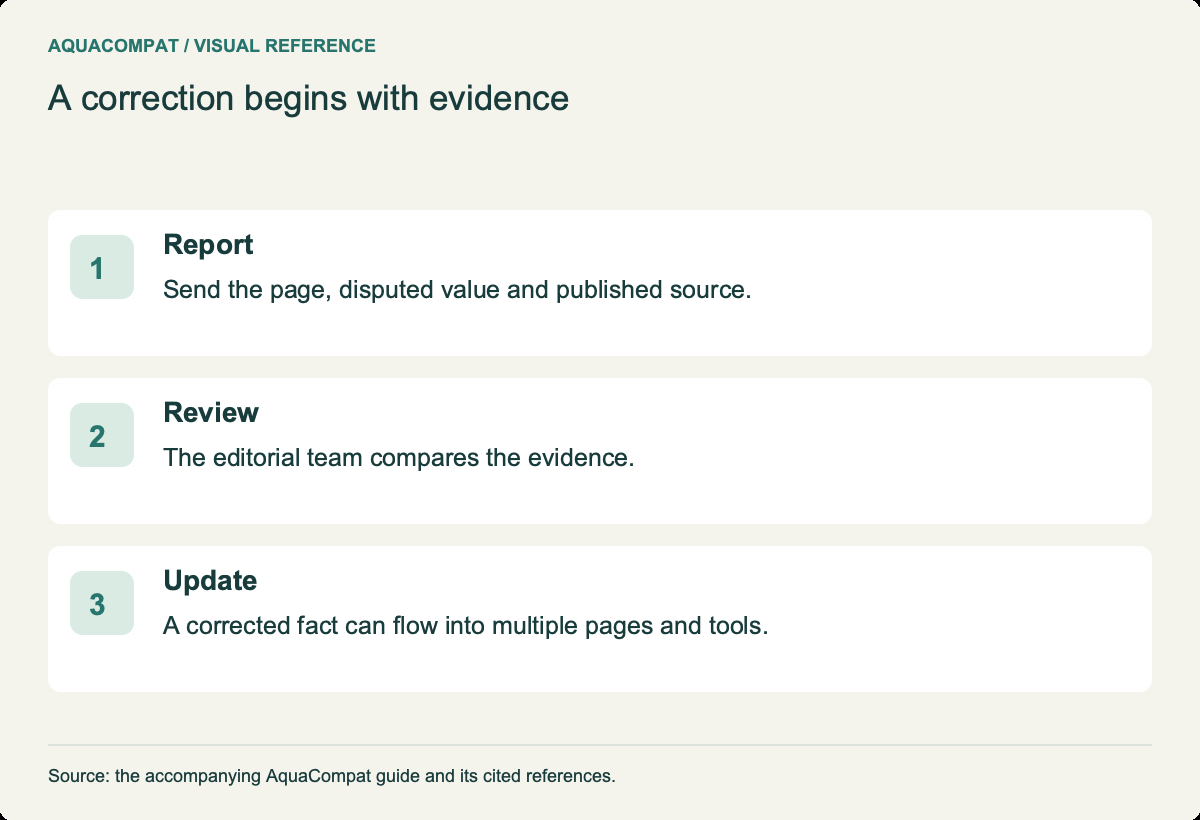
You can report a wrong figure through the AquaCompat contact page. The most useful reports name the page, the value you think is wrong and, where possible, the published source that disagrees. Corrections go into the species or topic fact file first, so one fix updates every page, every pair score and both tools that use that value. The site collects no personal data beyond what you choose to send, as the privacy policy describes.
Questions people ask
Is AquaCompat run by a pet store or a manufacturer?
No. AquaCompat is independent and is not owned by, or paid by, any pet store, fish farm or equipment maker. Its only income at launch is Amazon Associates commissions, and Amazon has no say in which products are covered or how species are scored. If the funding changes, this page and the affiliate disclosure will be updated to say so.
Why does AquaCompat not share personal fishkeeping experience?
Because a personal anecdote cannot be checked and a published figure can. AquaCompat's value is that every number traces back to a named source and every verdict to a documented formula. Where sources disagree, the page shows both figures and says who published each, so you can weigh them yourself rather than rely on one keeper's tank.
Can I trust a compatible verdict without reading the pair page?
Treat a compatible verdict as a strong starting point, not a guarantee. The verdict compares species-level data, while individual fish vary in temperament, and a mixed community adds bioload that a two-species score does not capture. The pair page explains the reasons behind each score, including size and behaviour notes, and is worth reading before you buy.
How often is AquaCompat updated?
Pages are rebuilt from the fact files whenever a fact file or the method changes, so a corrected value reaches every page that uses it at the next build. Each page shows its own updated date, and that date moves only when the page's content actually changes, not on a fixed schedule.