What do the aquarium illustrations cover?
The illustrations are the diagrams drawn for AquaCompat's guides, so each one explains a single idea from the page it was made for. They fall into six main groups:
- Water chemistry and the nitrogen cycle: where aquarium nitrogen goes, why a single zero reading does not prove a cycle, GH against KH, pH and buffering, tap water treatment, RO water and TDS in shrimp tanks.
- Fish compatibility: how a compatibility verdict is made, why a hard failure overrides a score, and water-range and candidate-verdict charts for individual species such as angelfish, discus and cherry shrimp.
- Tank setups: planning a 10-gallon community, giving plants and fish their own space in a planted tank, and the order to set up a new aquarium.
- Fish health: the ich life cycle, fin rot, swim bladder signs, cloudy water, new tank syndrome, appetite loss and planaria compared with hydra.
- Equipment: how a sponge filter works, sizing a heater, canister flow ratings, CO2 system parts, plant lighting and choosing a test kit or water conditioner.
- Species comparisons: adult size and minimum tank side by side, for example Caridina against Neocaridina shrimp.
Below each image you will find its title, a link to the guide it appears in, the SVG download and the copy-credit button. The anchor of each illustration on this page is the address to use in your credit link.
Browse the illustrations
Credit line format: Illustration: <a href="https://aquacompat.com/image-library/#ID">AquaCompat</a> (CC BY 4.0)
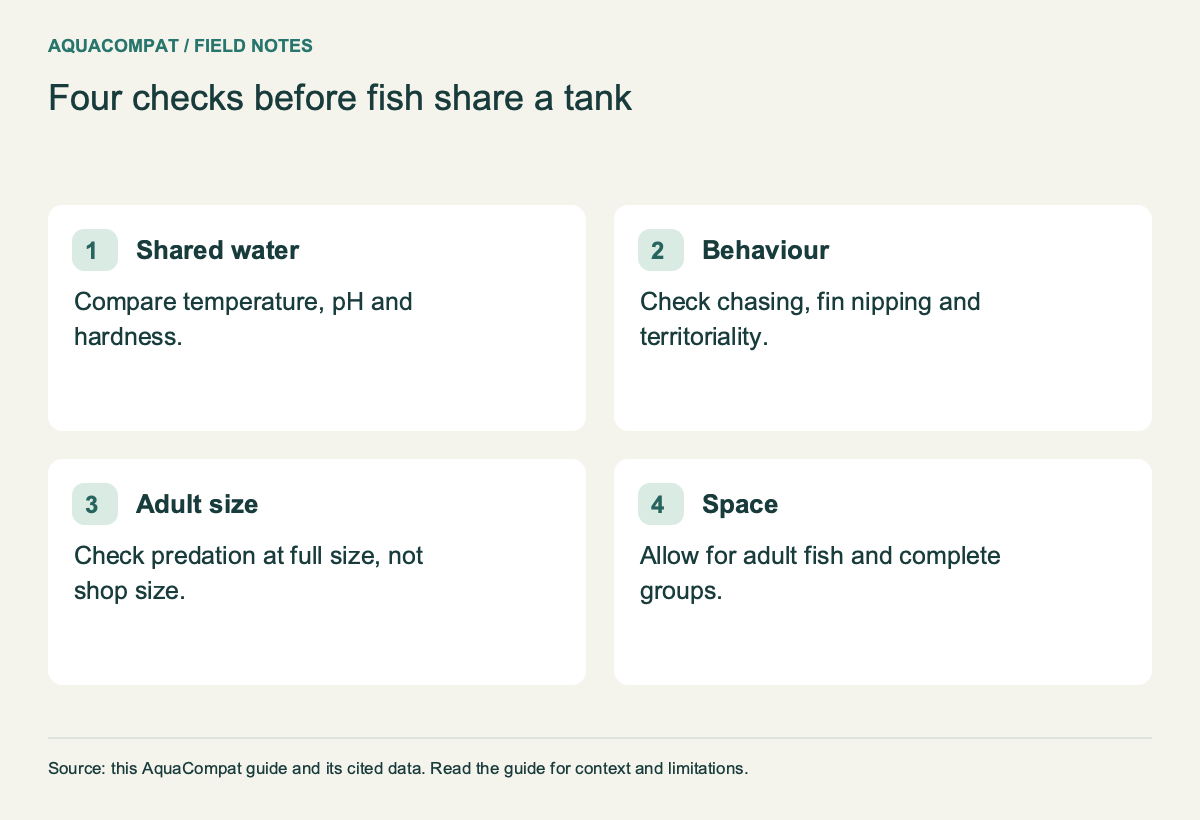
Four checks before fish share a tank
SVG file · Appears in Which Freshwater Fish Can Share a Tank, and Why
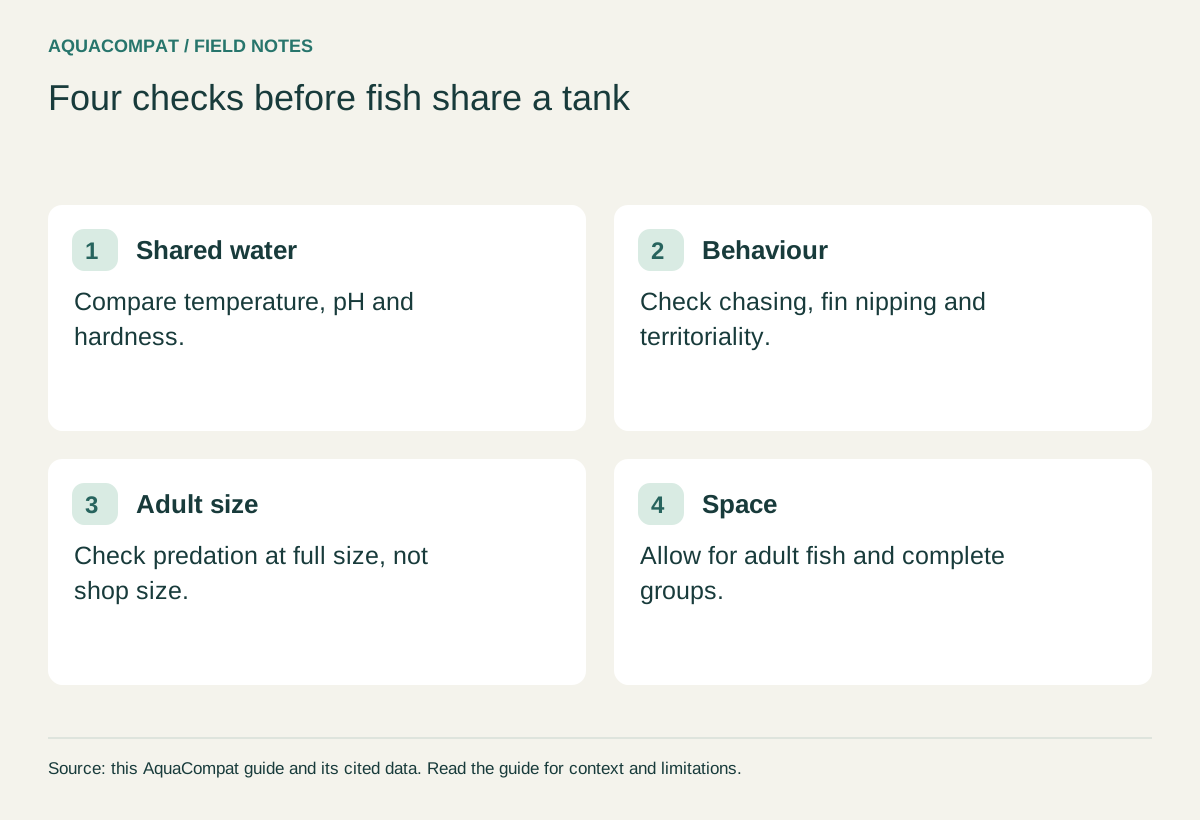
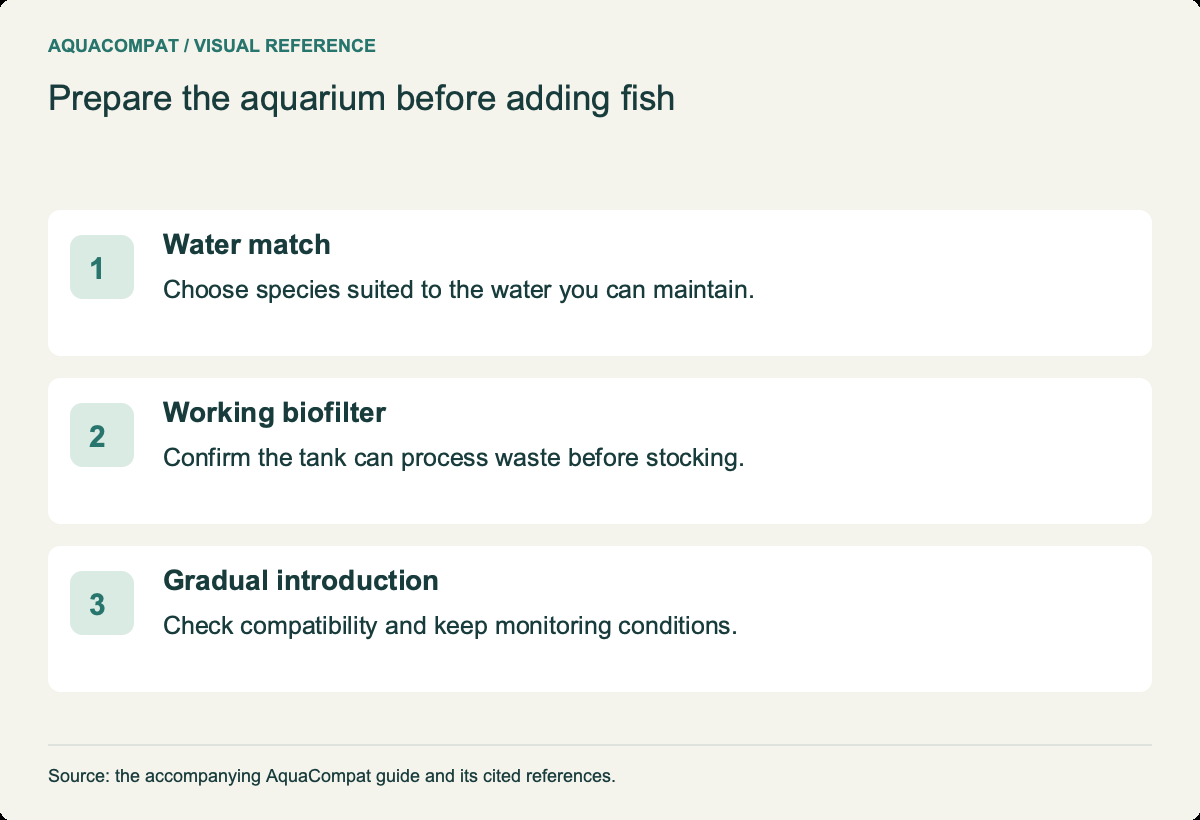
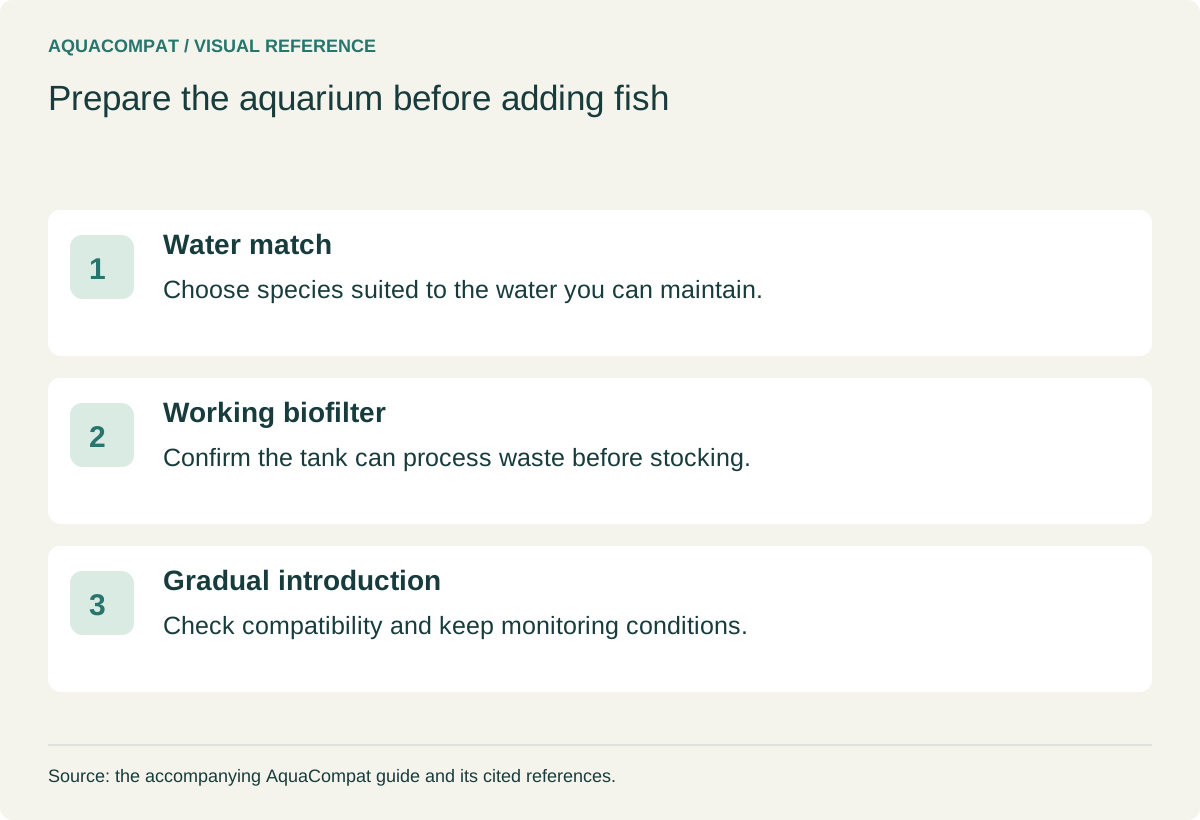
Prepare the aquarium before adding fish
SVG file · Appears in Which Freshwater Fish Can Share a Tank, and Why
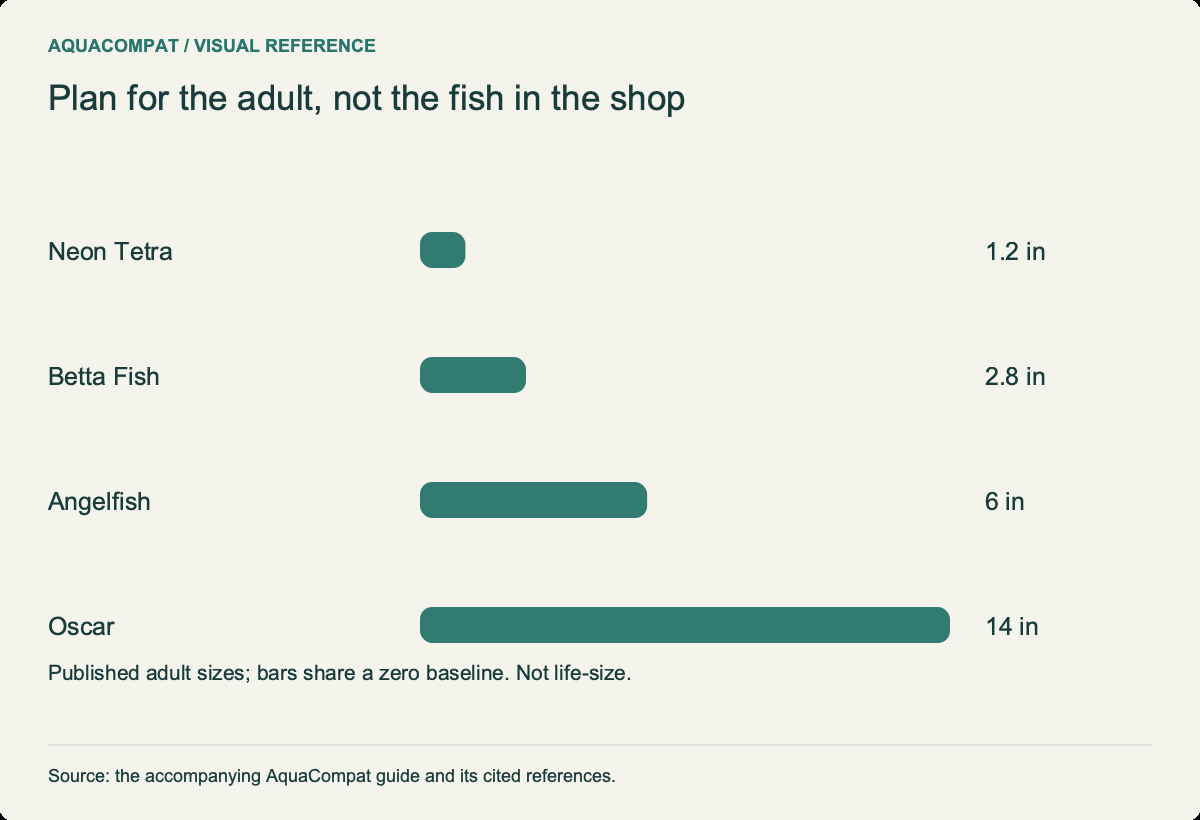
Plan for the adult, not the fish in the shop
SVG file · Appears in Which Freshwater Fish Can Share a Tank, and Why
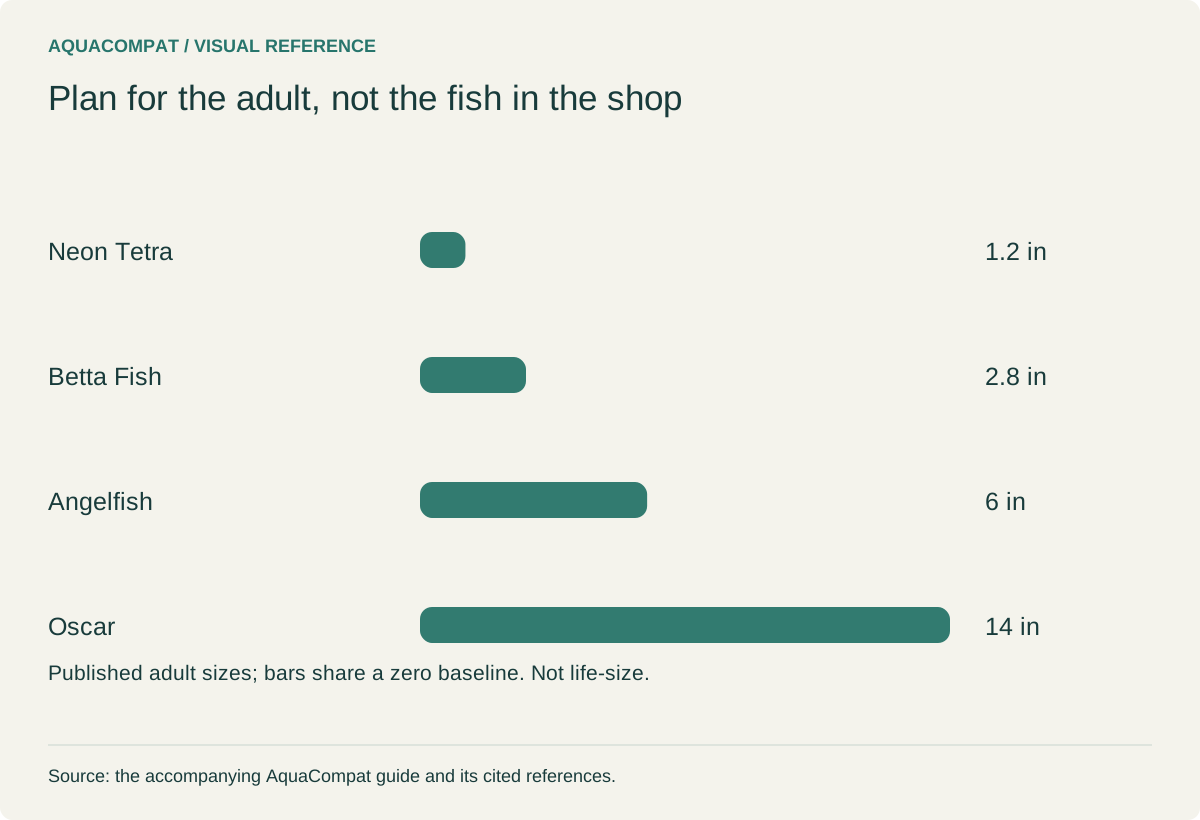
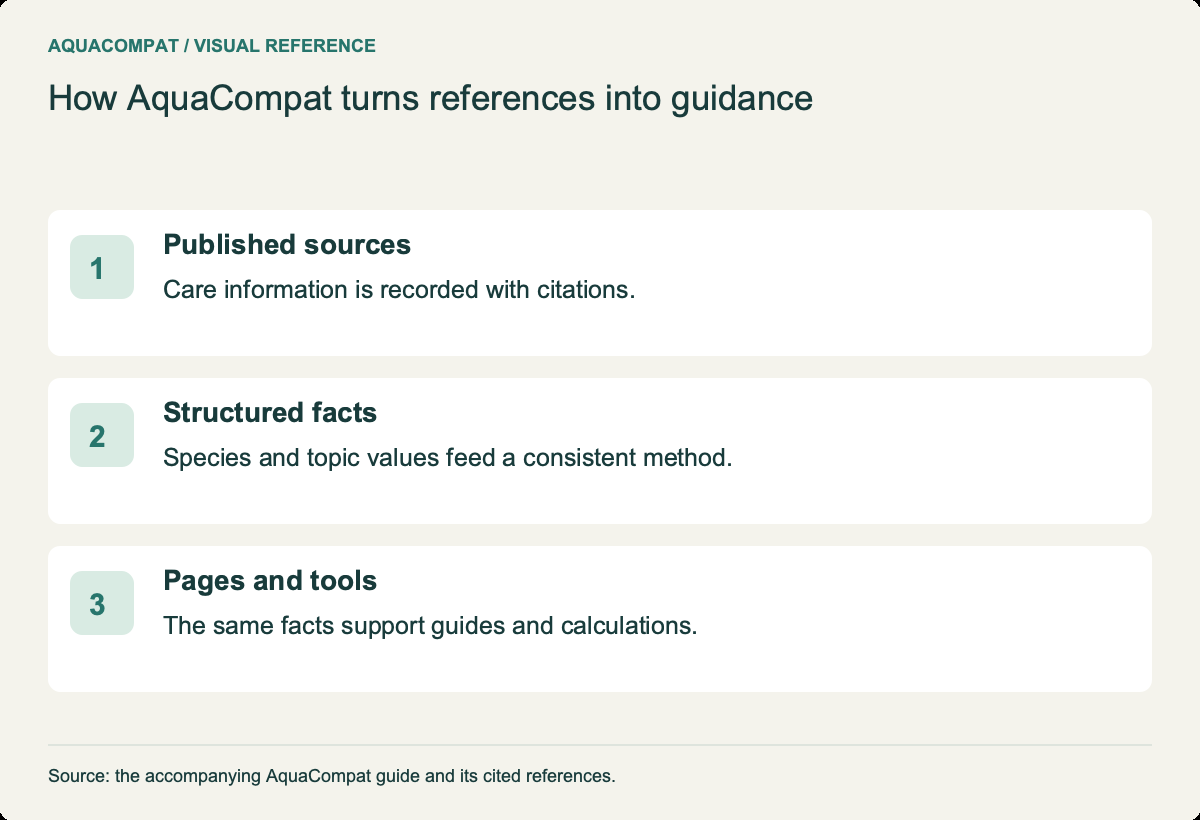
How AquaCompat turns references into guidance
SVG file · Appears in About AquaCompat
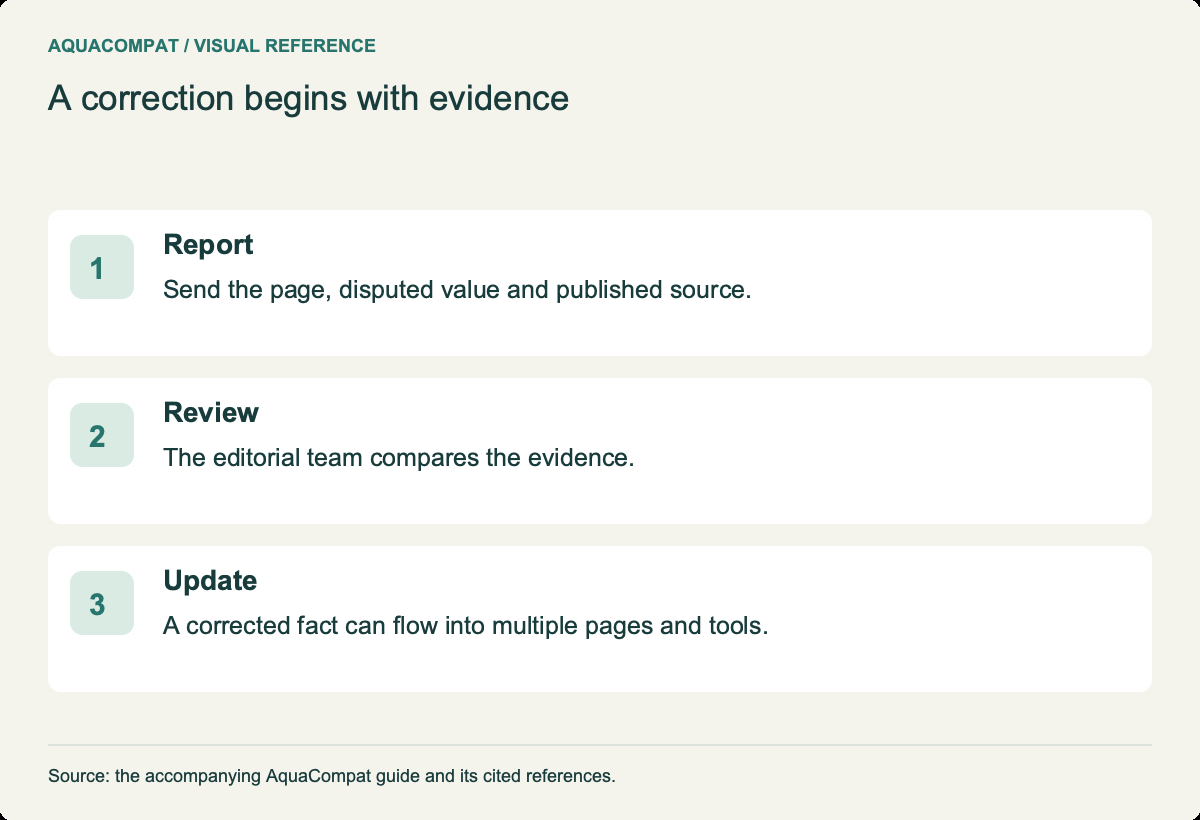
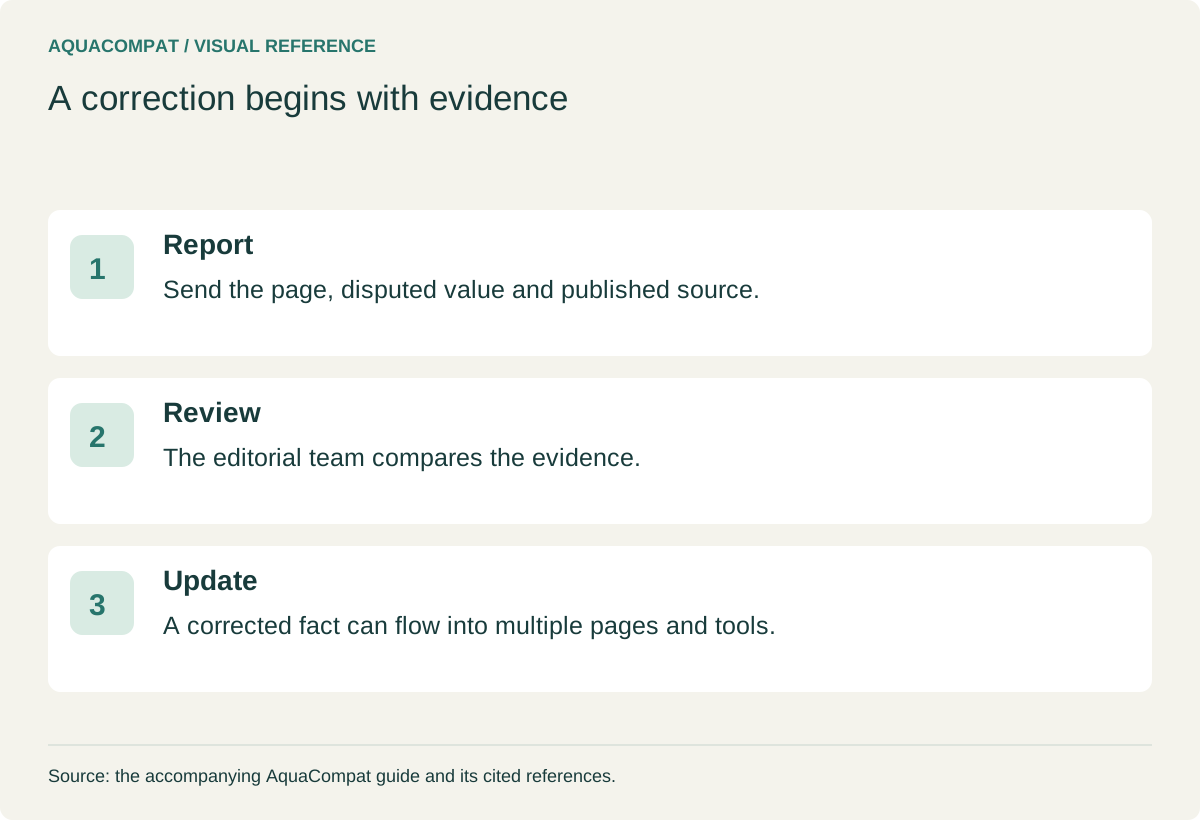
A correction begins with evidence
SVG file · Appears in About AquaCompat
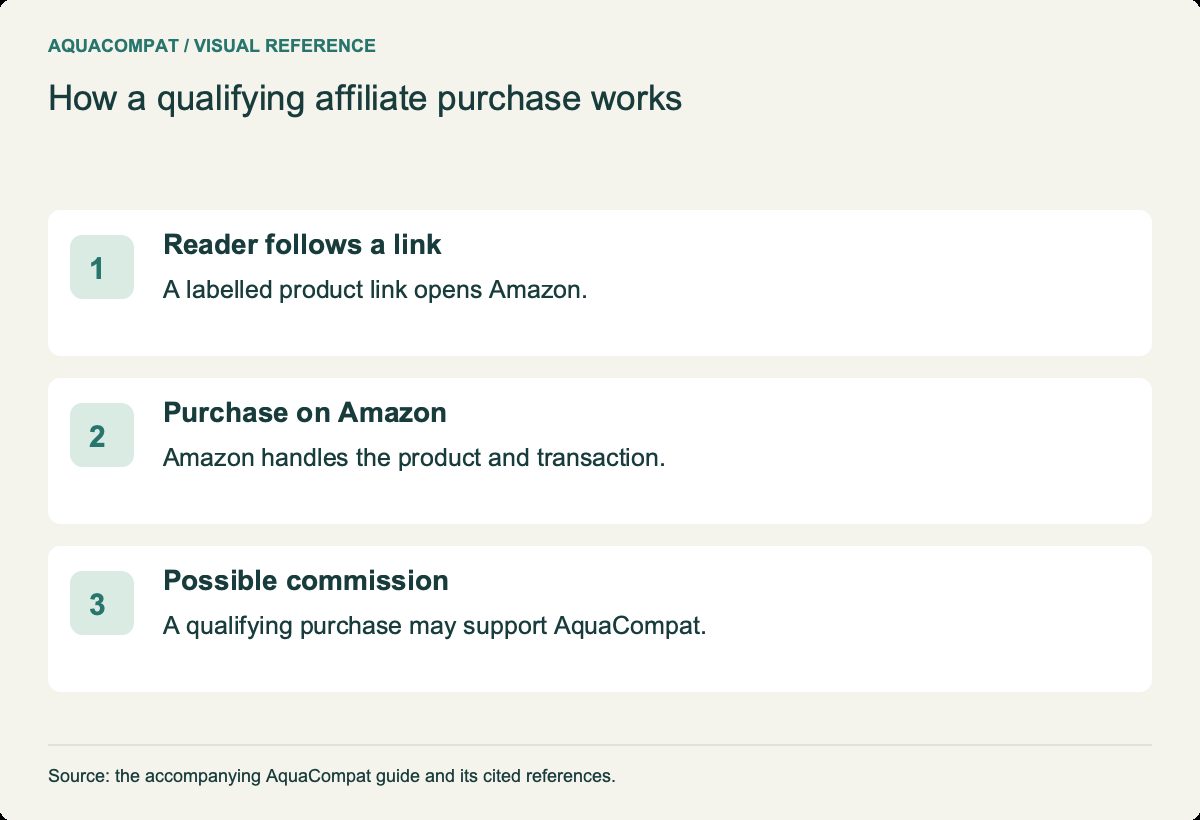
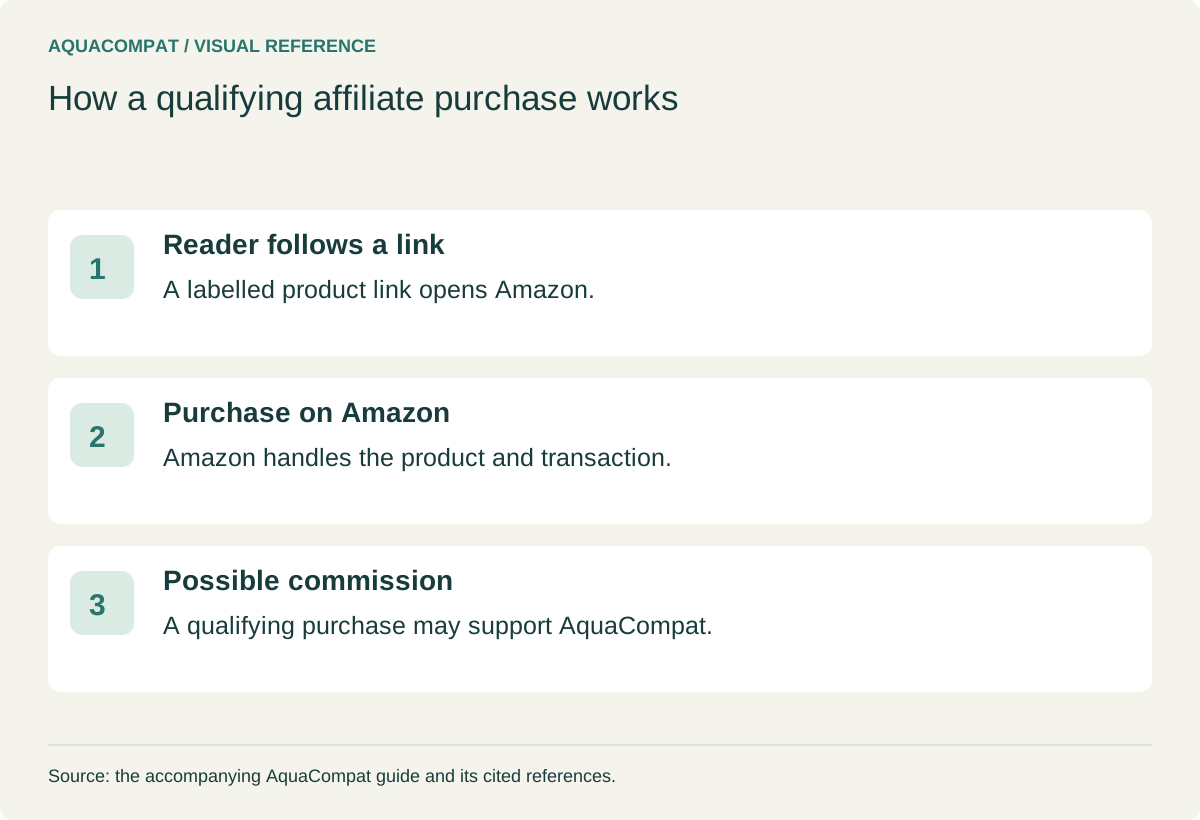
How a qualifying affiliate purchase works
SVG file · Appears in Affiliate Disclosure
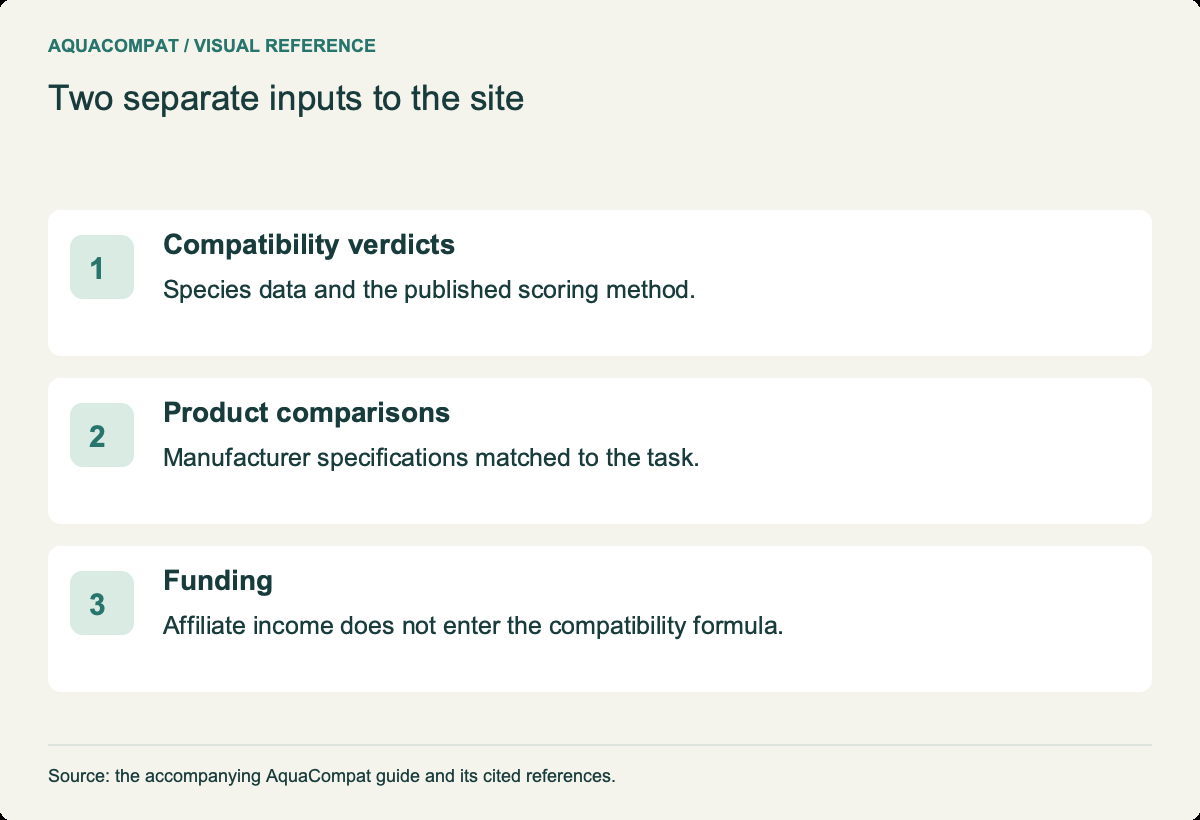
Two separate inputs to the site
SVG file · Appears in Affiliate Disclosure
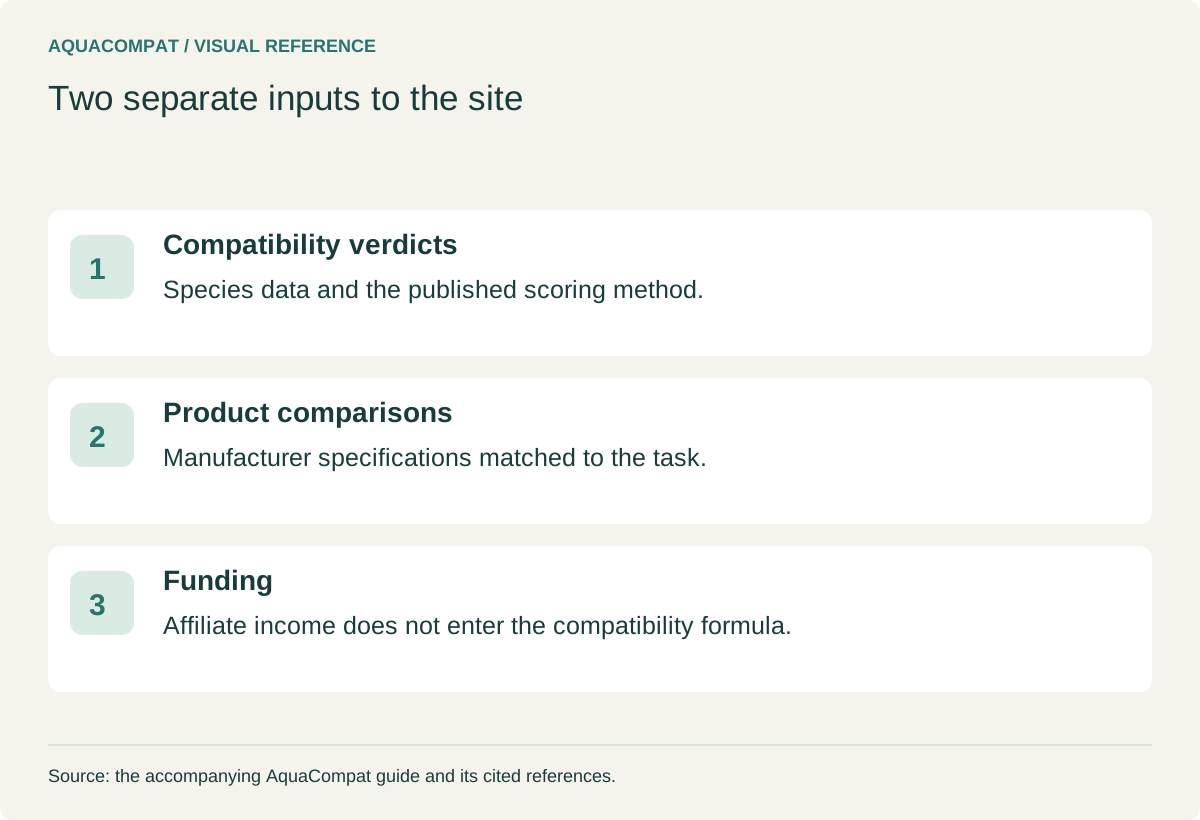
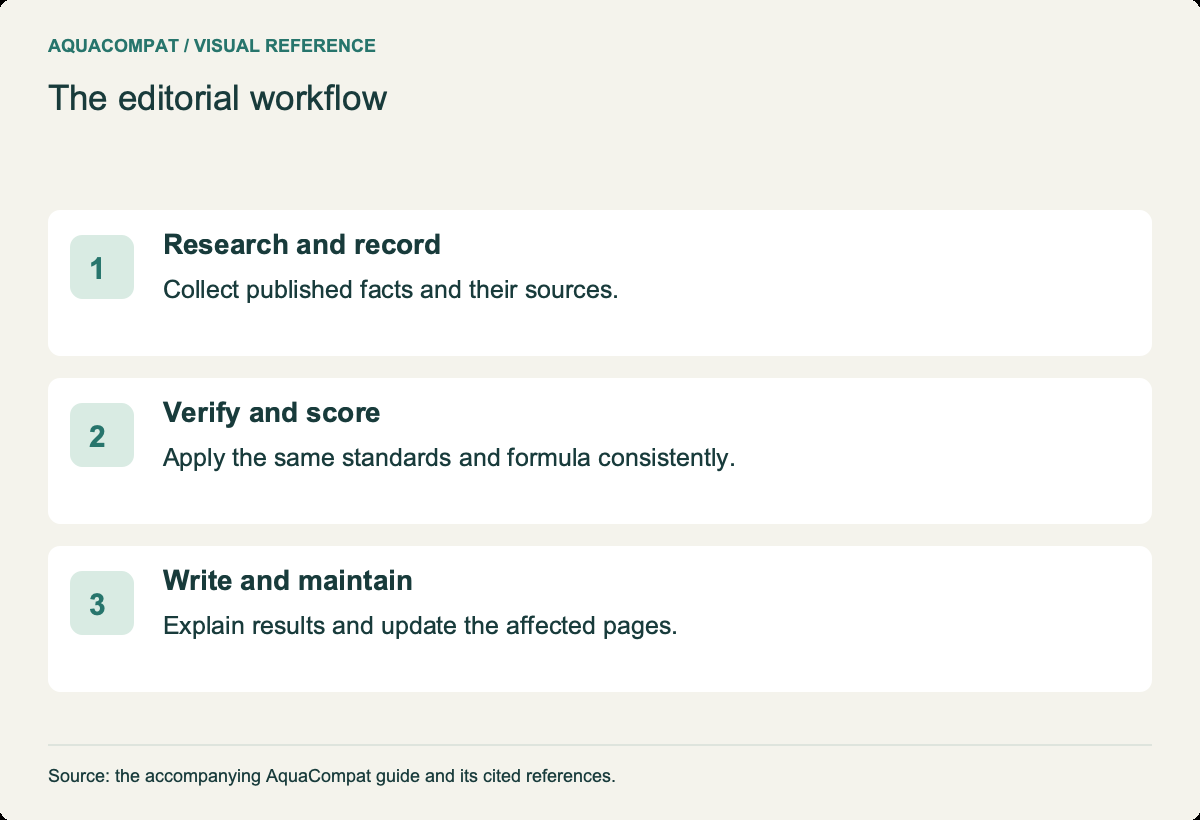
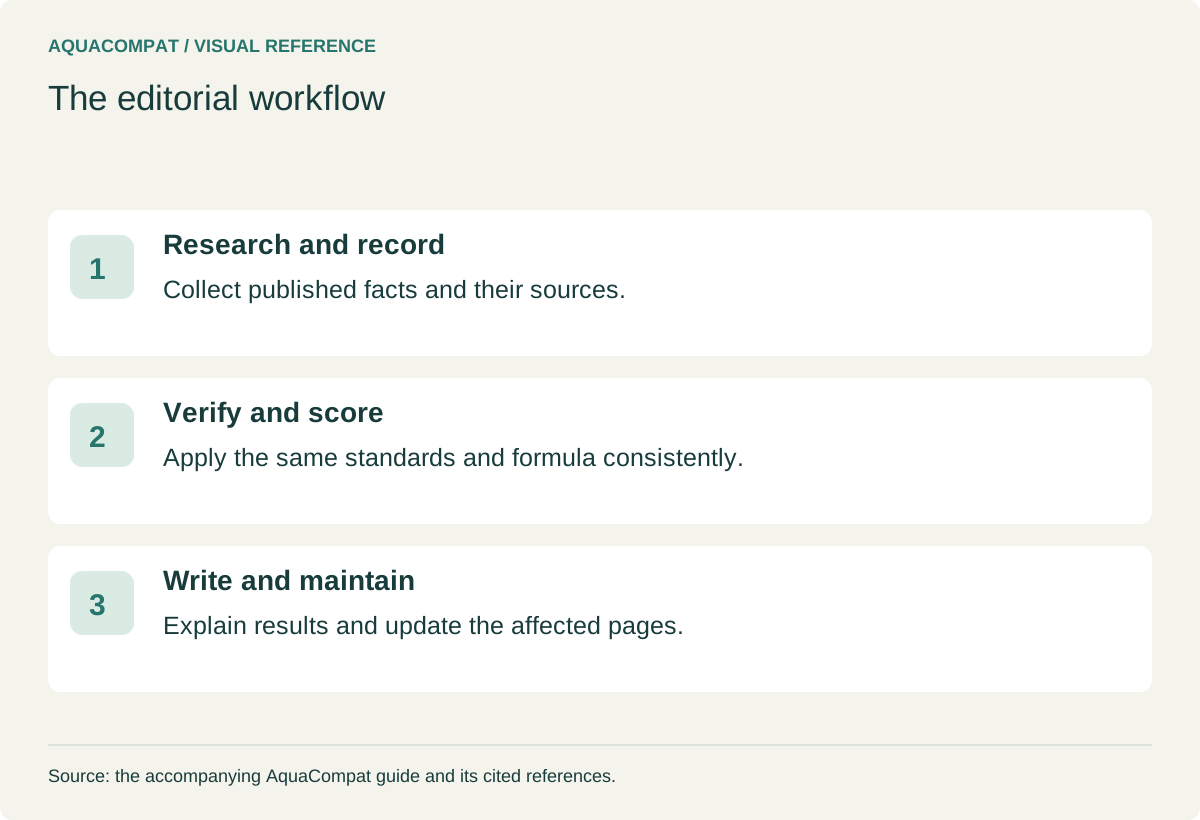
The editorial workflow
SVG file · Appears in AquaCompat Editorial Team
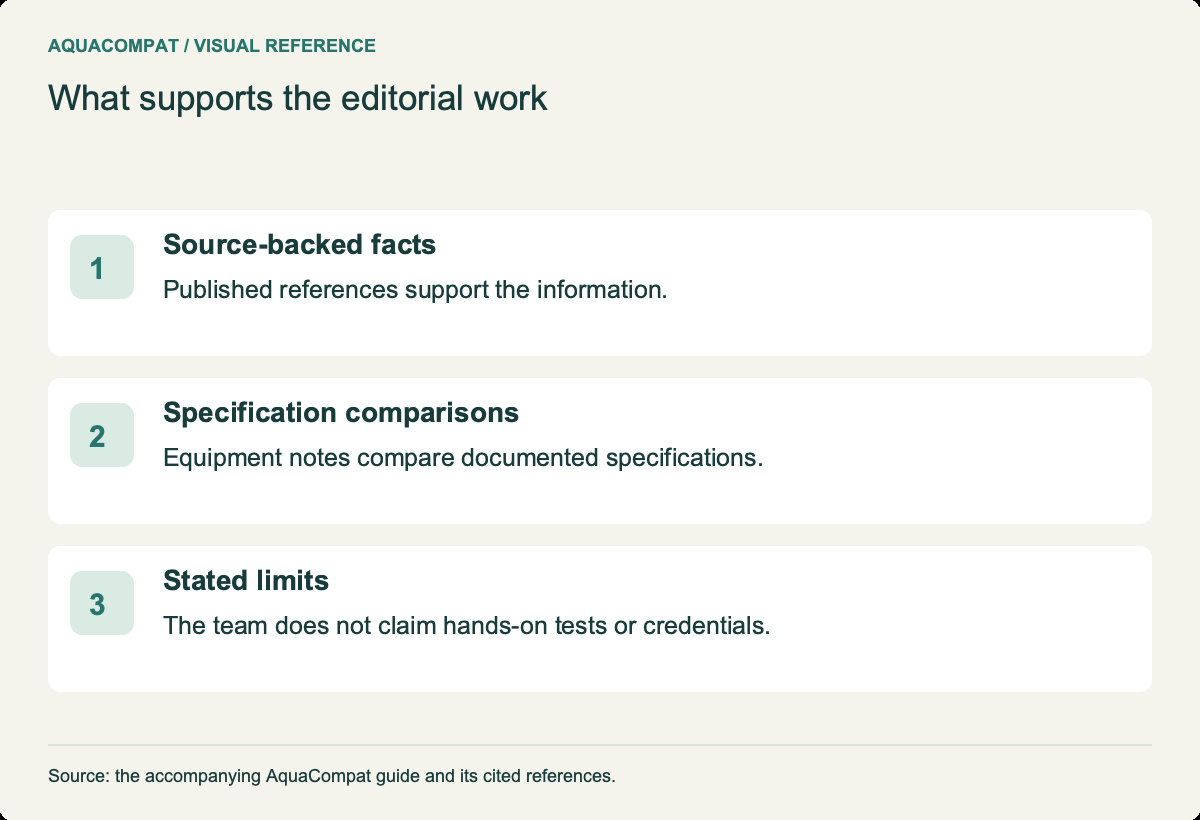
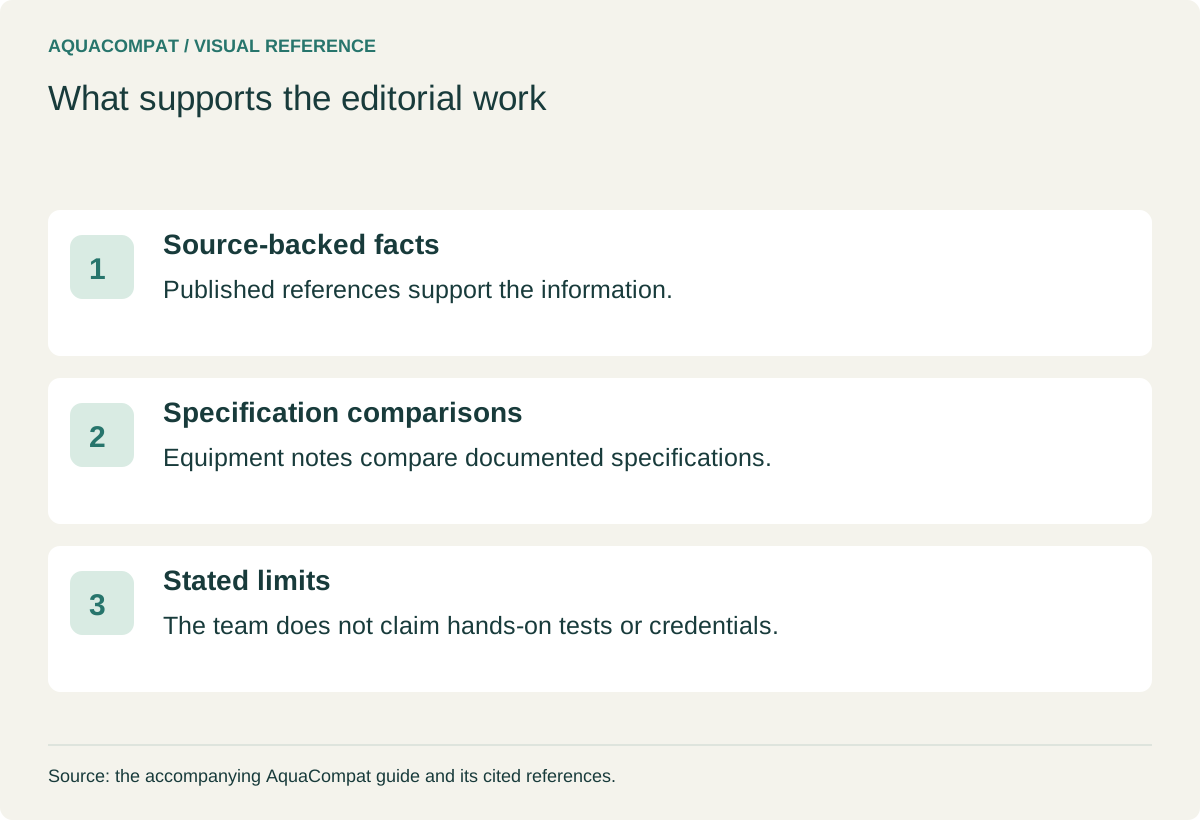
What supports the editorial work
SVG file · Appears in AquaCompat Editorial Team
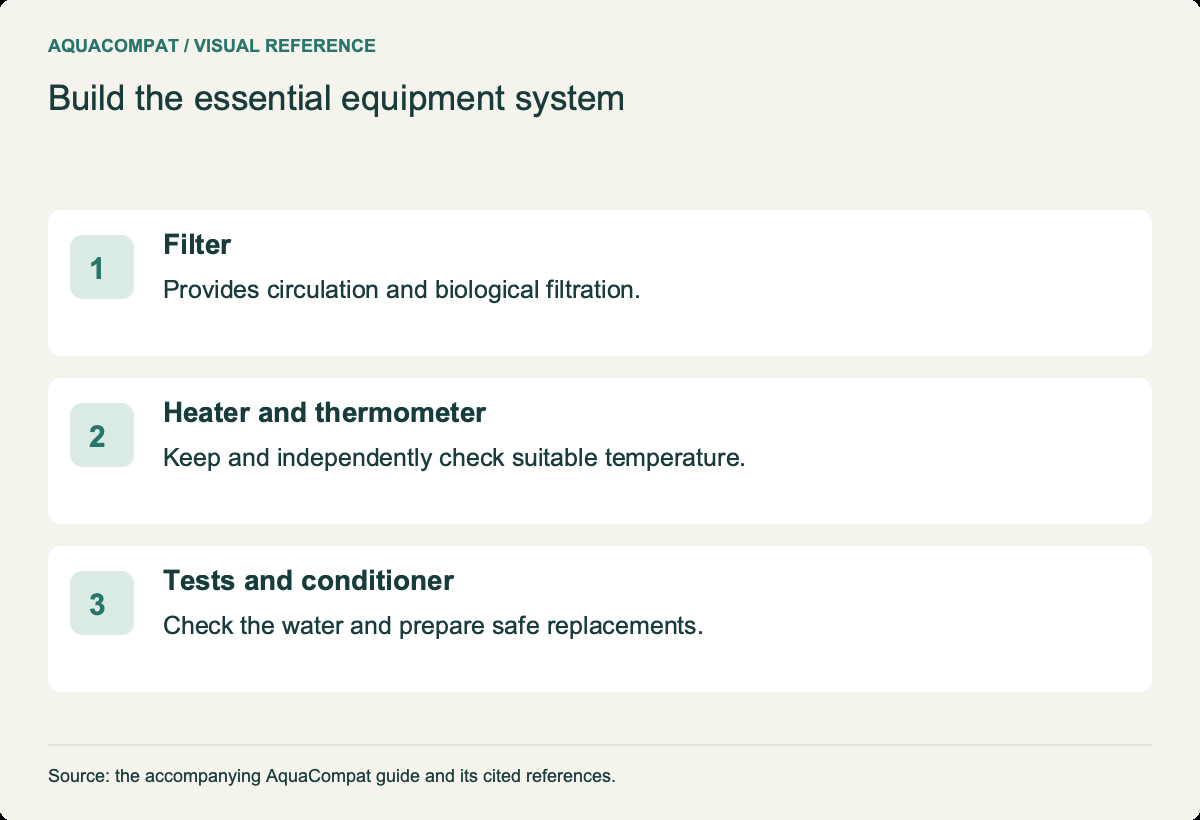
Build the essential equipment system
SVG file · Appears in Aquarium Equipment Buyer Guides
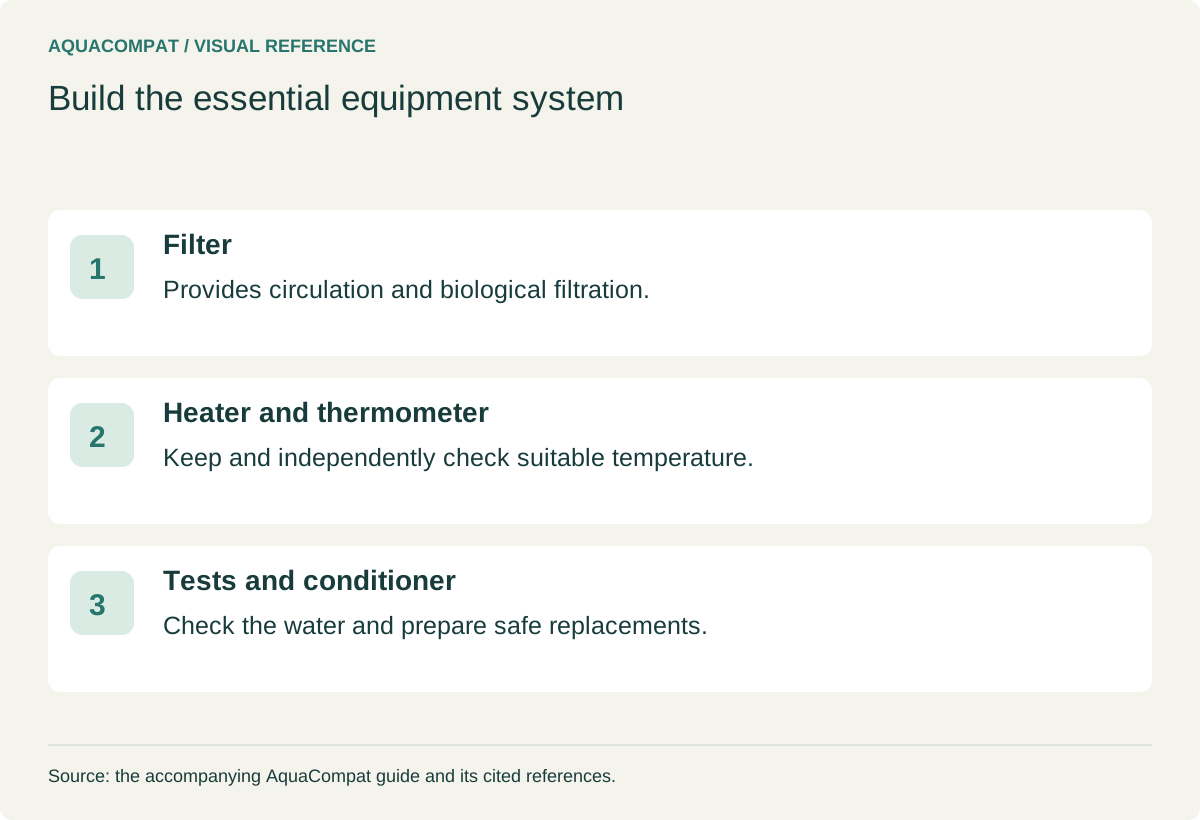
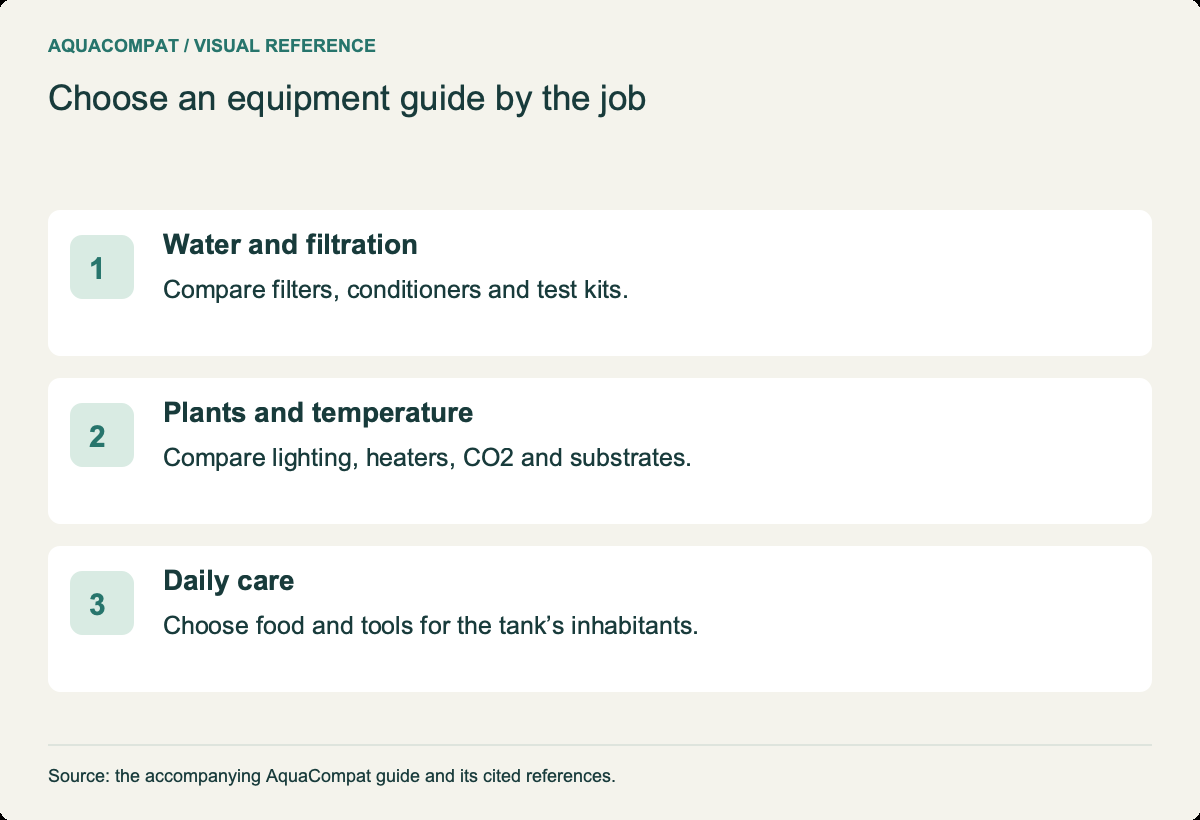
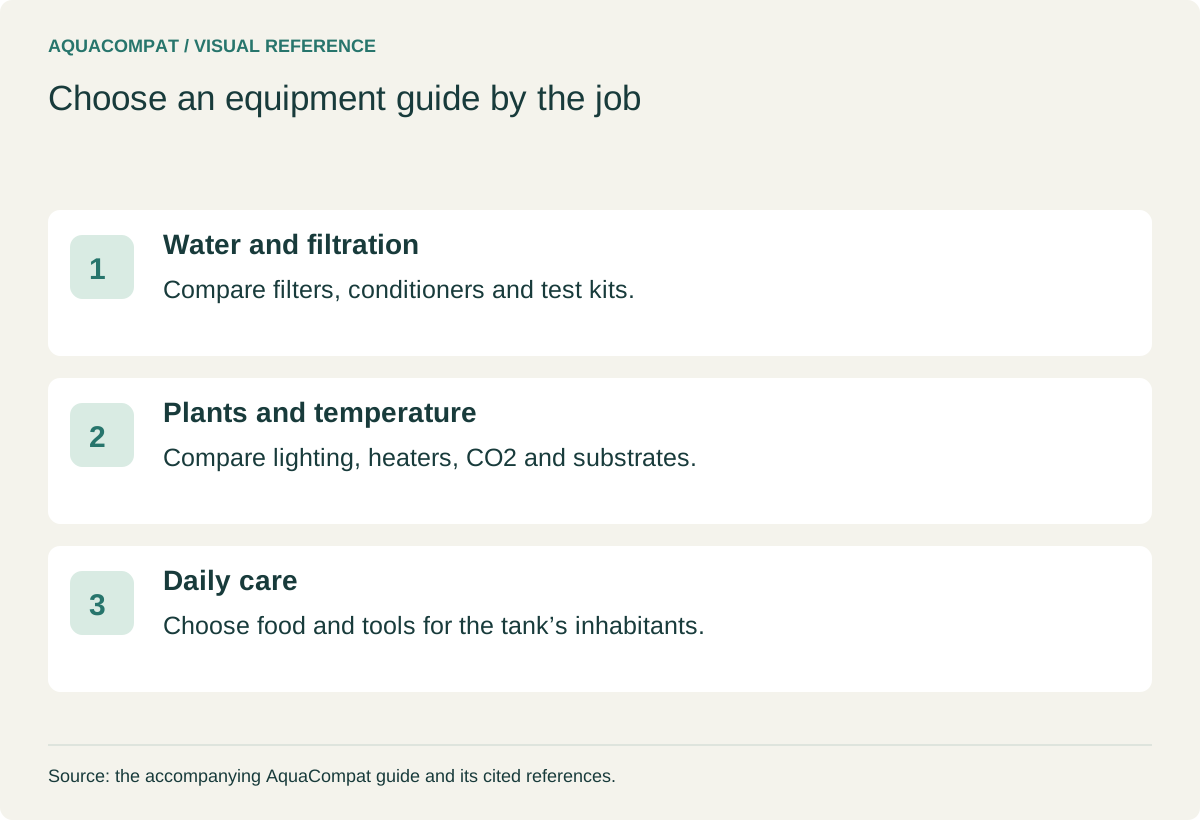
Choose an equipment guide by the job
SVG file · Appears in Aquarium Equipment Buyer Guides
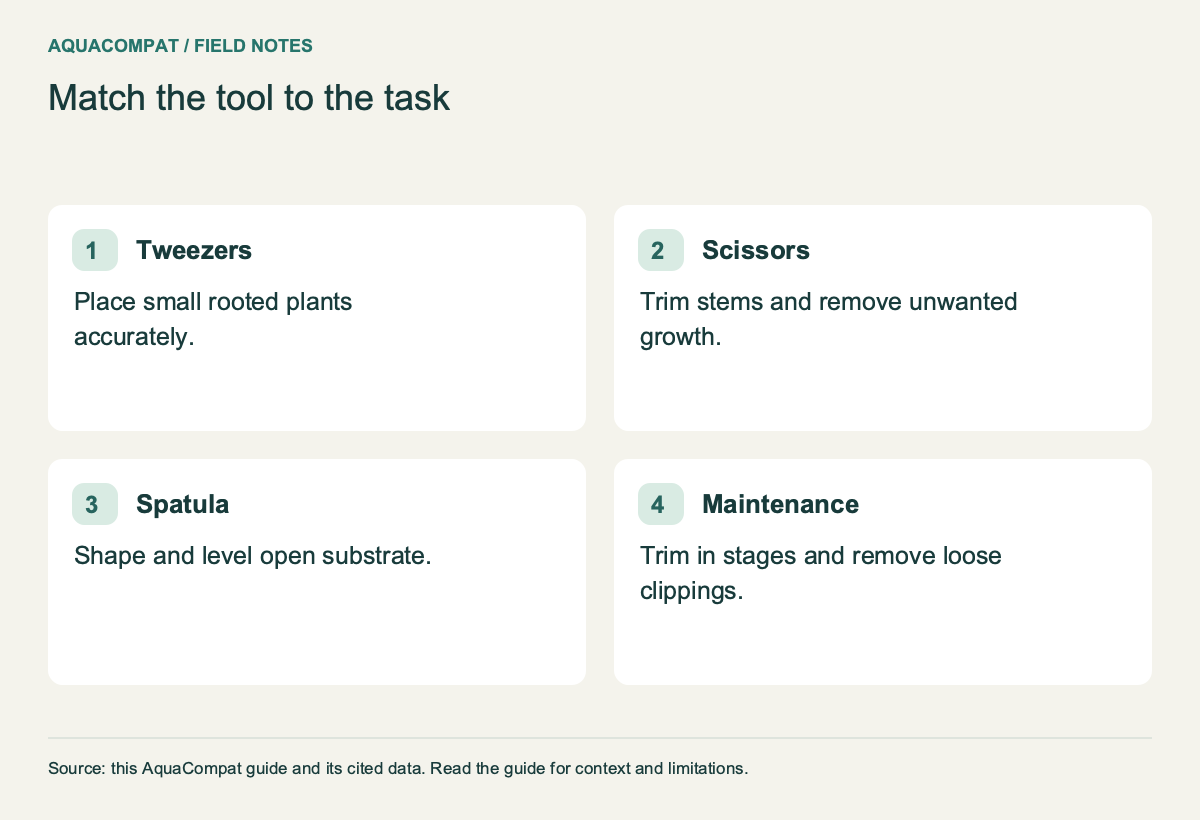
Match the tool to the task
SVG file · Appears in Best Aquascaping Tools for Planted Tanks
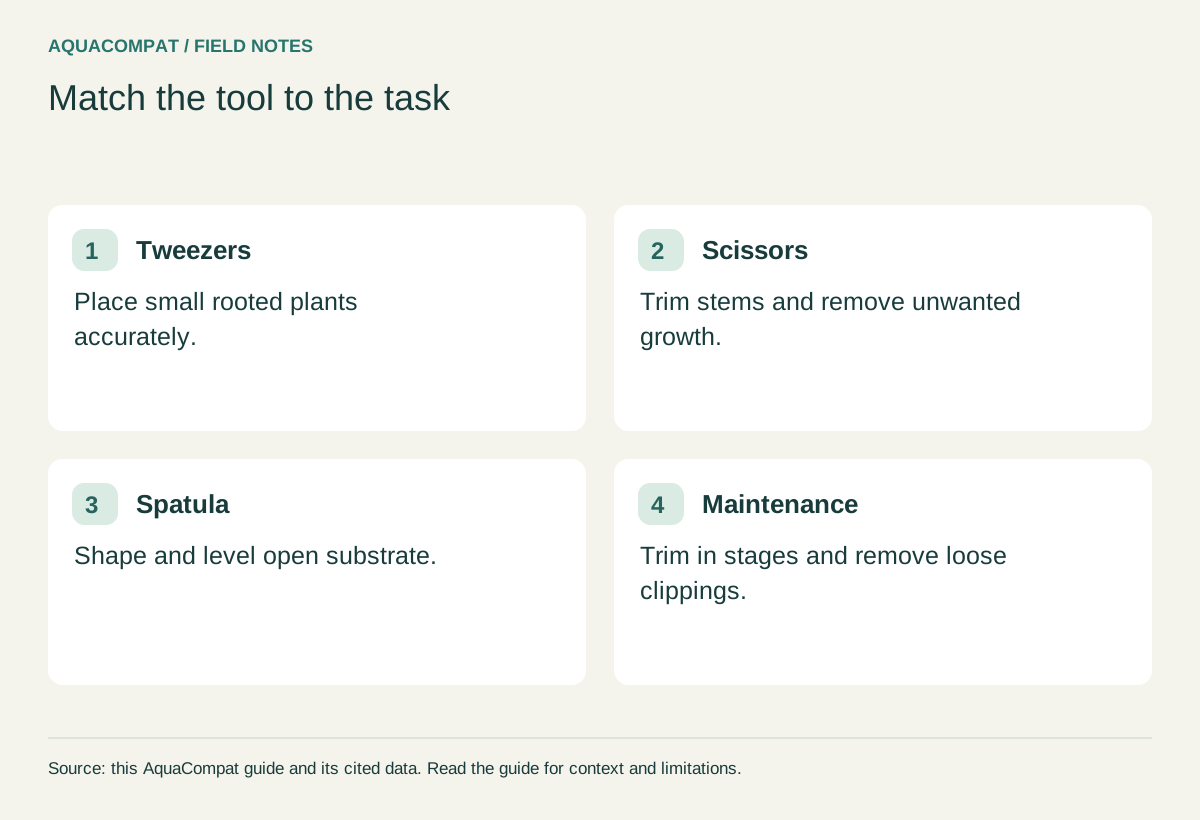
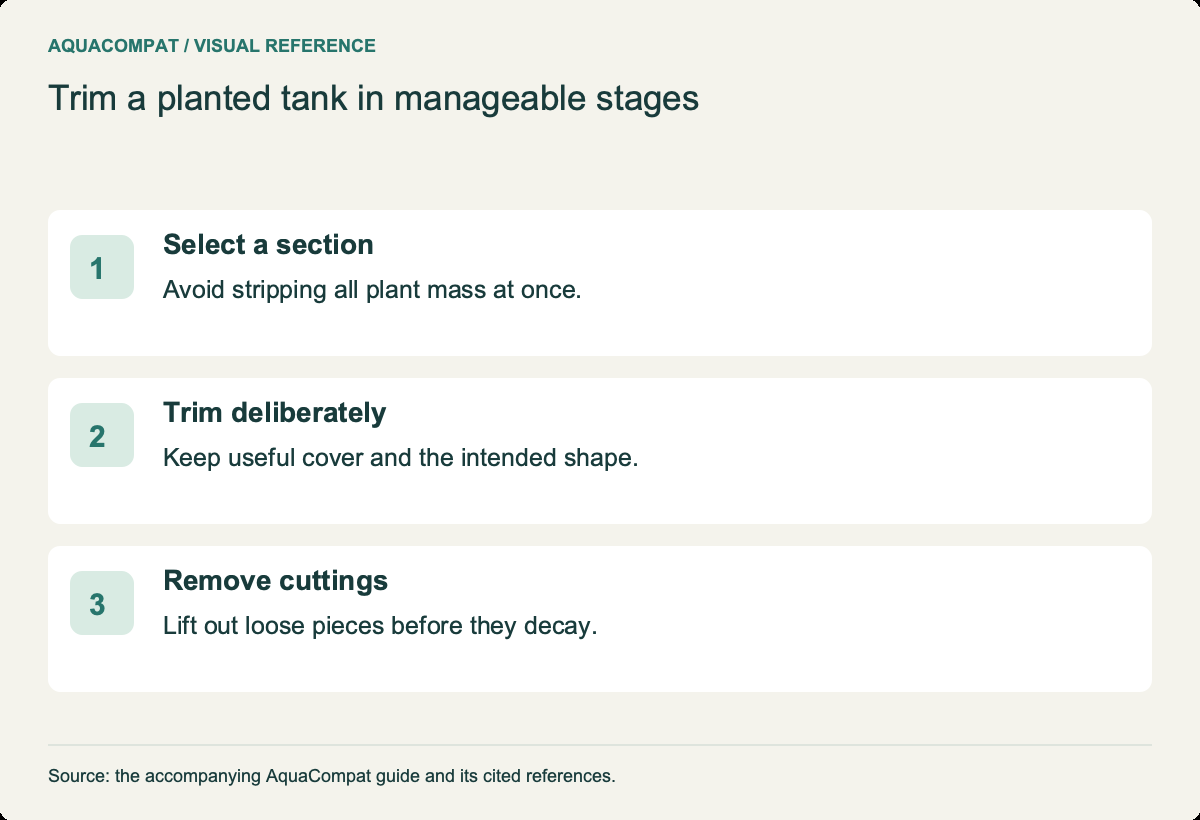
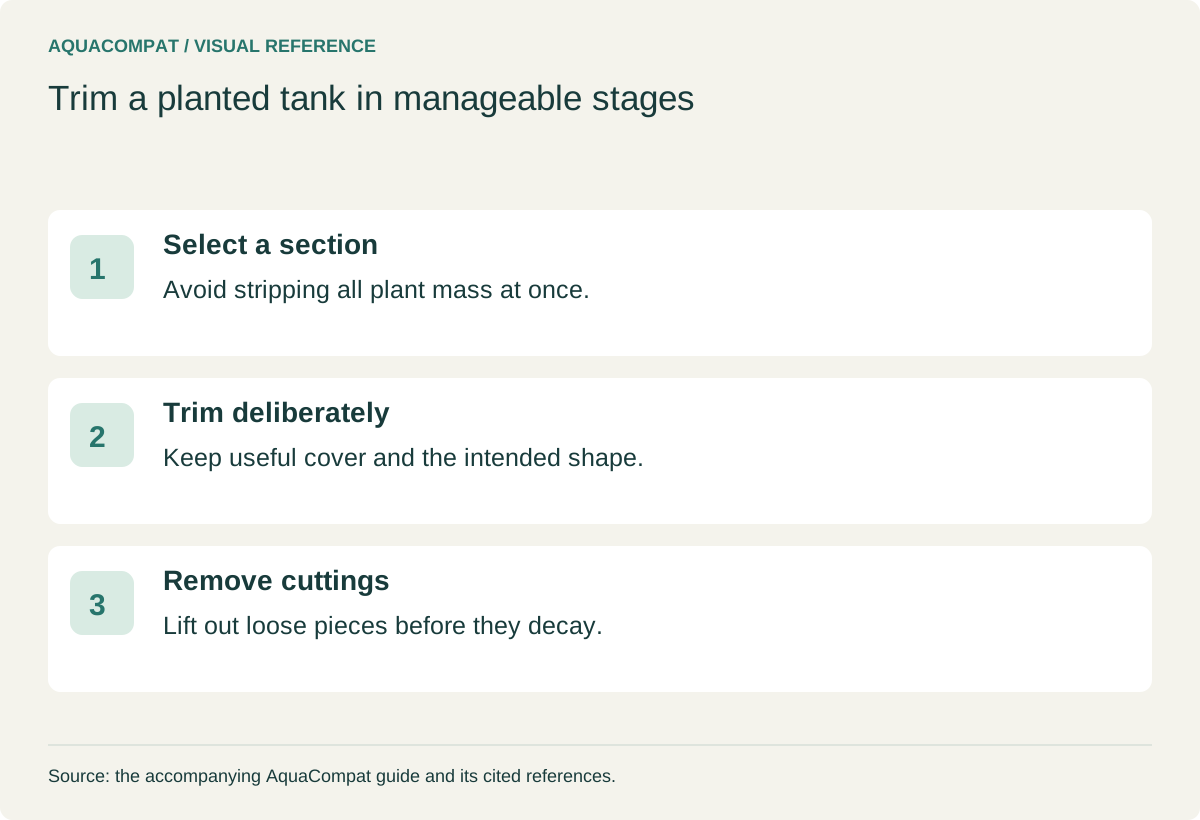
Trim a planted tank in manageable stages
SVG file · Appears in Best Aquascaping Tools for Planted Tanks
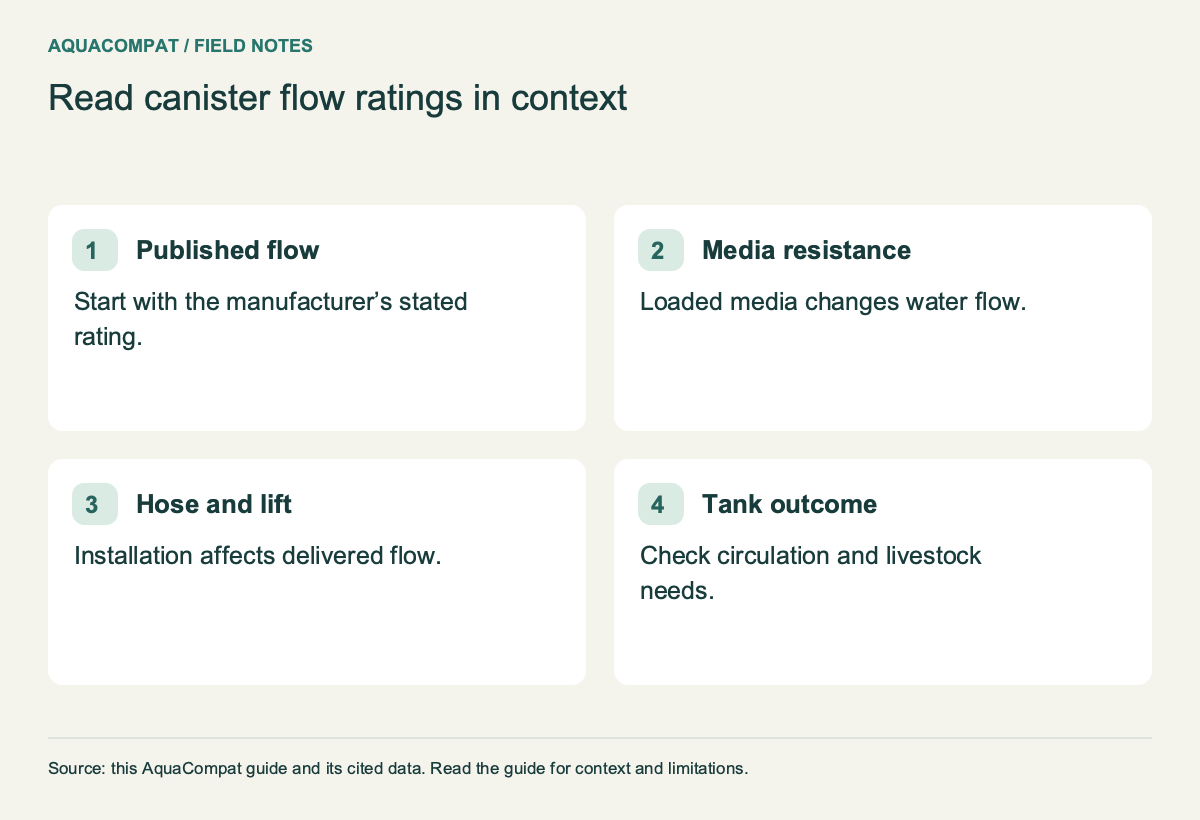
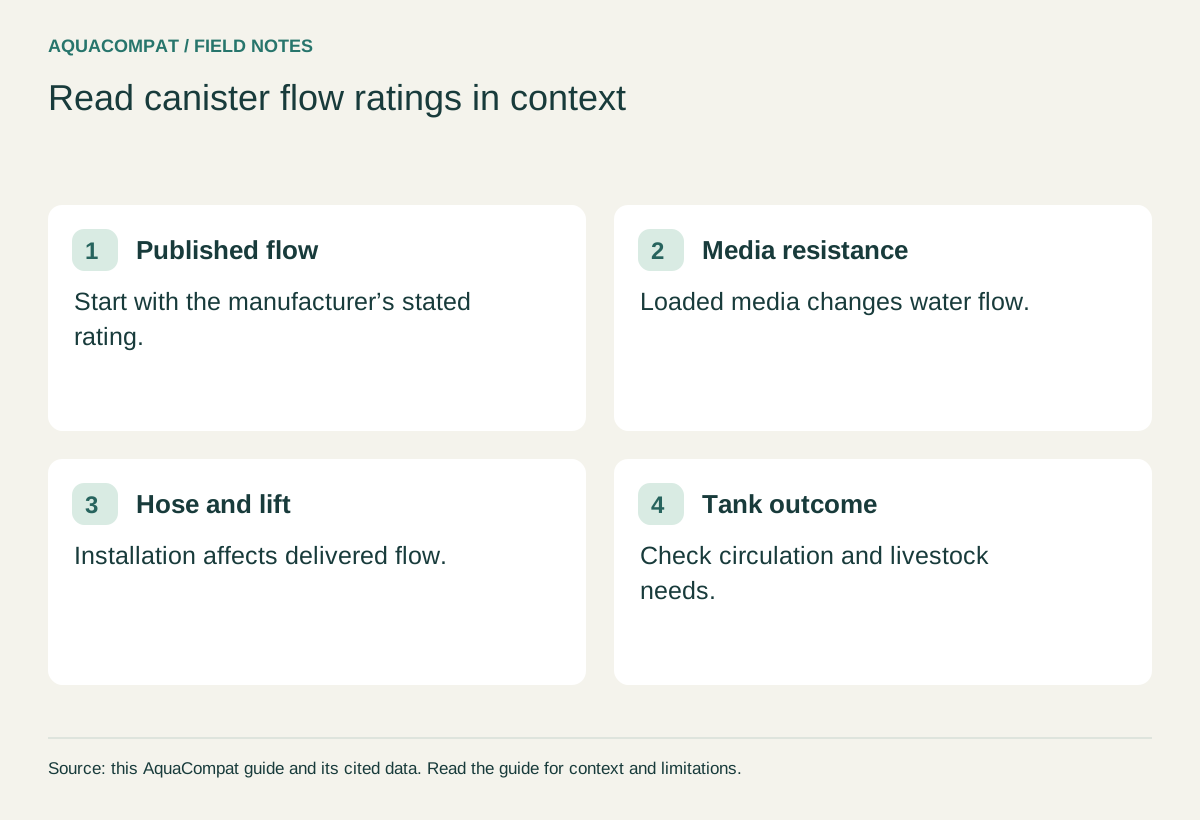
Read canister flow ratings in context
SVG file · Appears in Best Aquarium Canister Filters by Tank Size
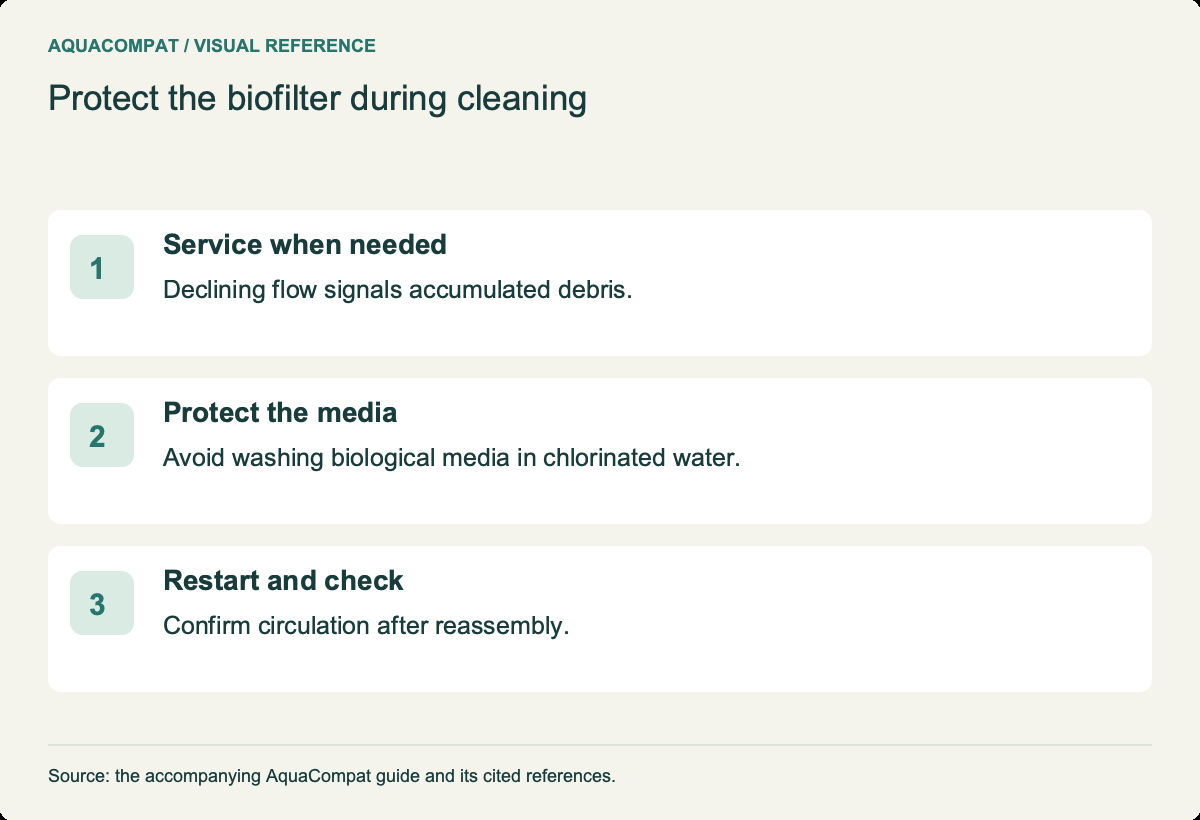
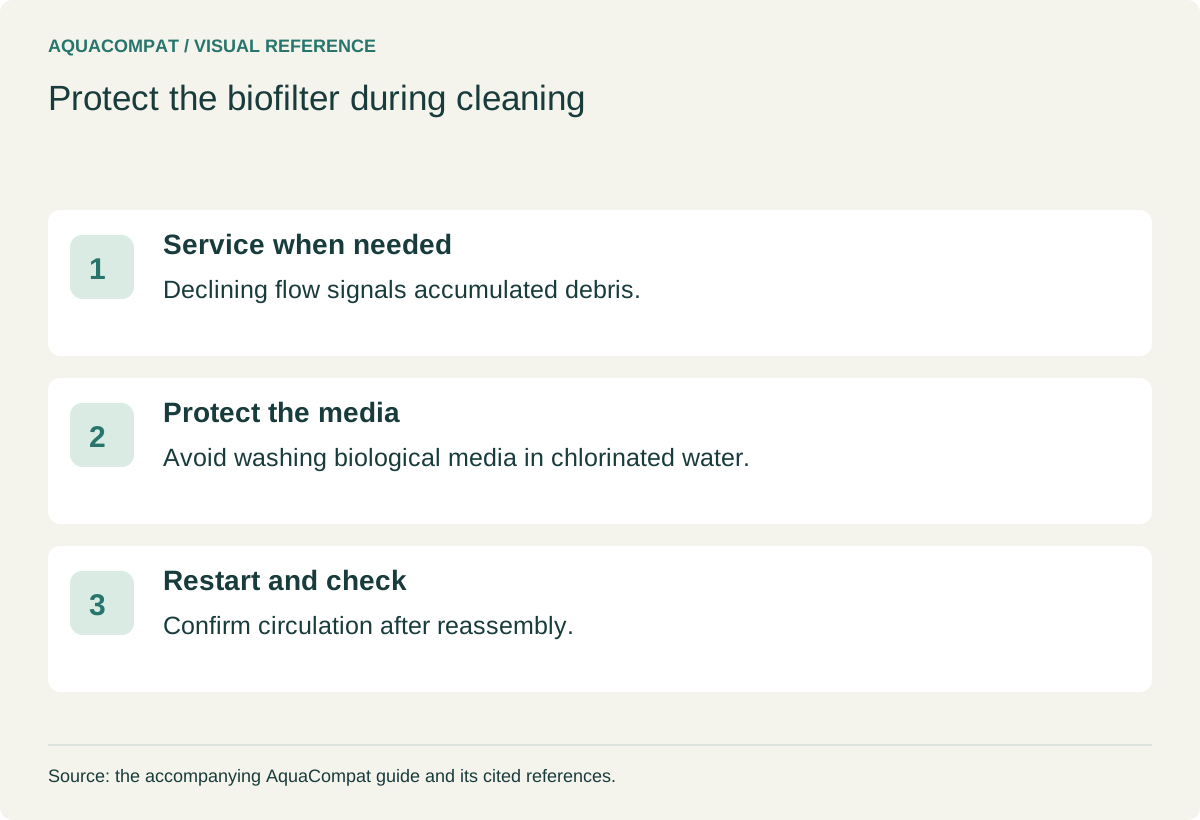
Protect the biofilter during cleaning
SVG file · Appears in Best Aquarium Canister Filters by Tank Size
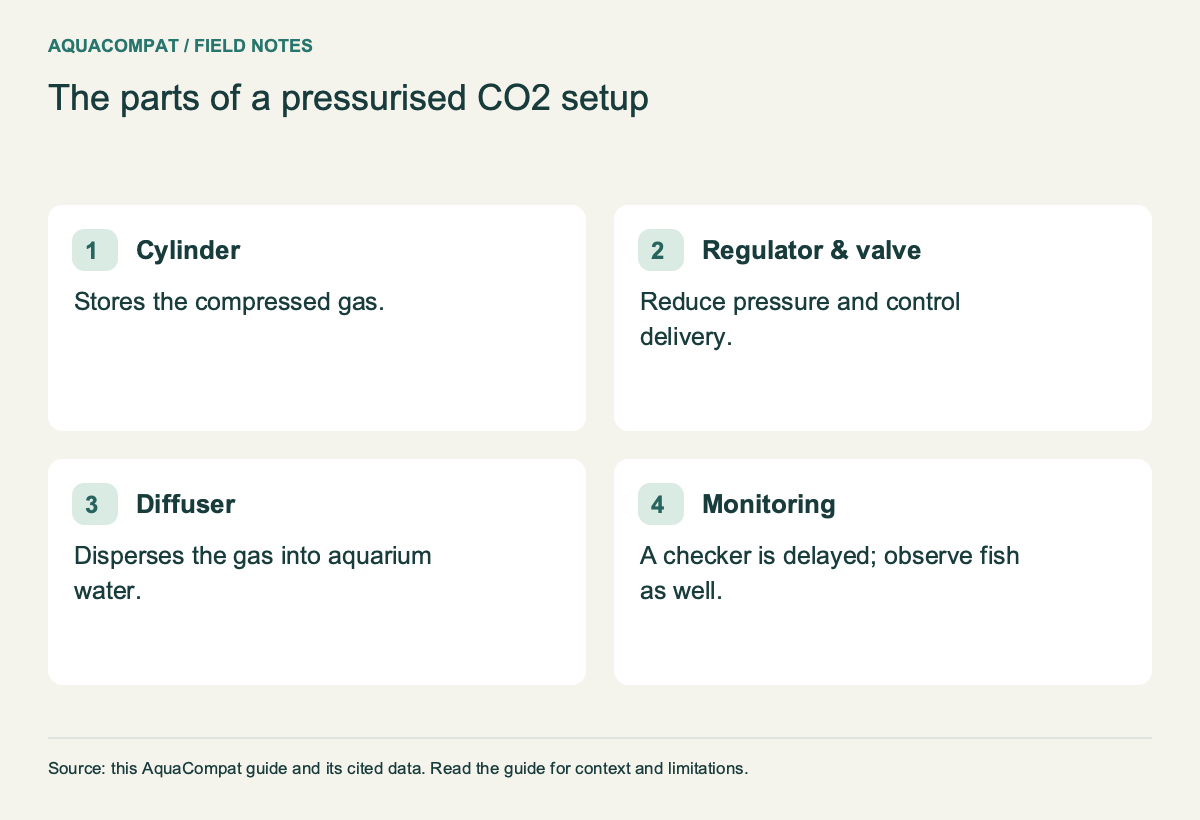
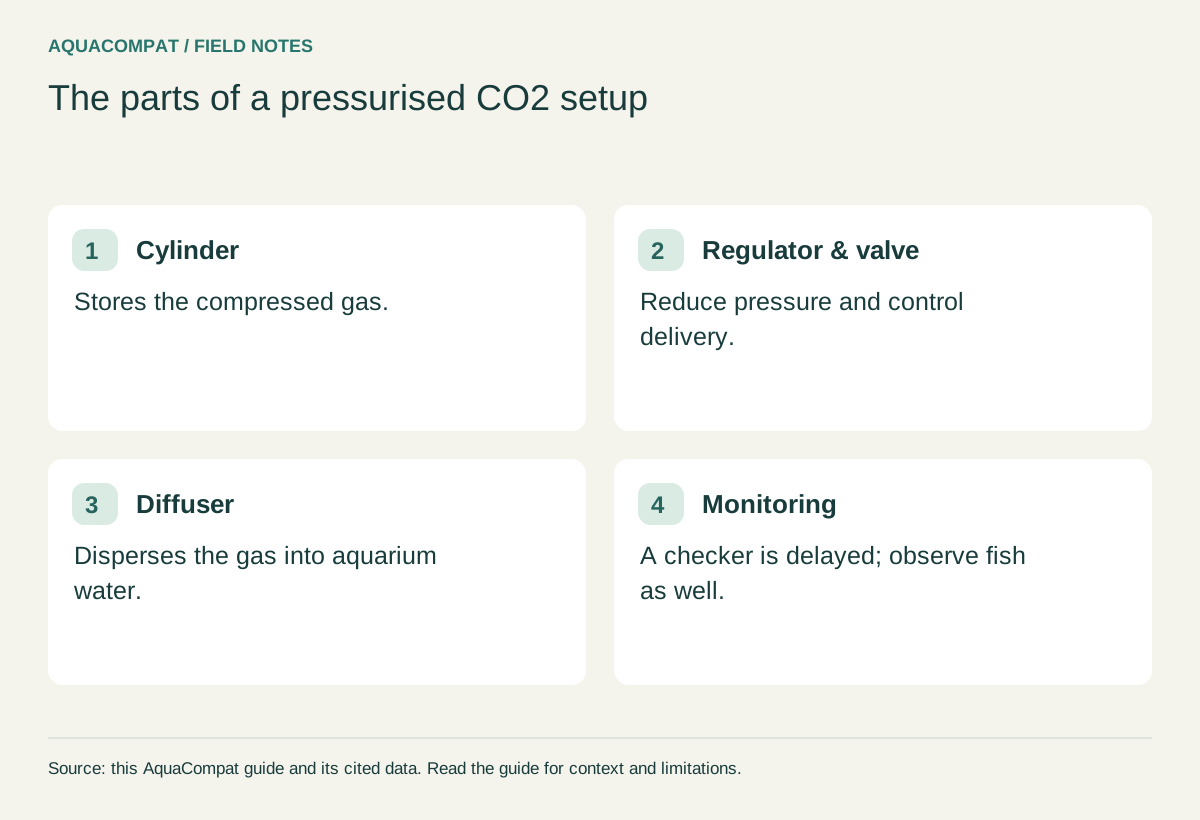
The parts of a pressurised CO2 setup
SVG file · Appears in Best CO2 Systems for Planted Aquariums
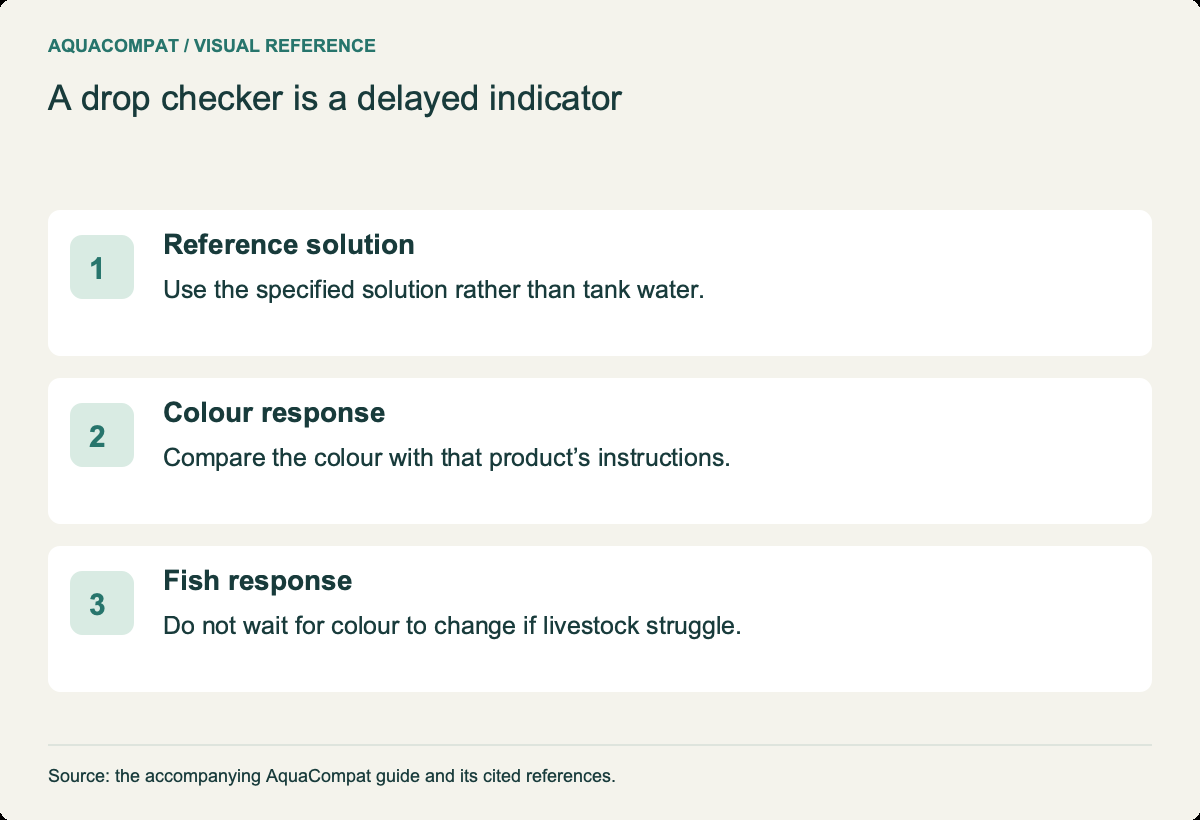
A drop checker is a delayed indicator
SVG file · Appears in Best CO2 Systems for Planted Aquariums
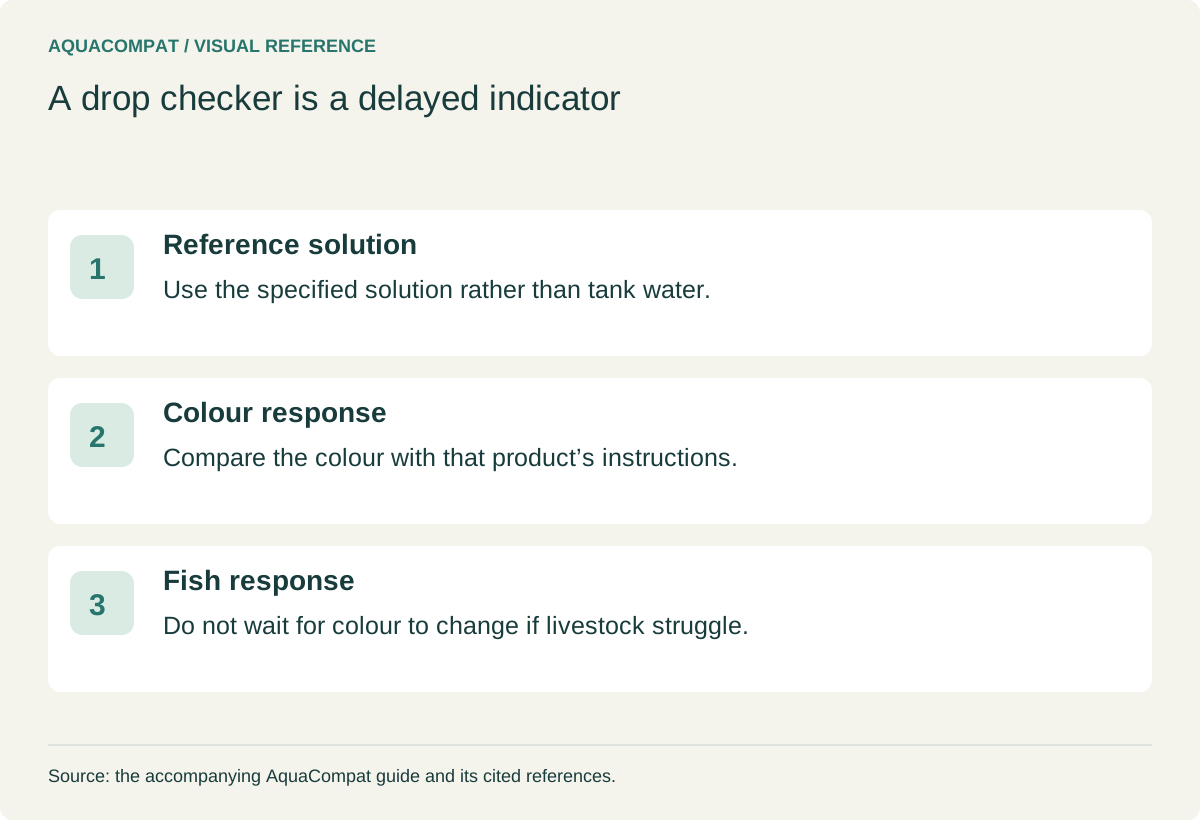
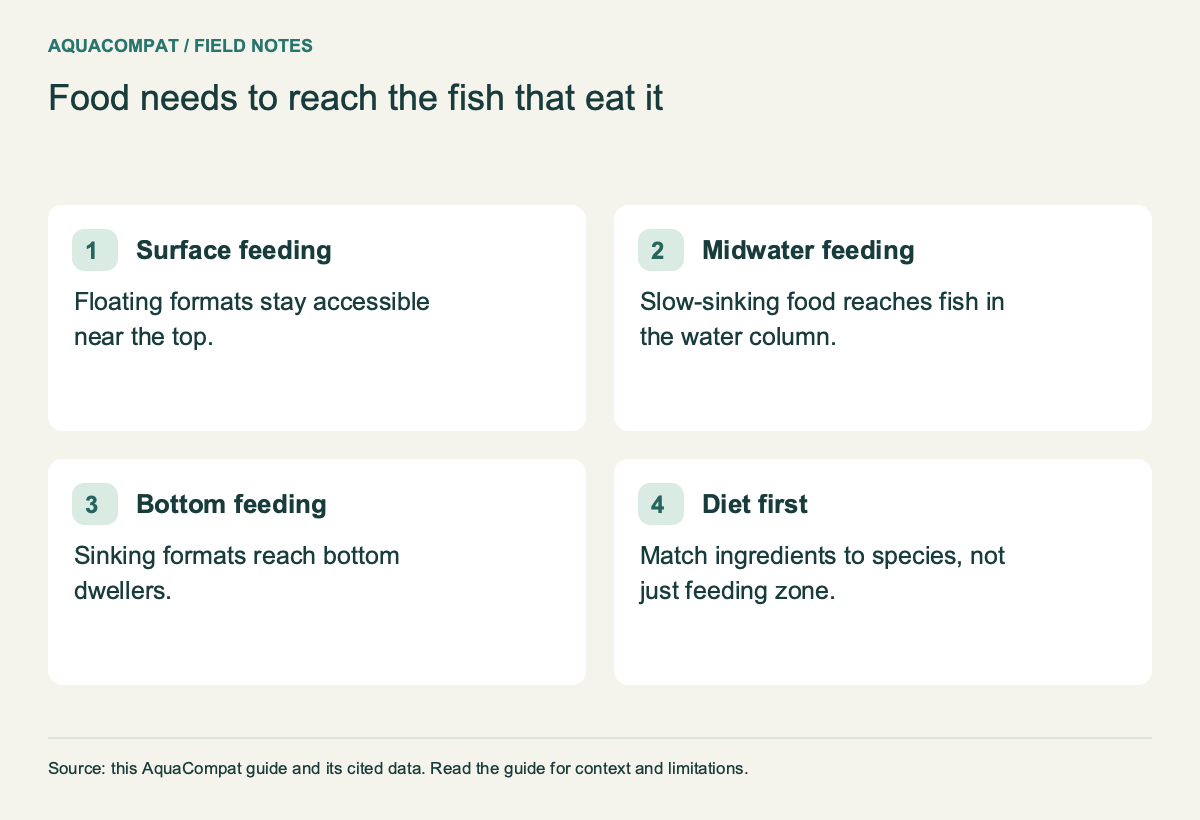
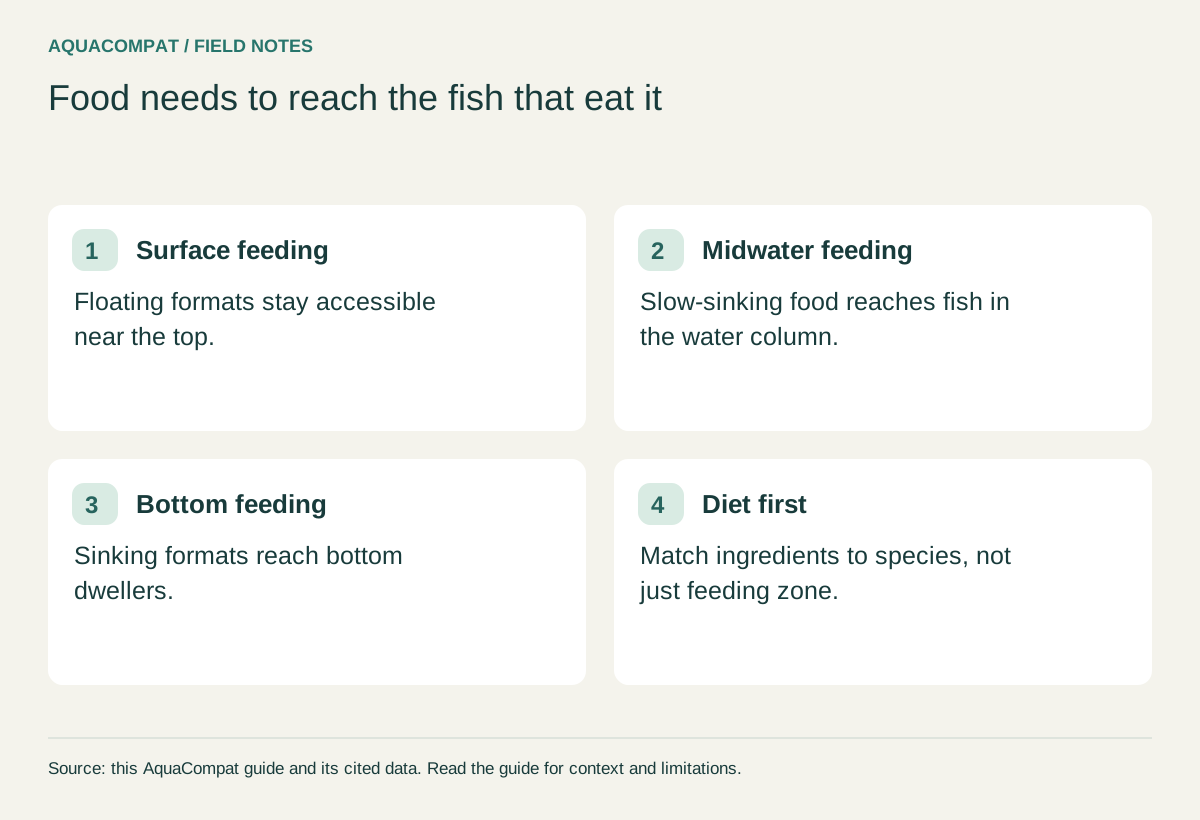
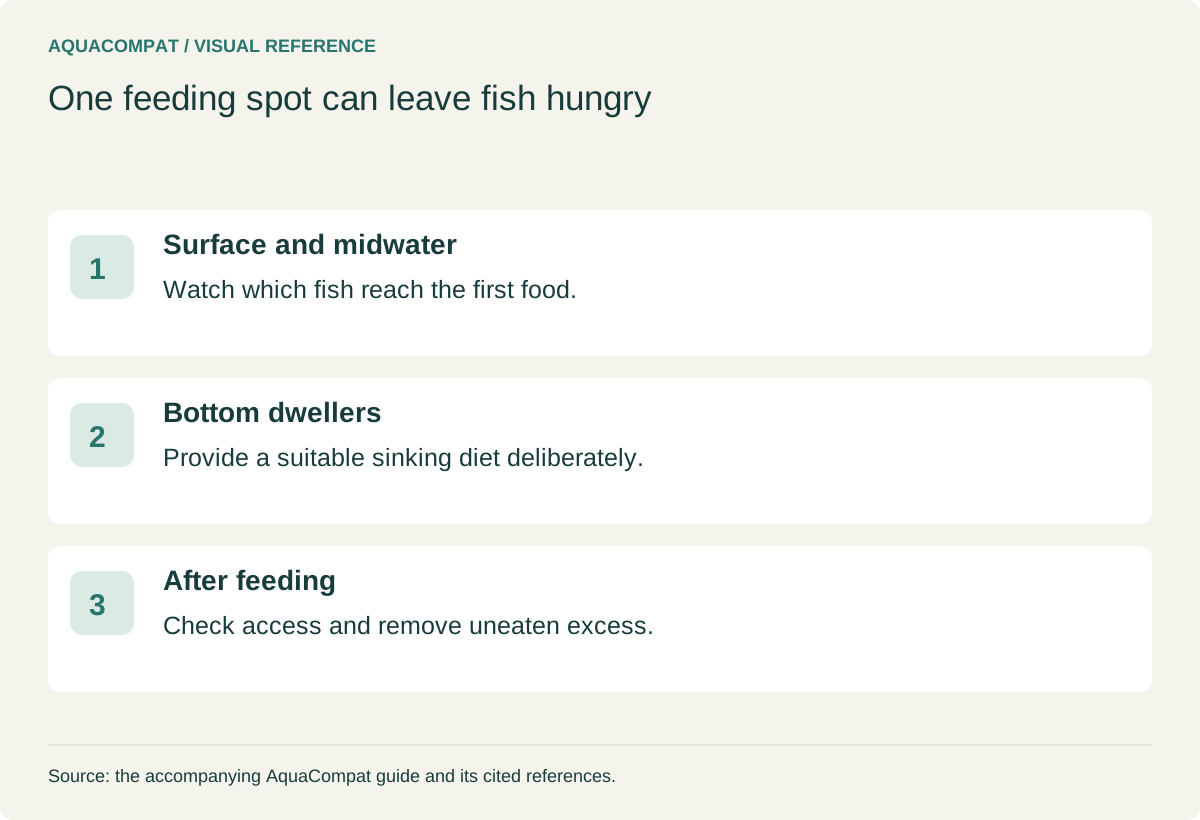
Food needs to reach the fish that eat it
SVG file · Appears in Best Aquarium Fish Food by Species Type
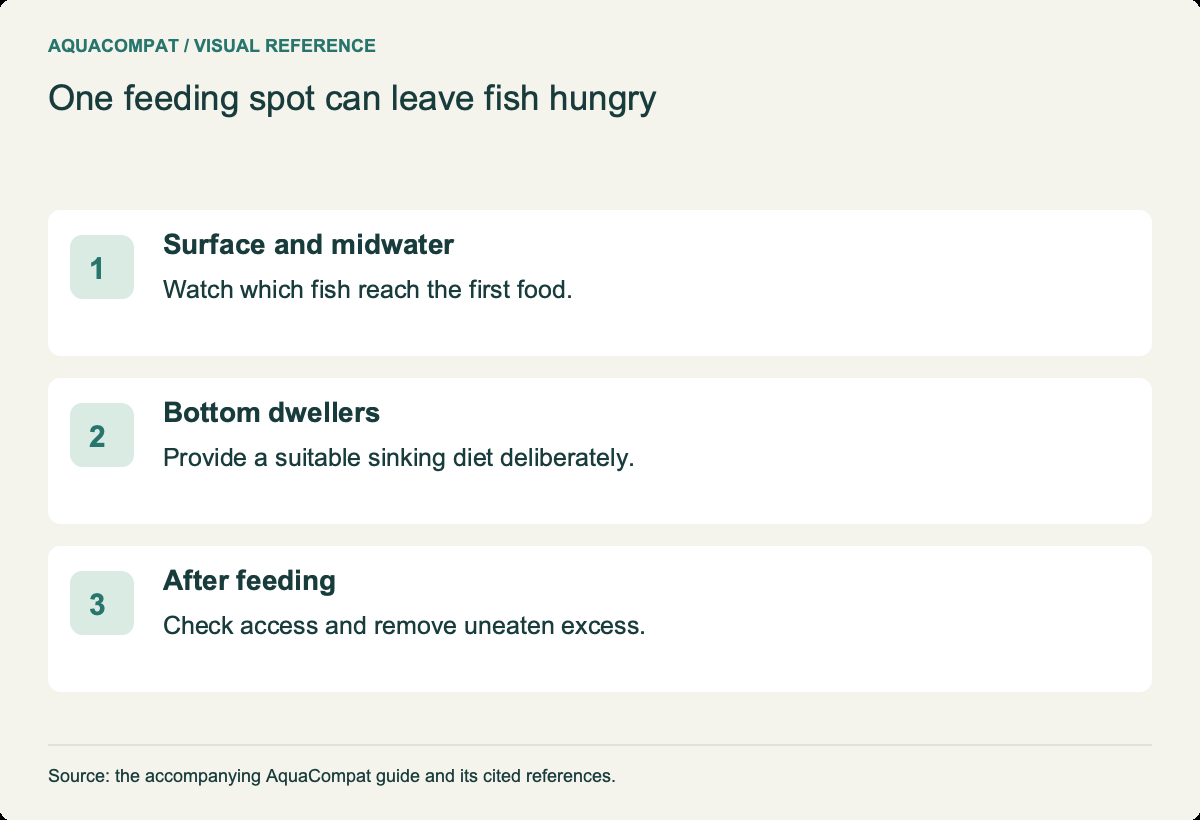
One feeding spot can leave fish hungry
SVG file · Appears in Best Aquarium Fish Food by Species Type
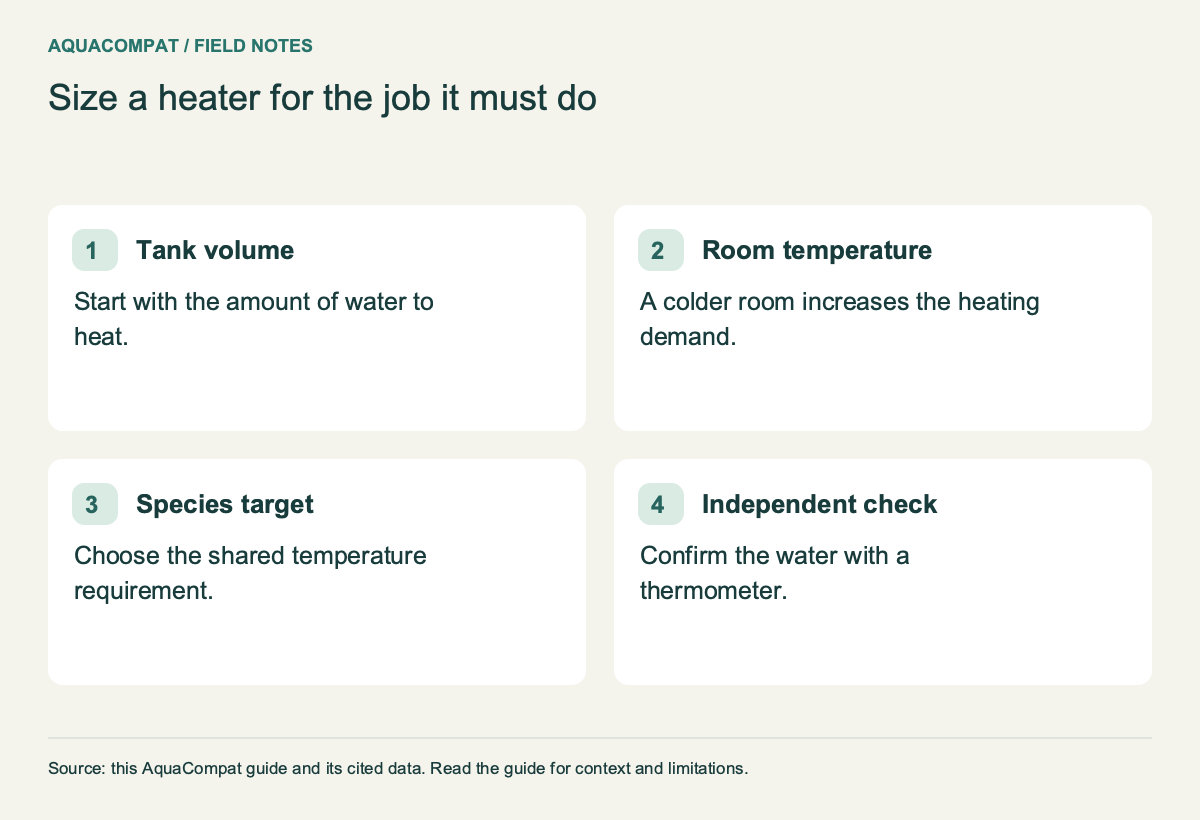
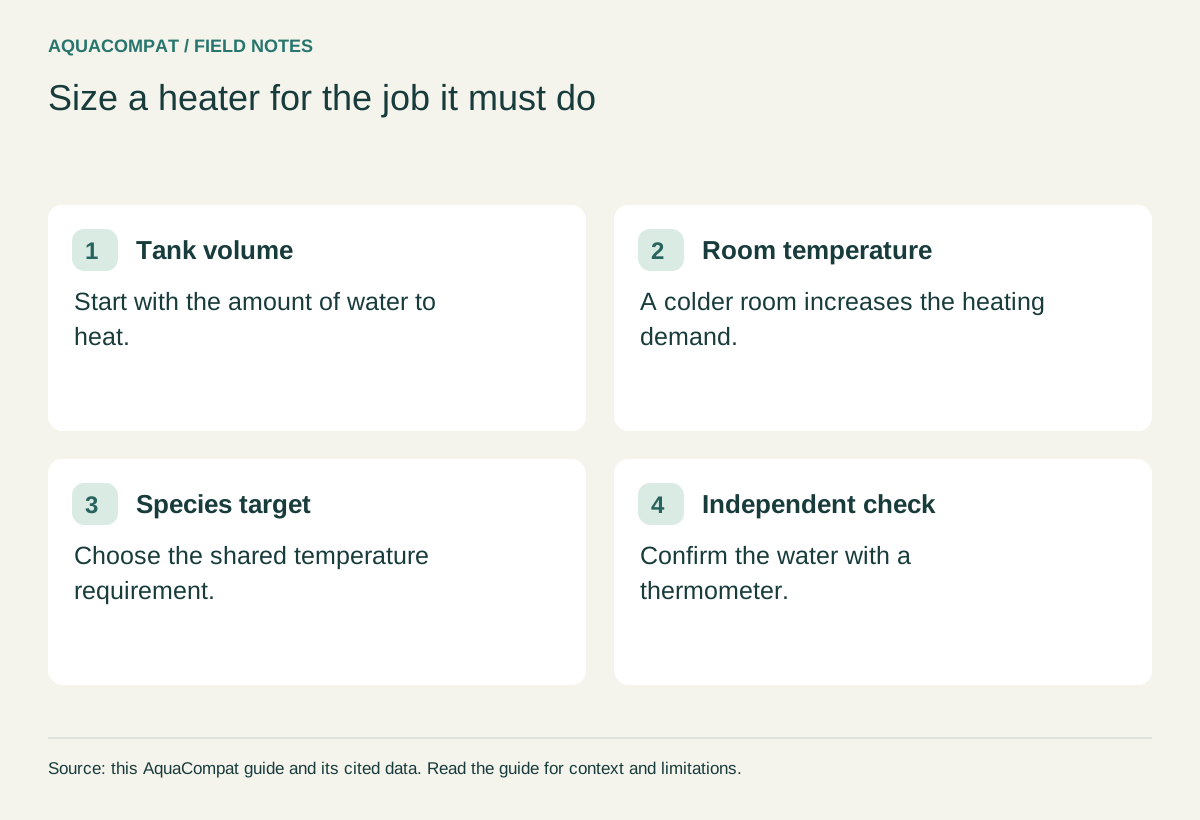
Size a heater for the job it must do
SVG file · Appears in Best Aquarium Heaters by Tank Size
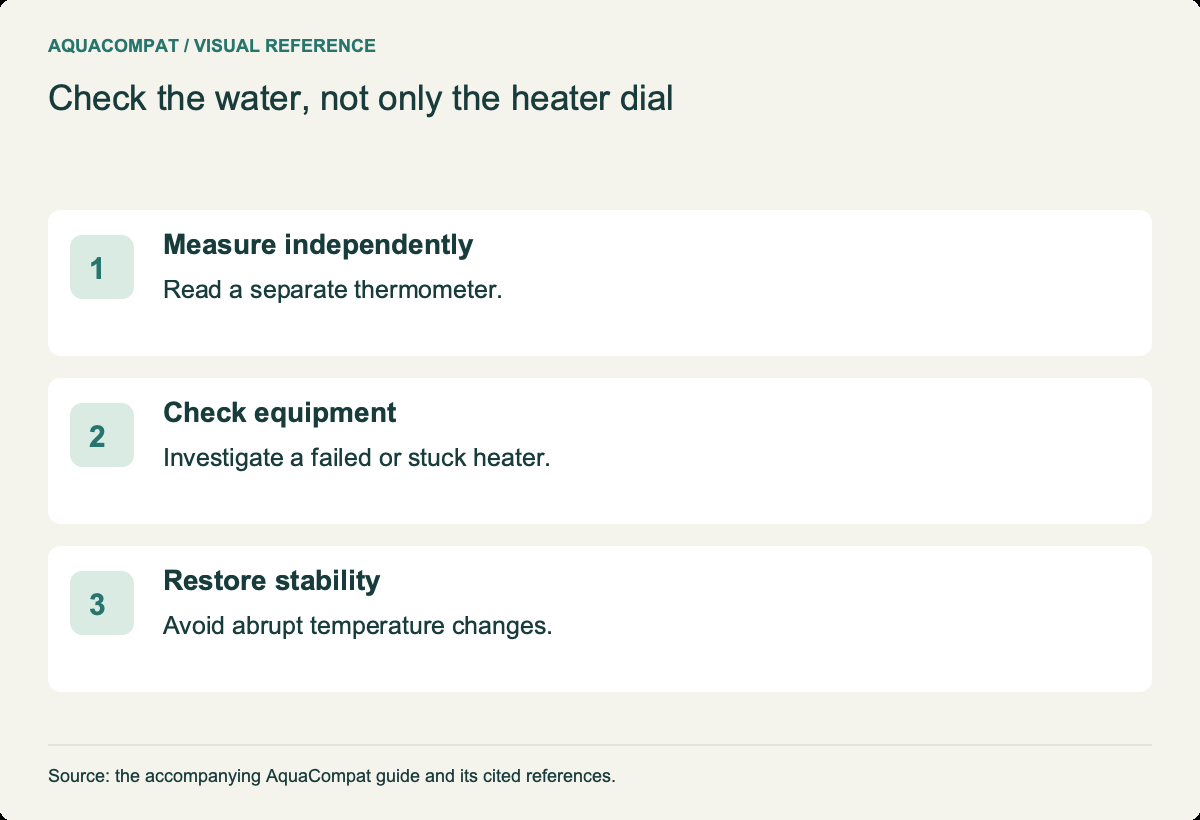
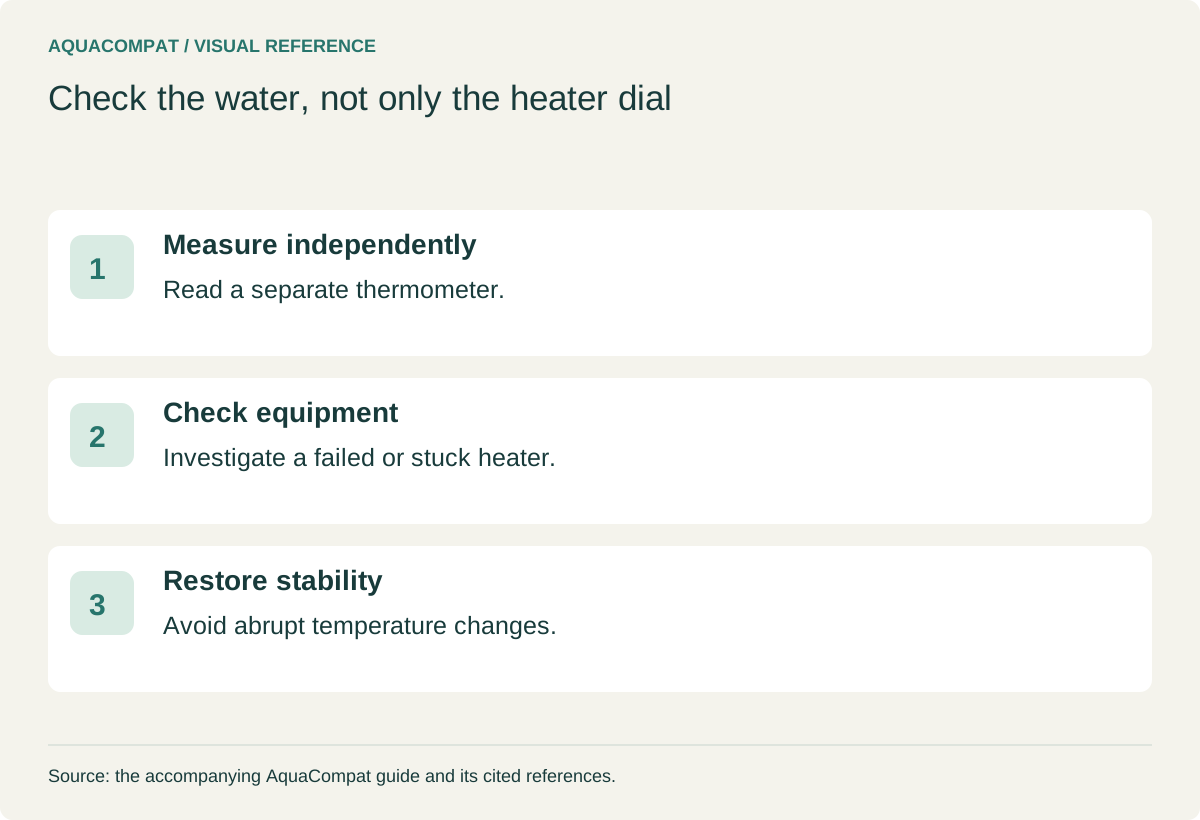
Check the water, not only the heater dial
SVG file · Appears in Best Aquarium Heaters by Tank Size
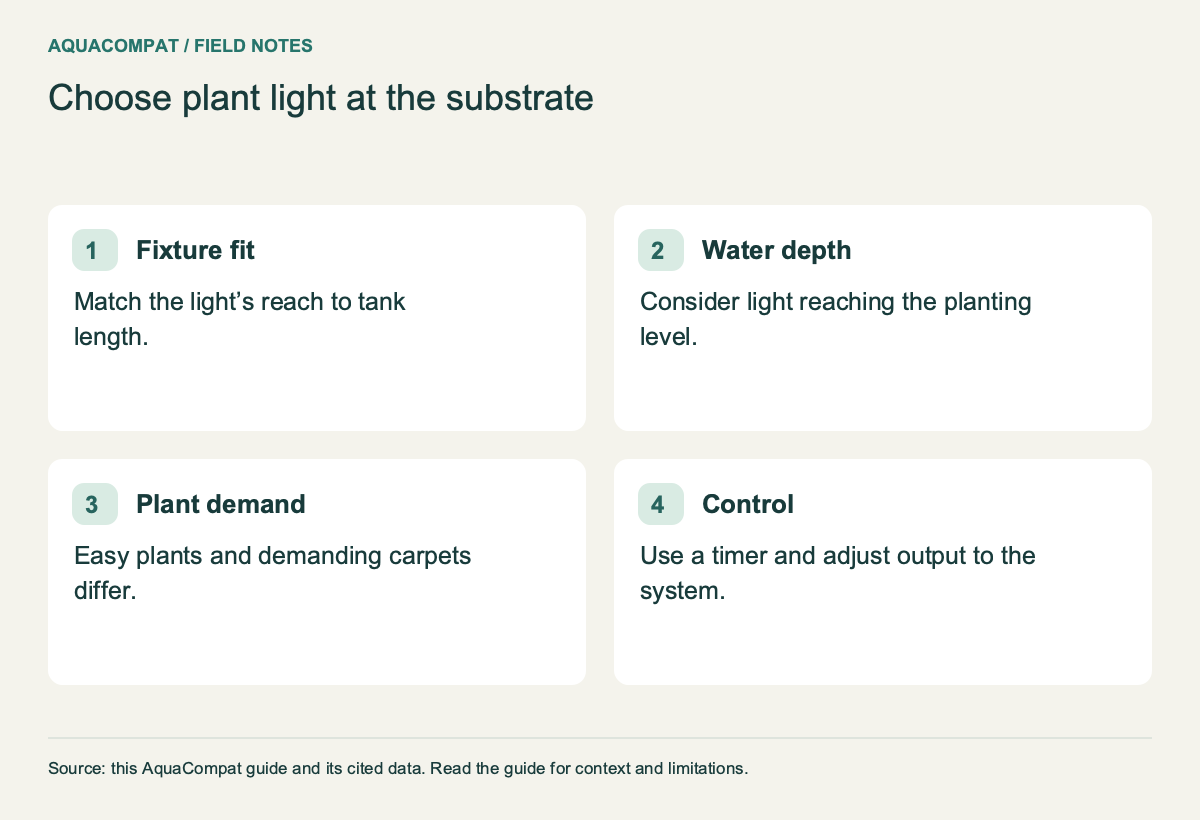
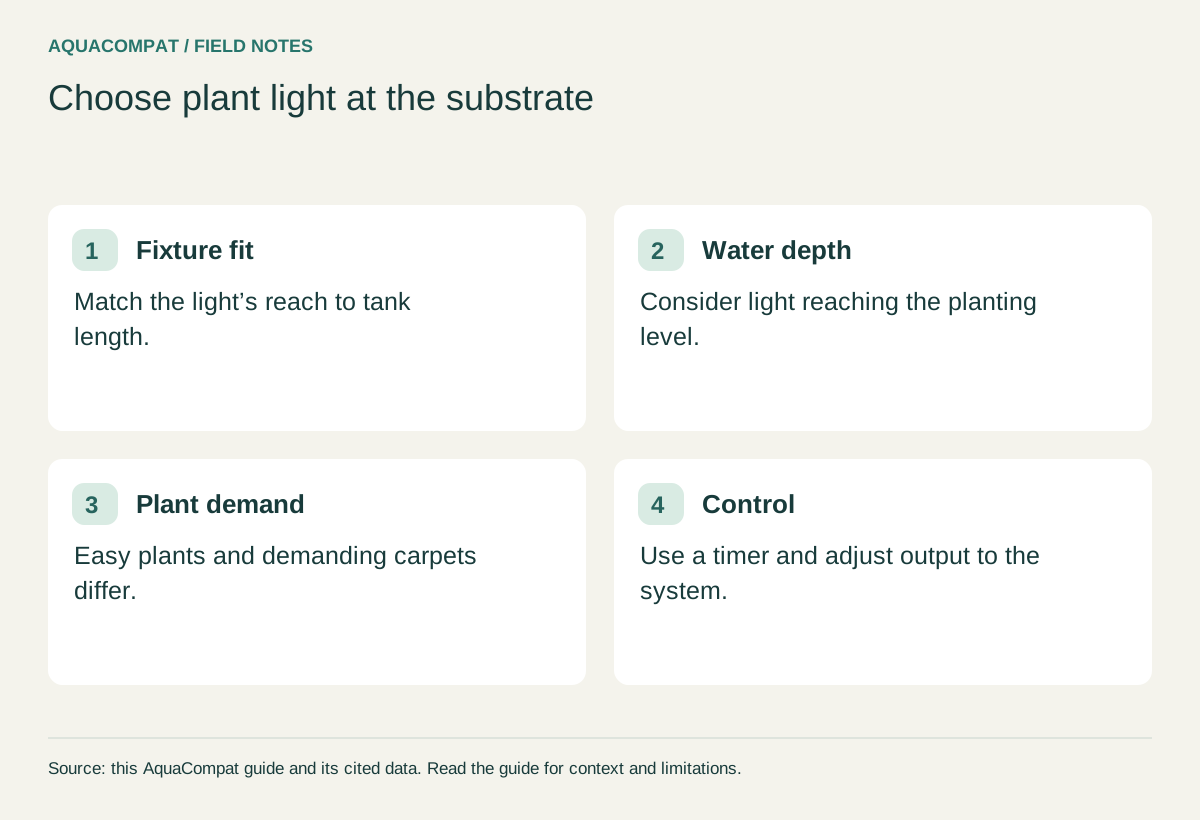
Choose plant light at the substrate
SVG file · Appears in Best Aquarium Lights for Plant Growth
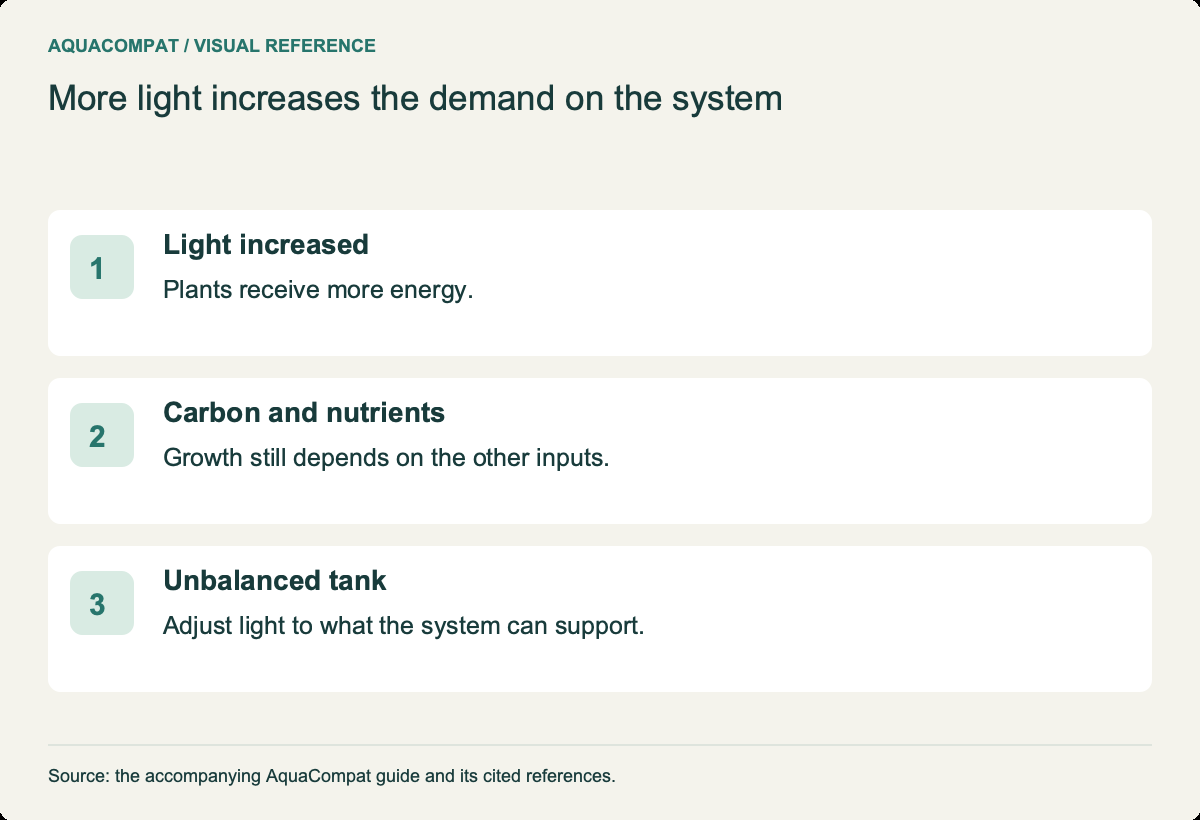
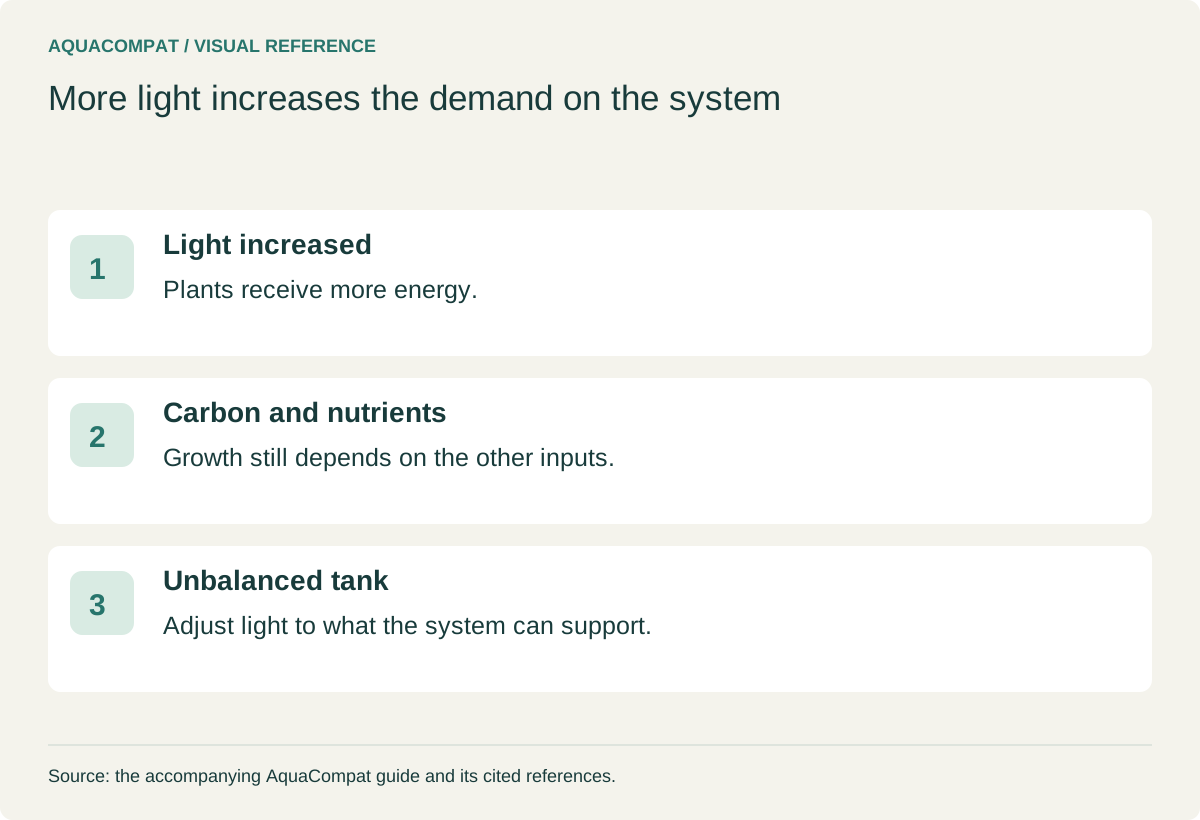
More light increases the demand on the system
SVG file · Appears in Best Aquarium Lights for Plant Growth
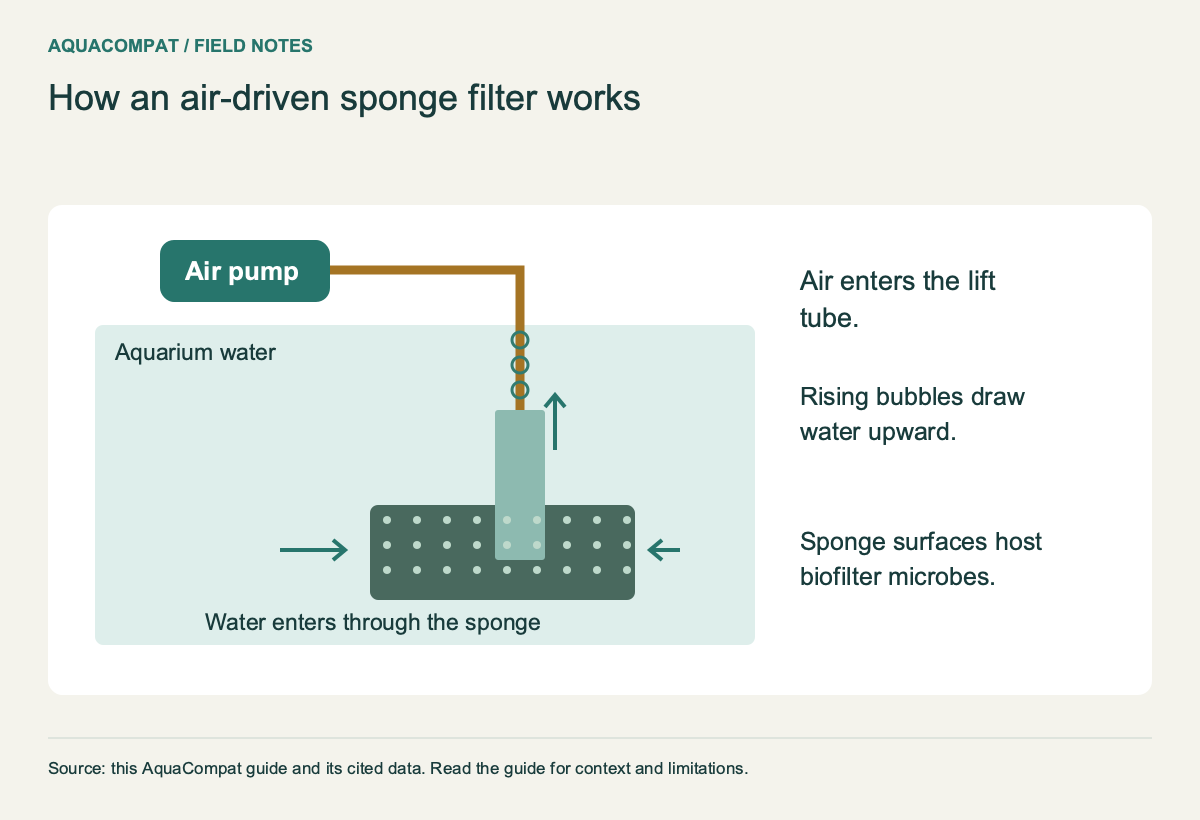
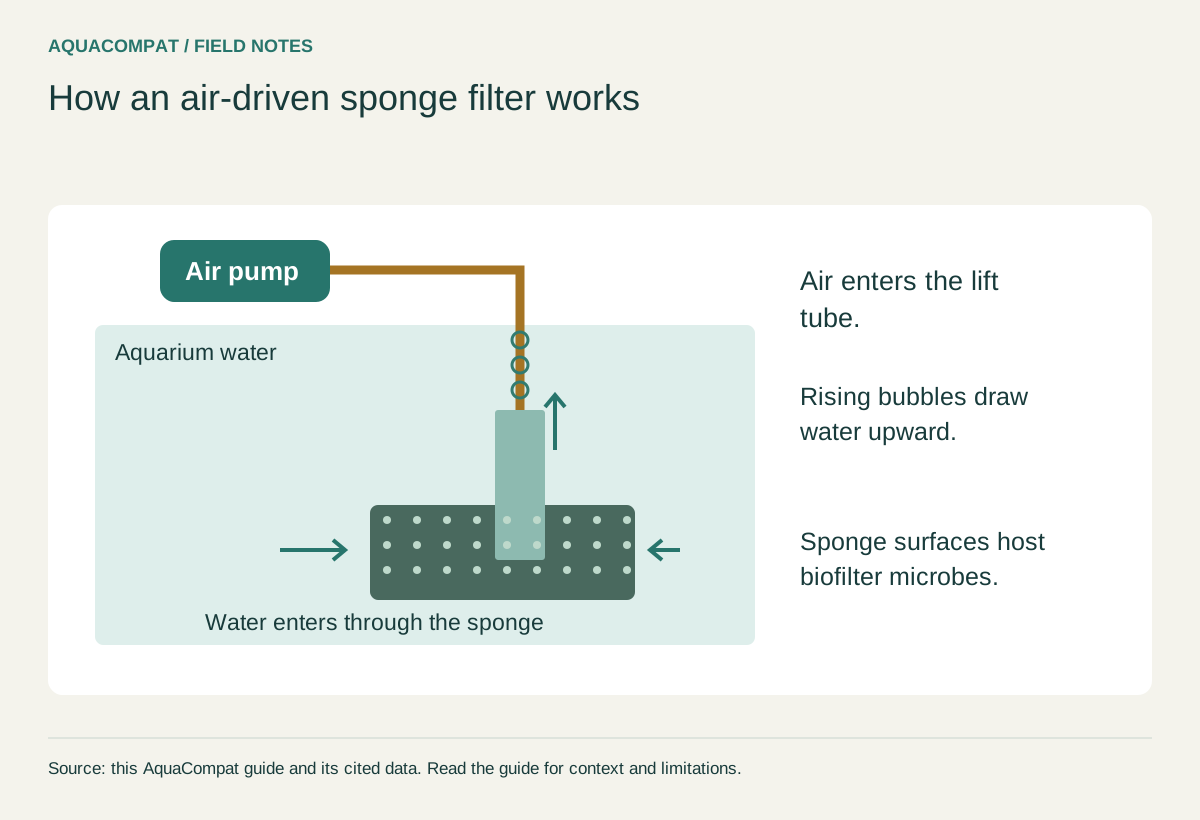
How an air-driven sponge filter works
SVG file · Appears in Best Sponge Filters for Shrimp, Fry and Betta Tanks
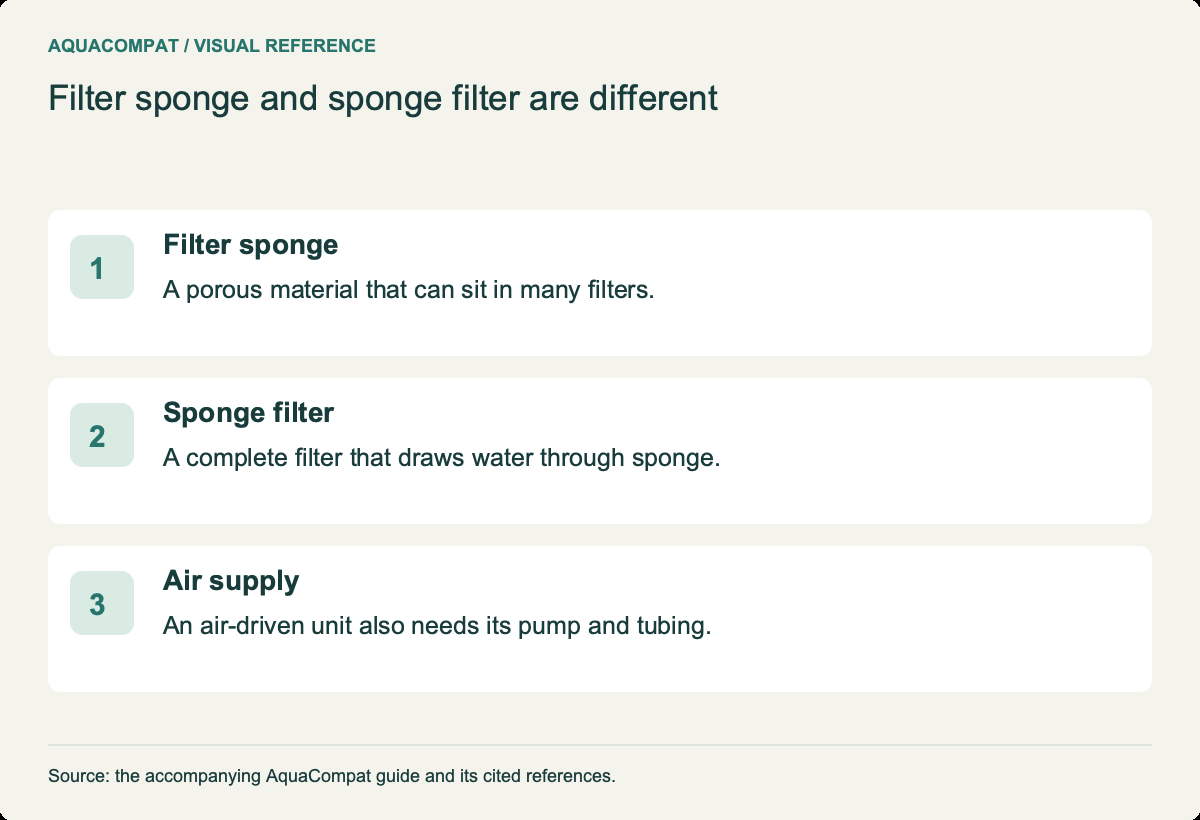
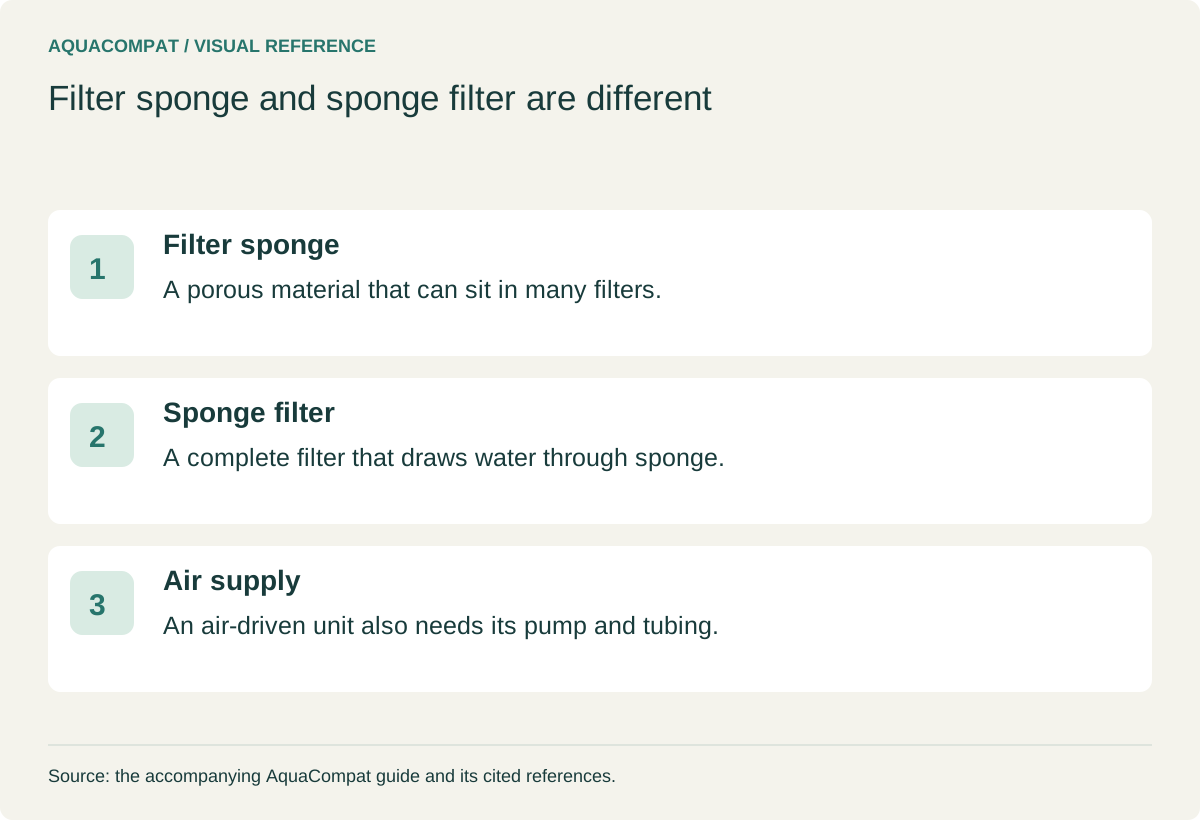
Filter sponge and sponge filter are different
SVG file · Appears in Best Sponge Filters for Shrimp, Fry and Betta Tanks
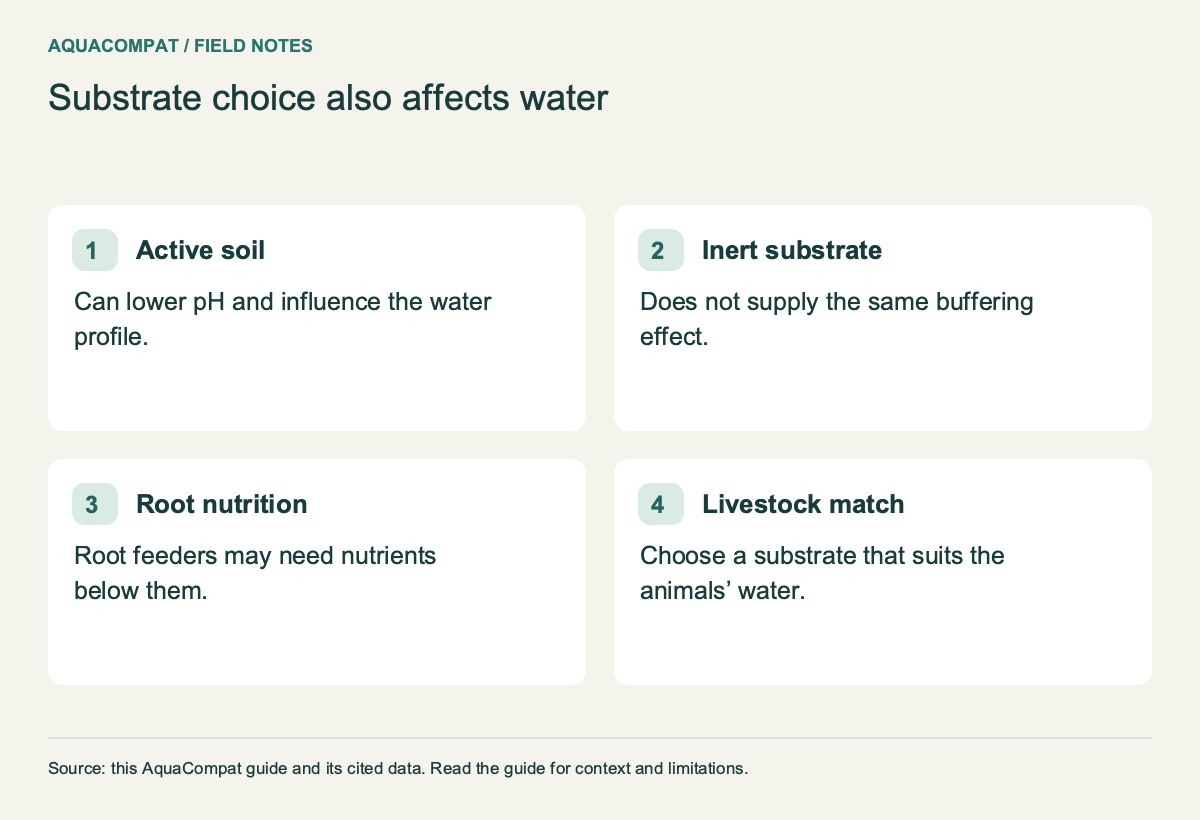
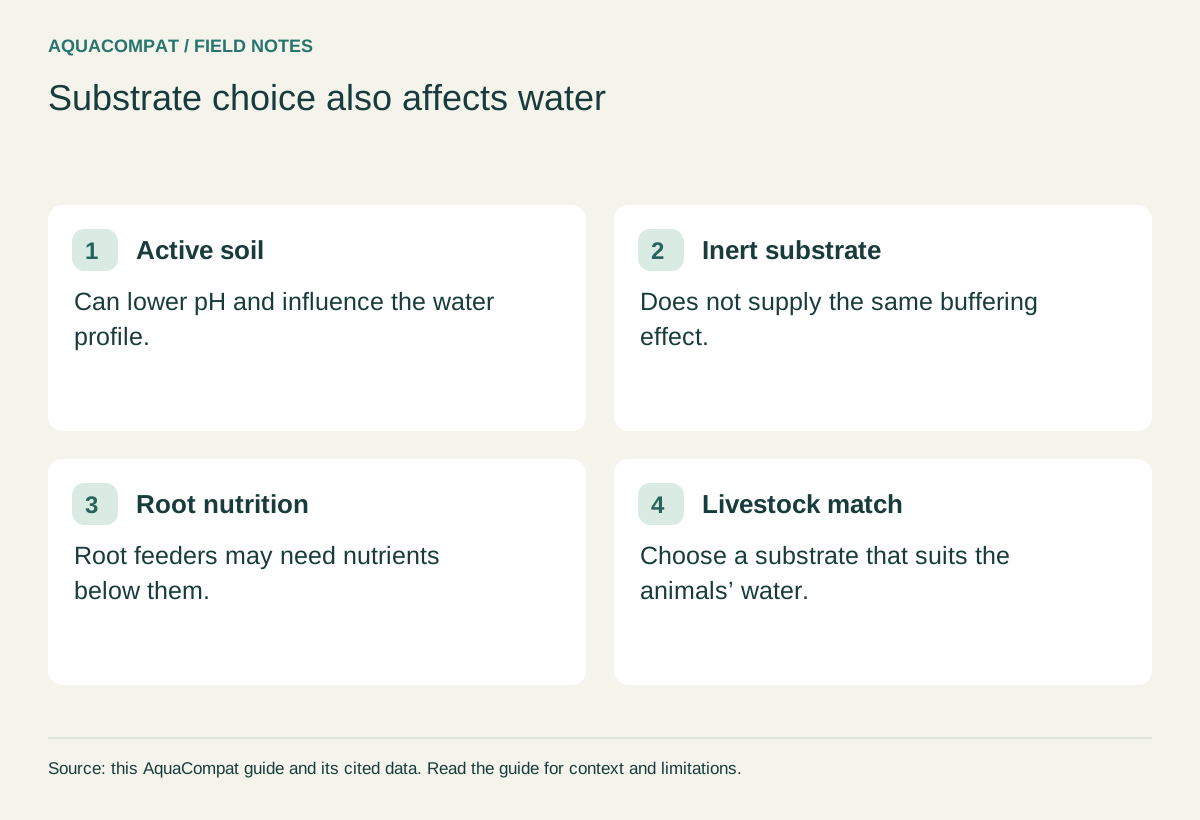
Substrate choice also affects water
SVG file · Appears in Best Substrate for Planted Tanks: Stratum vs Amazonia vs Tropica Soil
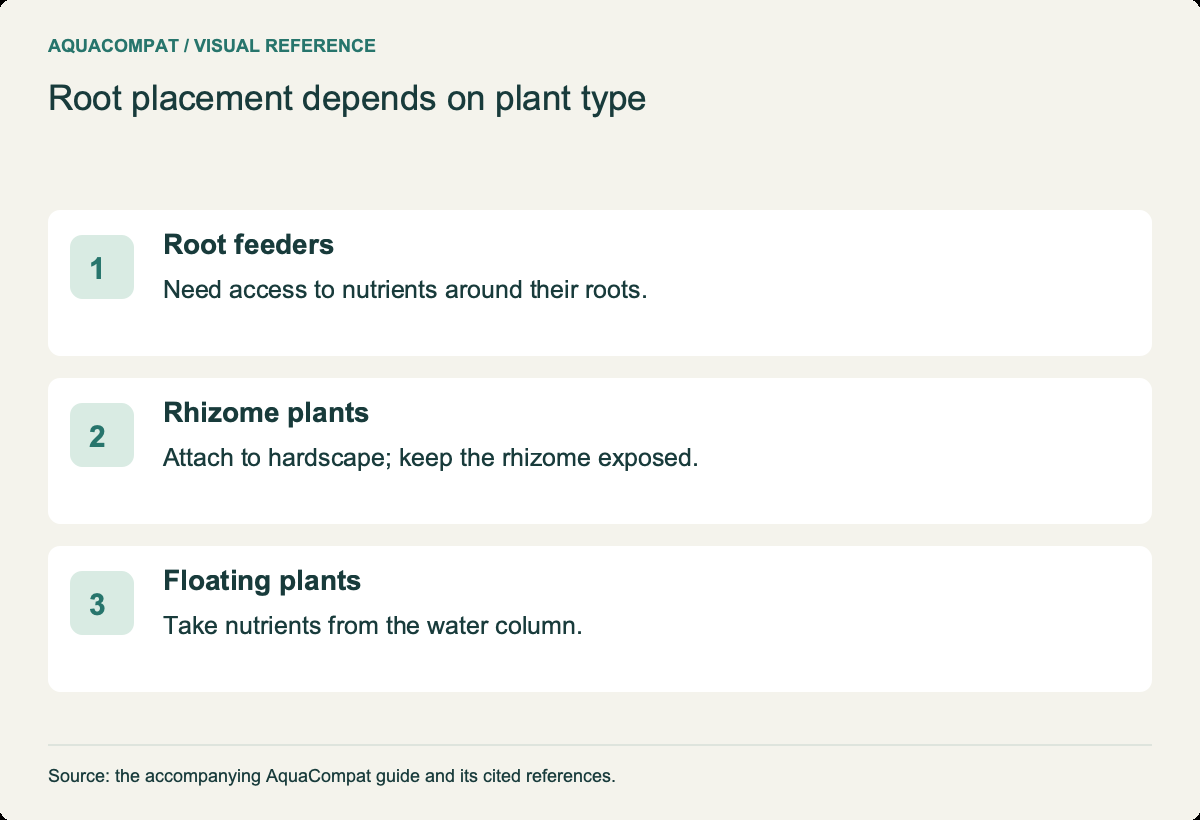
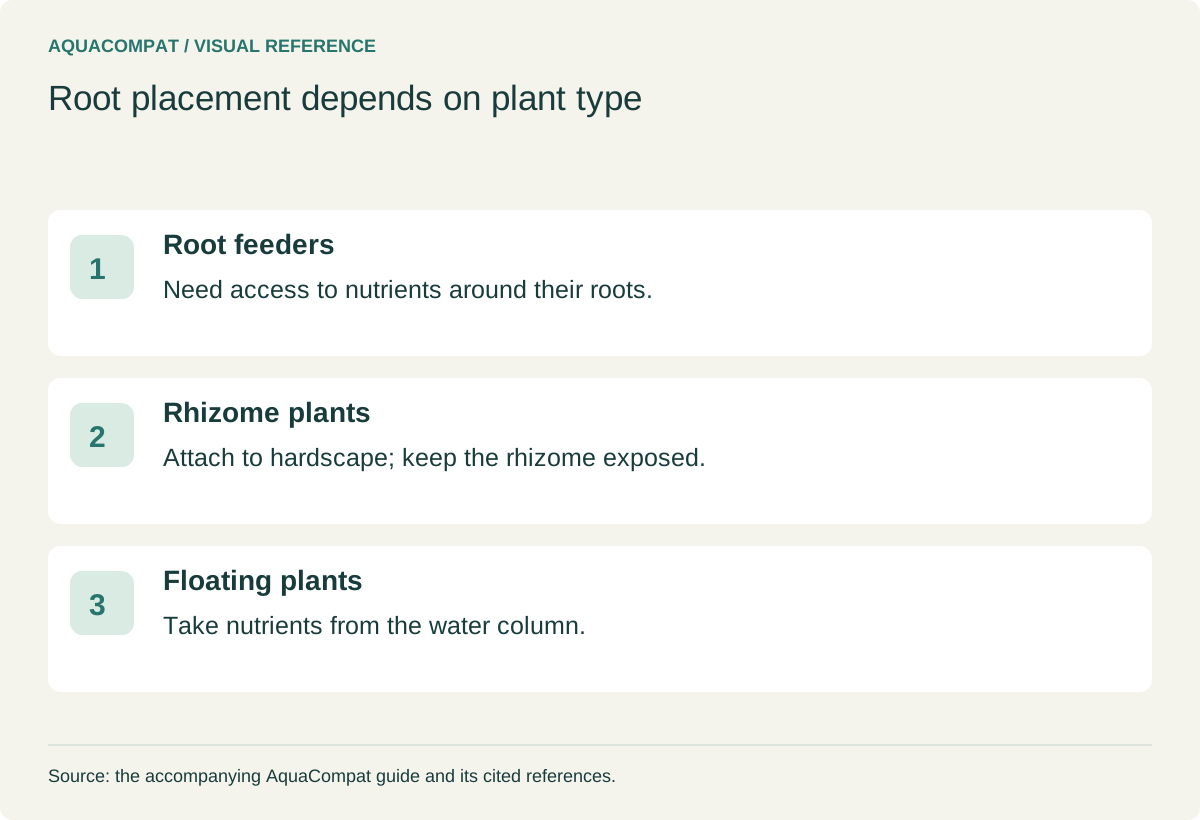
Root placement depends on plant type
SVG file · Appears in Best Substrate for Planted Tanks: Stratum vs Amazonia vs Tropica Soil
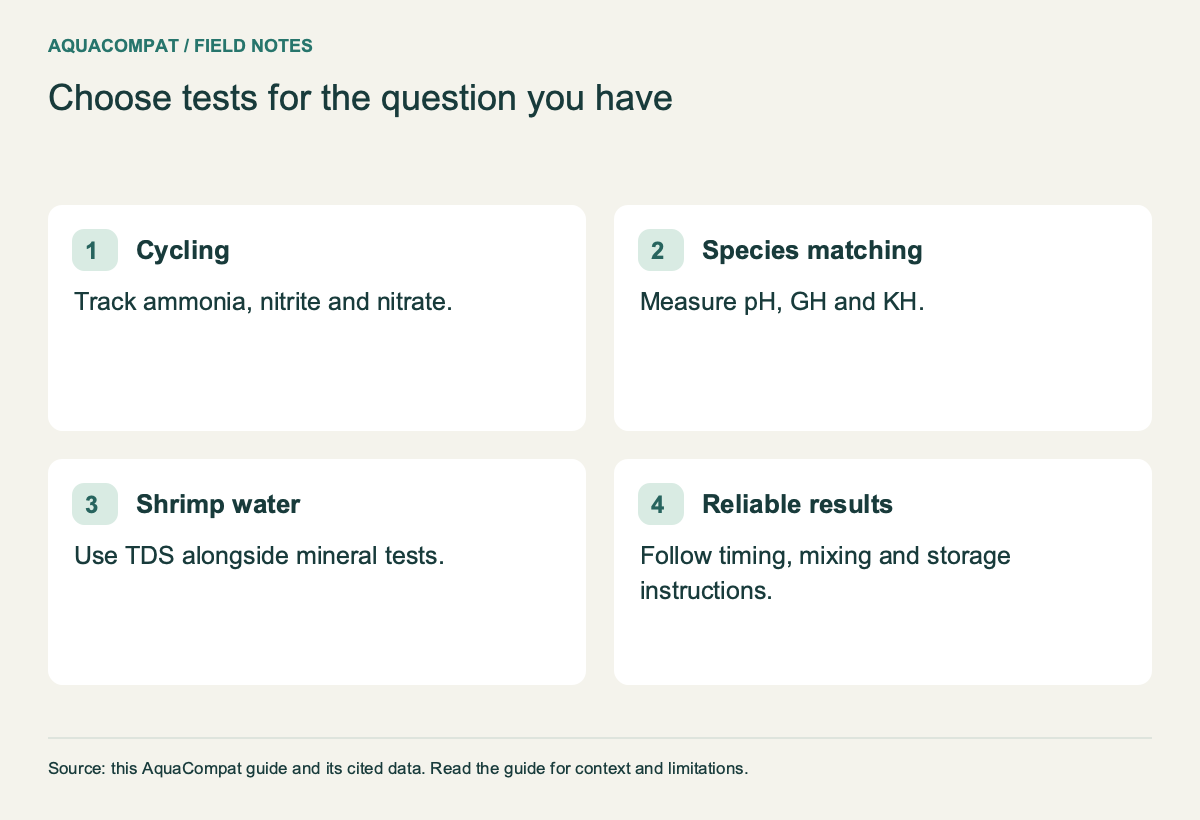
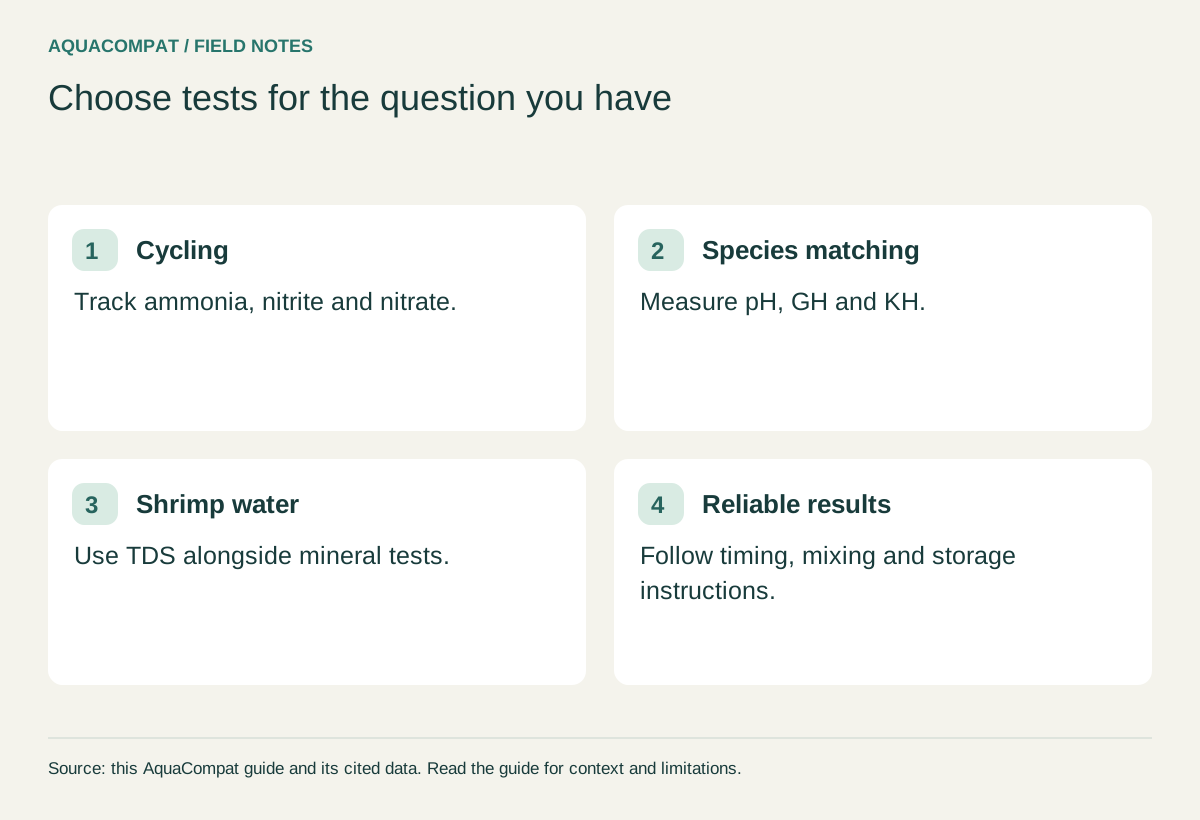
Choose tests for the question you have
SVG file · Appears in Best Aquarium Test Kits Compared
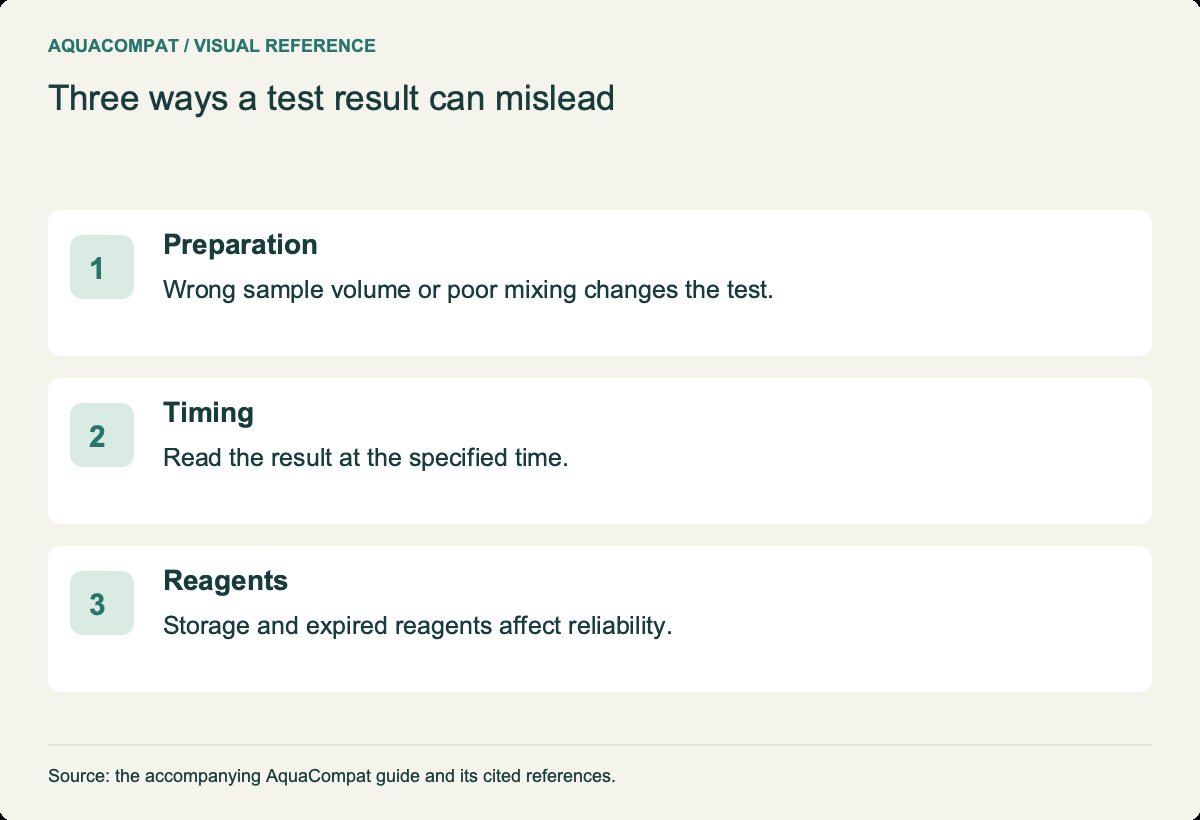
Three ways a test result can mislead
SVG file · Appears in Best Aquarium Test Kits Compared
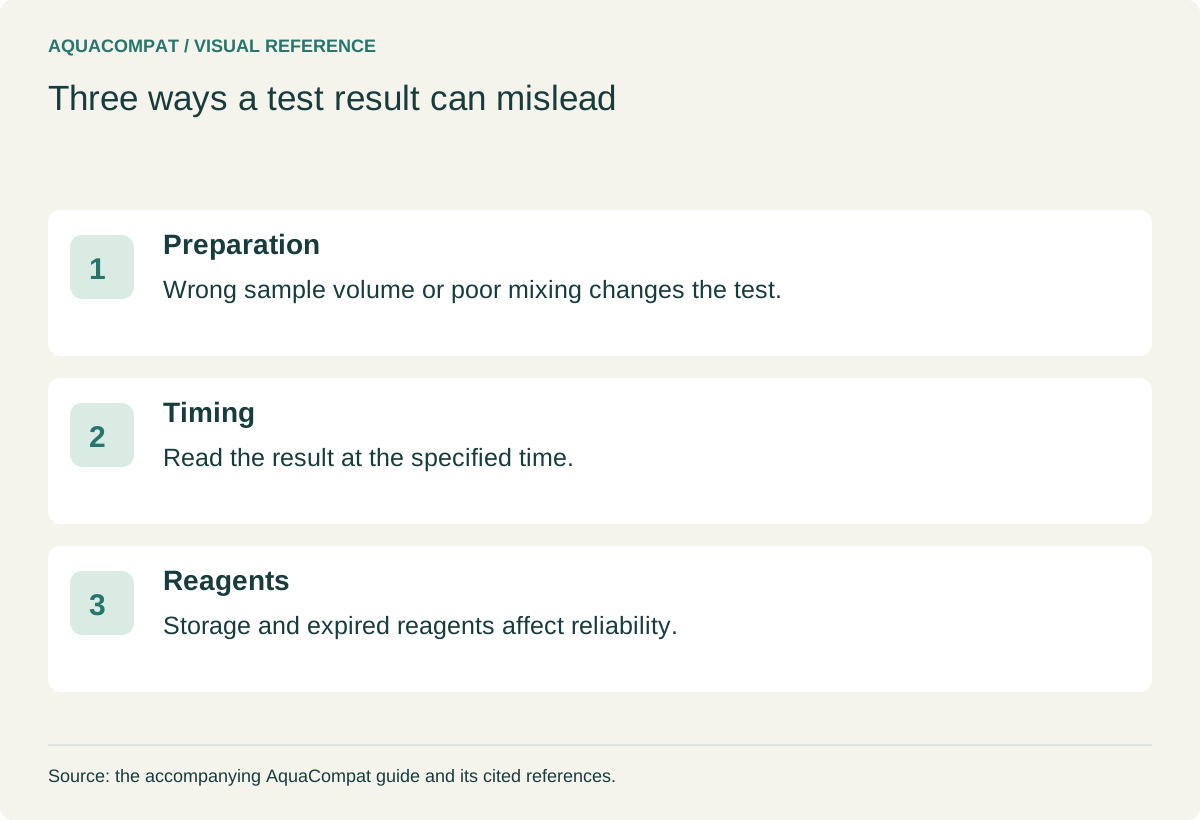
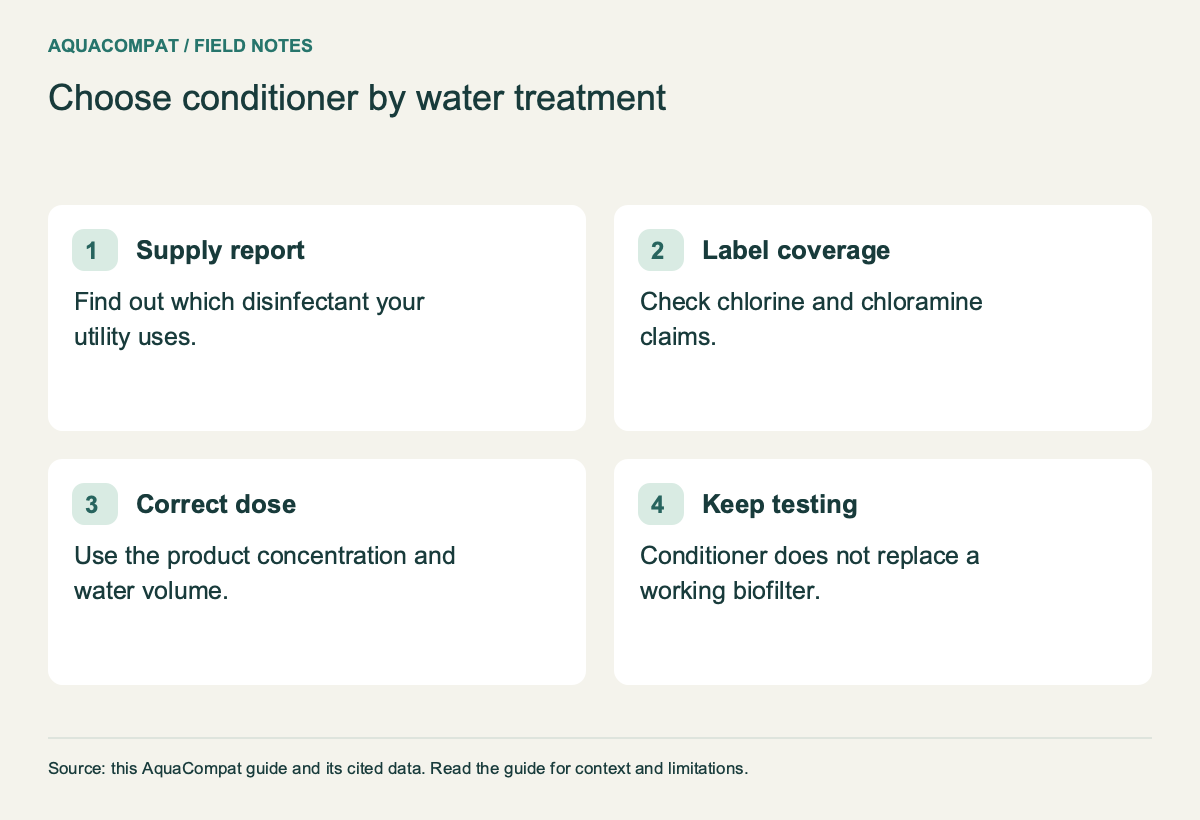
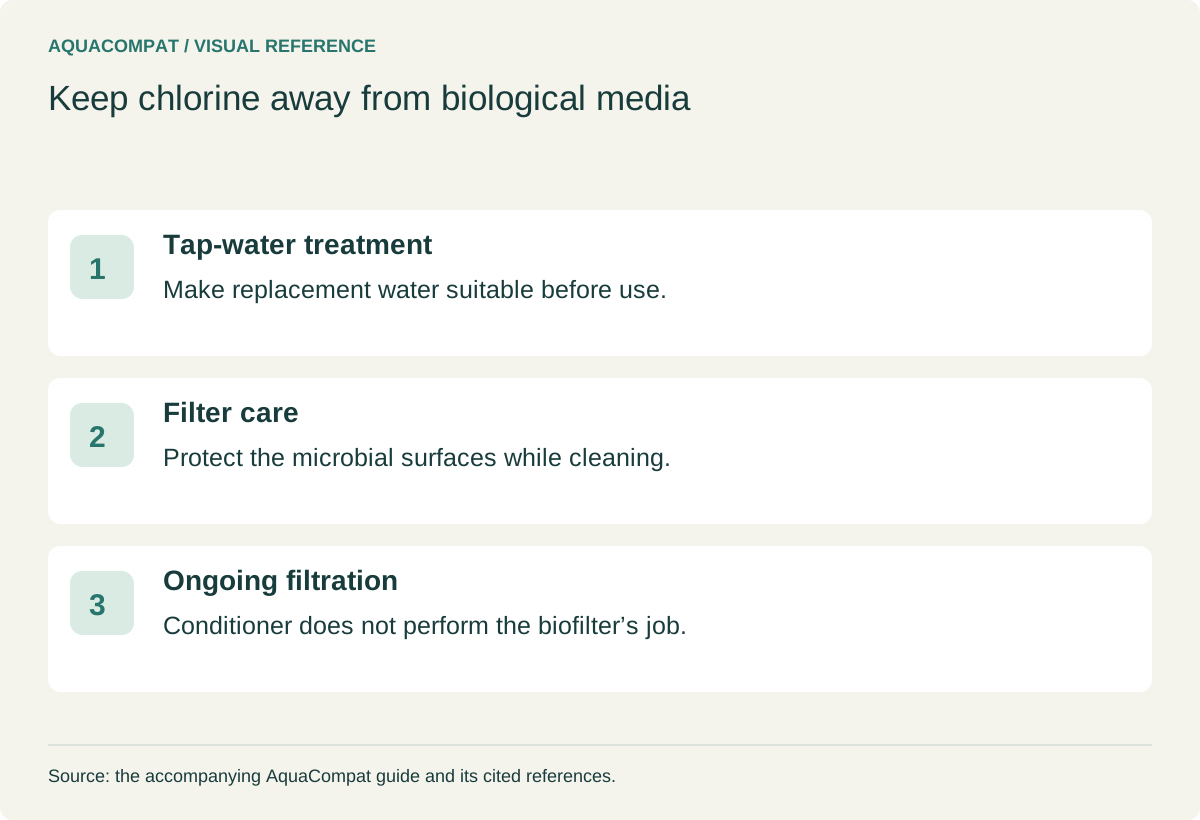
Choose conditioner by water treatment
SVG file · Appears in Best Aquarium Water Conditioners and Dechlorinators
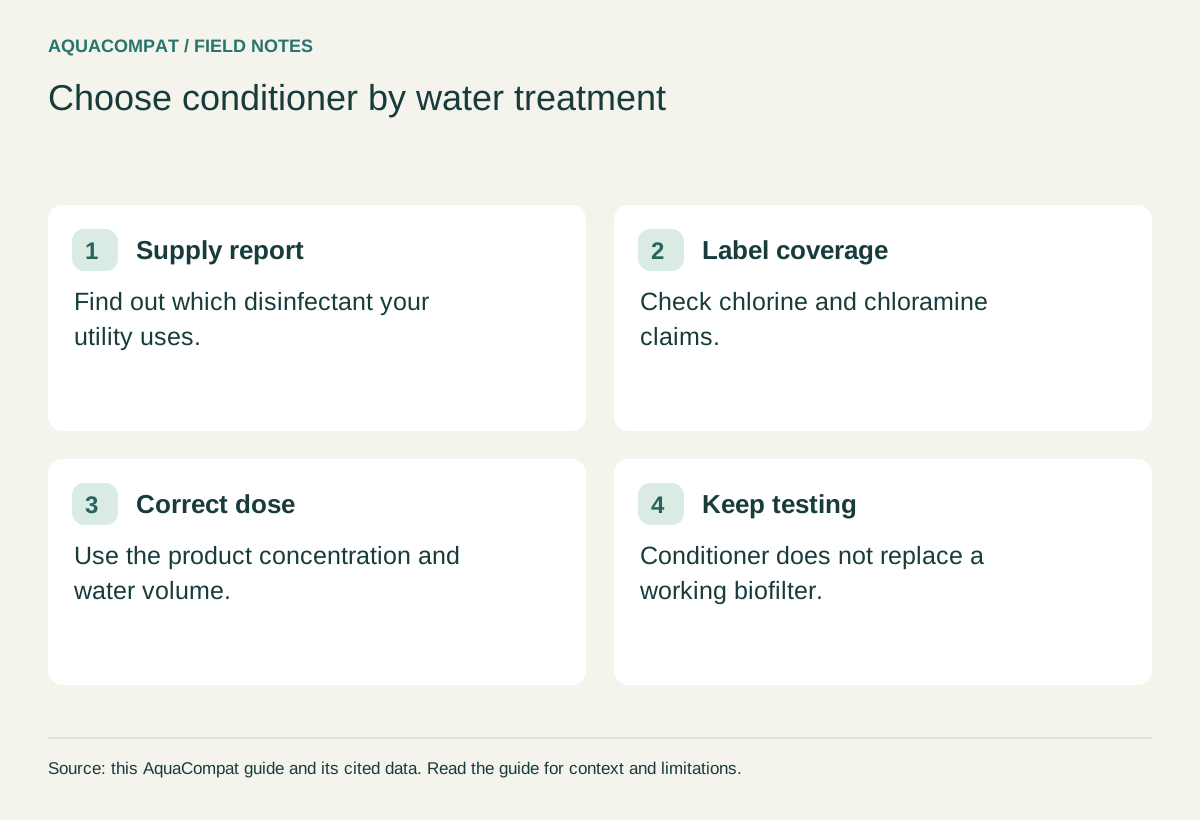
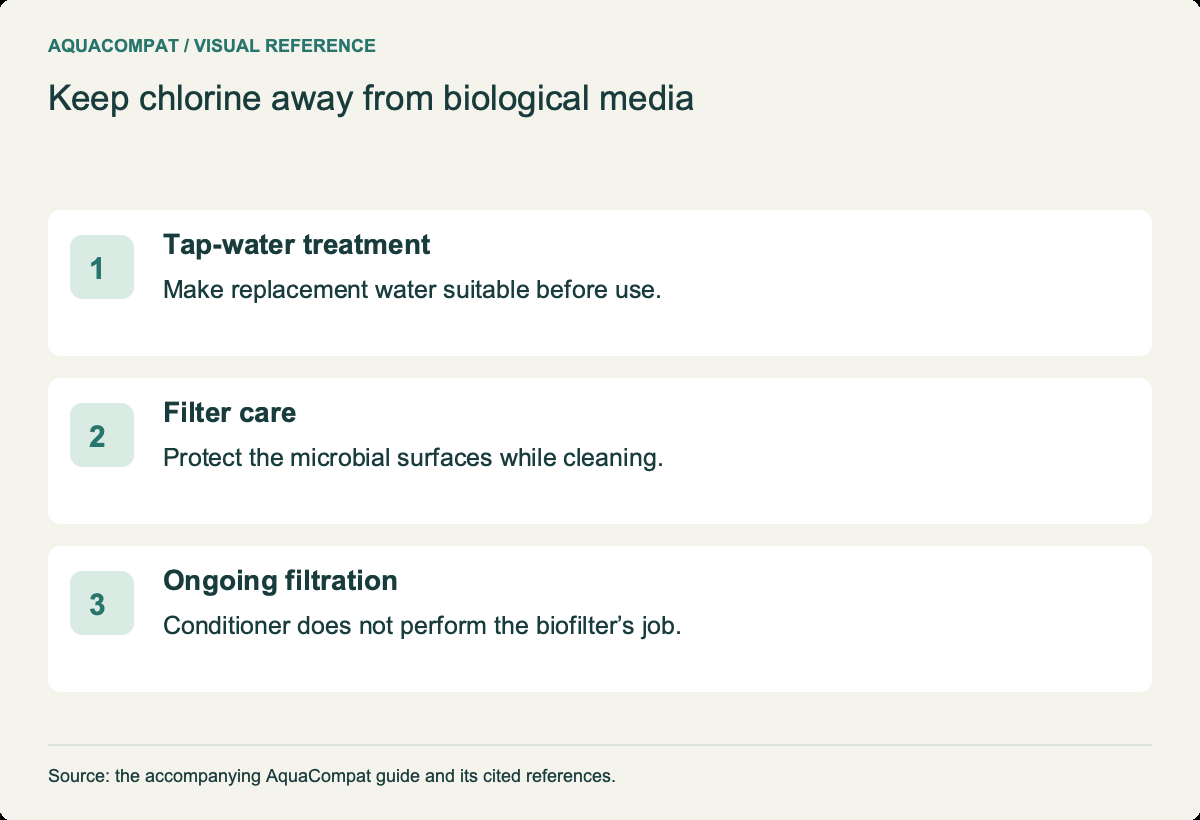
Keep chlorine away from biological media
SVG file · Appears in Best Aquarium Water Conditioners and Dechlorinators
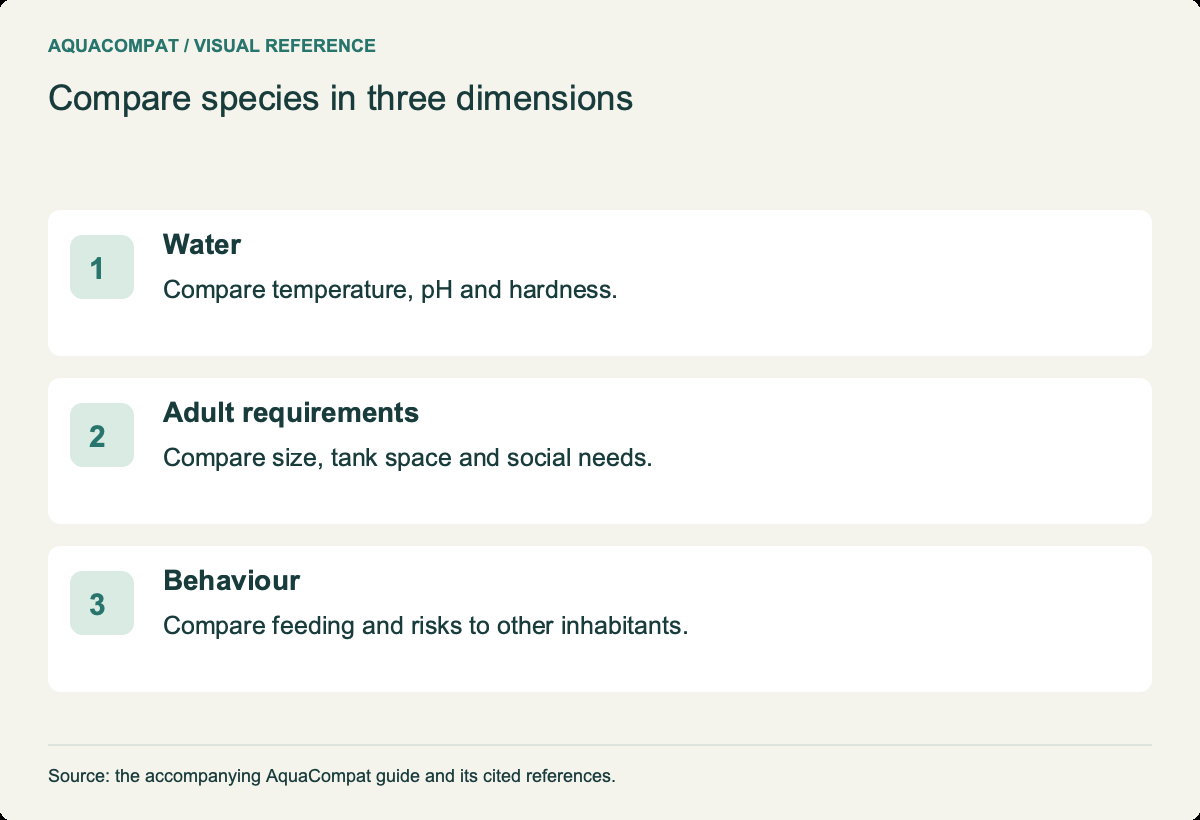
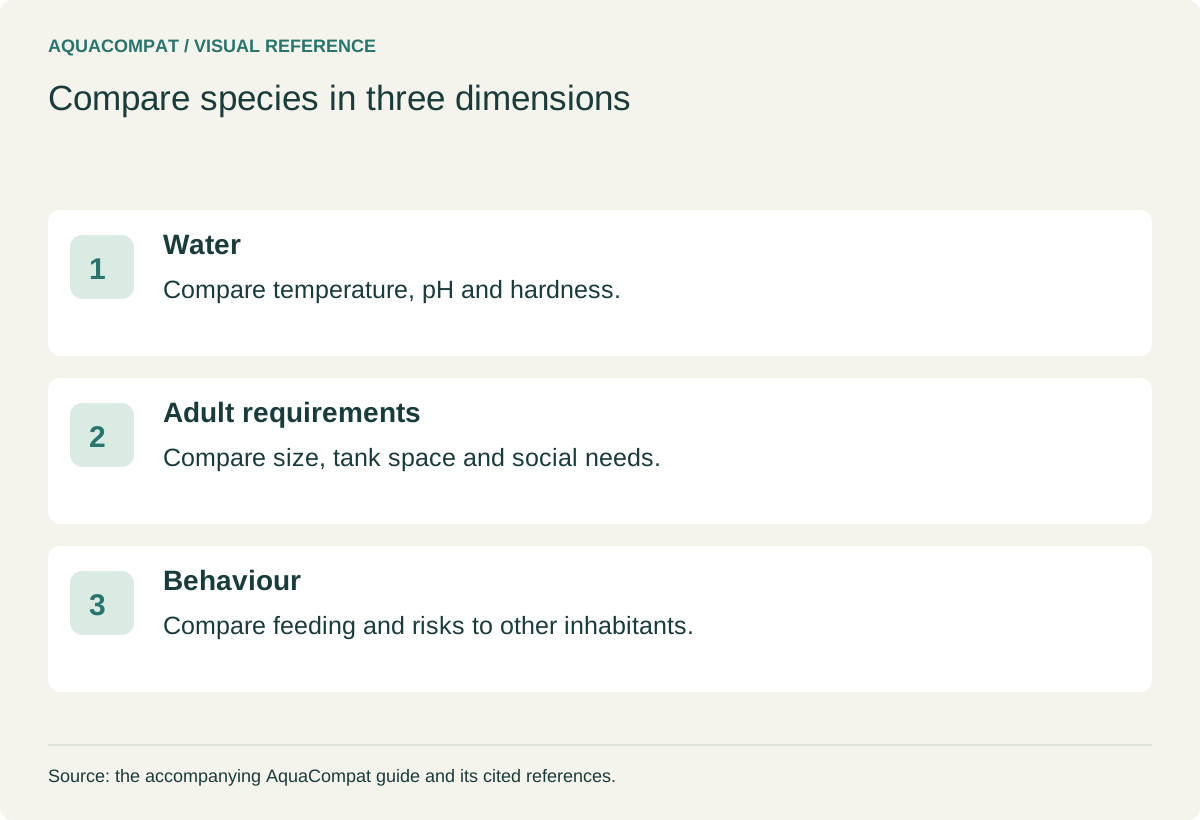
Compare species in three dimensions
SVG file · Appears in Aquarium Species Comparisons: Similar Fish and Shrimp Side by Side
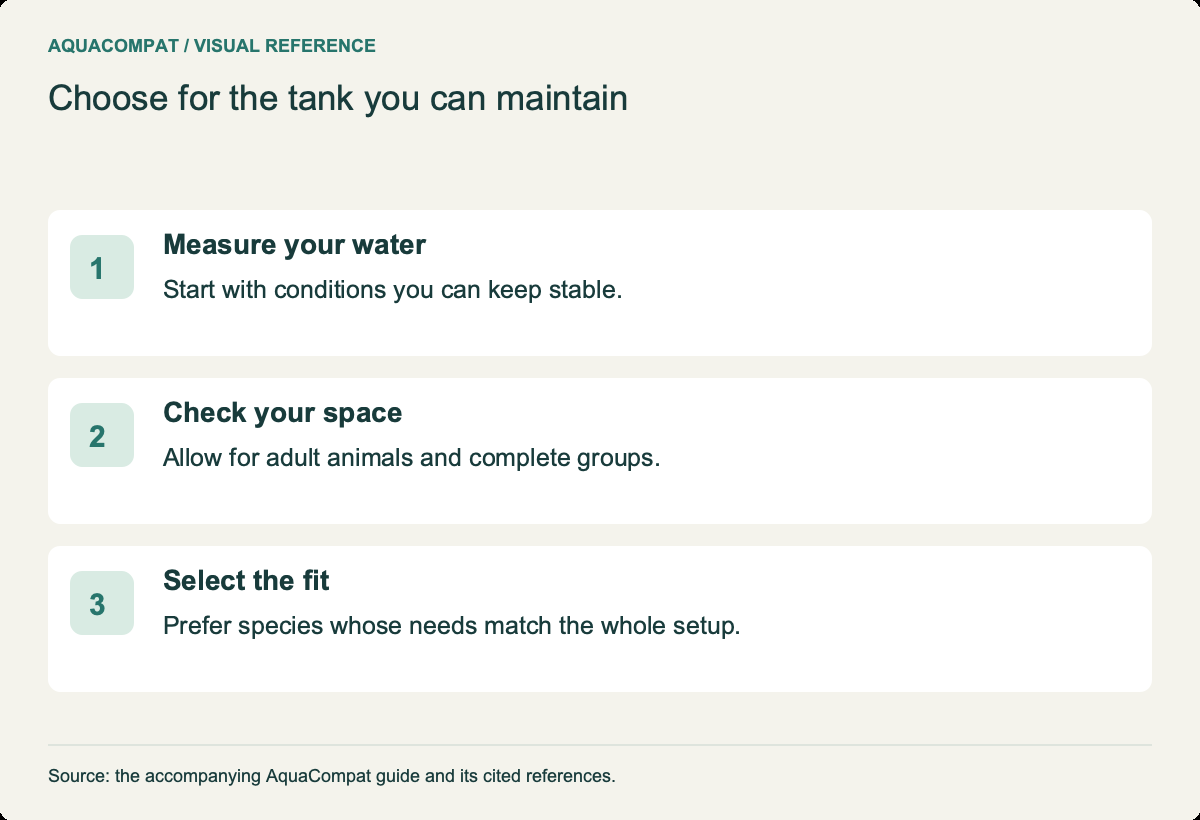
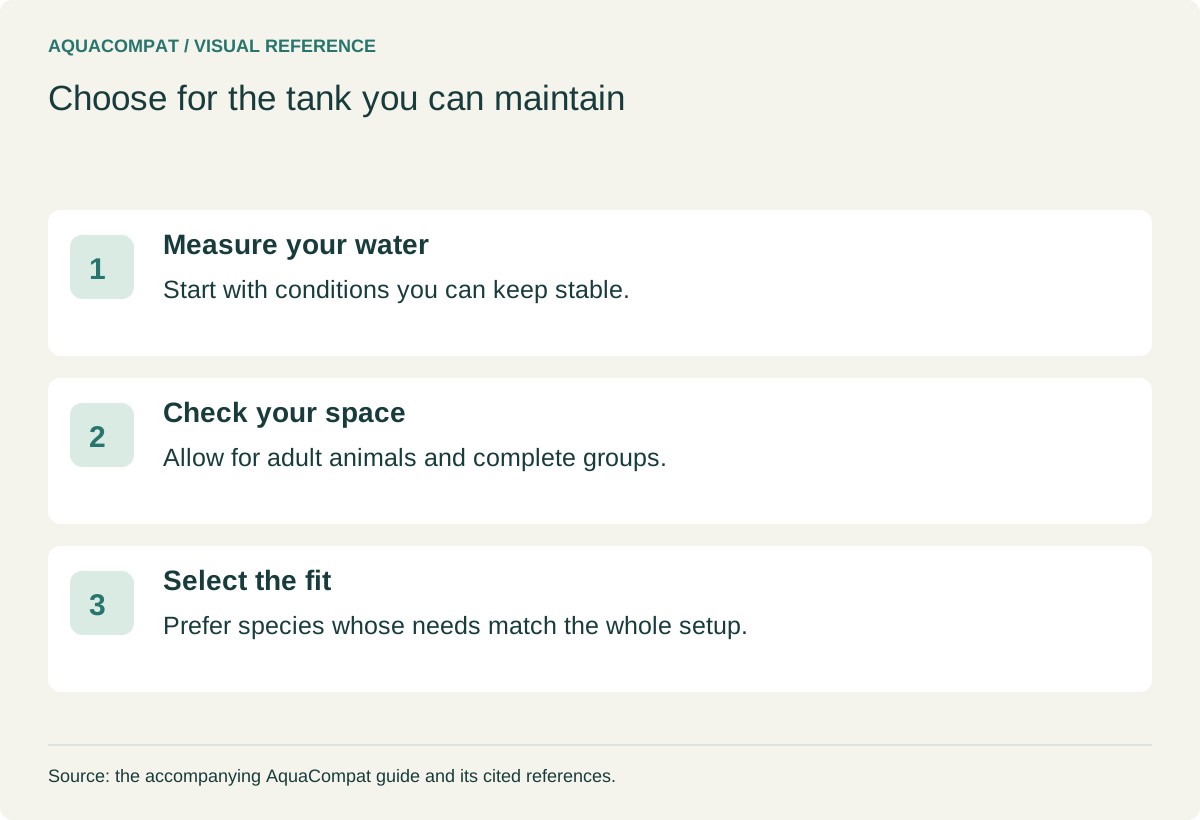
Choose for the tank you can maintain
SVG file · Appears in Aquarium Species Comparisons: Similar Fish and Shrimp Side by Side
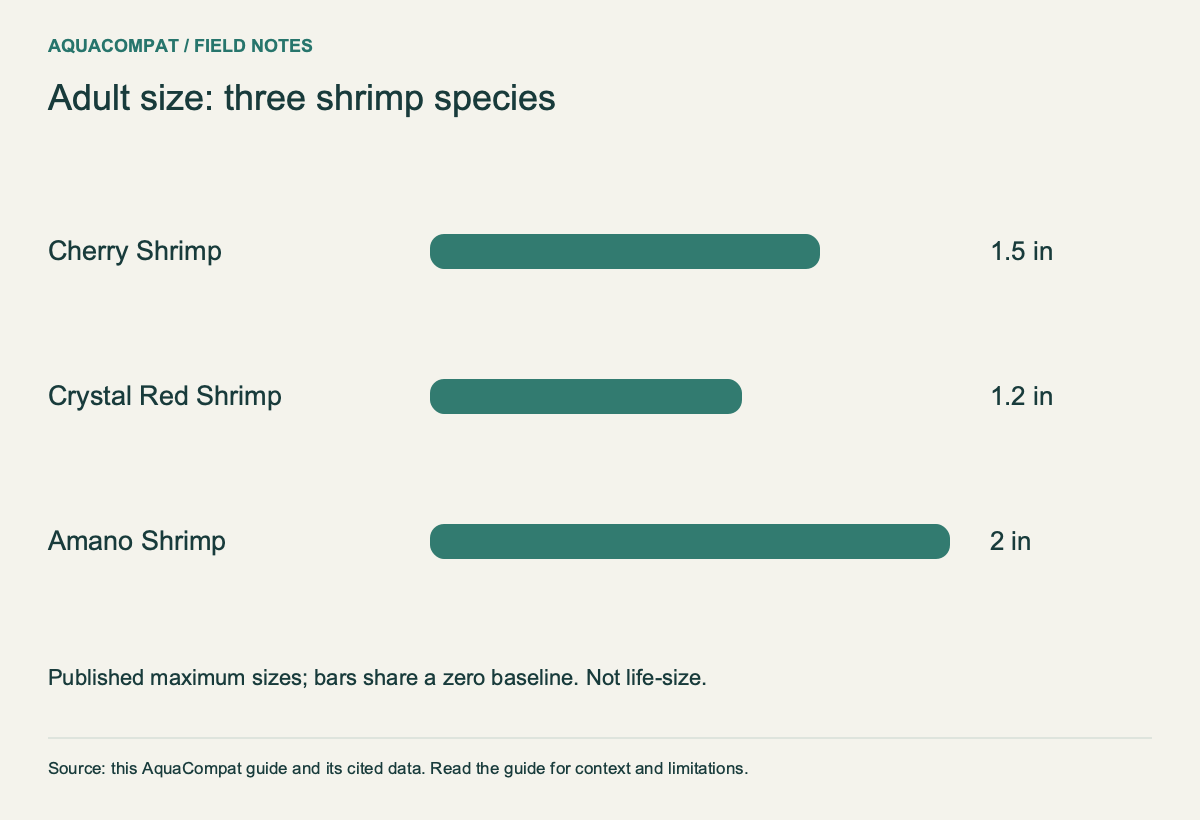
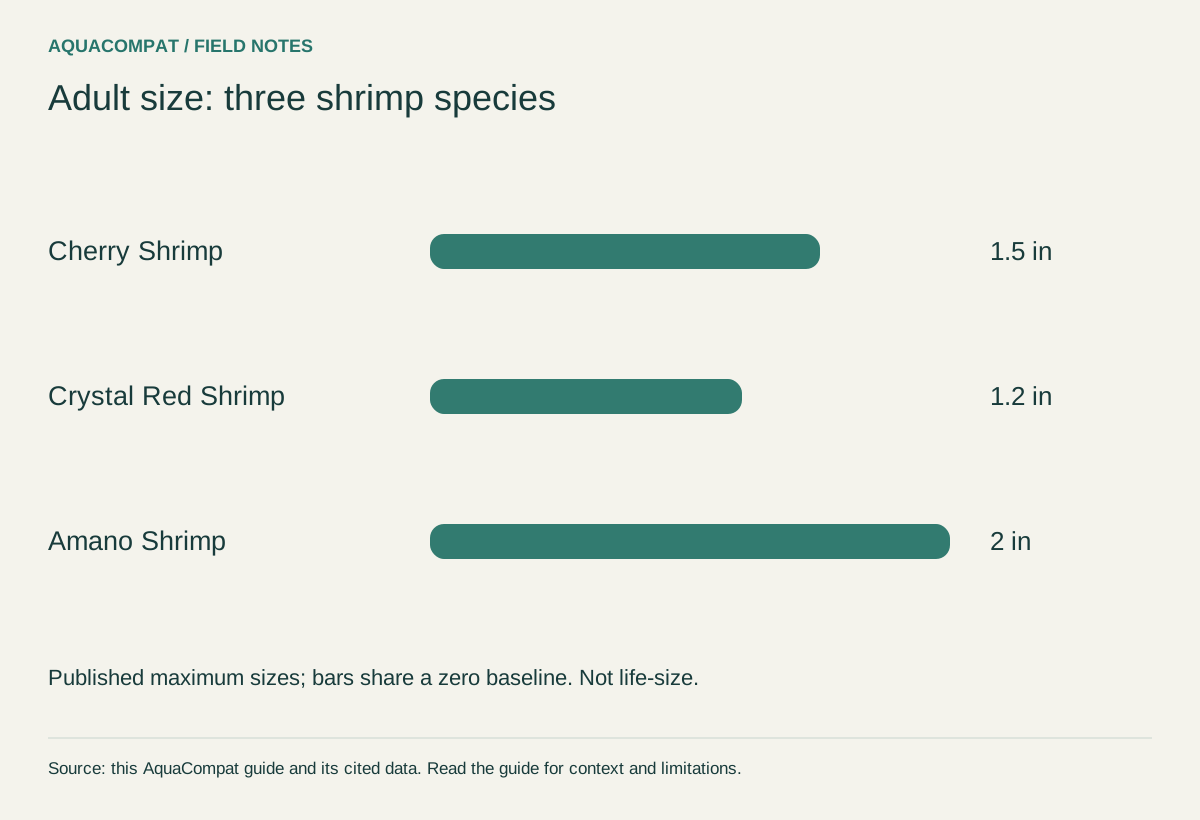
Adult size: three shrimp species
SVG file · Appears in Caridina vs Neocaridina Shrimp
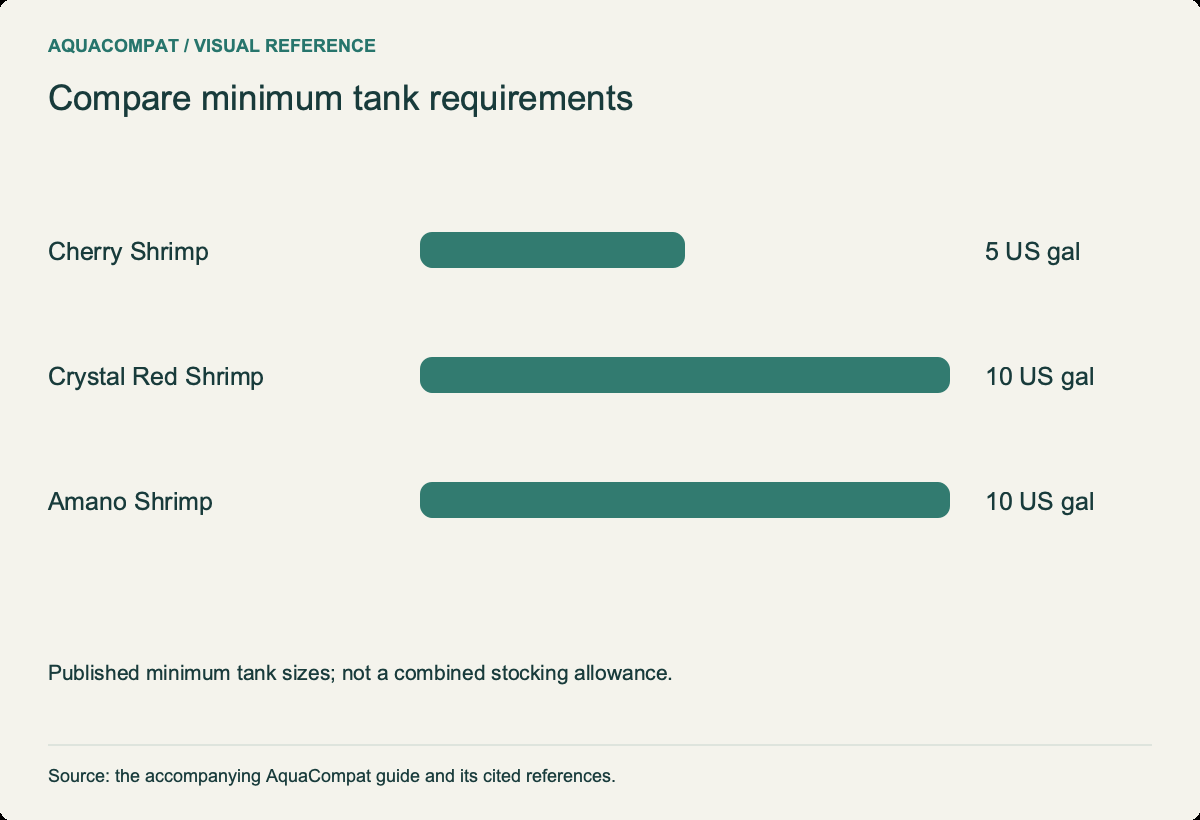
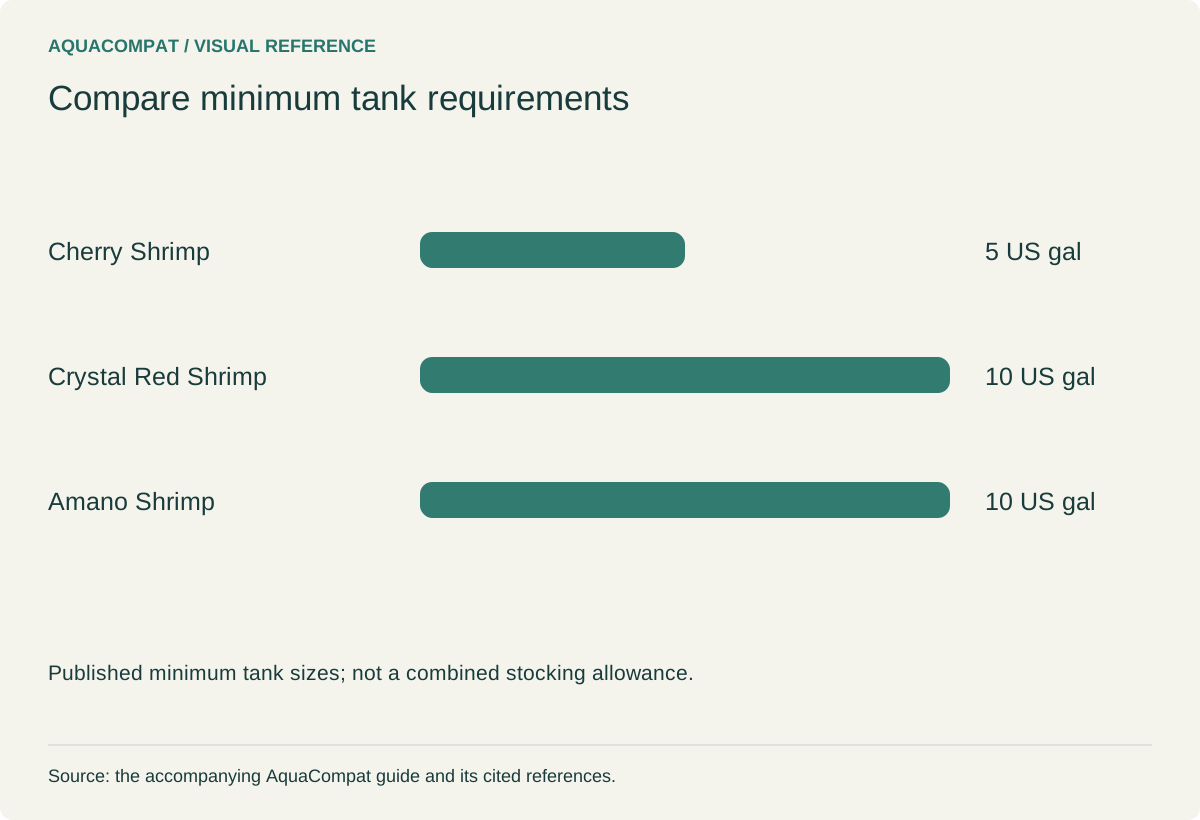
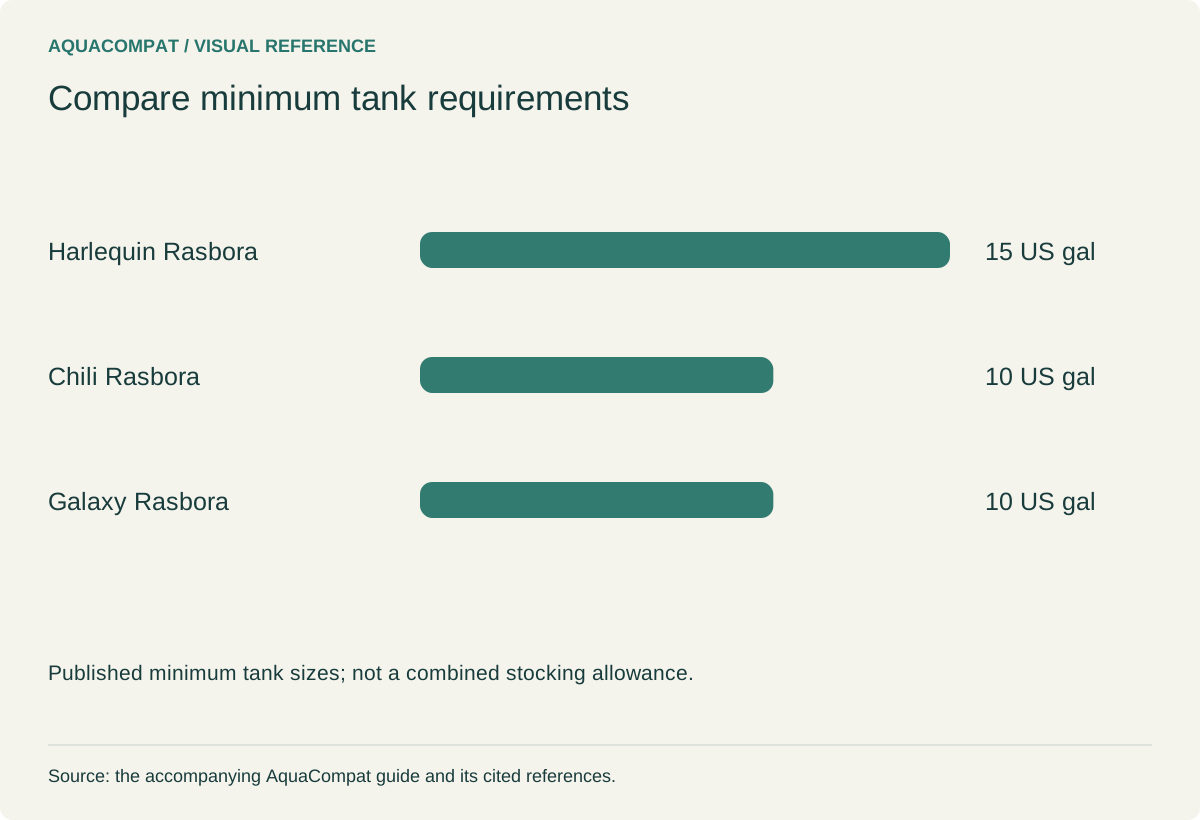
Compare minimum tank requirements
SVG file · Appears in Caridina vs Neocaridina Shrimp
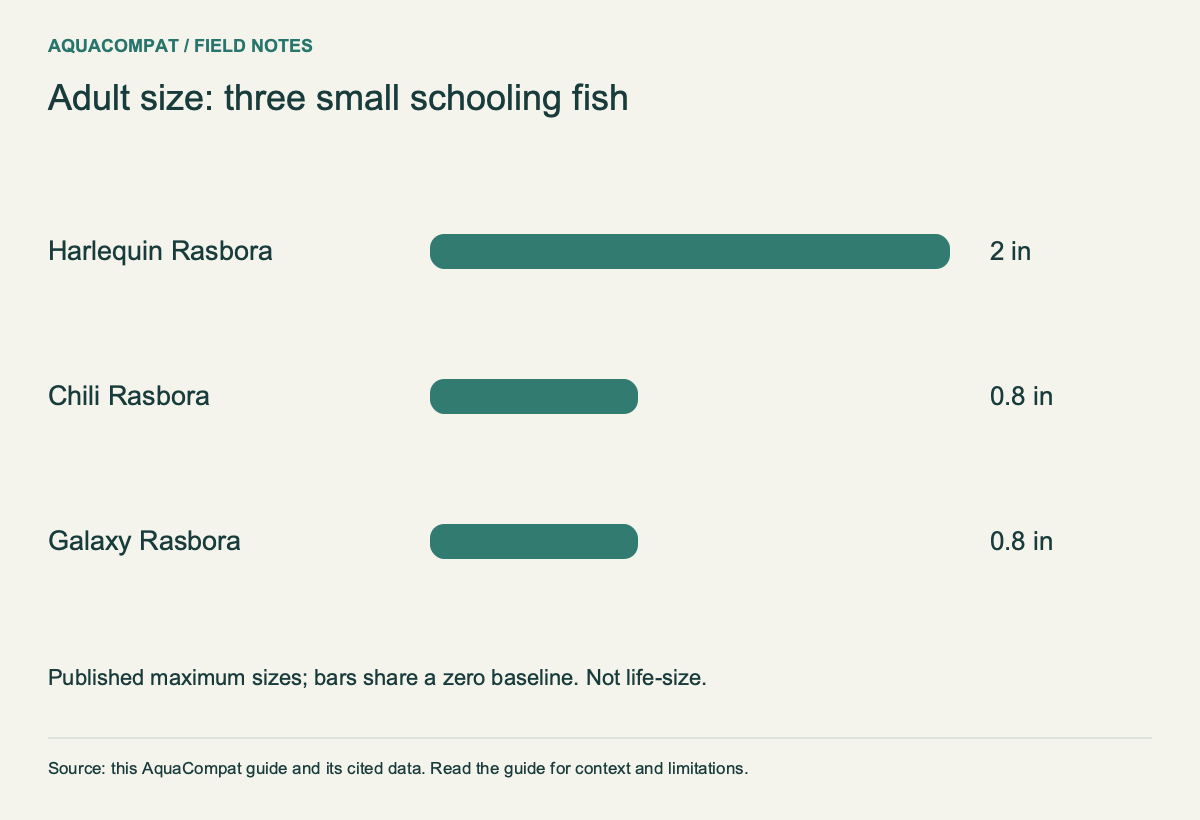
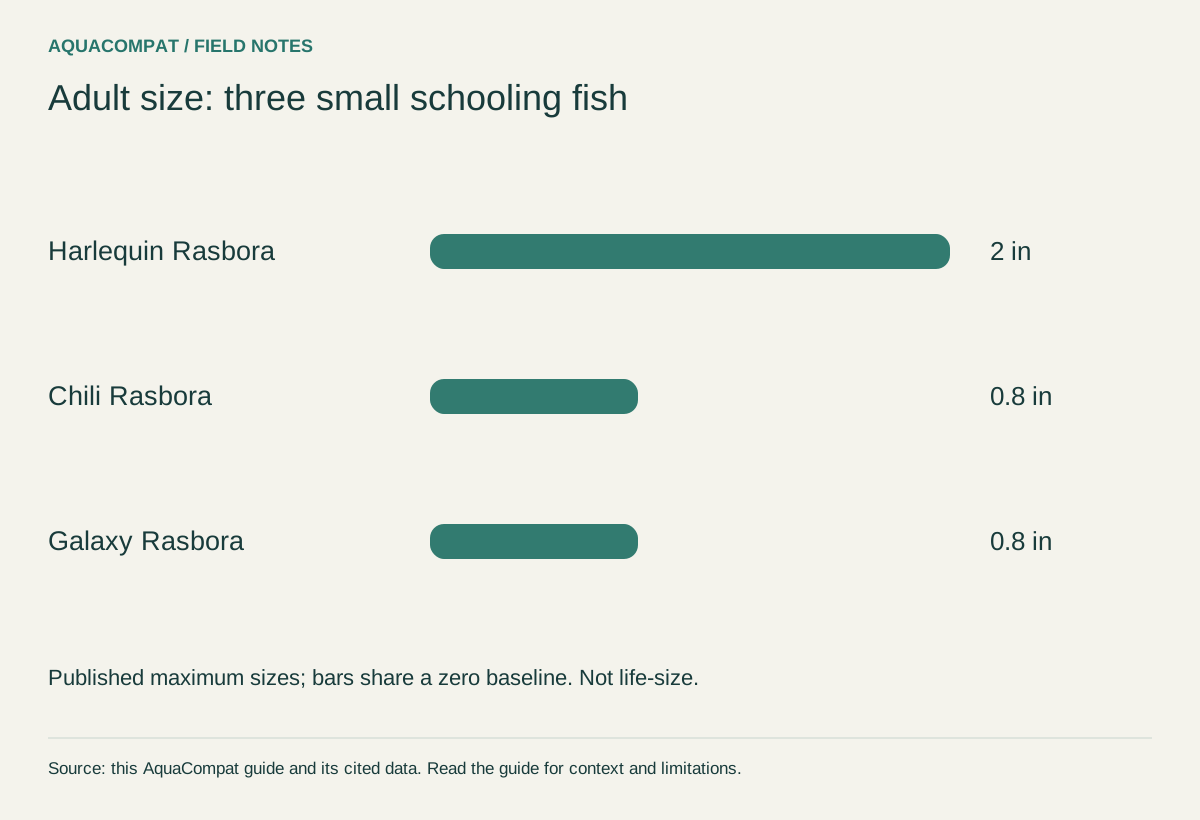
Adult size: three small schooling fish
SVG file · Appears in Harlequin vs Chili vs Galaxy Rasbora
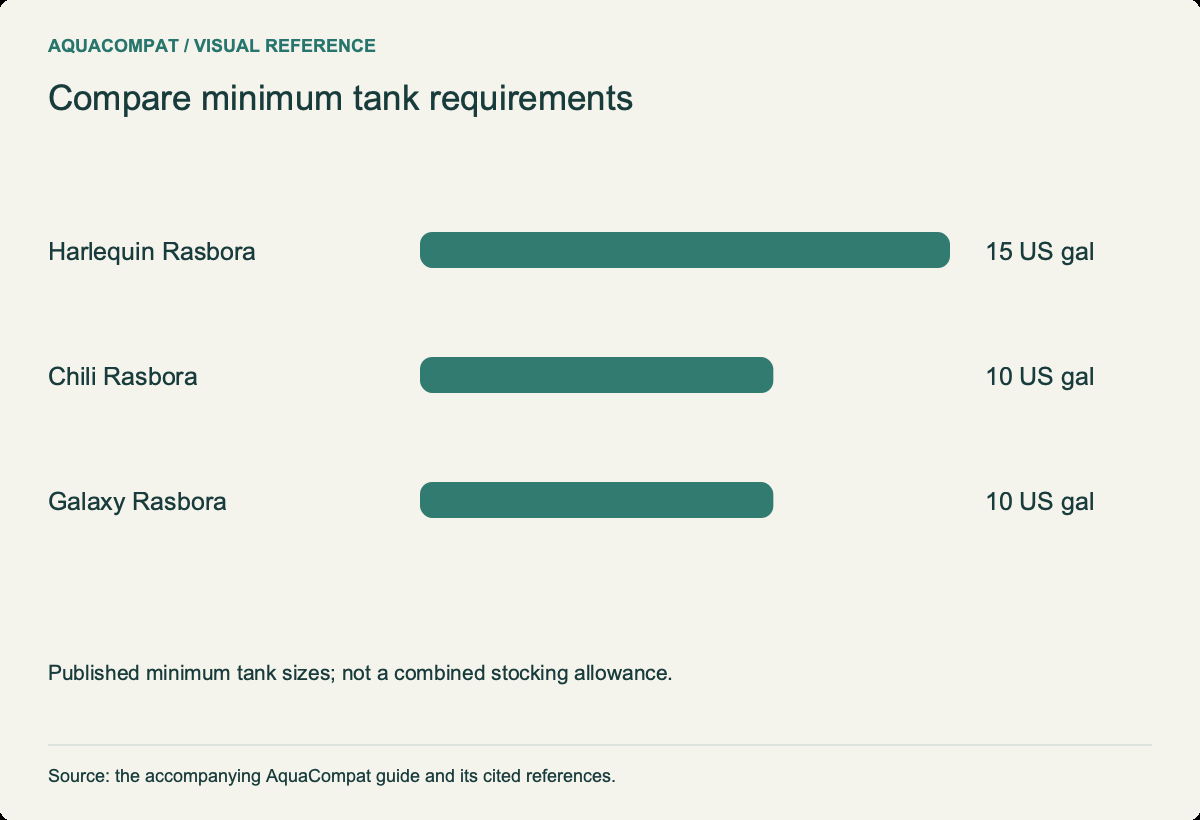
Compare minimum tank requirements
SVG file · Appears in Harlequin vs Chili vs Galaxy Rasbora
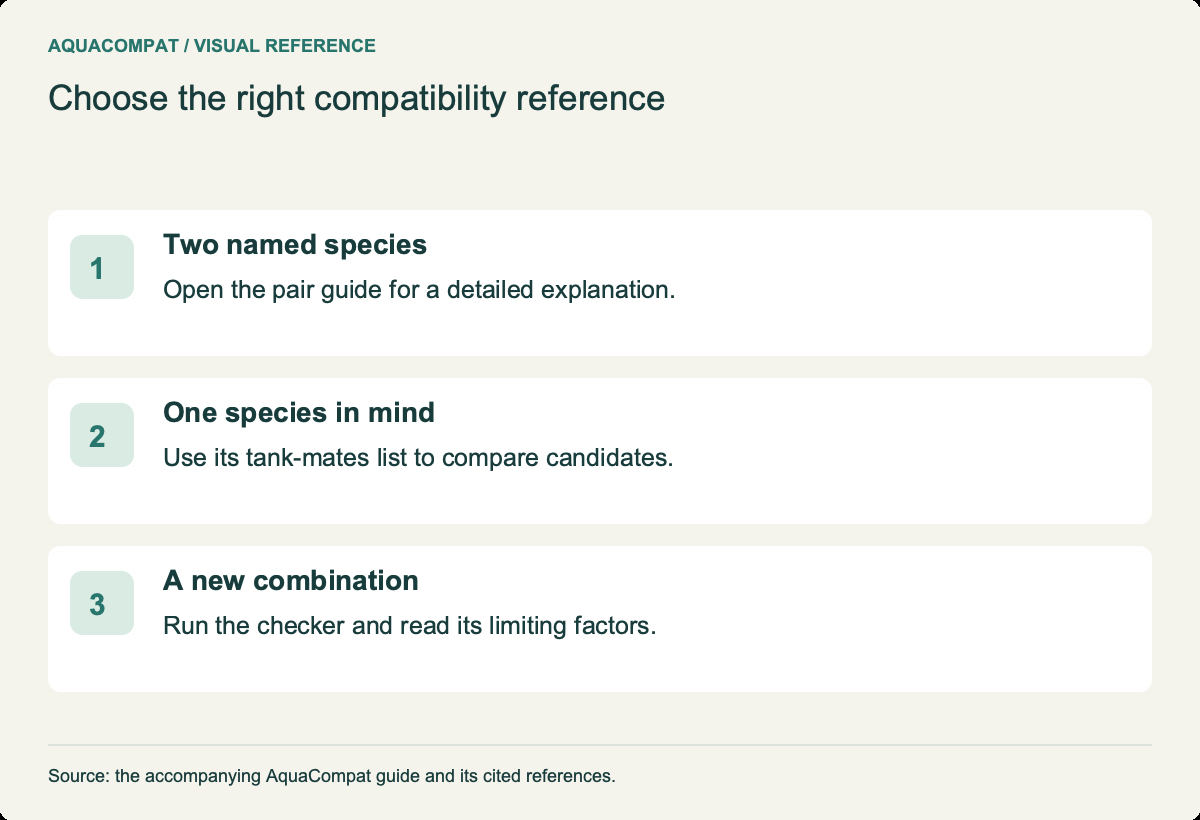
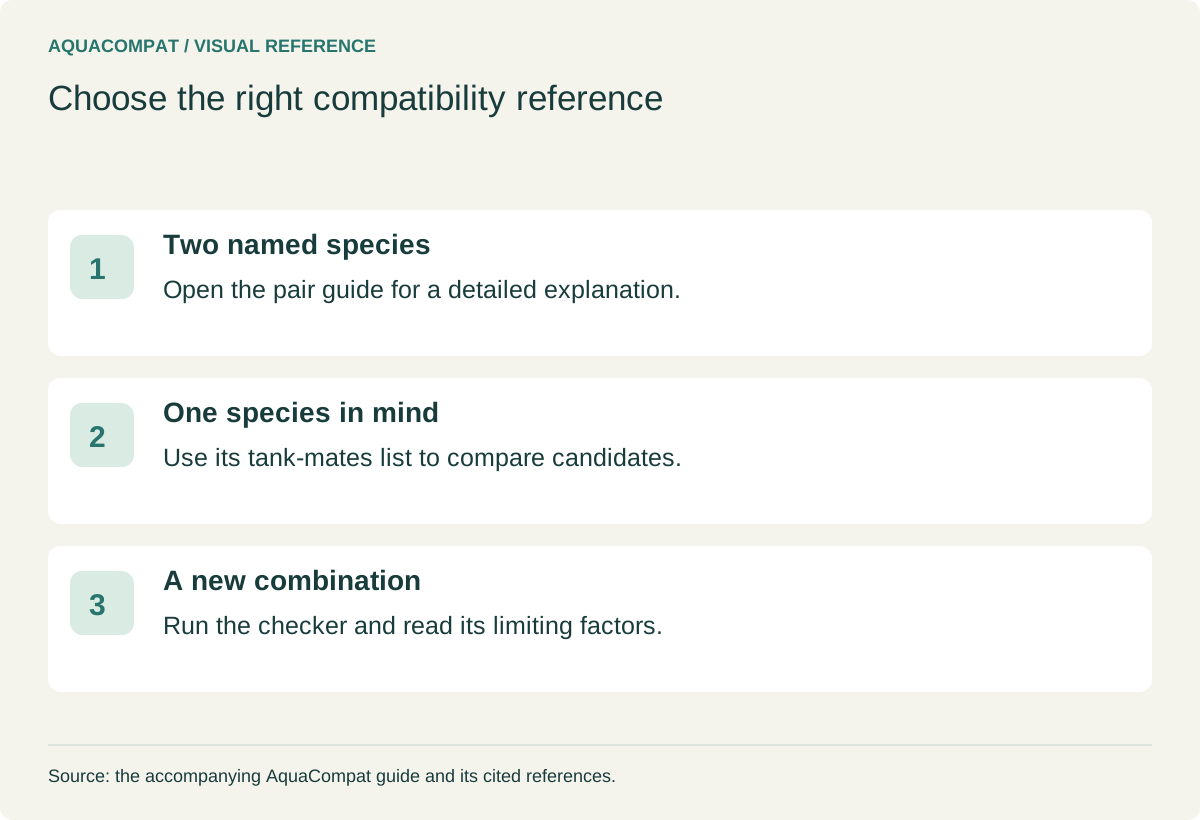
Choose the right compatibility reference
SVG file · Appears in Fish Compatibility Guides: Which Species Can Share a Tank
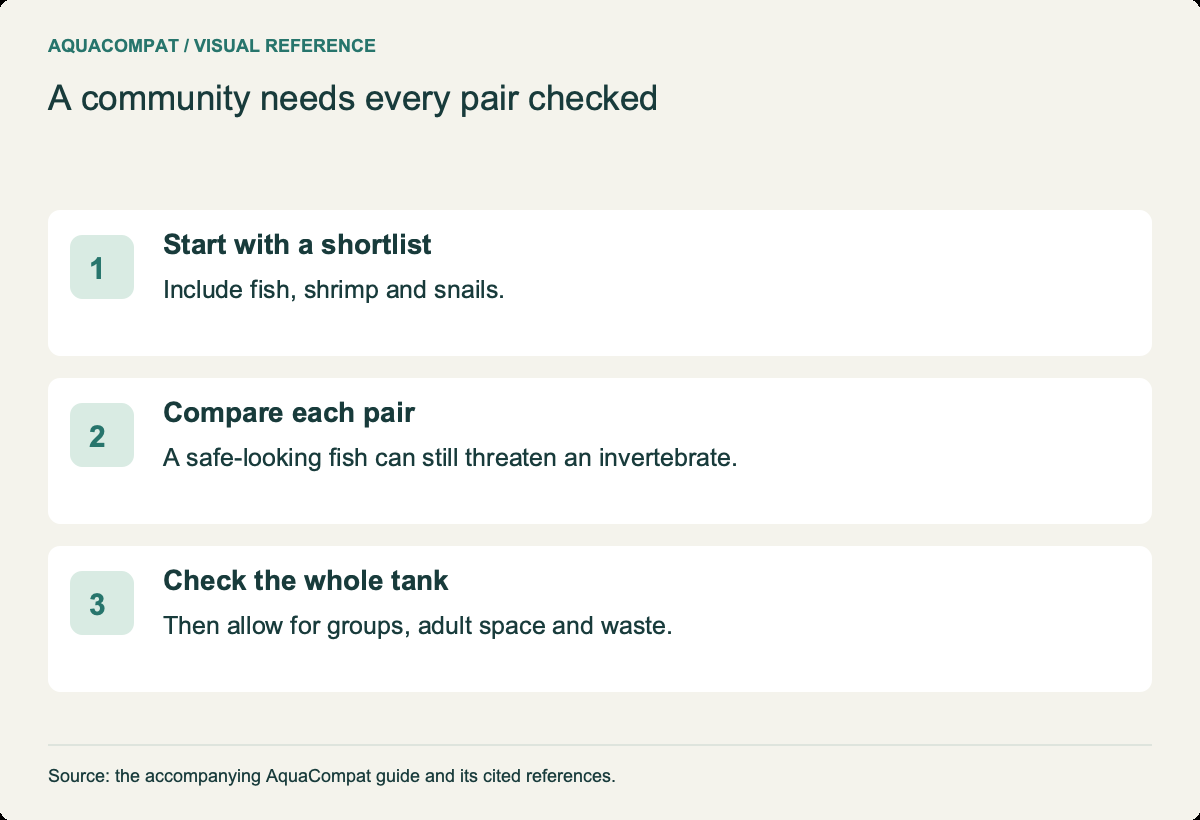
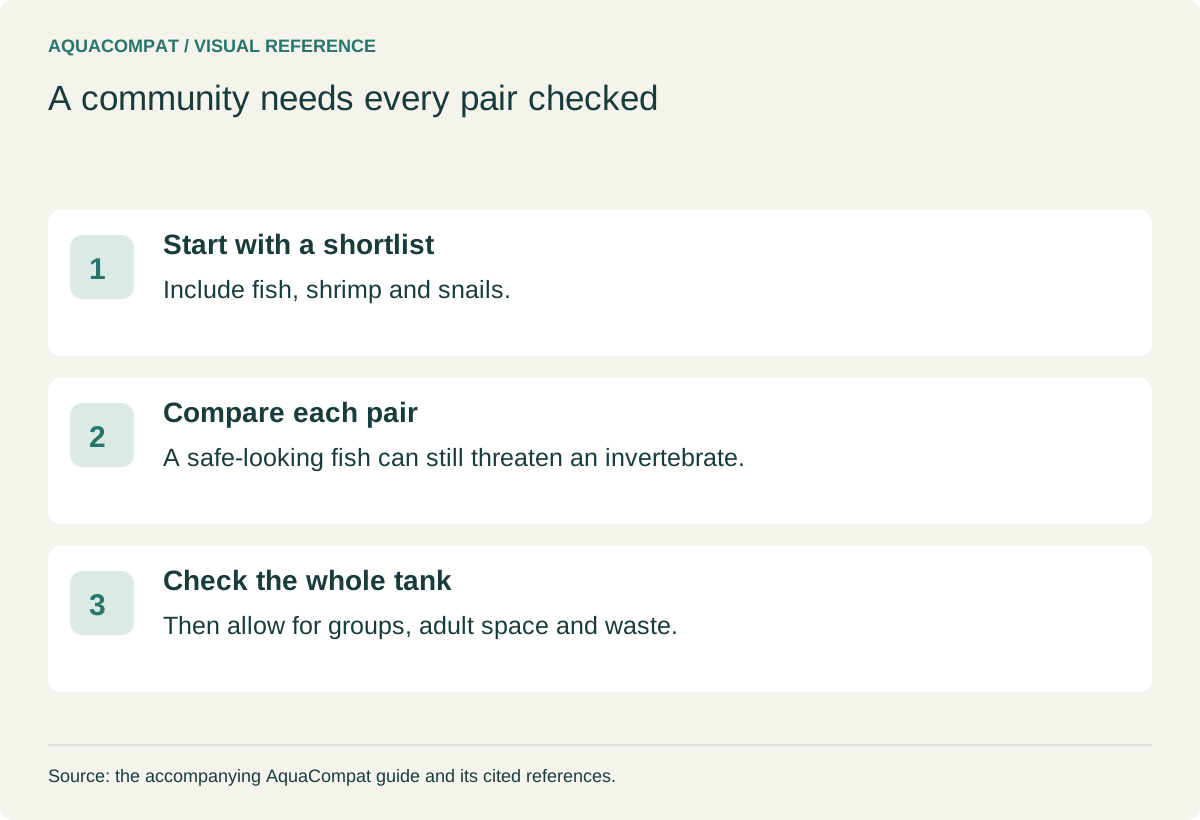
A community needs every pair checked
SVG file · Appears in Fish Compatibility Guides: Which Species Can Share a Tank
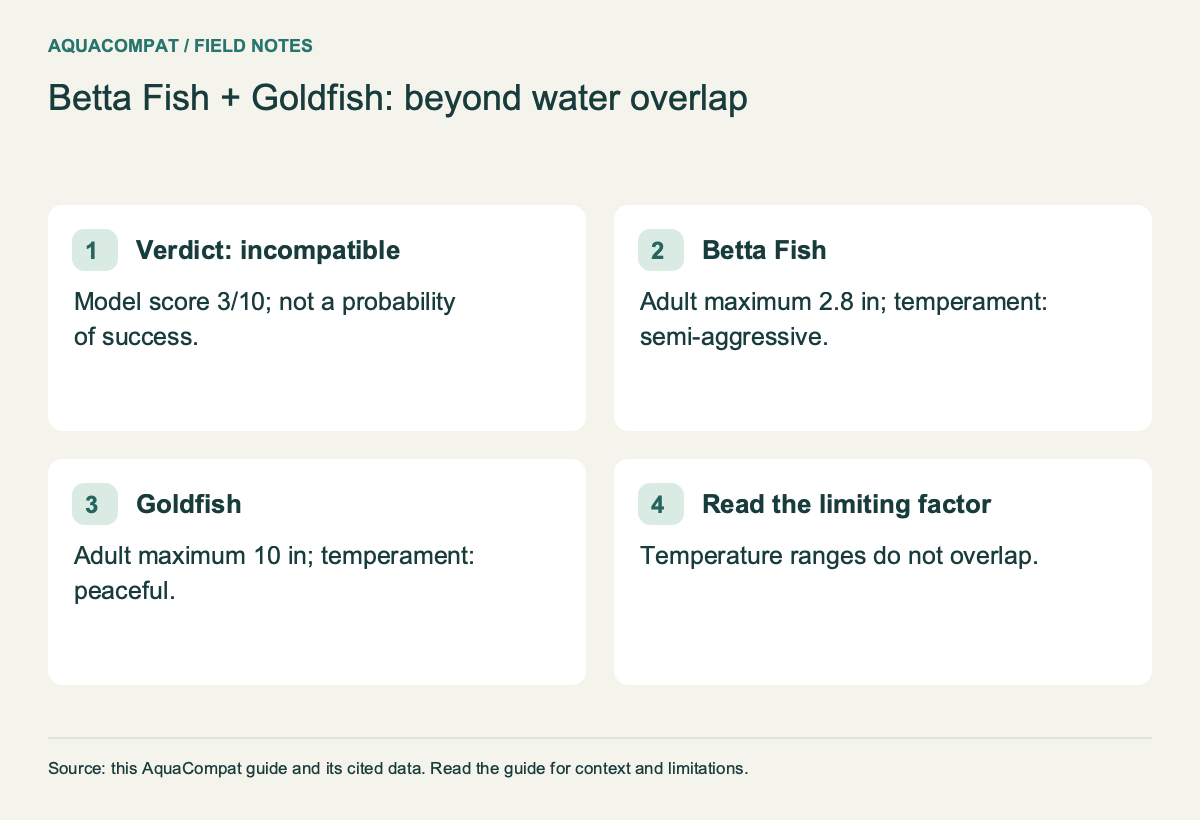
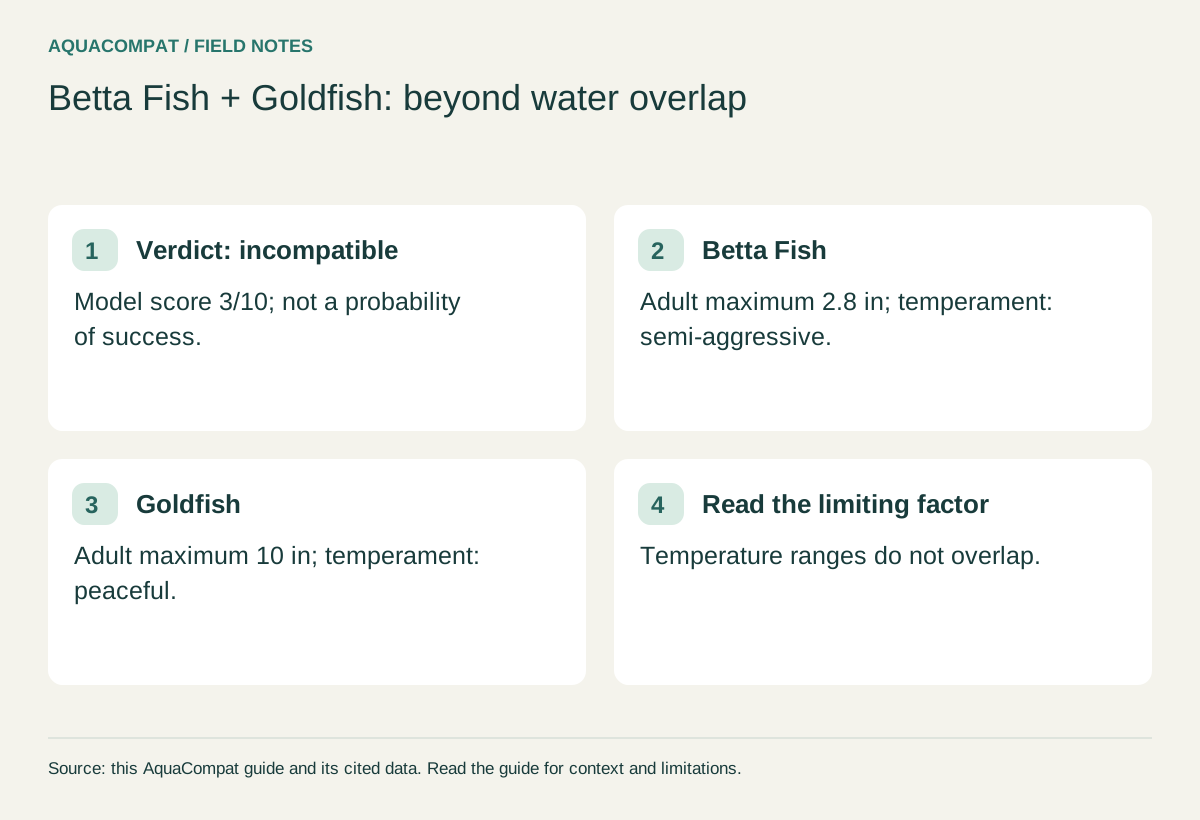
Betta Fish + Goldfish: beyond water overlap
SVG file · Appears in Can Betta Fish and Goldfish Live Together?
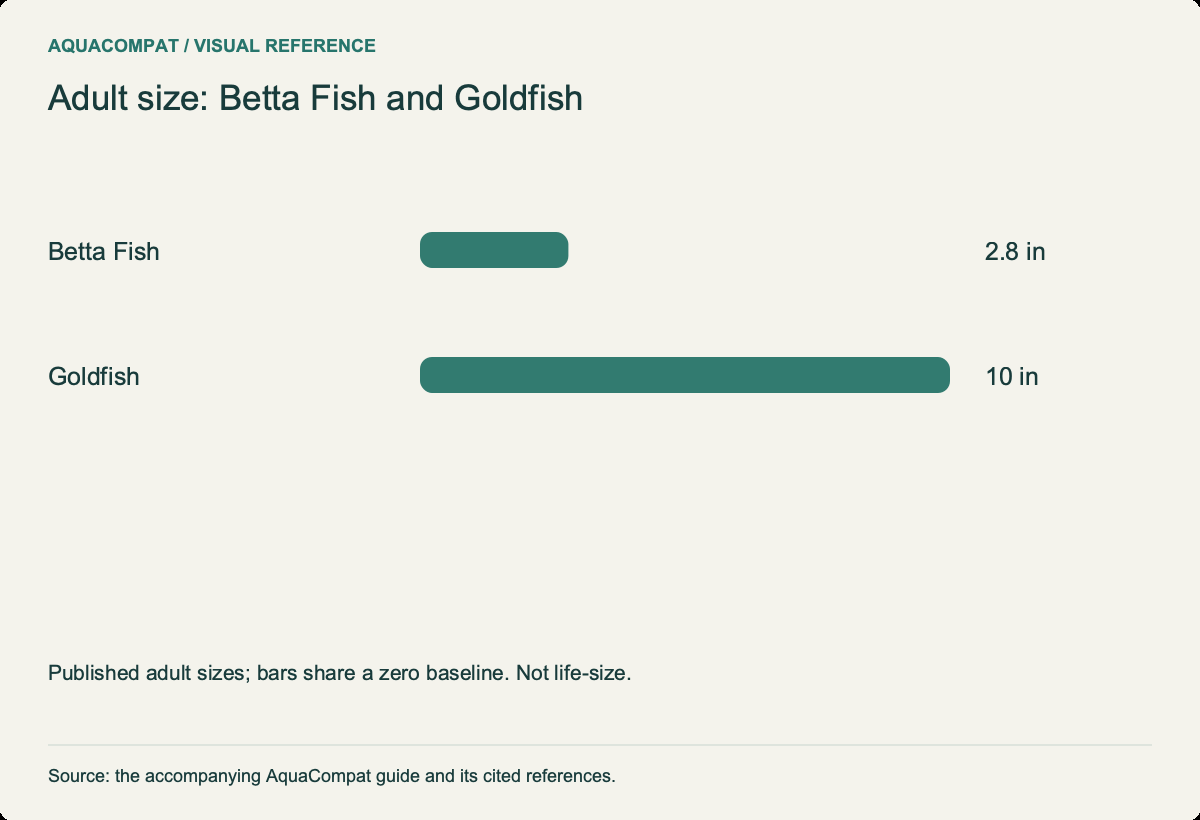
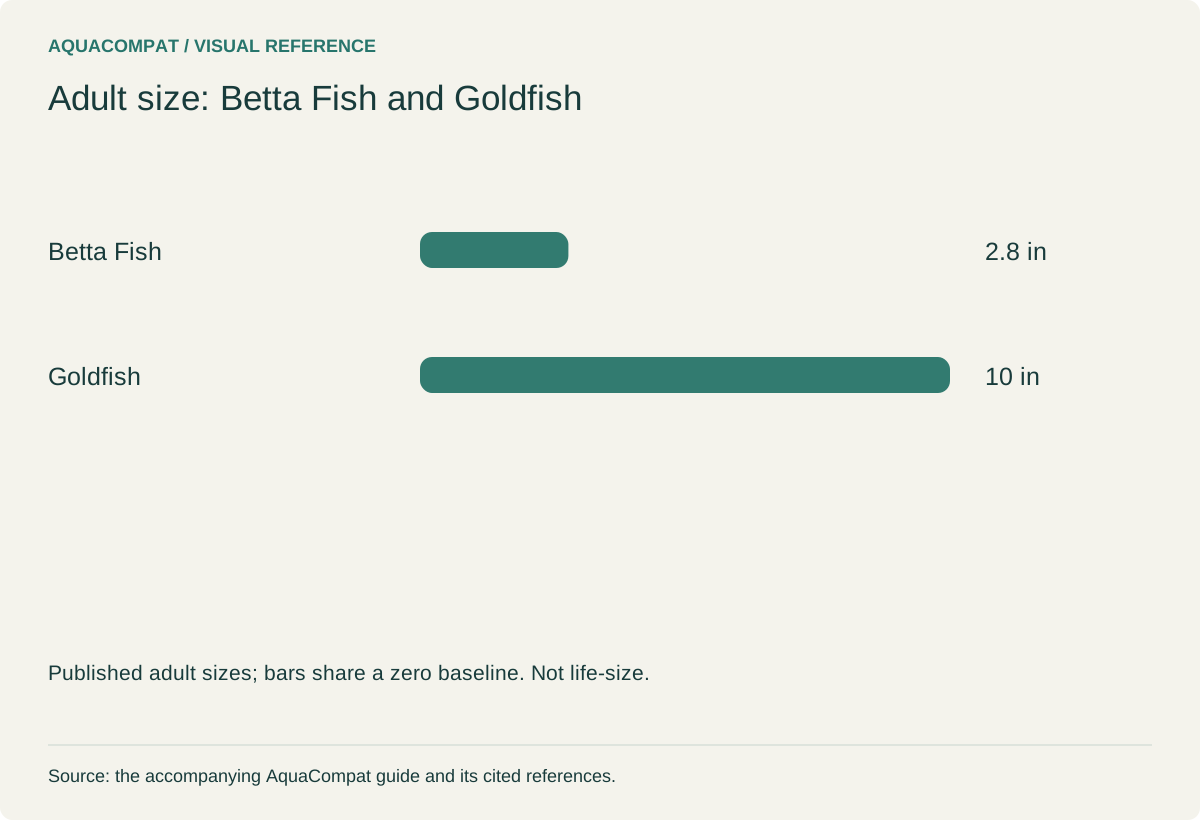
Adult size: Betta Fish and Goldfish
SVG file · Appears in Can Betta Fish and Goldfish Live Together?
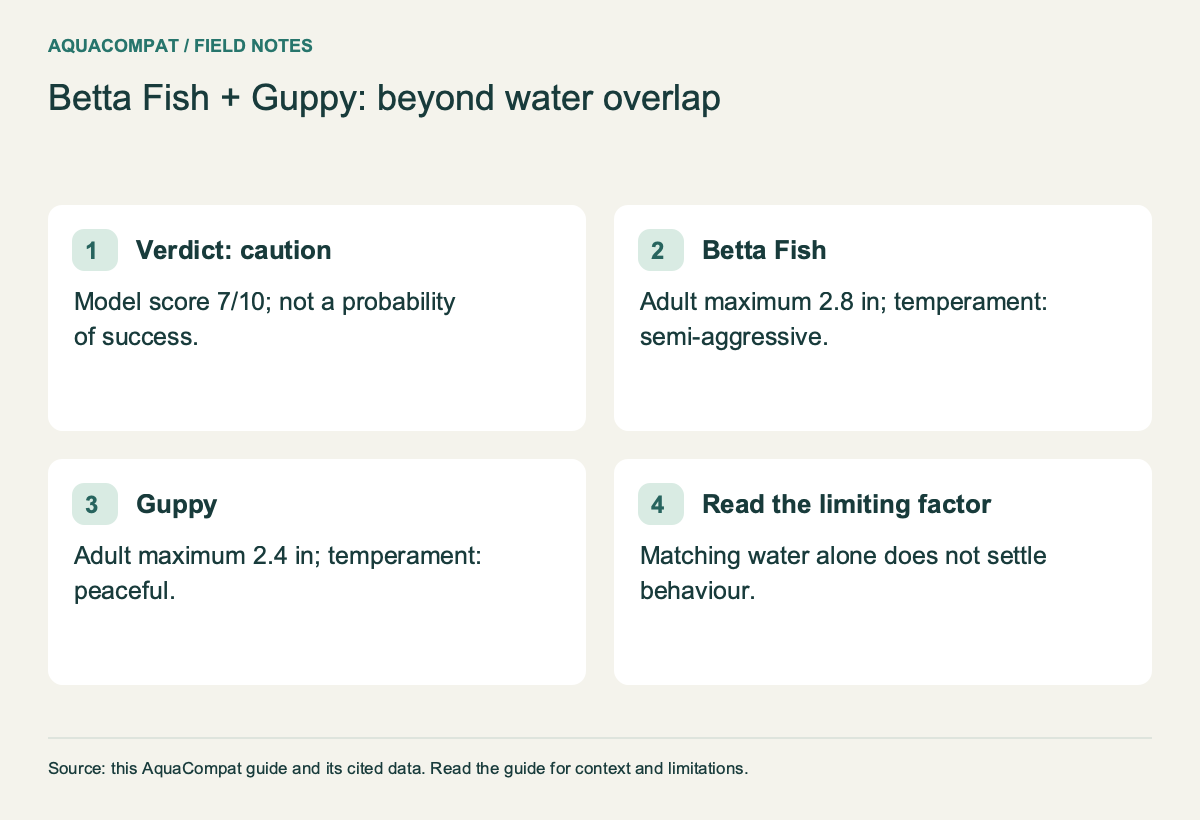
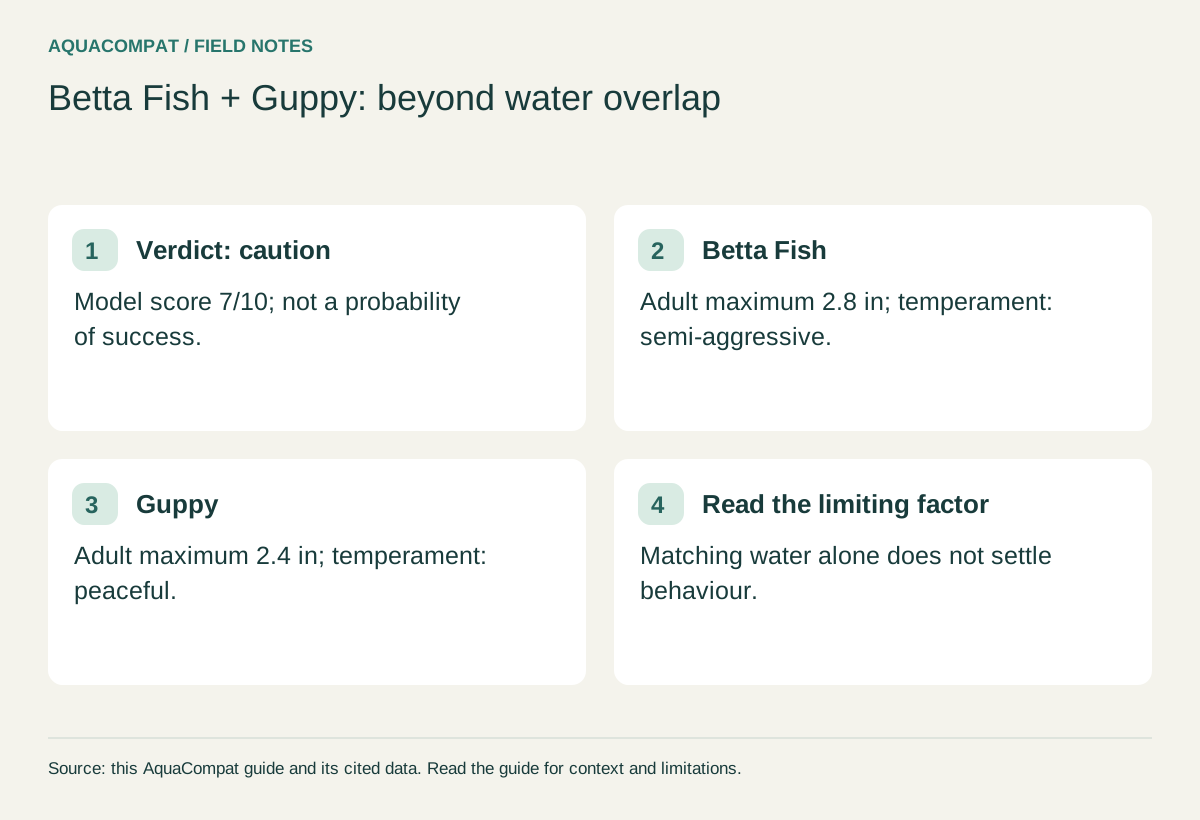
Betta Fish + Guppy: beyond water overlap
SVG file · Appears in Can Betta Fish and Guppies Live Together?
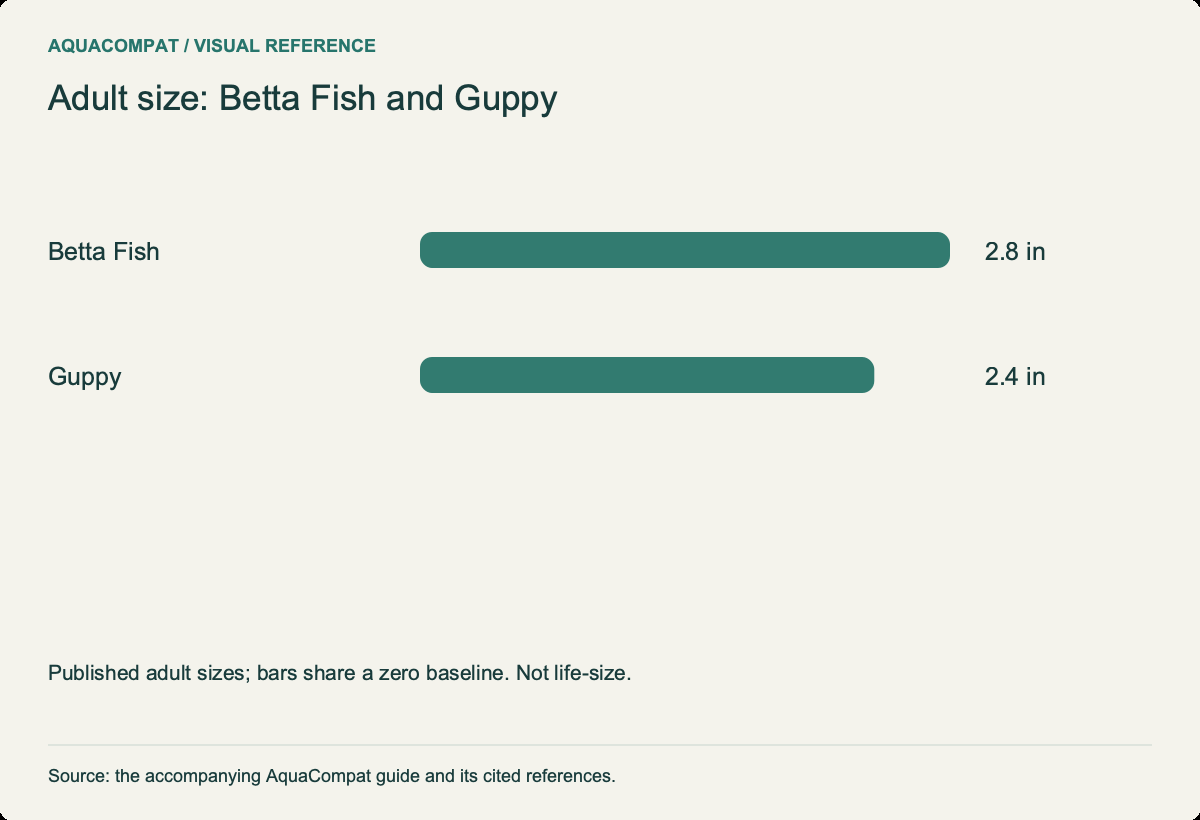
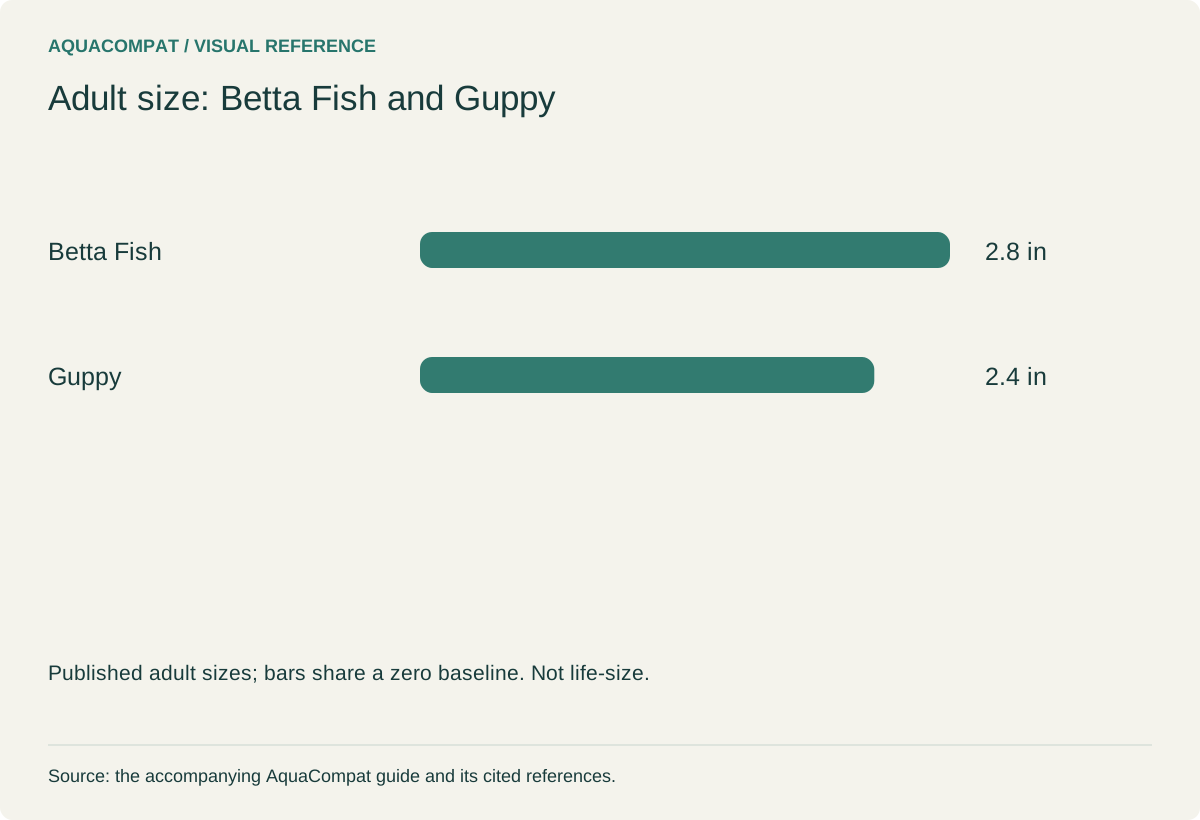
Adult size: Betta Fish and Guppy
SVG file · Appears in Can Betta Fish and Guppies Live Together?
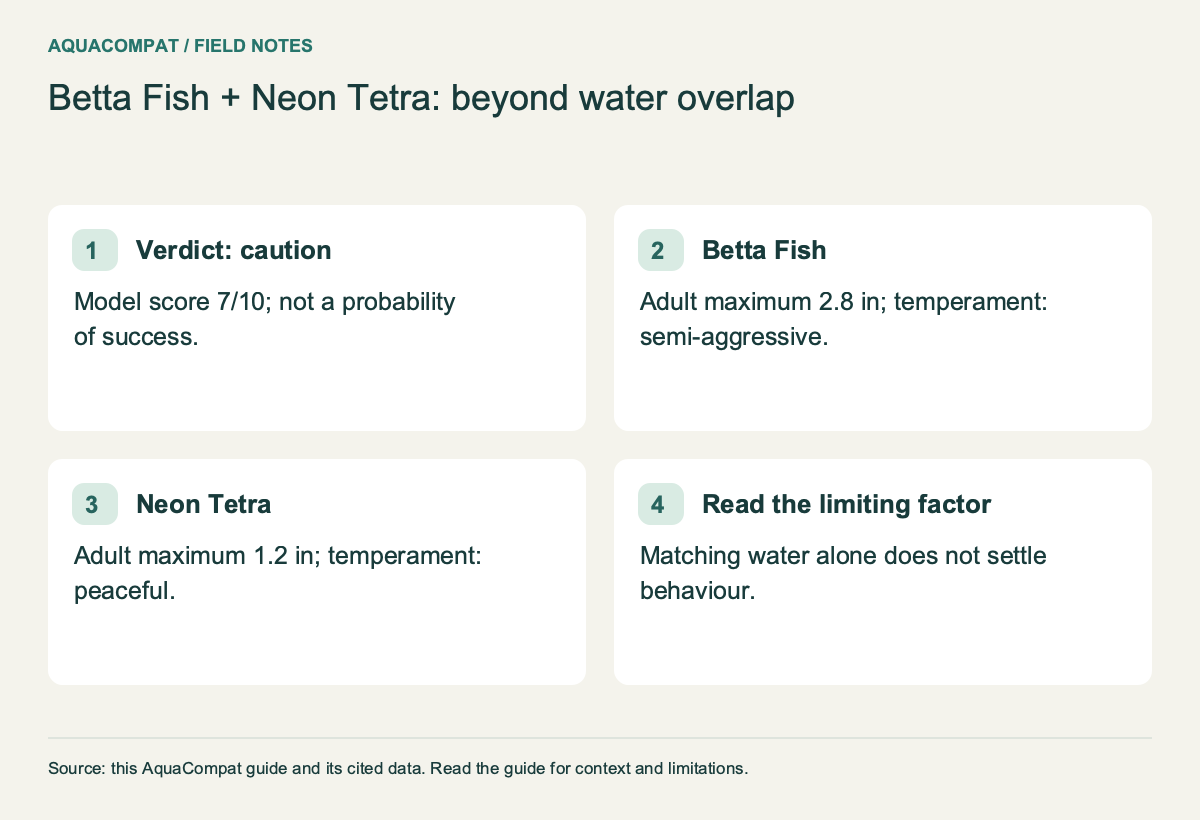
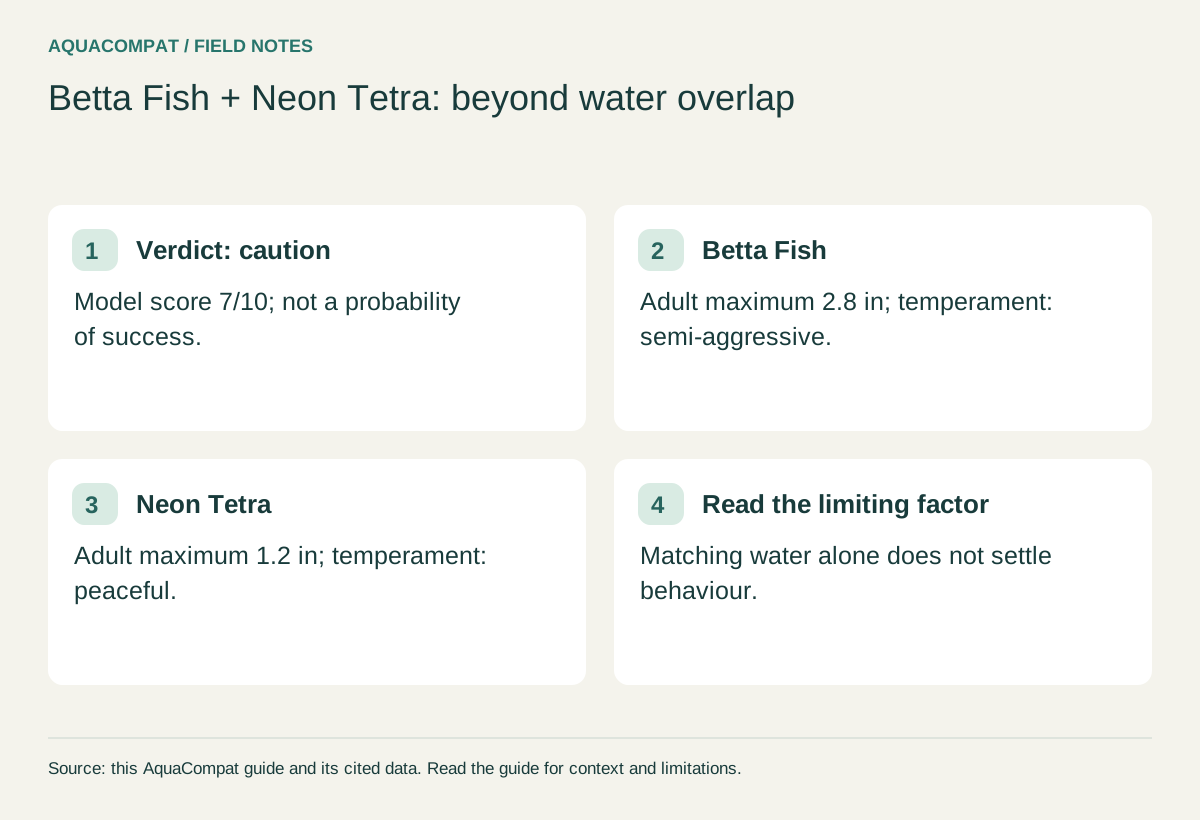
Betta Fish + Neon Tetra: beyond water overlap
SVG file · Appears in Can Betta Fish and Neon Tetras Live Together?
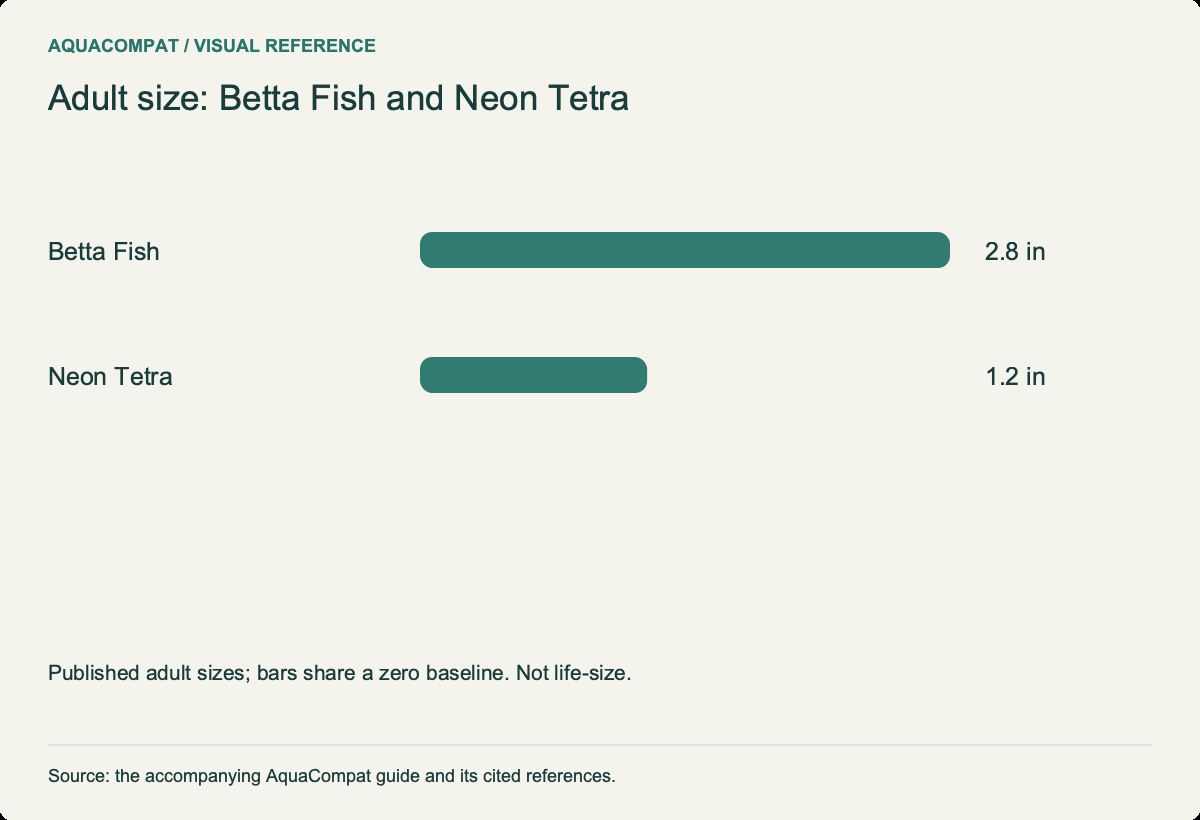
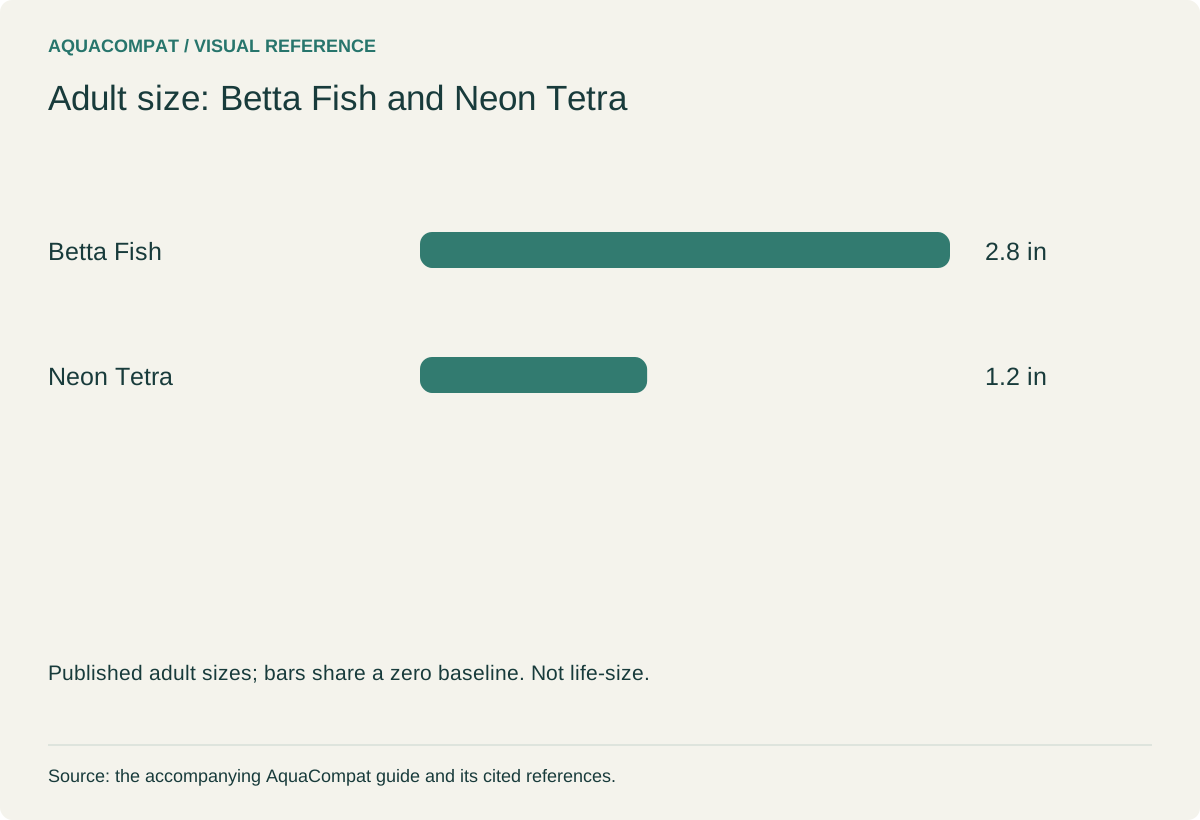
Adult size: Betta Fish and Neon Tetra
SVG file · Appears in Can Betta Fish and Neon Tetras Live Together?
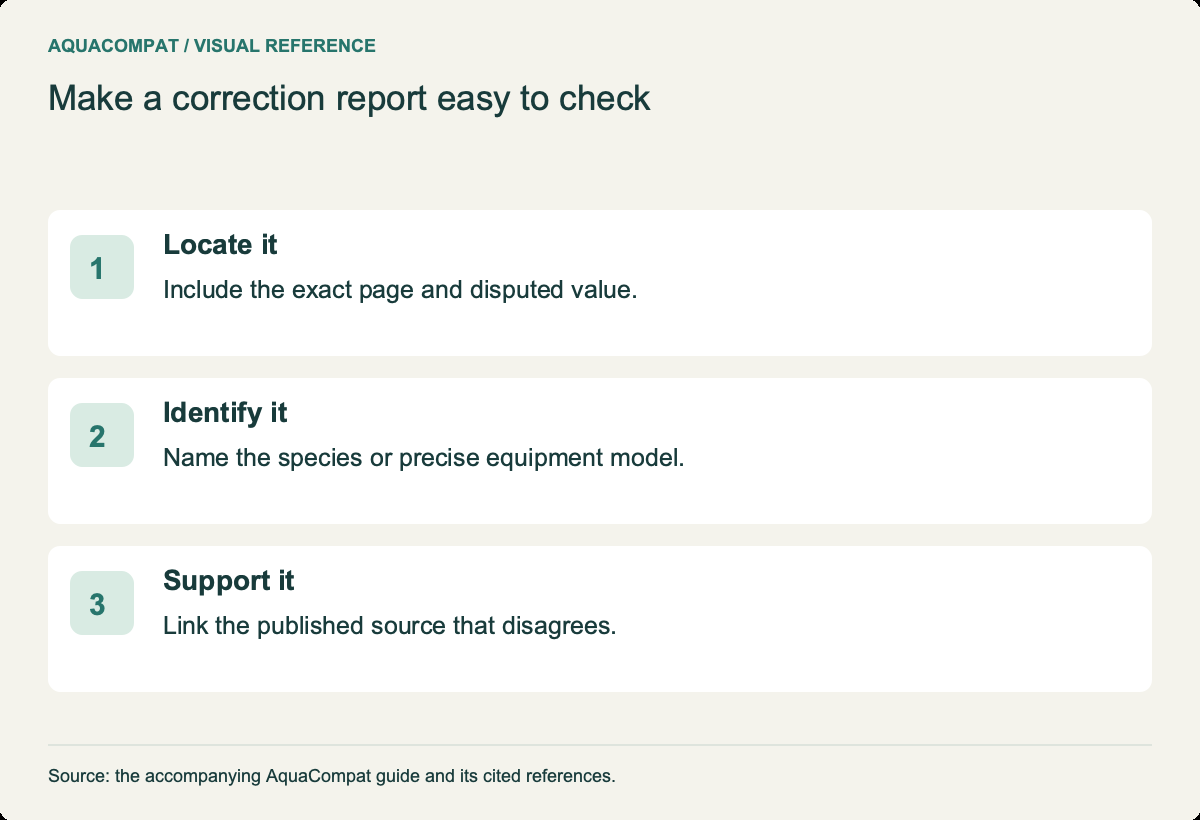
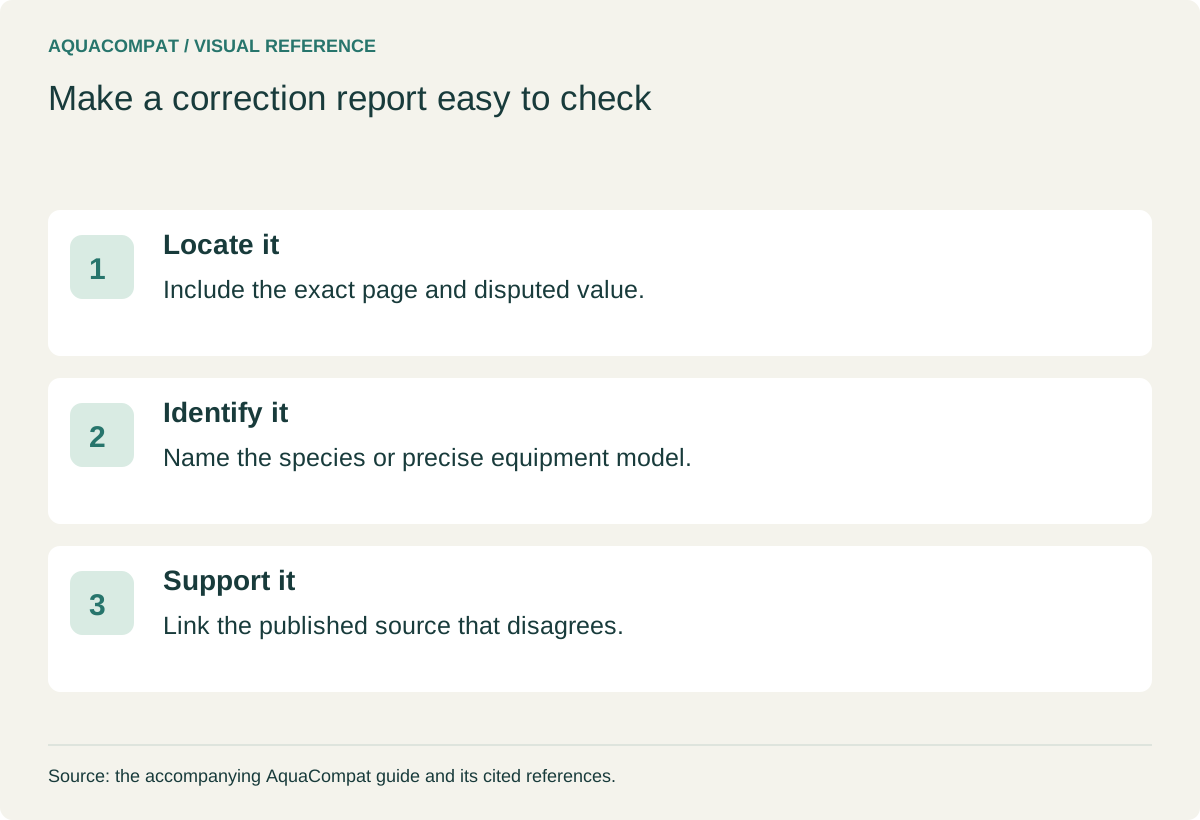
Make a correction report easy to check
SVG file · Appears in Contact AquaCompat
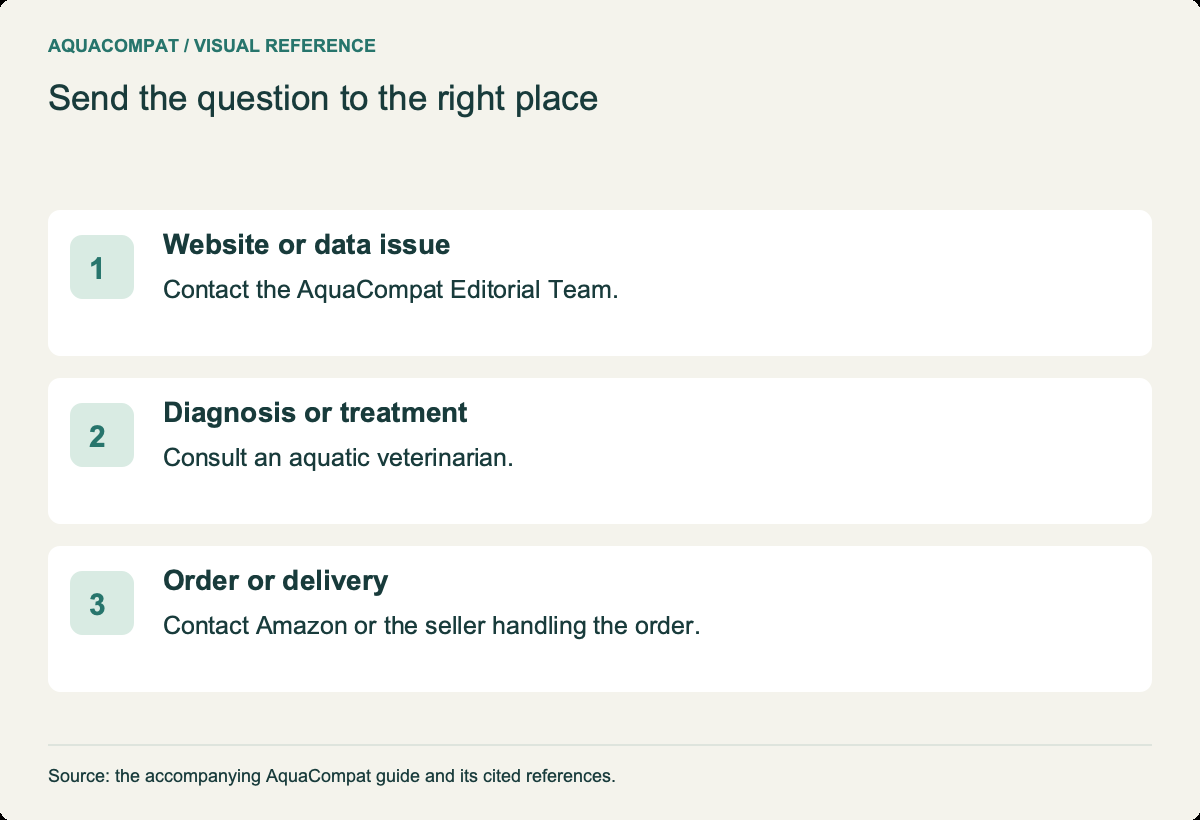
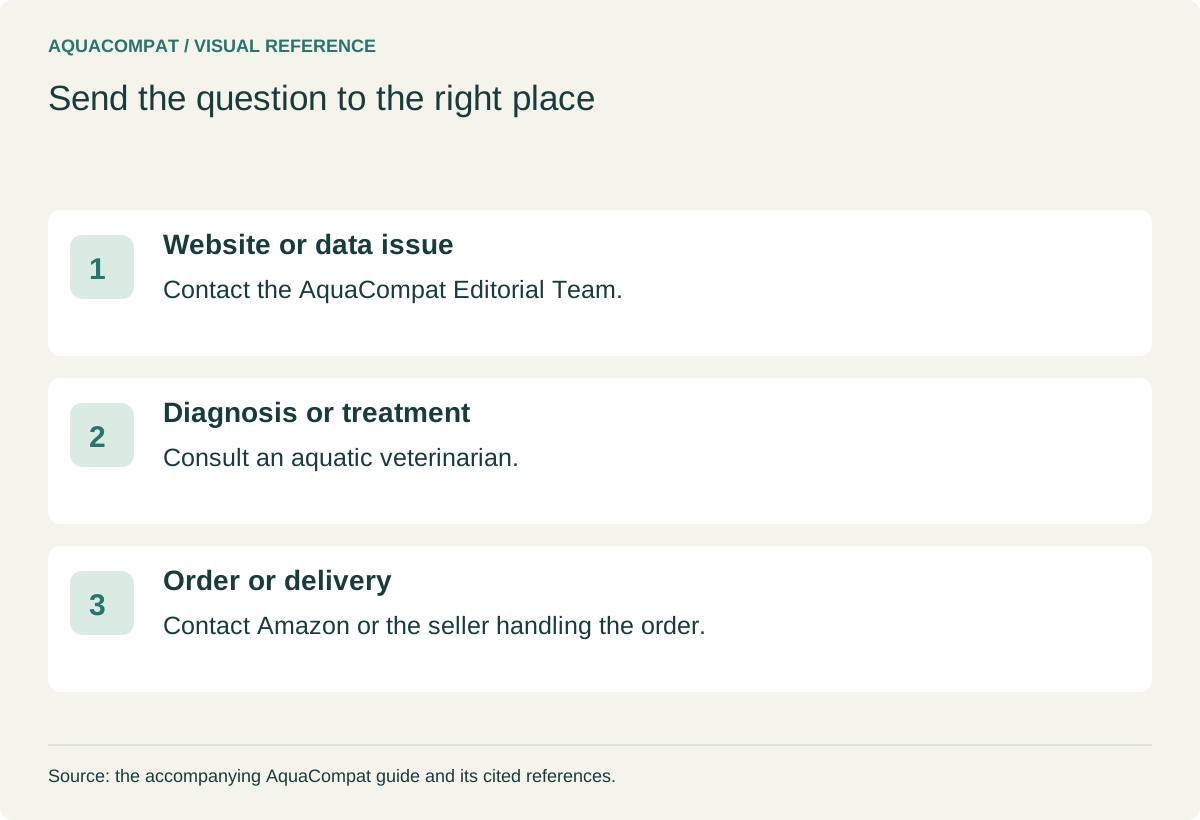
Send the question to the right place
SVG file · Appears in Contact AquaCompat
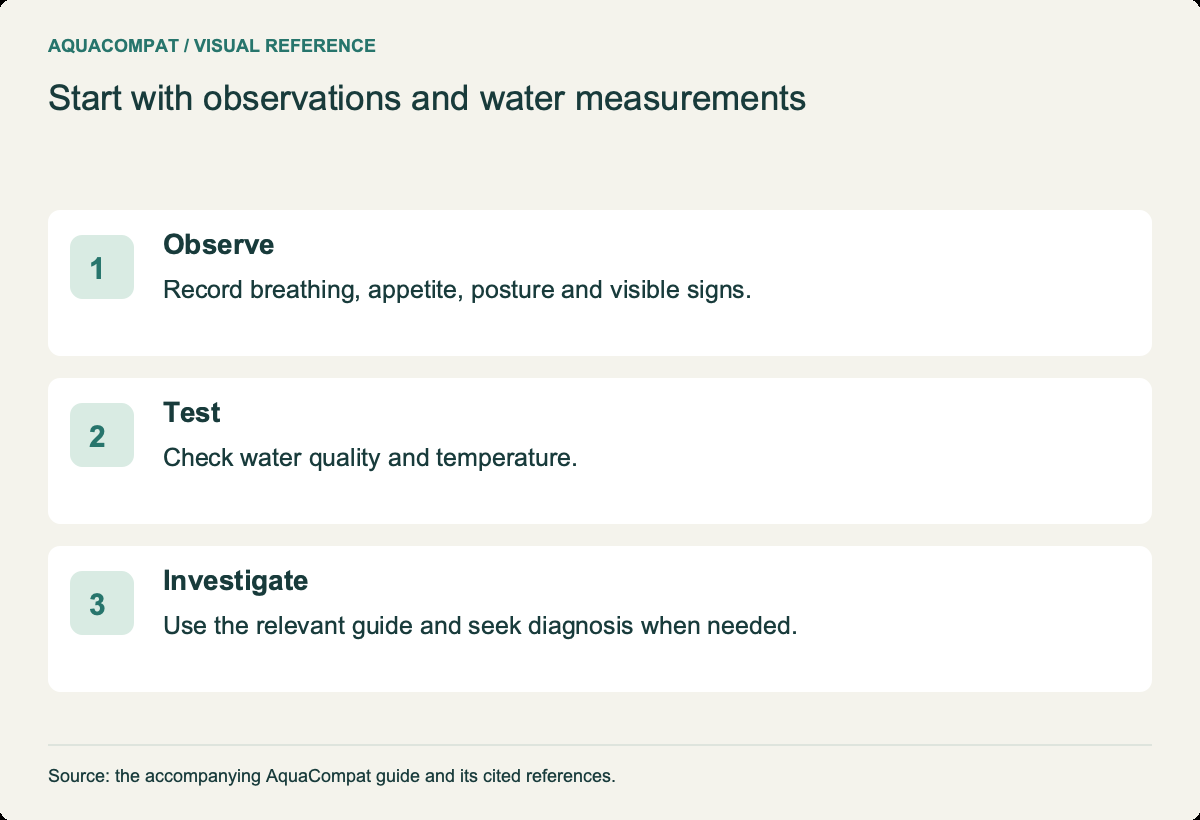
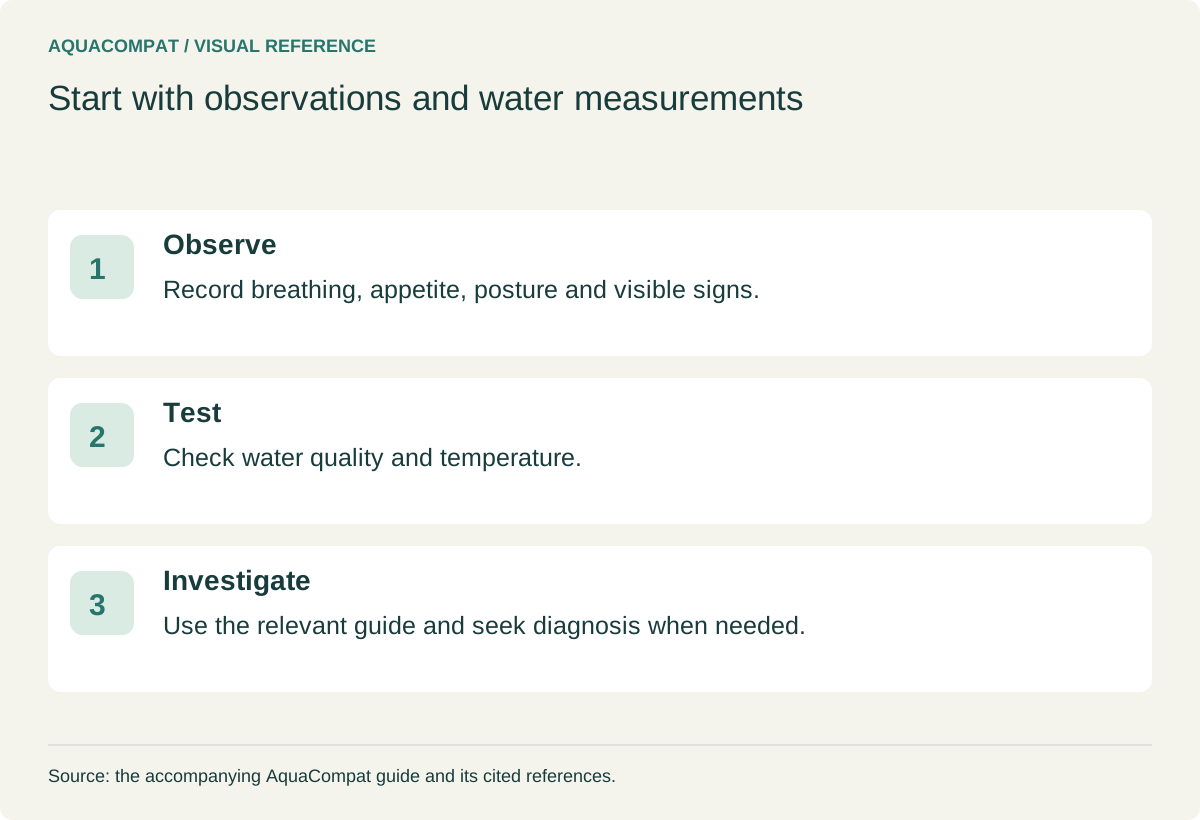
Start with observations and water measurements
SVG file · Appears in Aquarium Fish Diseases and Tank Problems
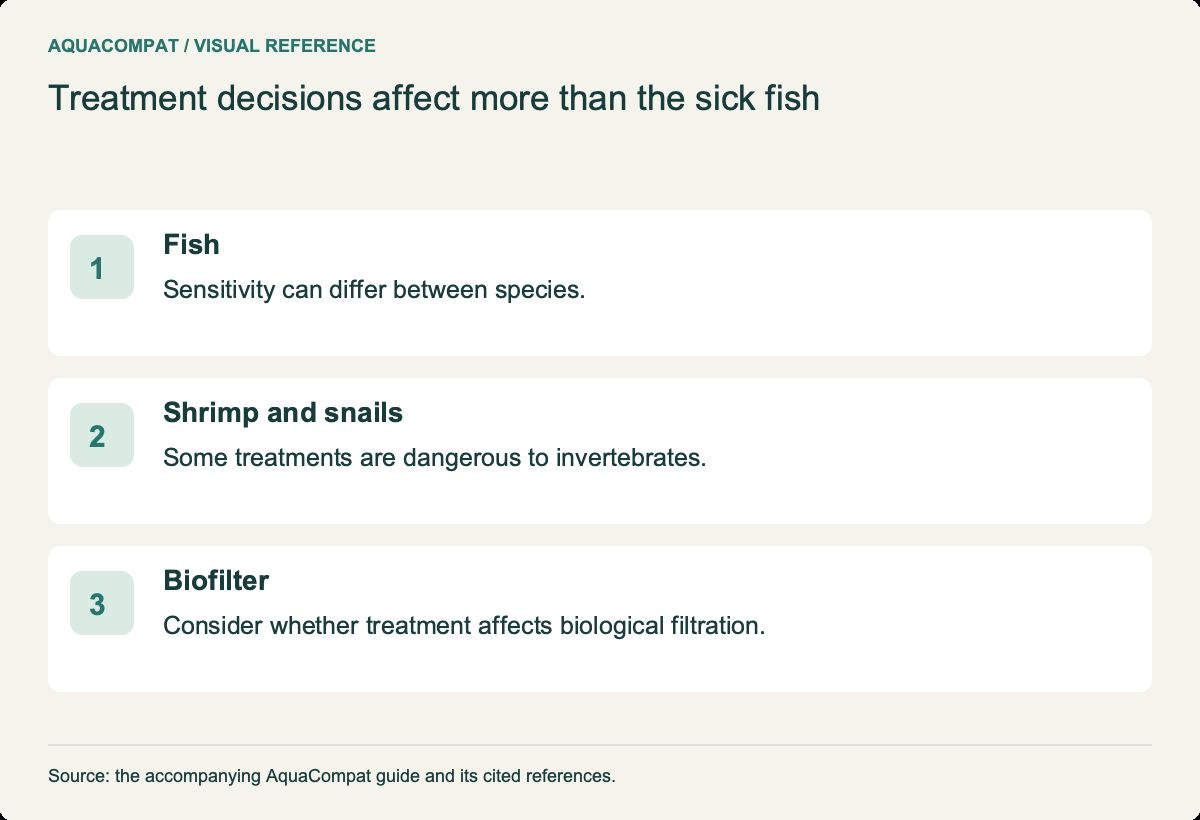
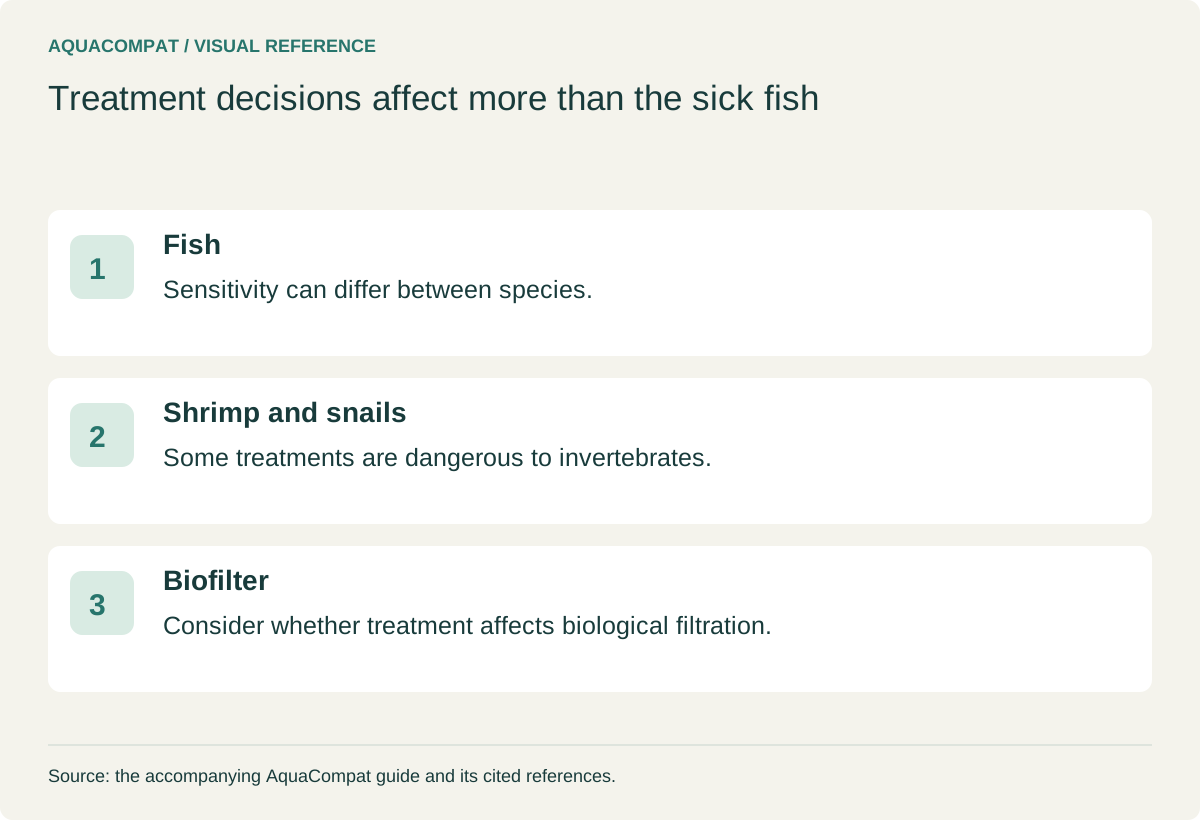
Treatment decisions affect more than the sick fish
SVG file · Appears in Aquarium Fish Diseases and Tank Problems
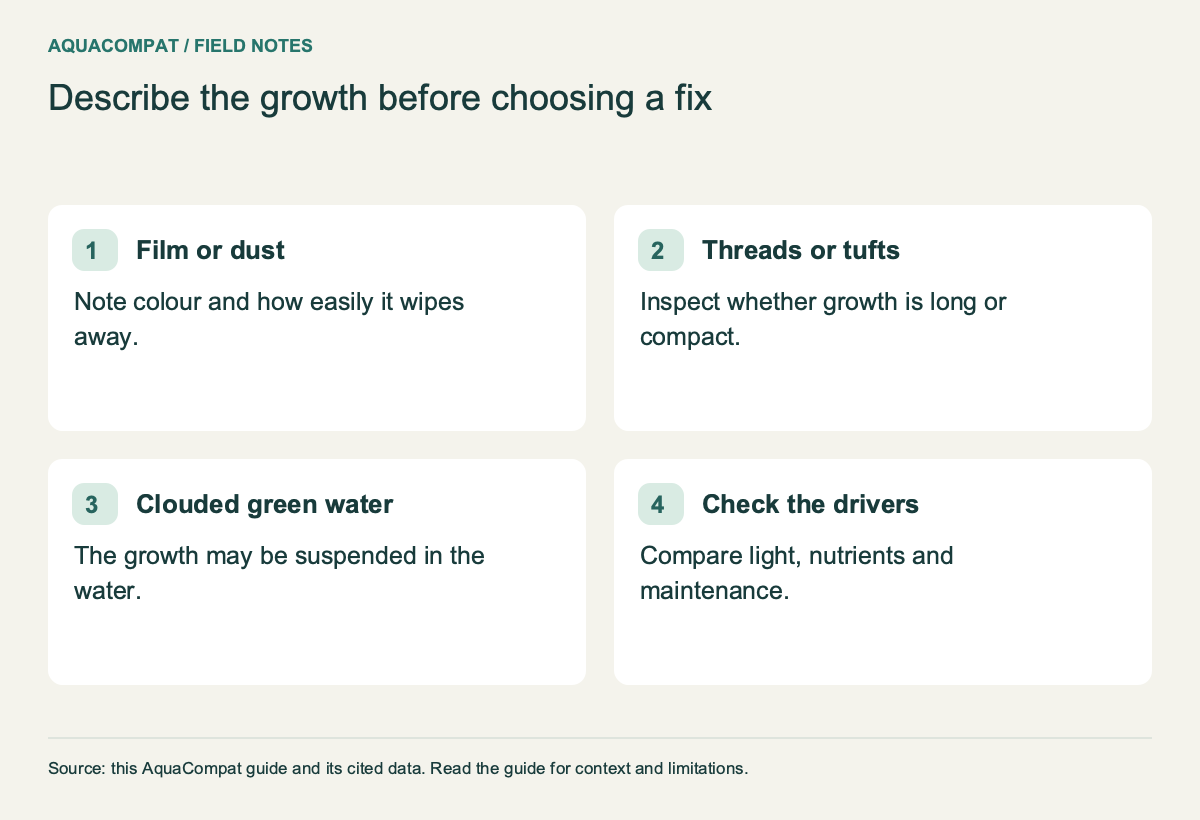
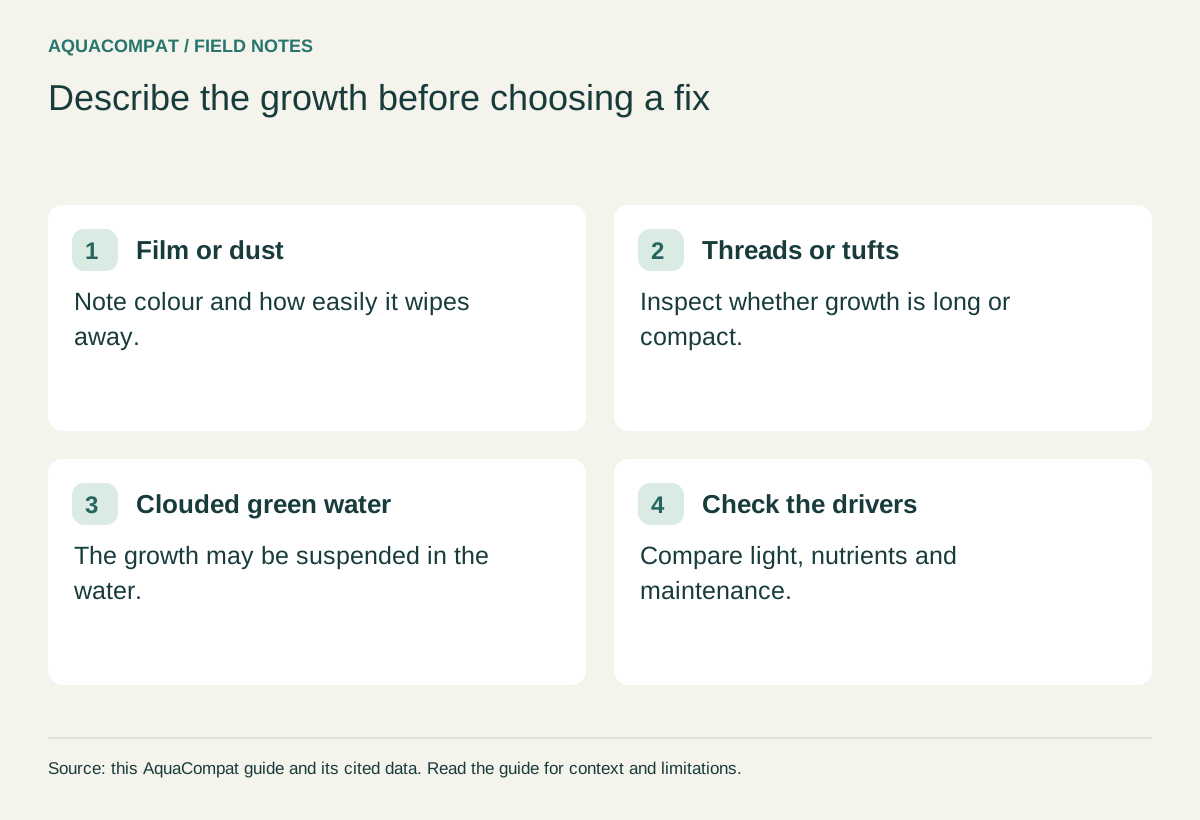
Describe the growth before choosing a fix
SVG file · Appears in Aquarium Algae: Types, Causes and Treatment
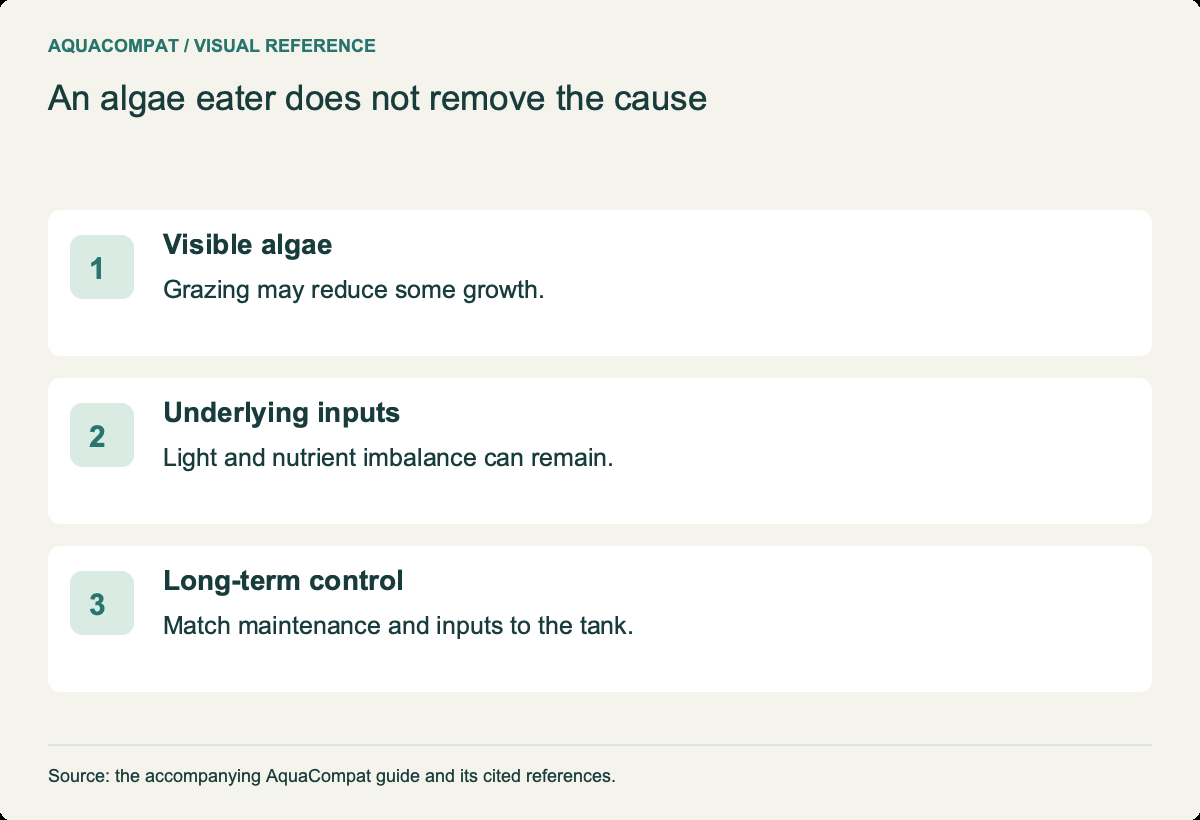
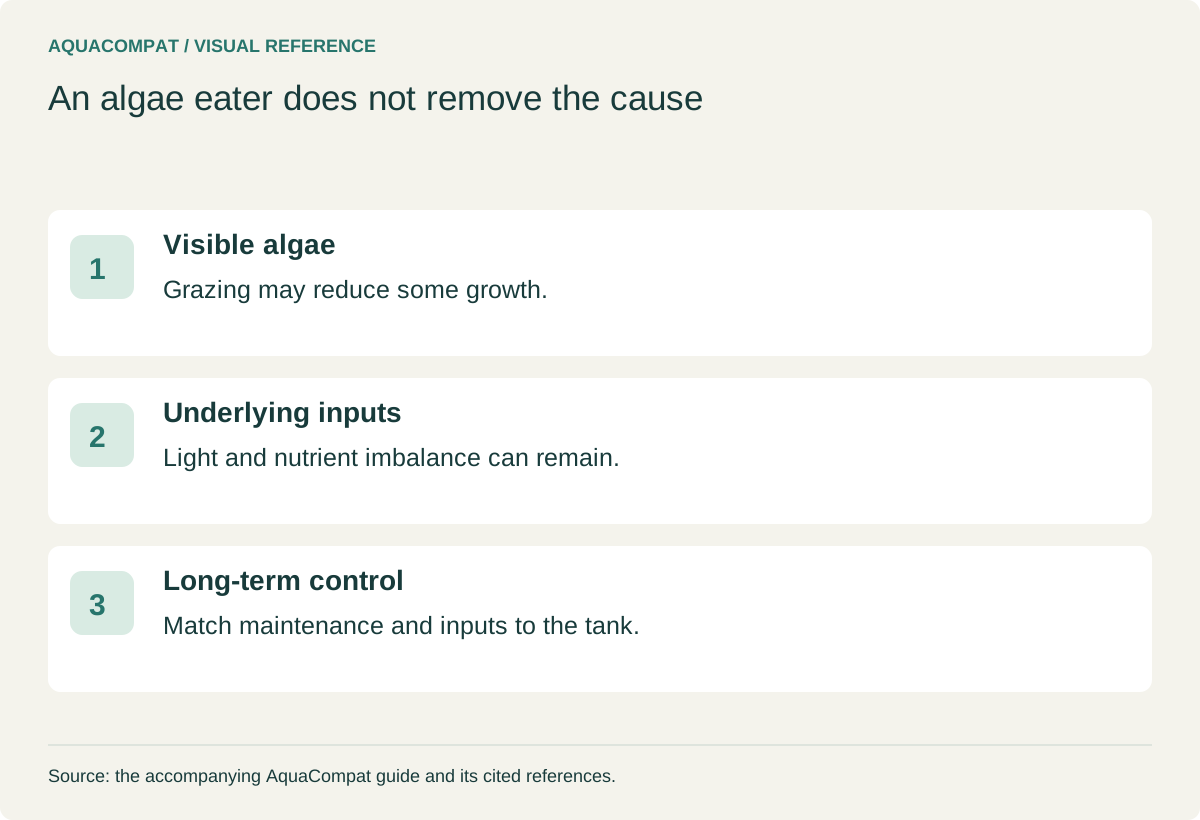
An algae eater does not remove the cause
SVG file · Appears in Aquarium Algae: Types, Causes and Treatment
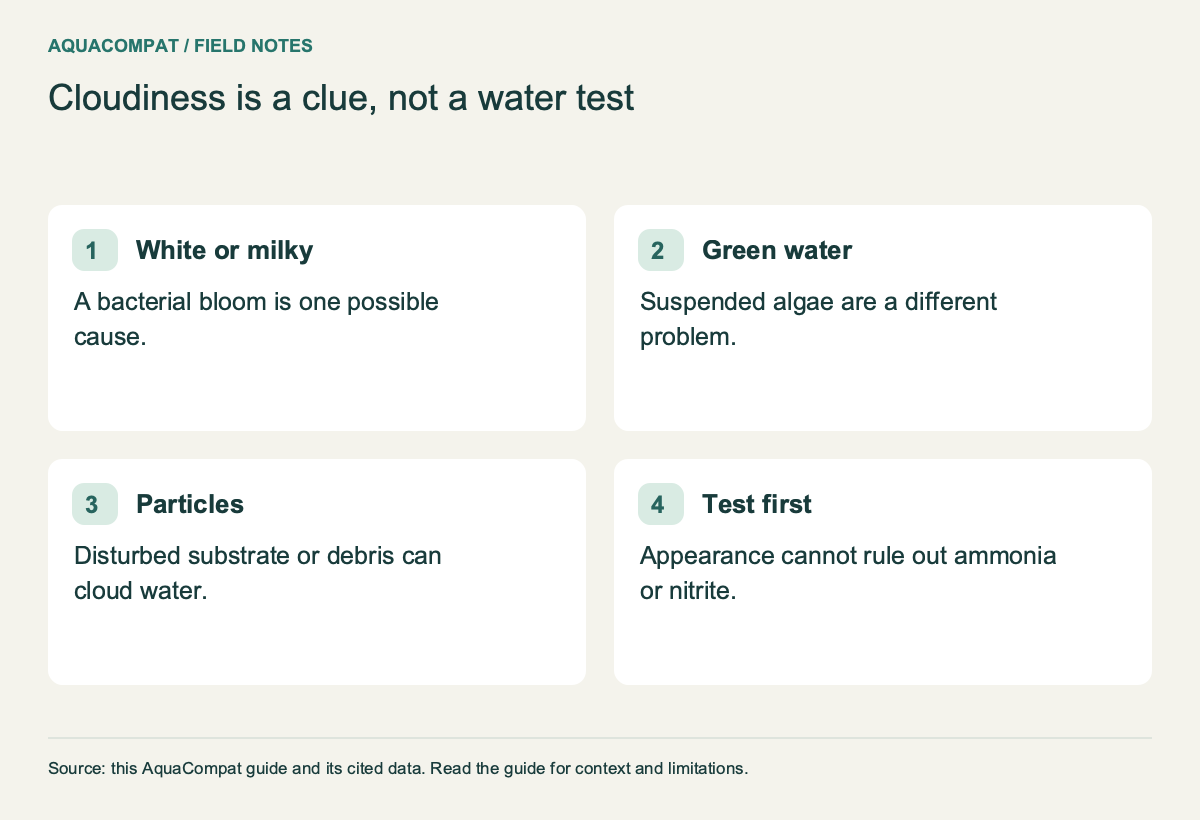
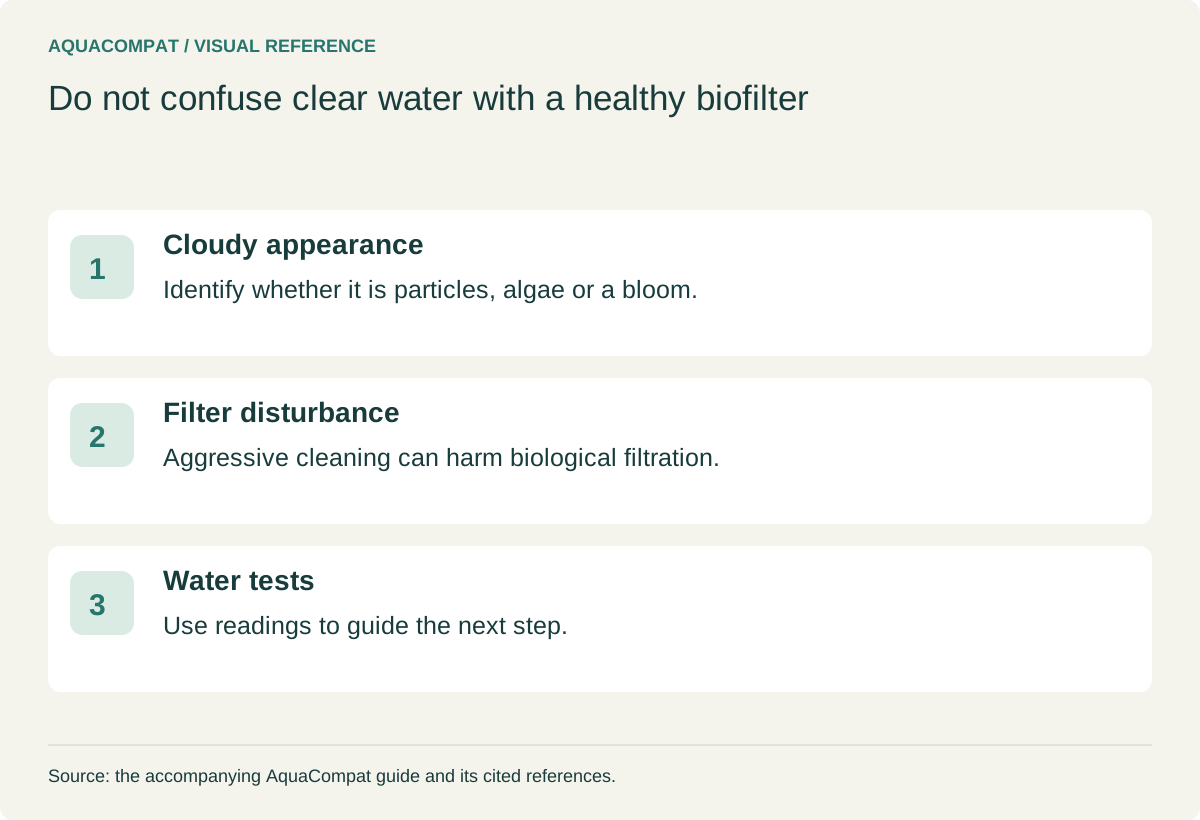
Cloudiness is a clue, not a water test
SVG file · Appears in Cloudy Aquarium Water: Every Cause and How to Fix It
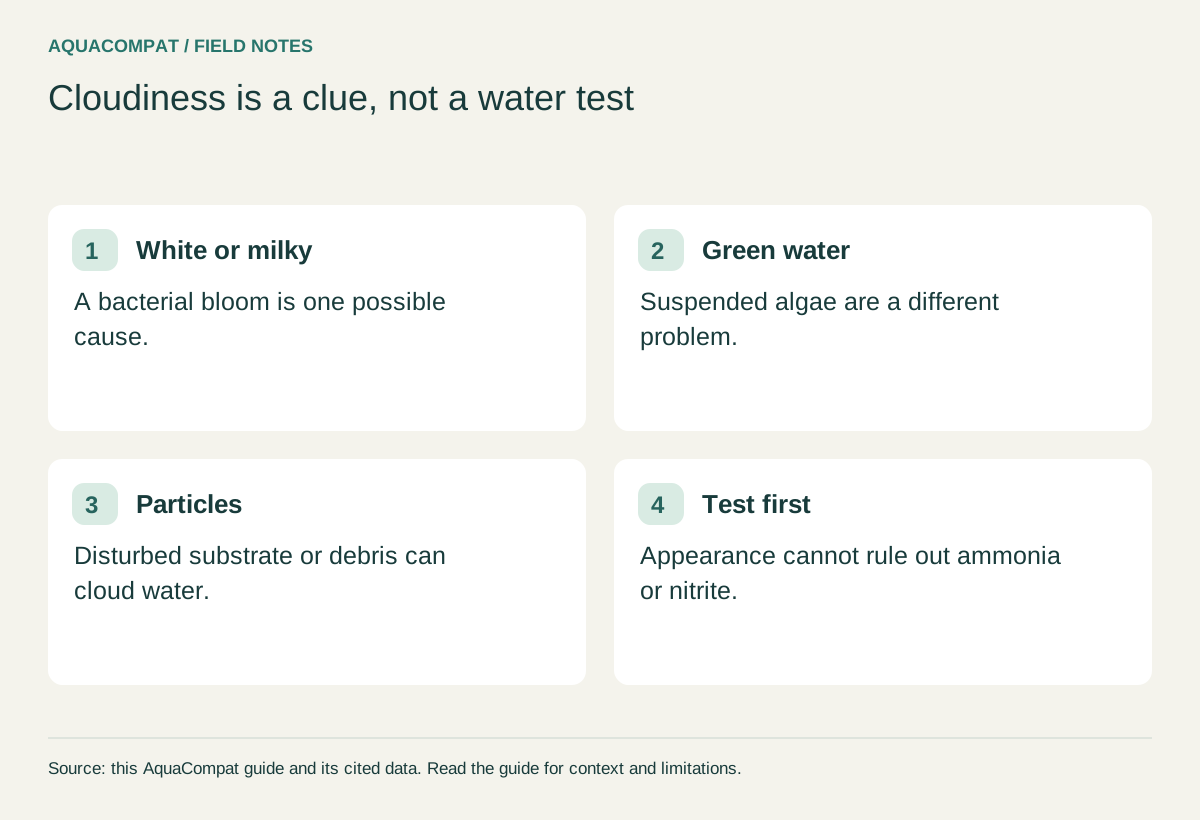
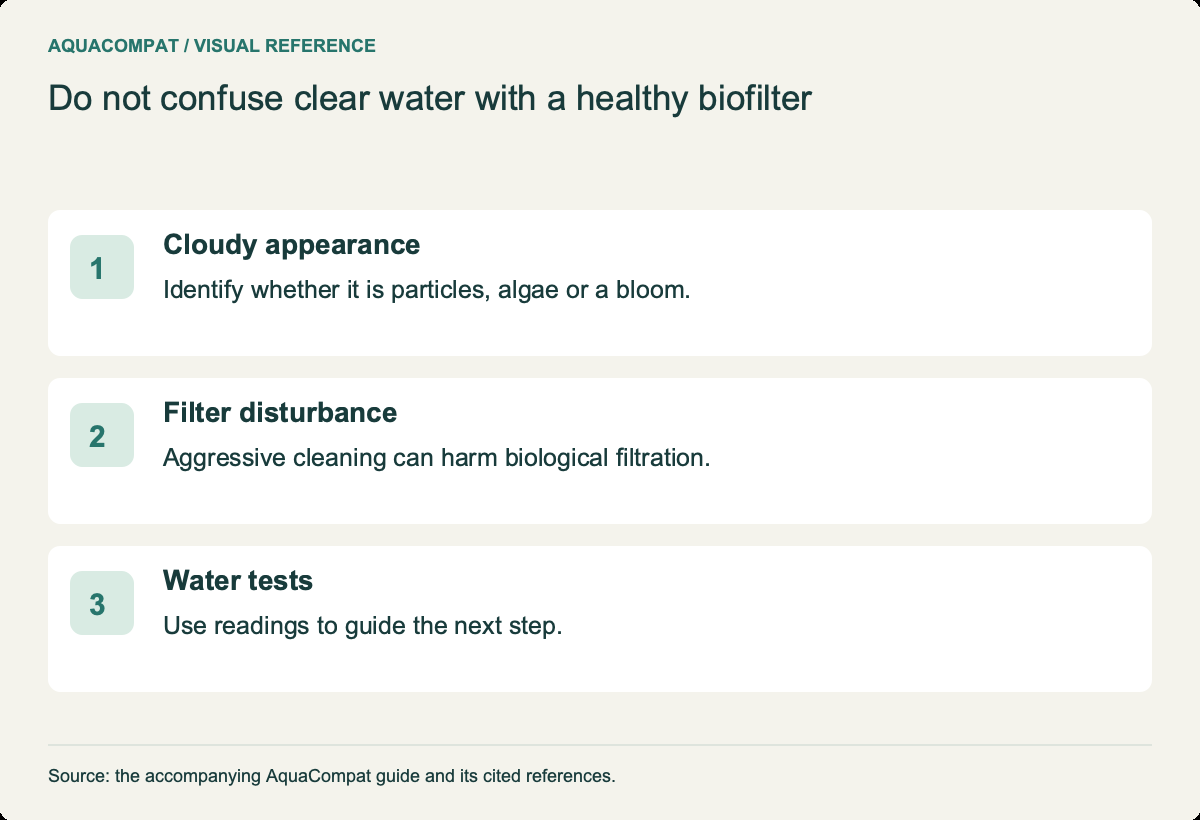
Do not confuse clear water with a healthy biofilter
SVG file · Appears in Cloudy Aquarium Water: Every Cause and How to Fix It
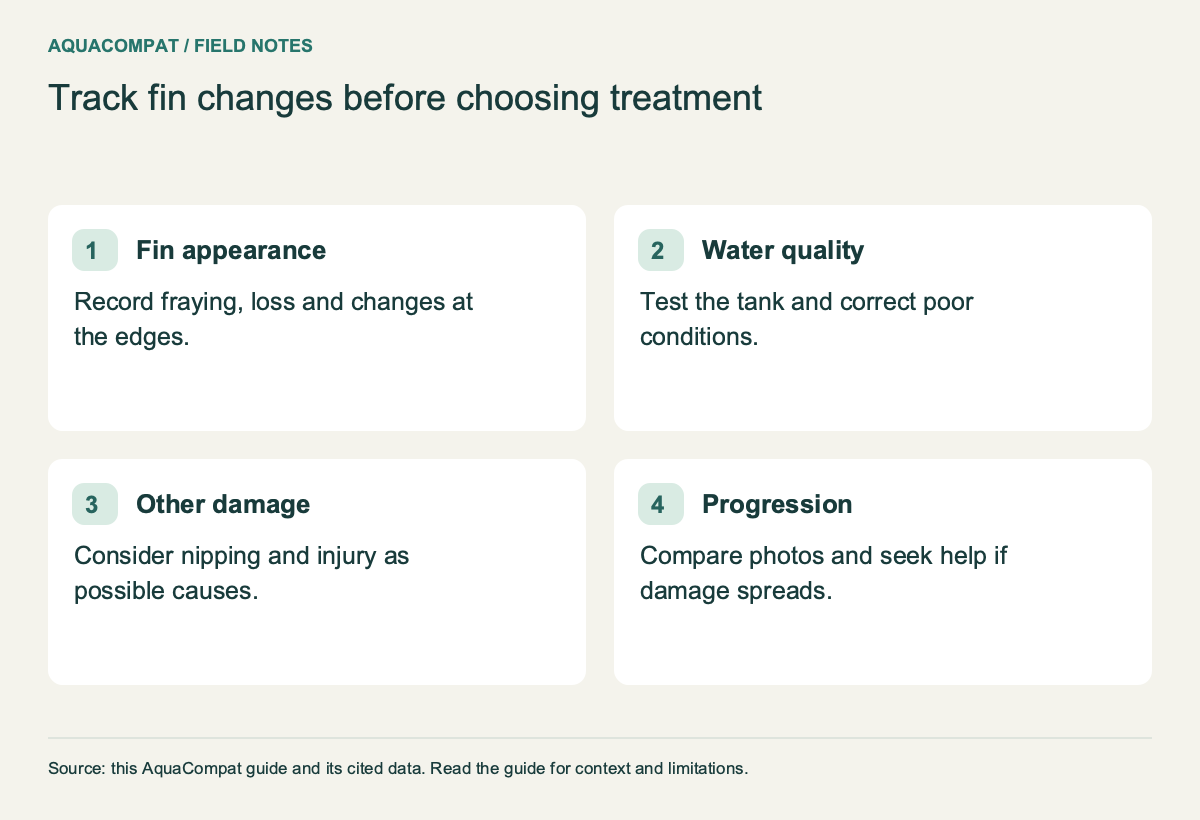
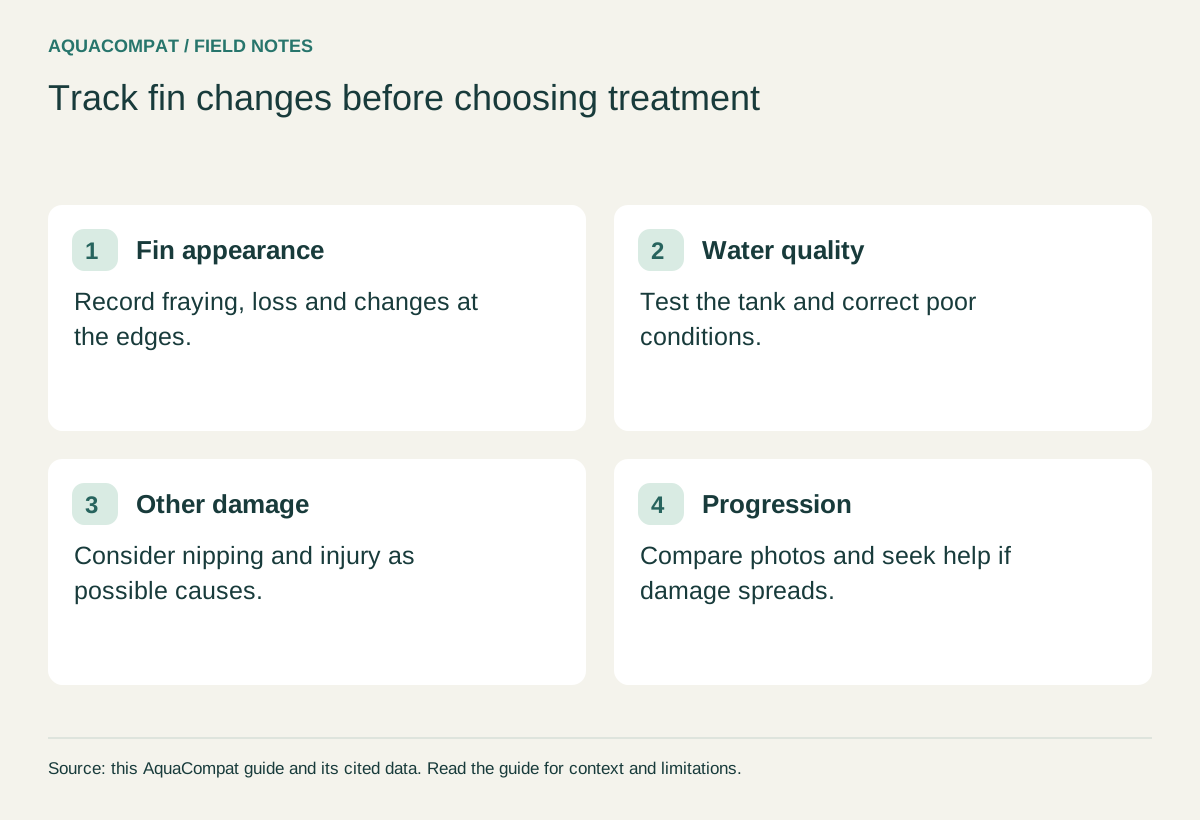
Track fin changes before choosing treatment
SVG file · Appears in Fin Rot in Aquarium Fish: Symptoms, Causes and Treatment
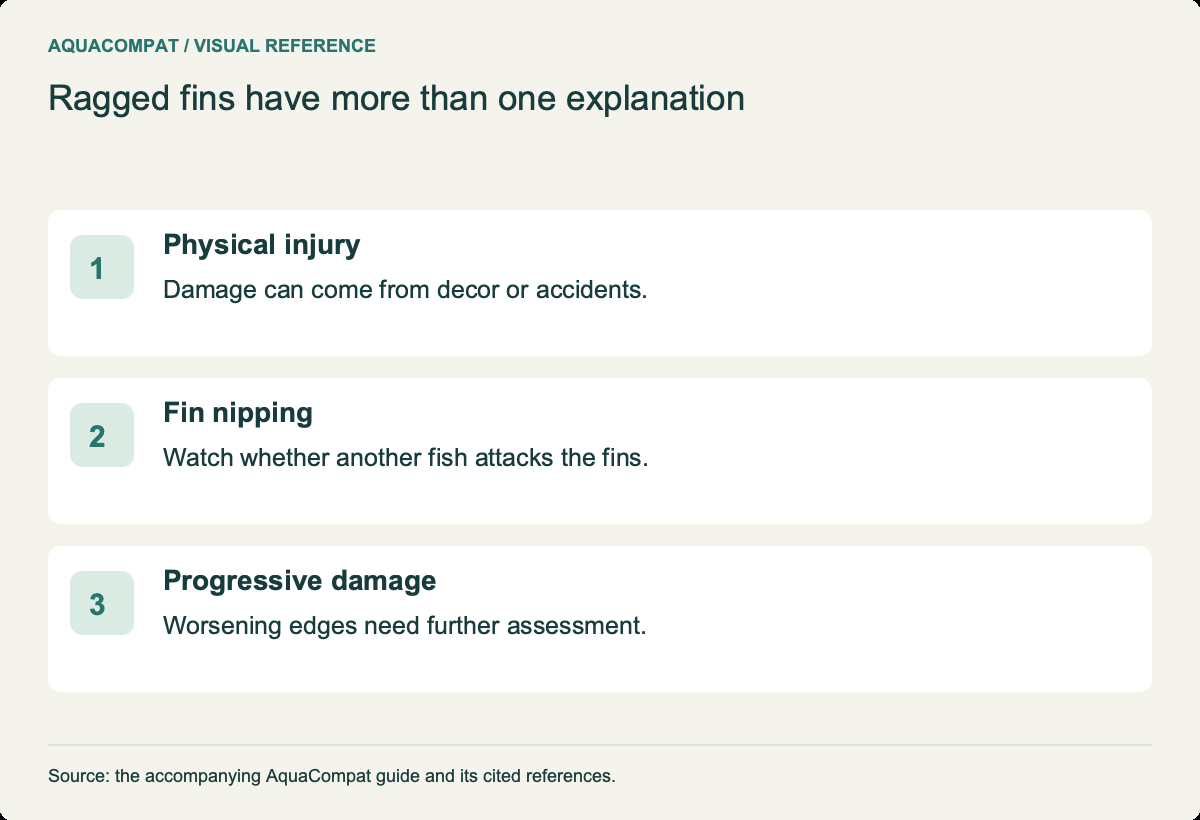
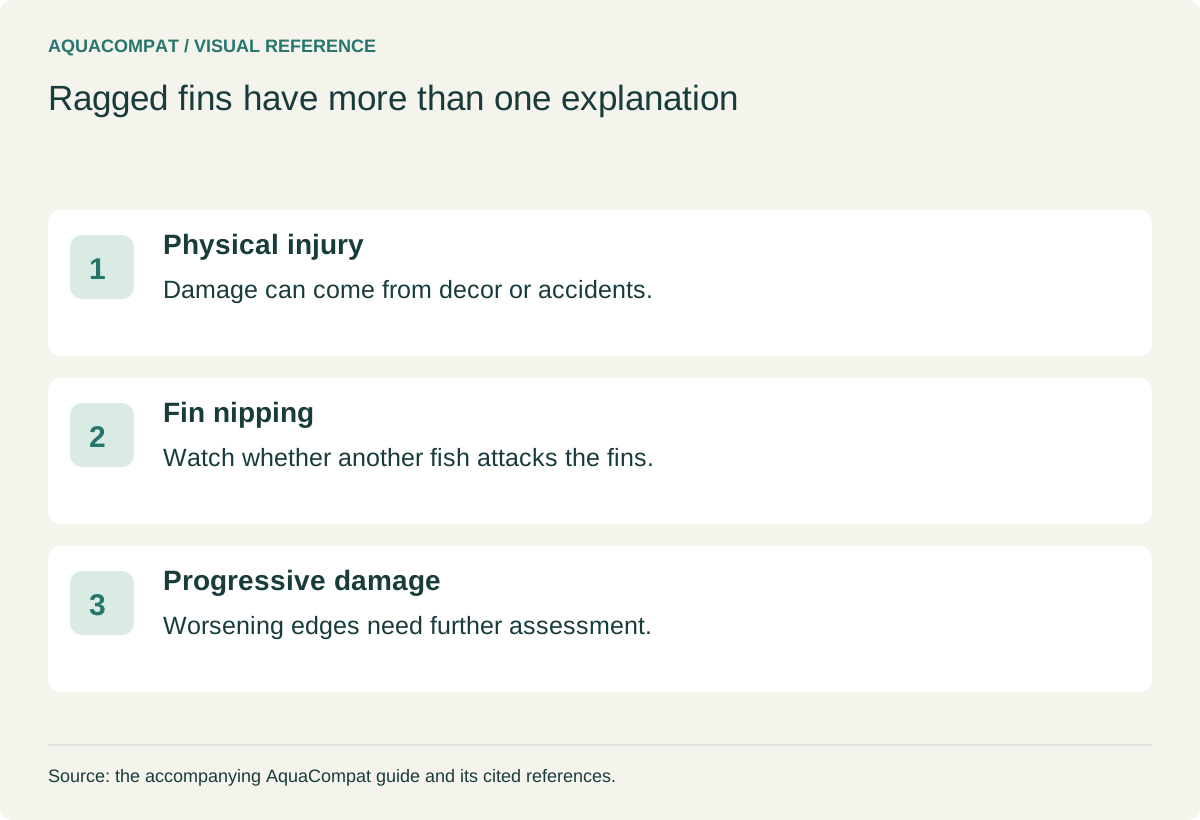
Ragged fins have more than one explanation
SVG file · Appears in Fin Rot in Aquarium Fish: Symptoms, Causes and Treatment
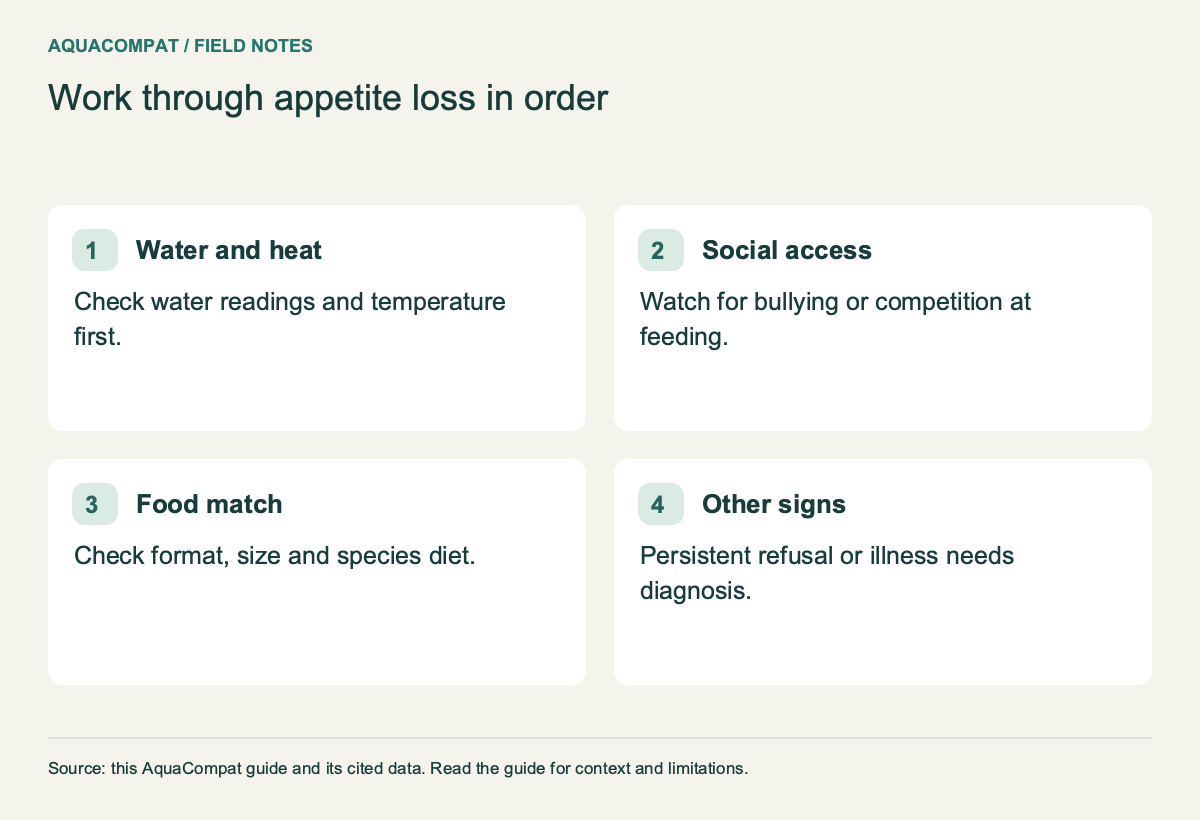
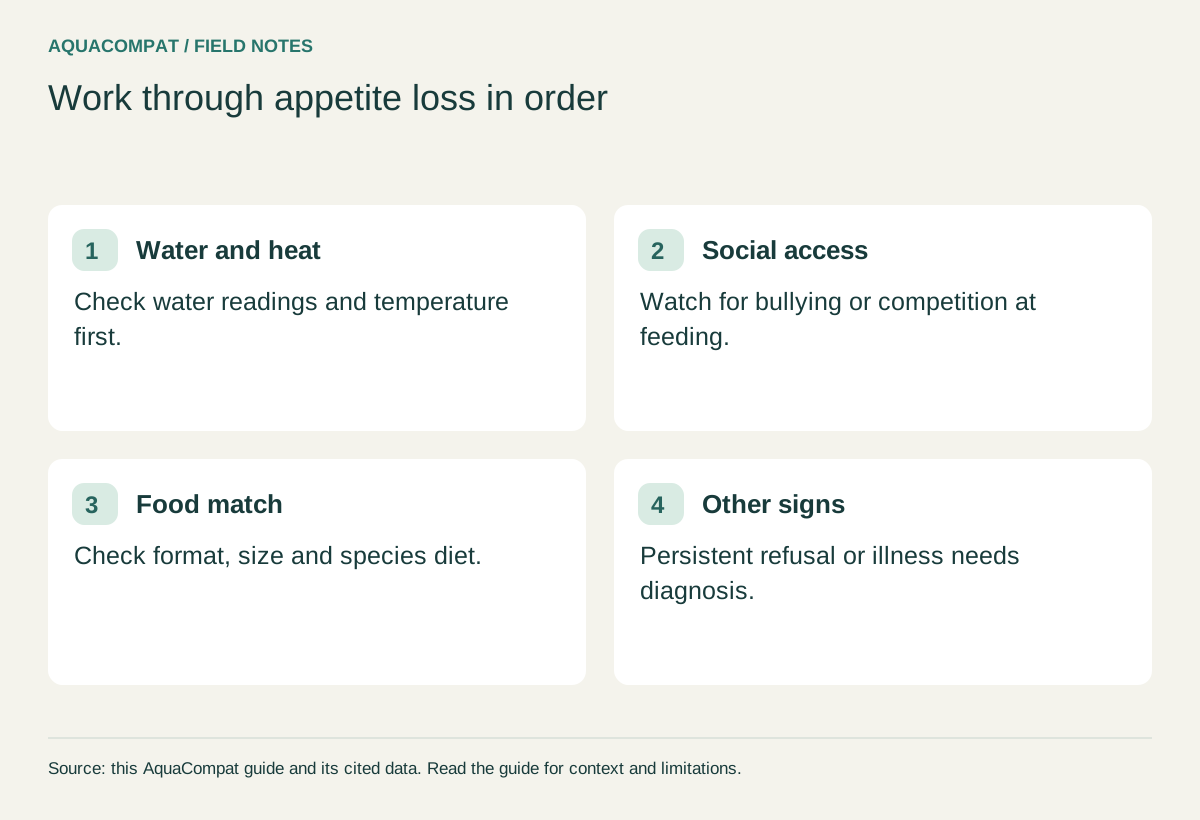
Work through appetite loss in order
SVG file · Appears in Fish Not Eating: Causes and What to Do
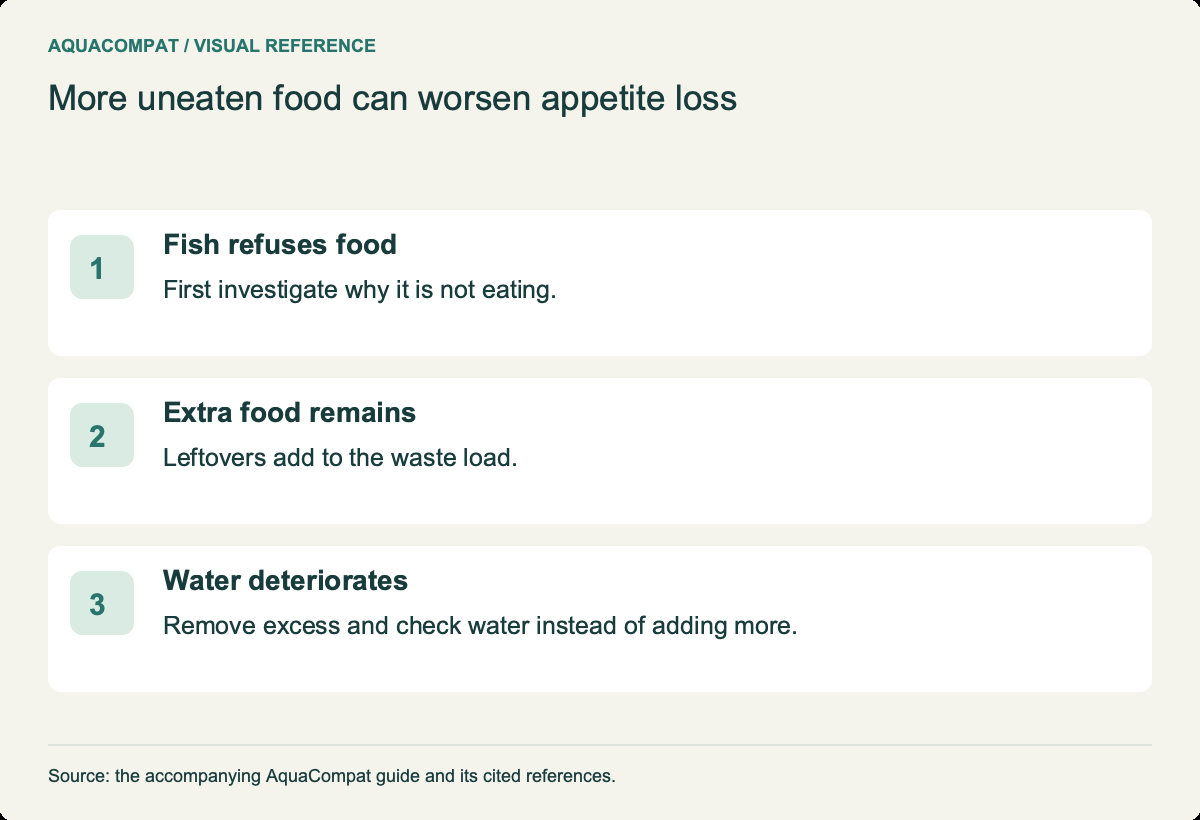
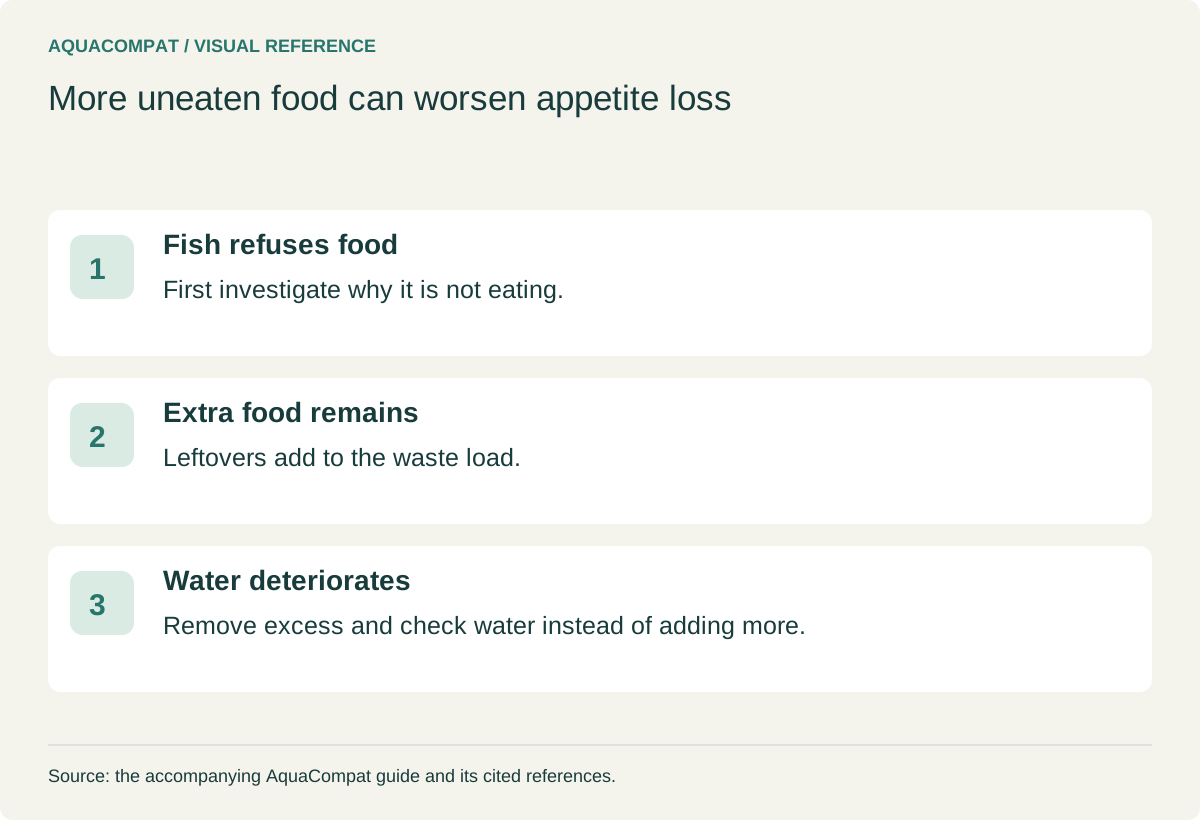
More uneaten food can worsen appetite loss
SVG file · Appears in Fish Not Eating: Causes and What to Do
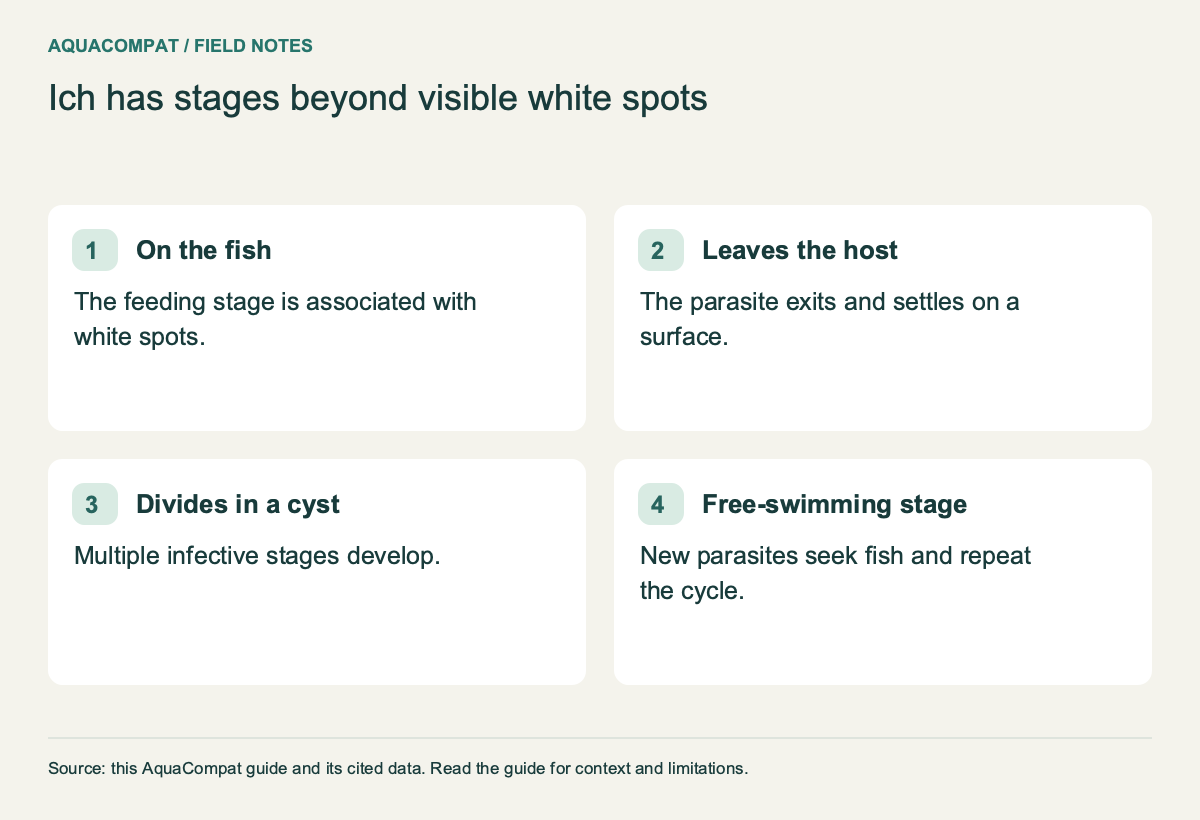
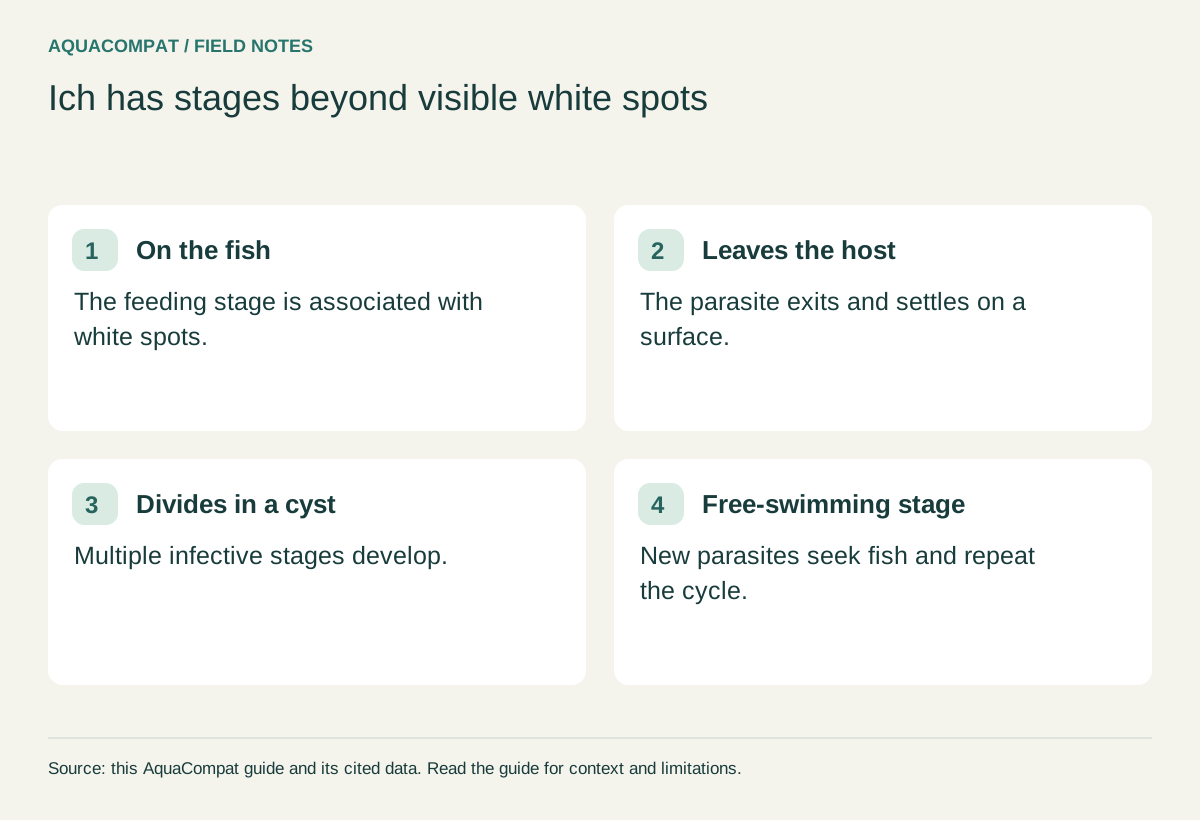
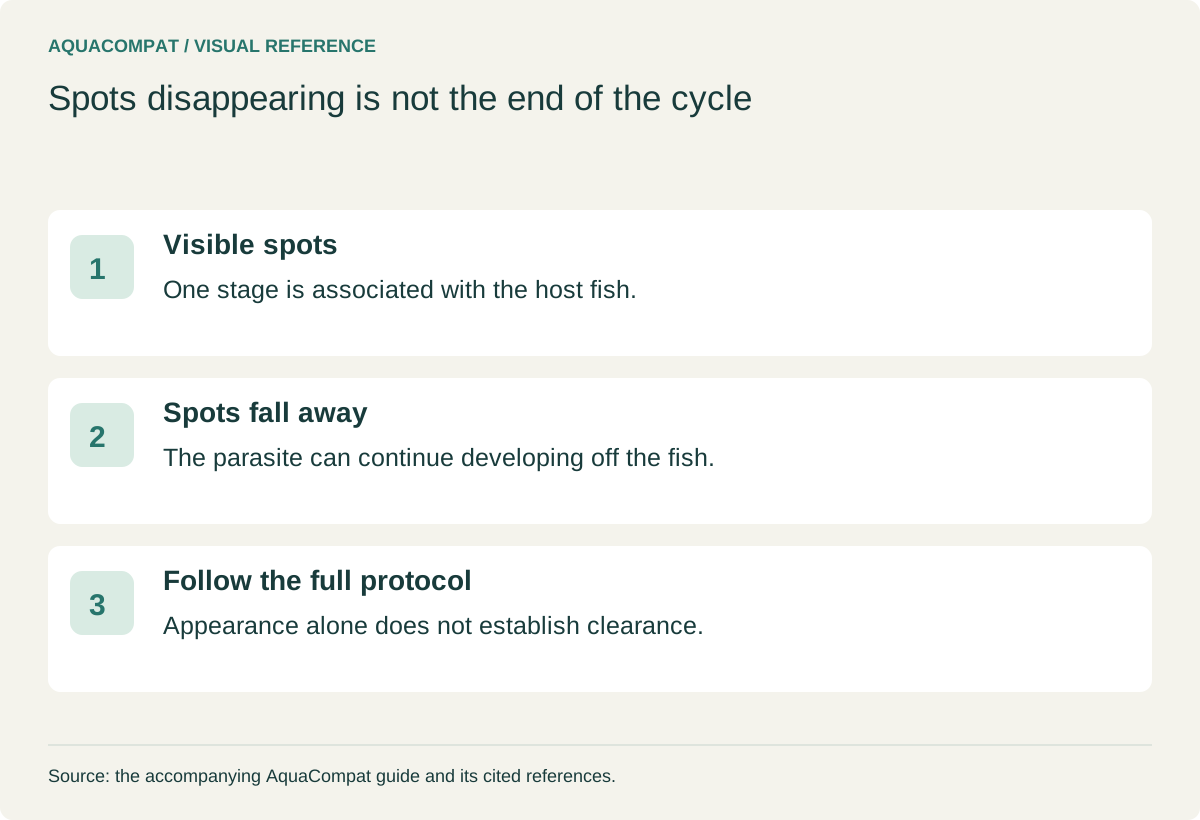
Ich has stages beyond visible white spots
SVG file · Appears in Ich (White Spot Disease): Symptoms, Causes and Treatment
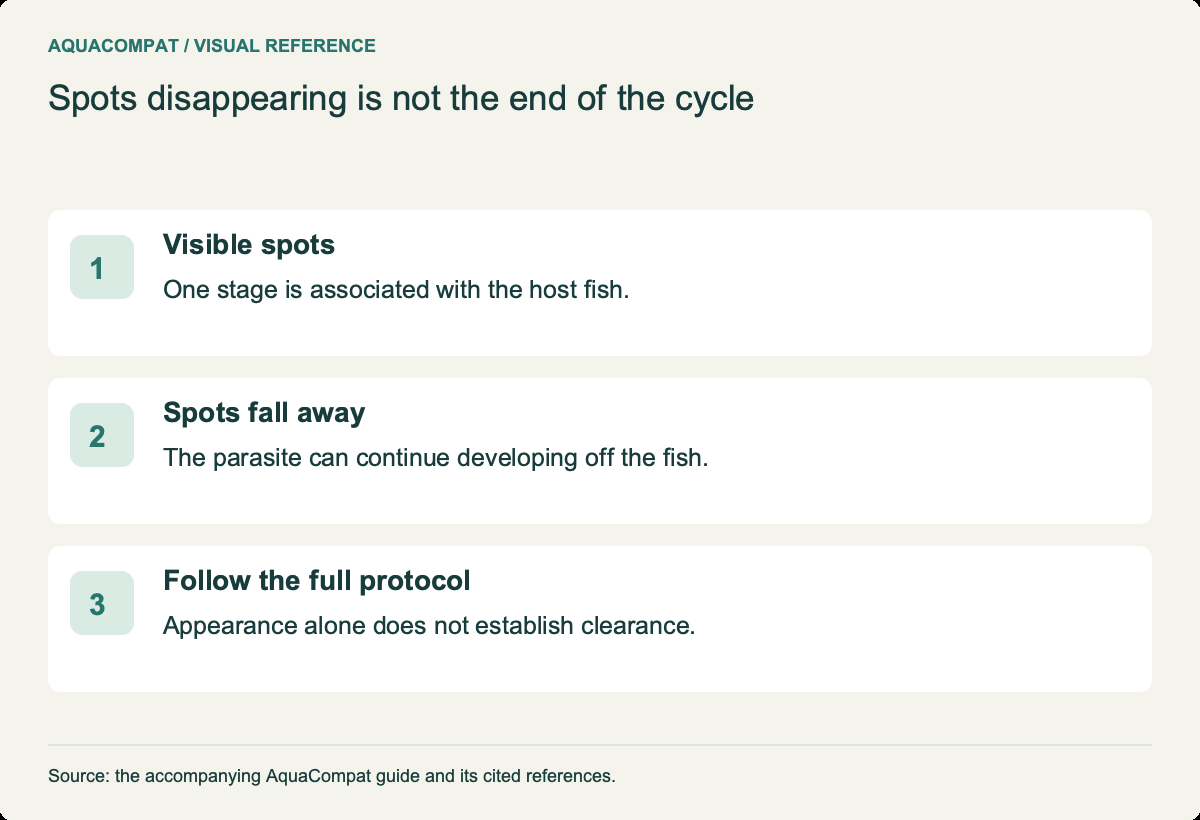
Spots disappearing is not the end of the cycle
SVG file · Appears in Ich (White Spot Disease): Symptoms, Causes and Treatment
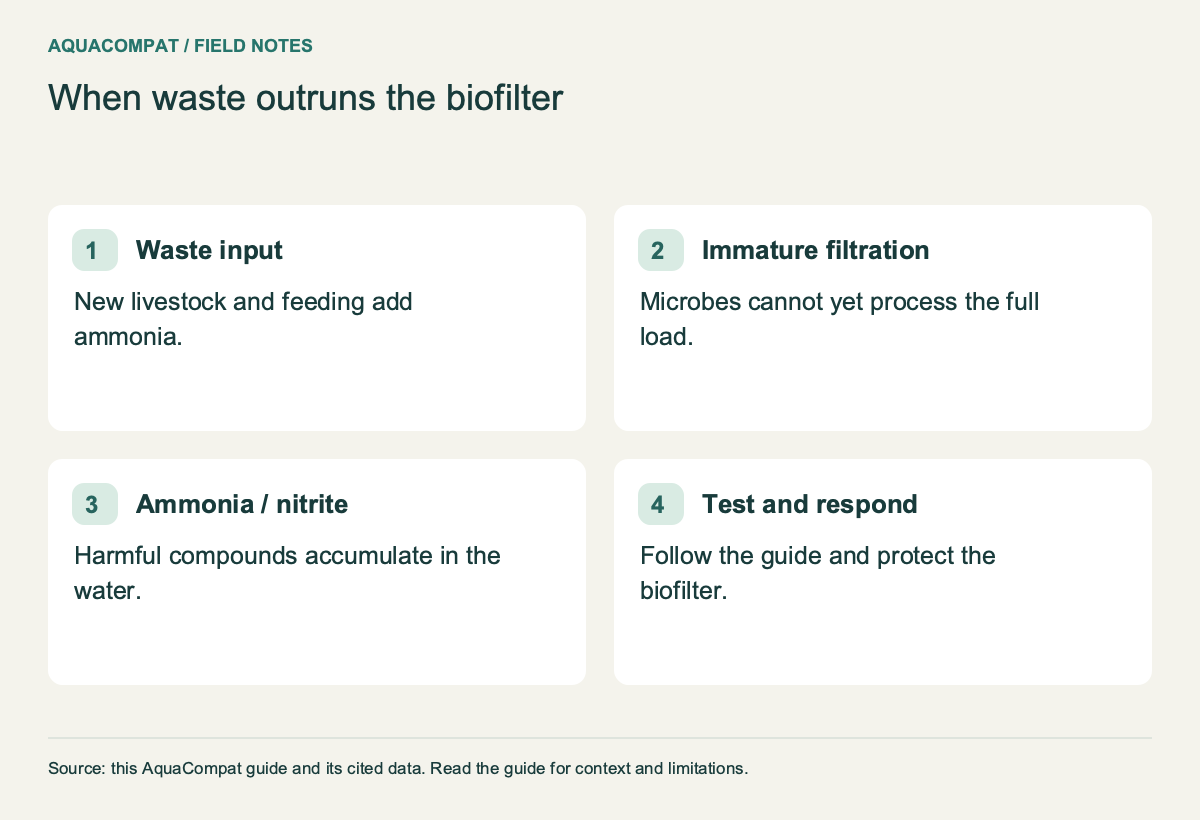
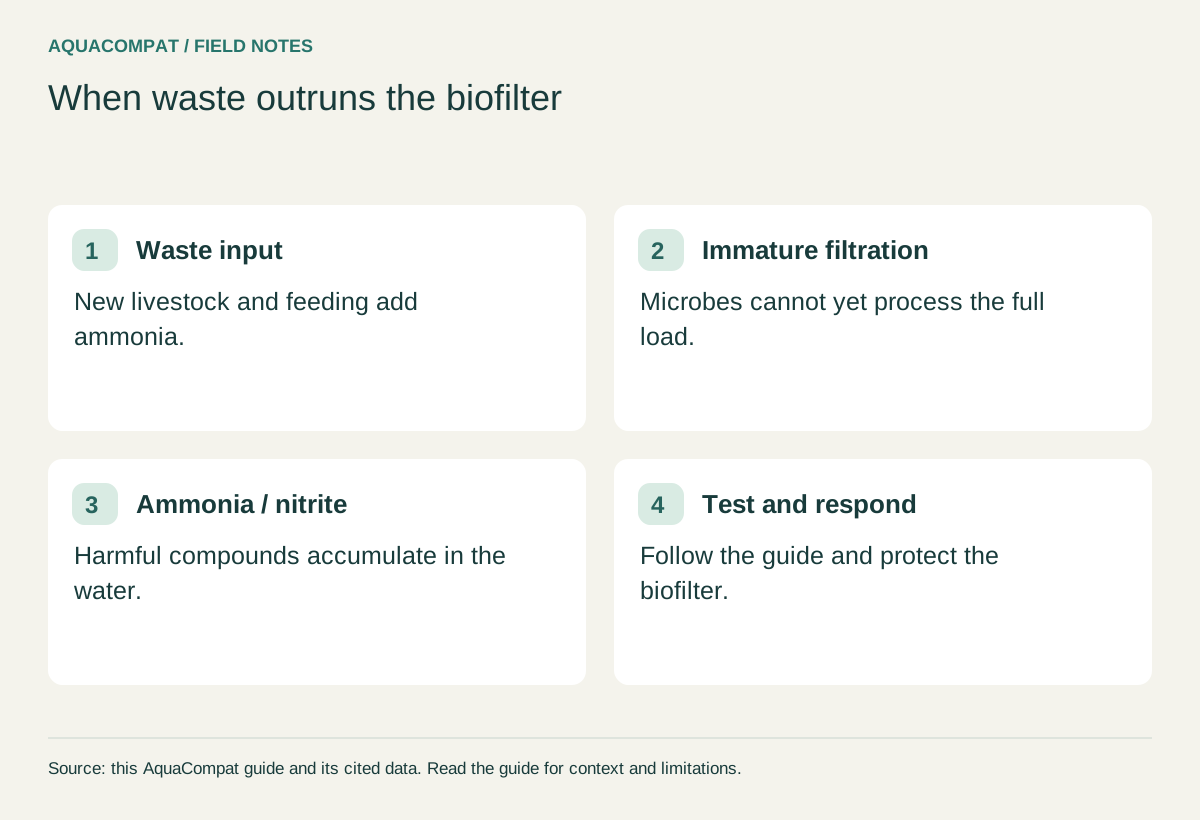
When waste outruns the biofilter
SVG file · Appears in New Tank Syndrome: Symptoms, Causes and Emergency Fixes
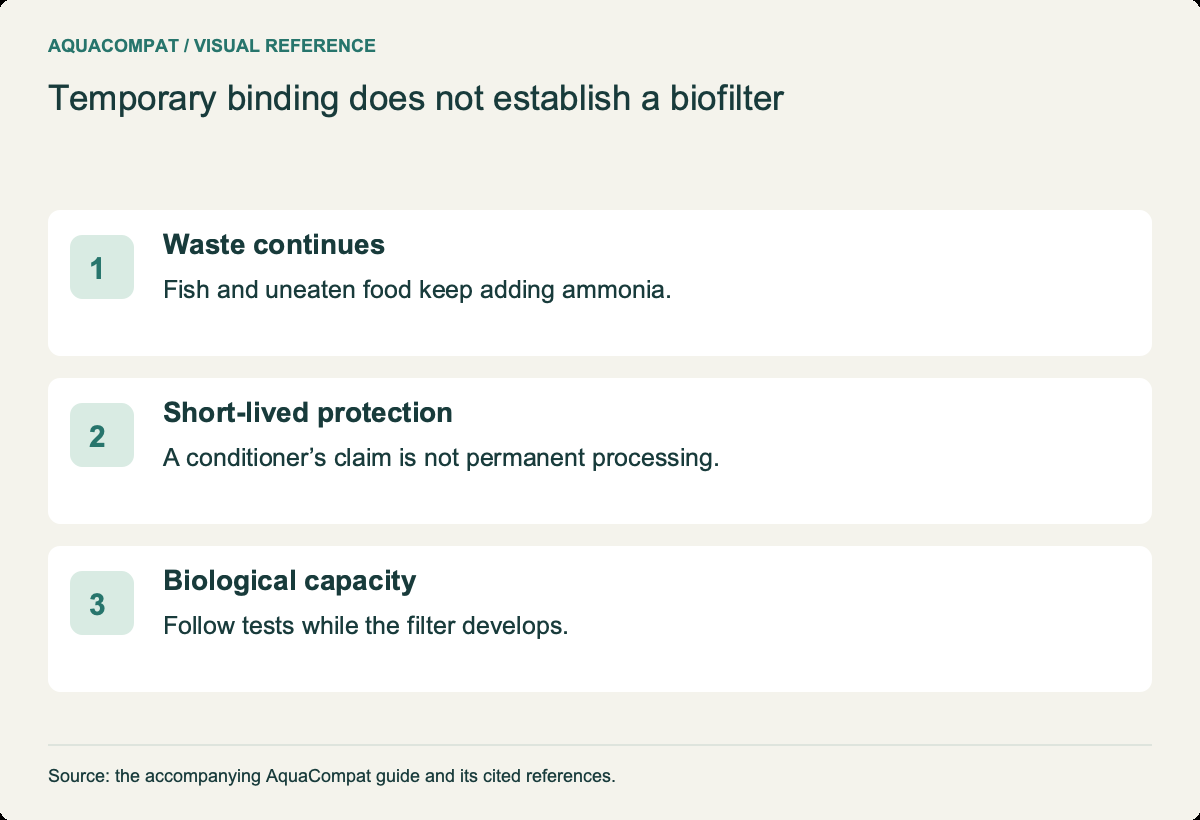
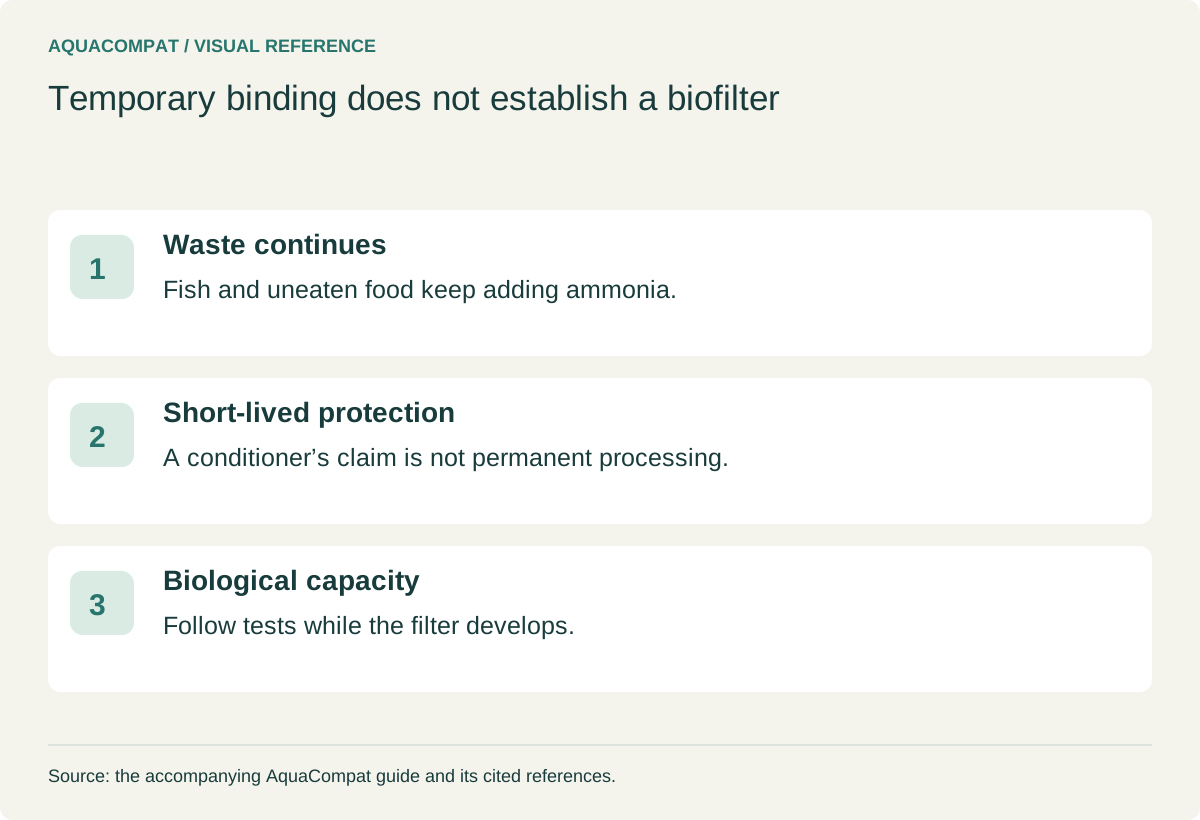
Temporary binding does not establish a biofilter
SVG file · Appears in New Tank Syndrome: Symptoms, Causes and Emergency Fixes
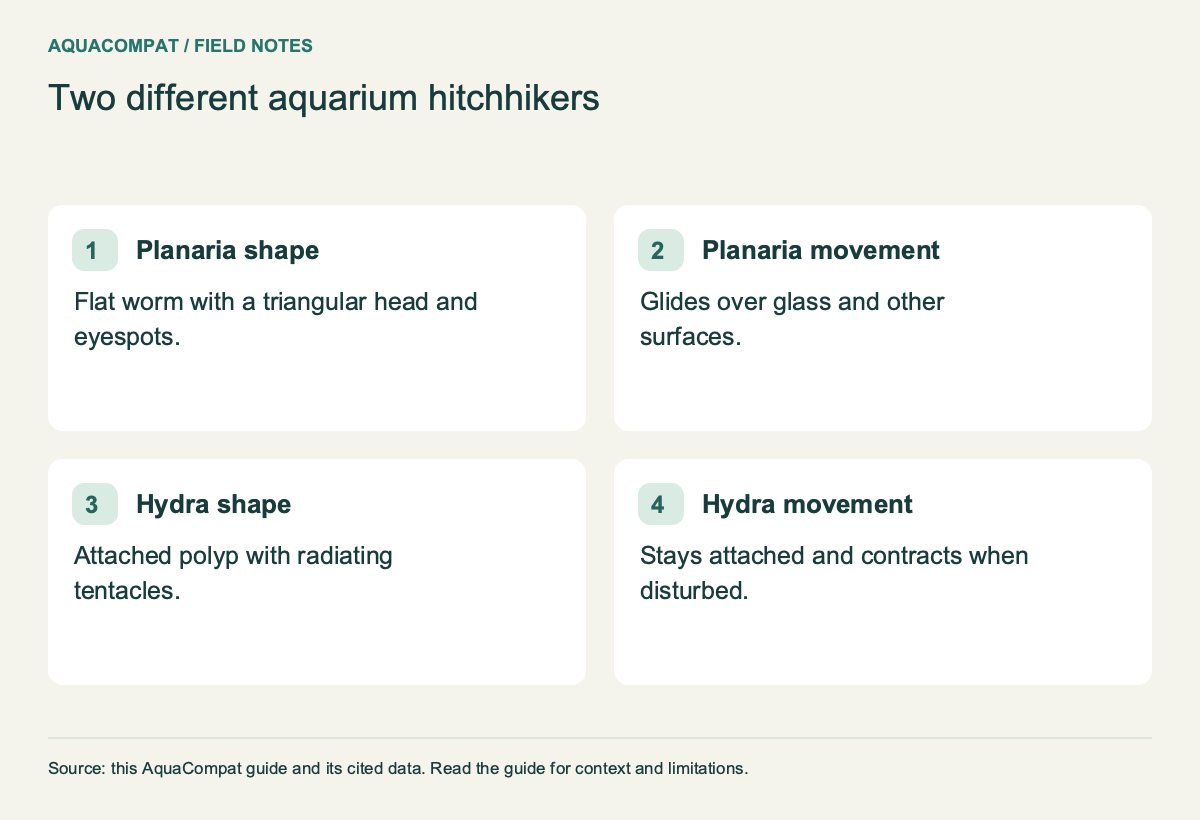
Two different aquarium hitchhikers
SVG file · Appears in Planaria and Hydra in Shrimp Tanks: Identify and Remove
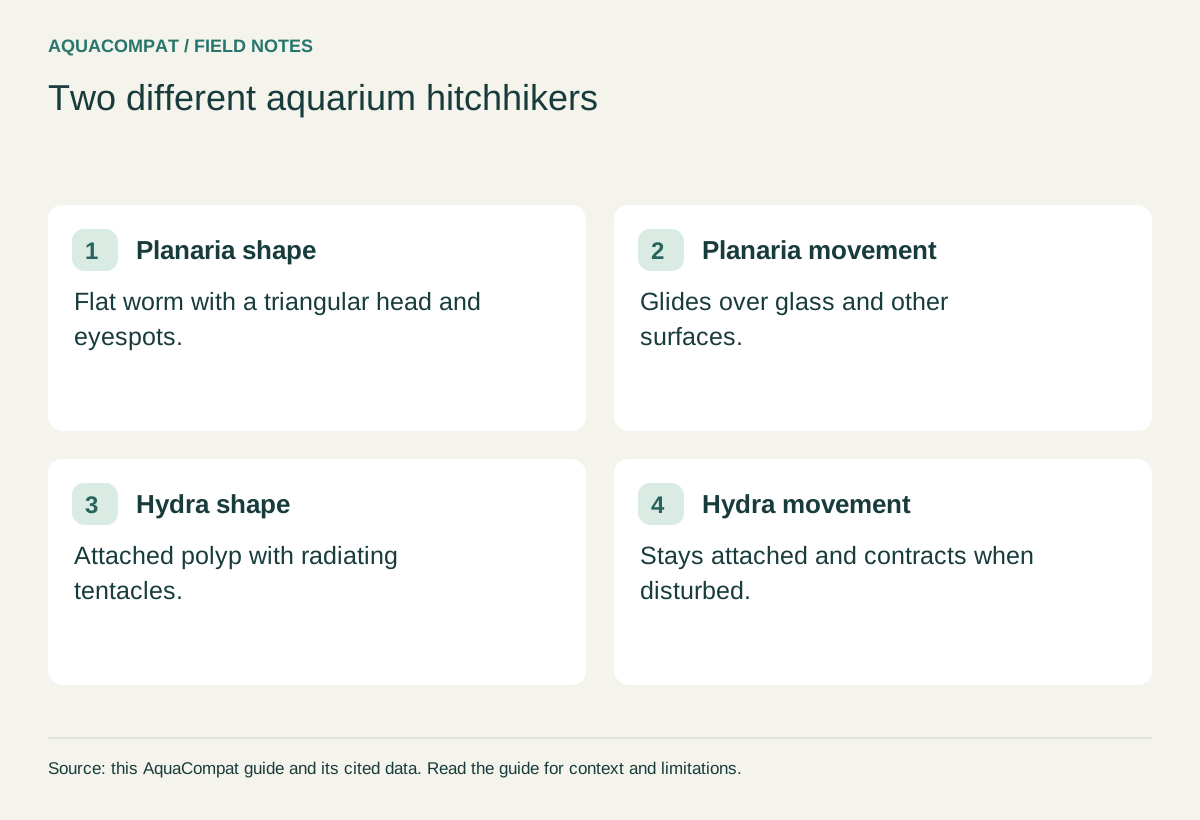
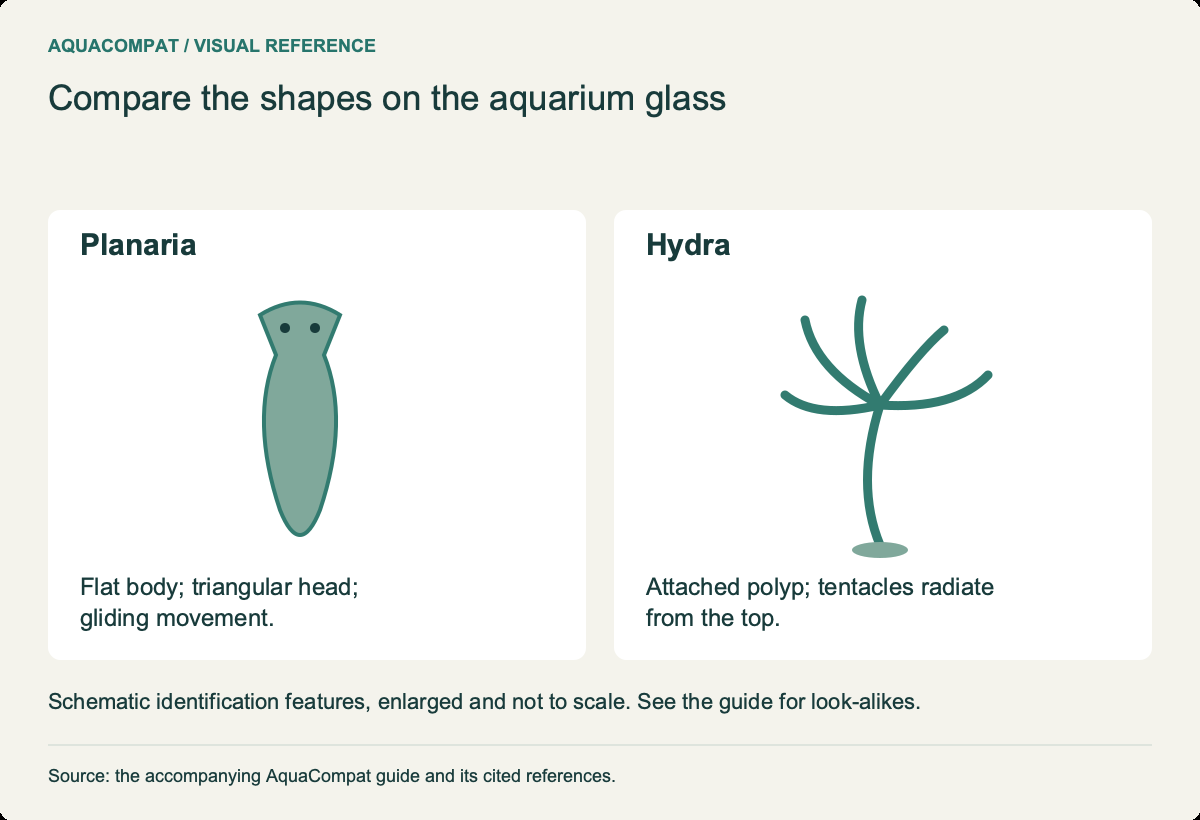
Compare the shapes on the aquarium glass
SVG file · Appears in Planaria and Hydra in Shrimp Tanks: Identify and Remove
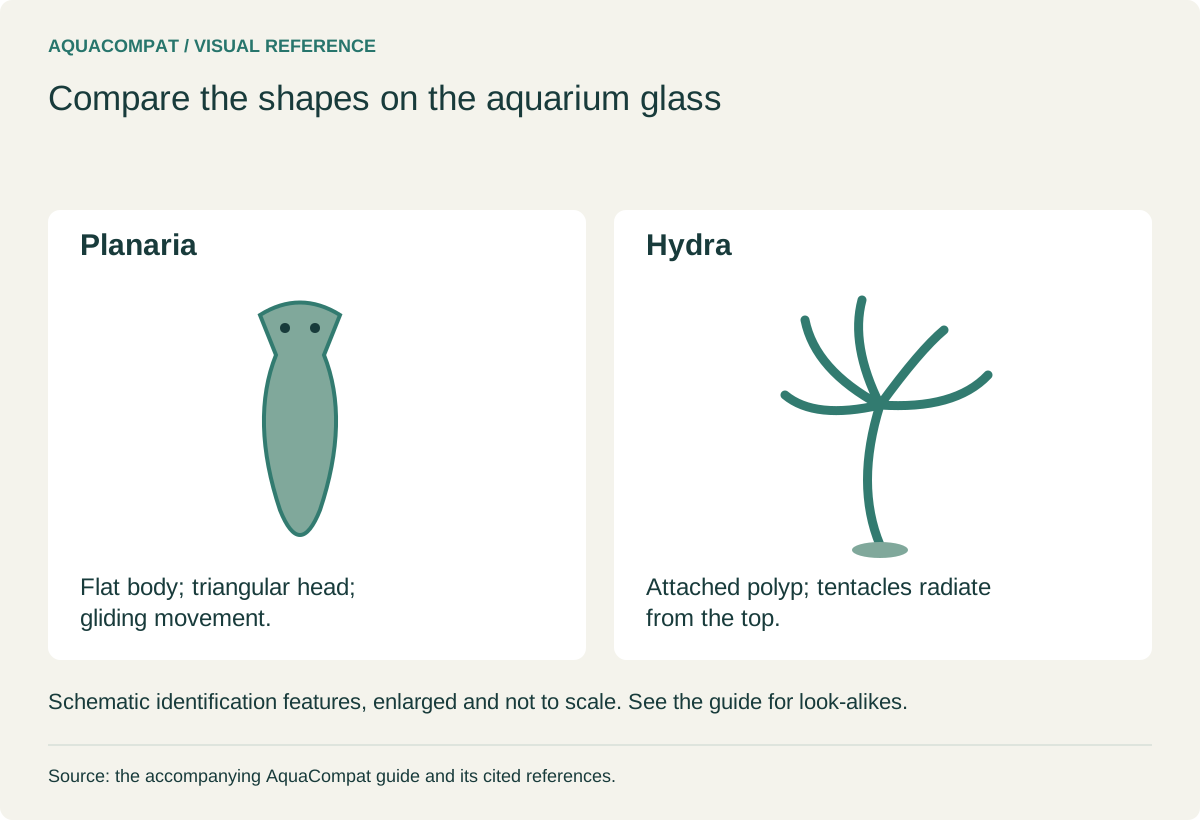
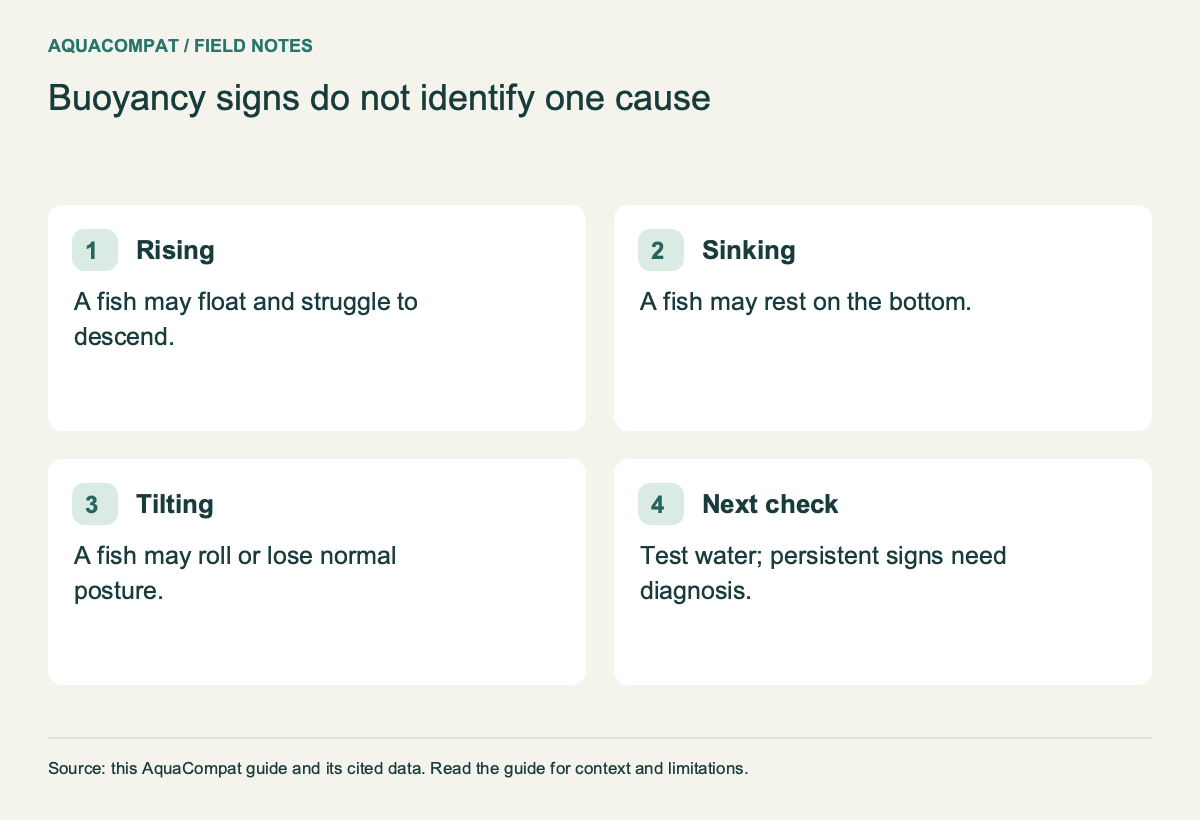
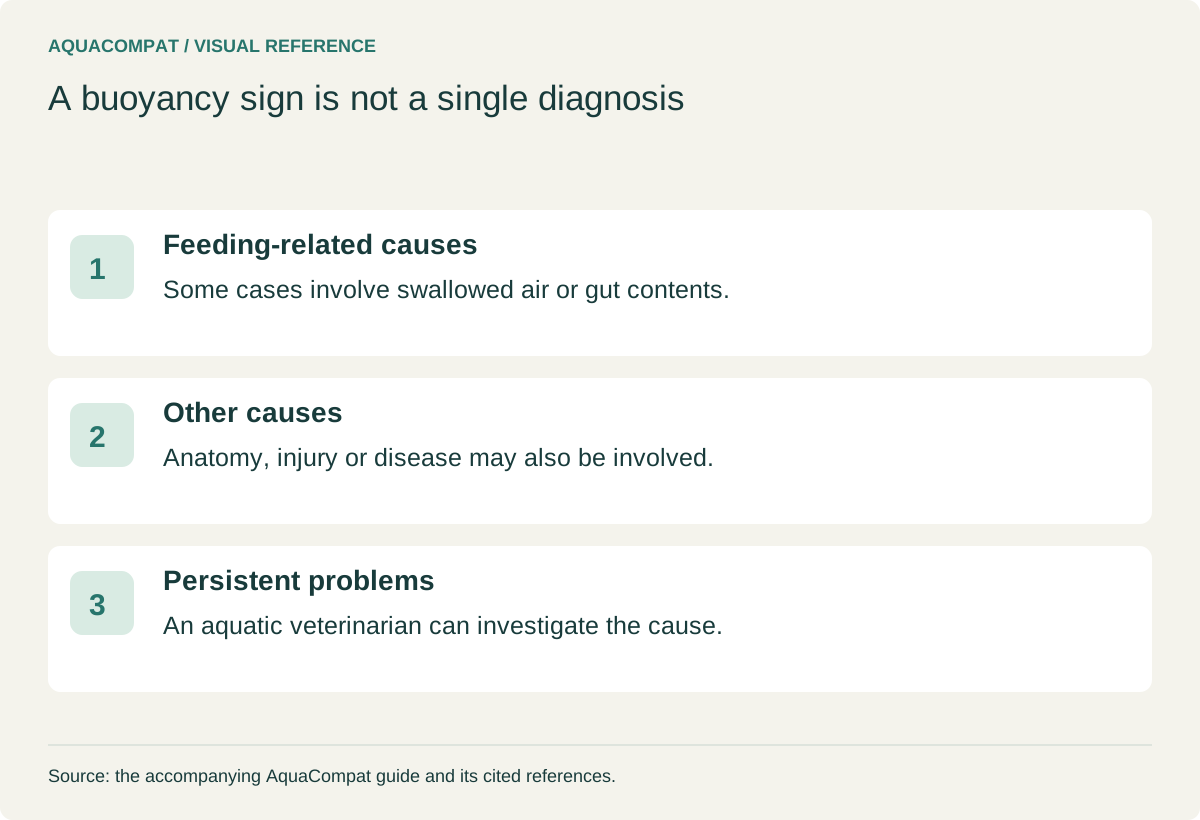
Buoyancy signs do not identify one cause
SVG file · Appears in Swim Bladder Disorder: Symptoms, Causes and Treatment
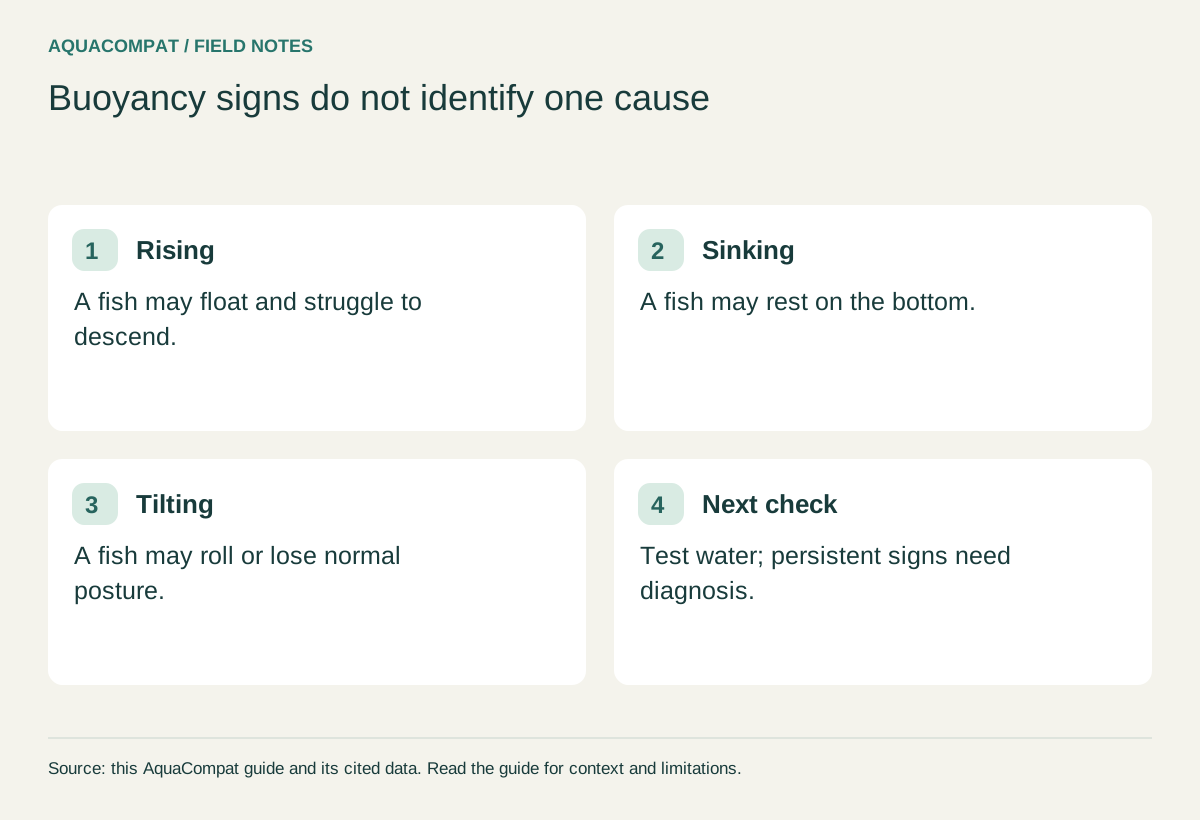
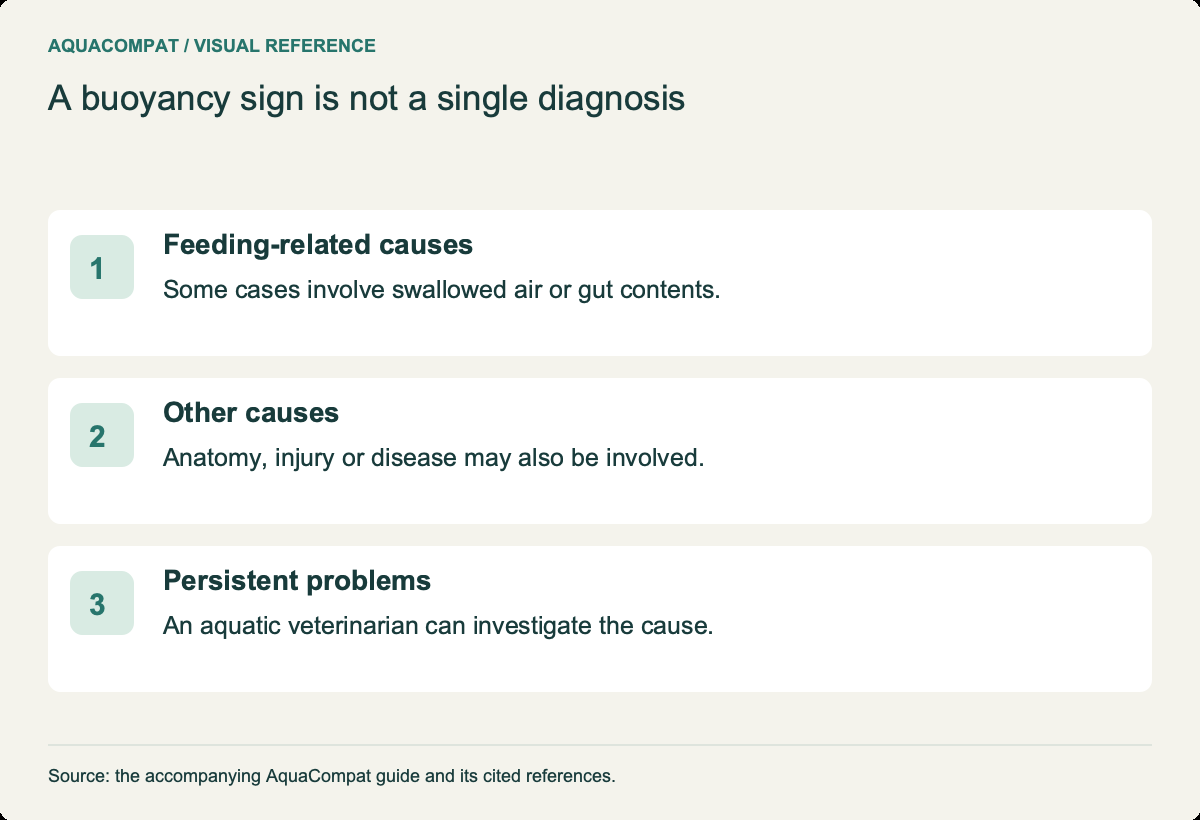
A buoyancy sign is not a single diagnosis
SVG file · Appears in Swim Bladder Disorder: Symptoms, Causes and Treatment
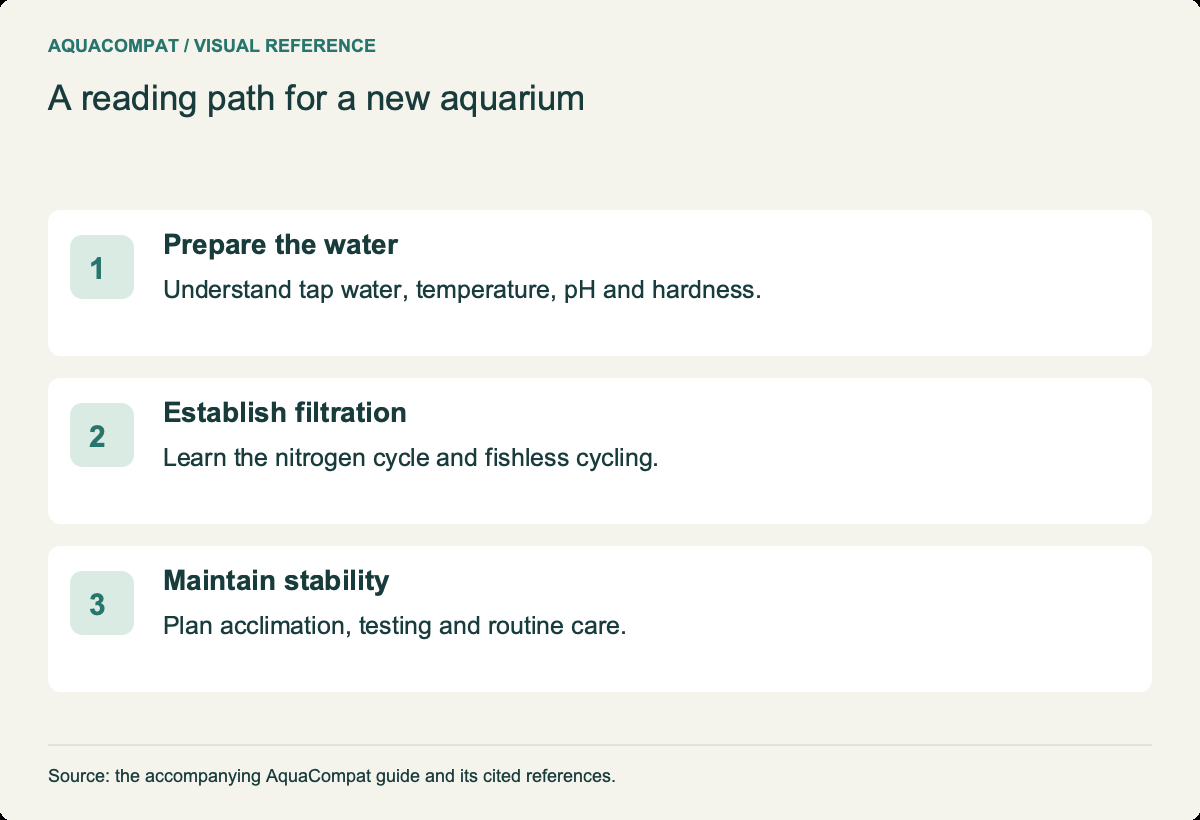
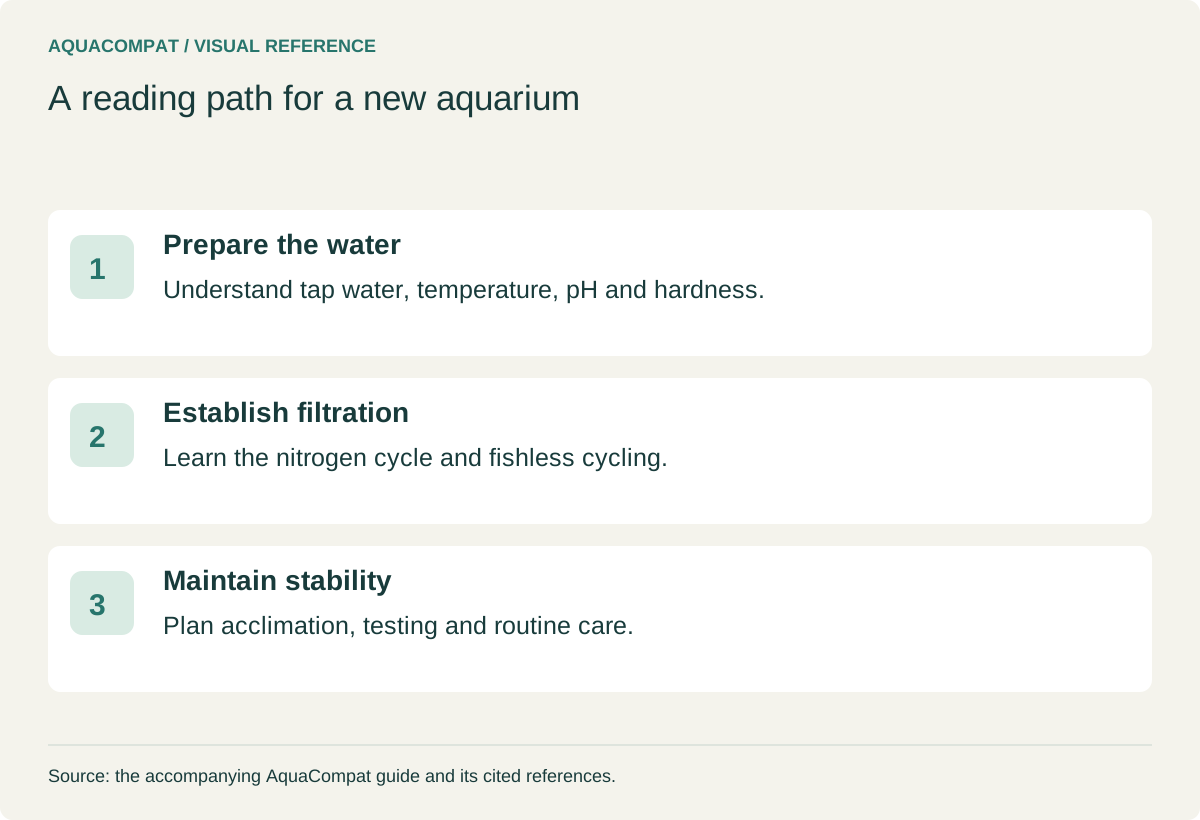
A reading path for a new aquarium
SVG file · Appears in Aquarium Water Chemistry and Setup Guides
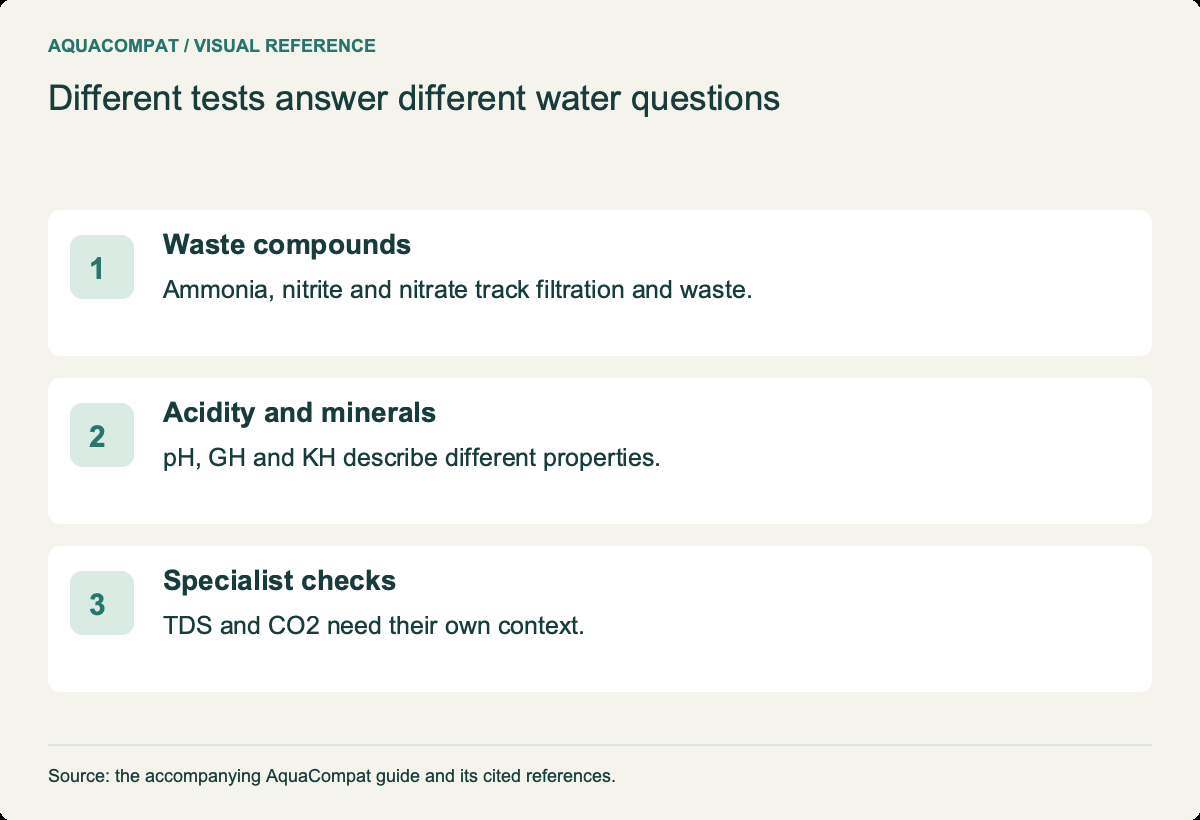
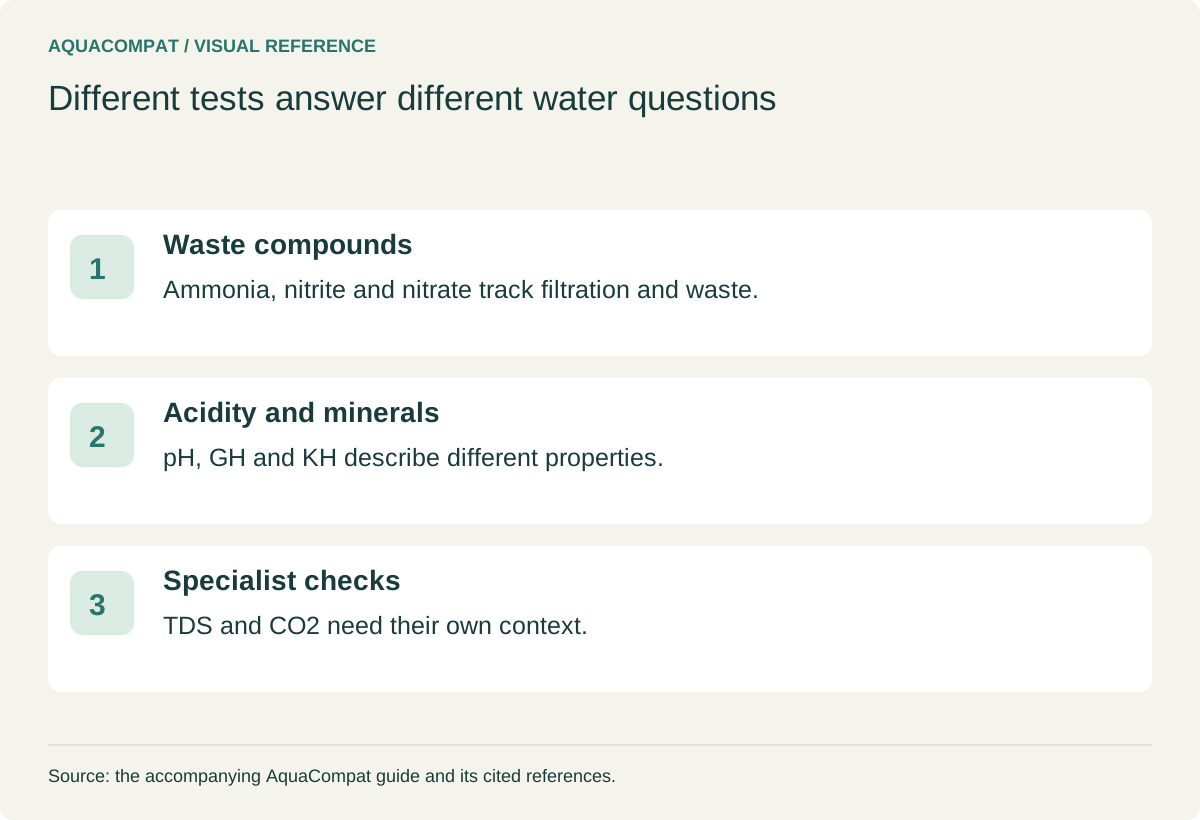
Different tests answer different water questions
SVG file · Appears in Aquarium Water Chemistry and Setup Guides
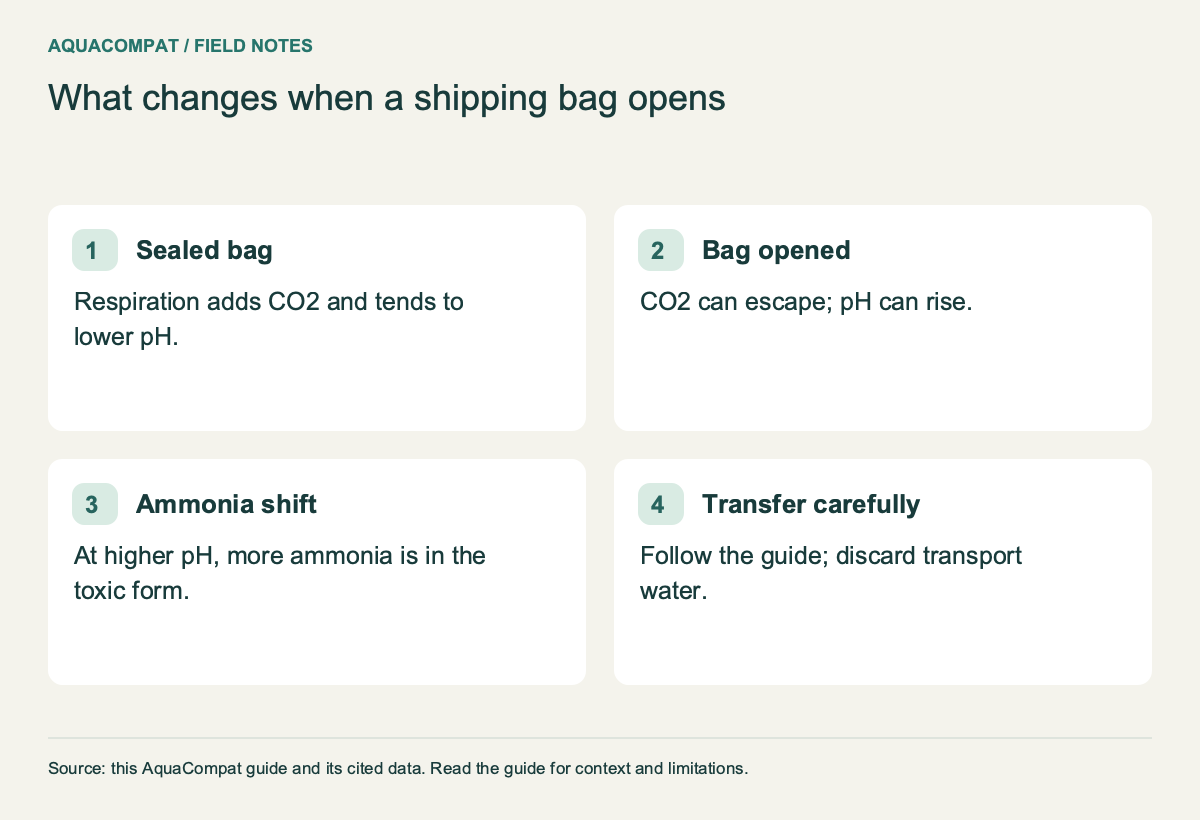
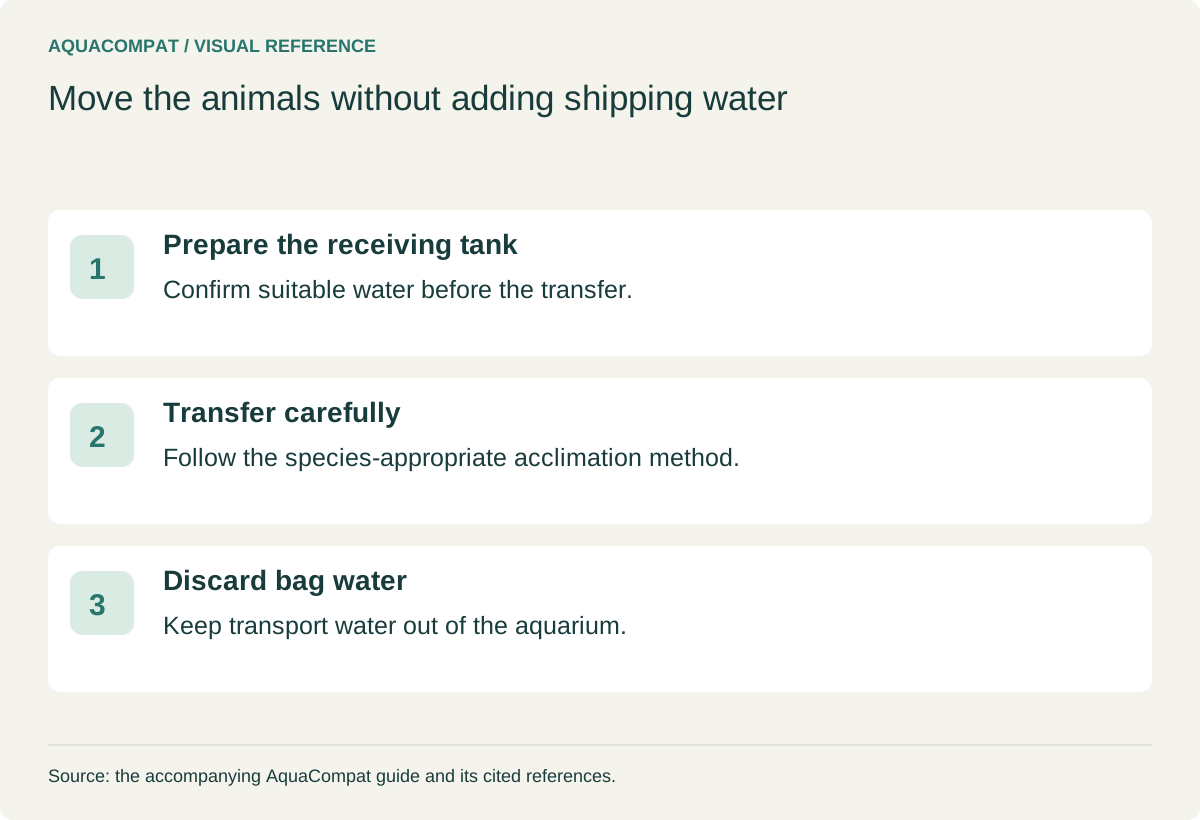
What changes when a shipping bag opens
SVG file · Appears in How to Acclimate New Fish: Drip vs Float
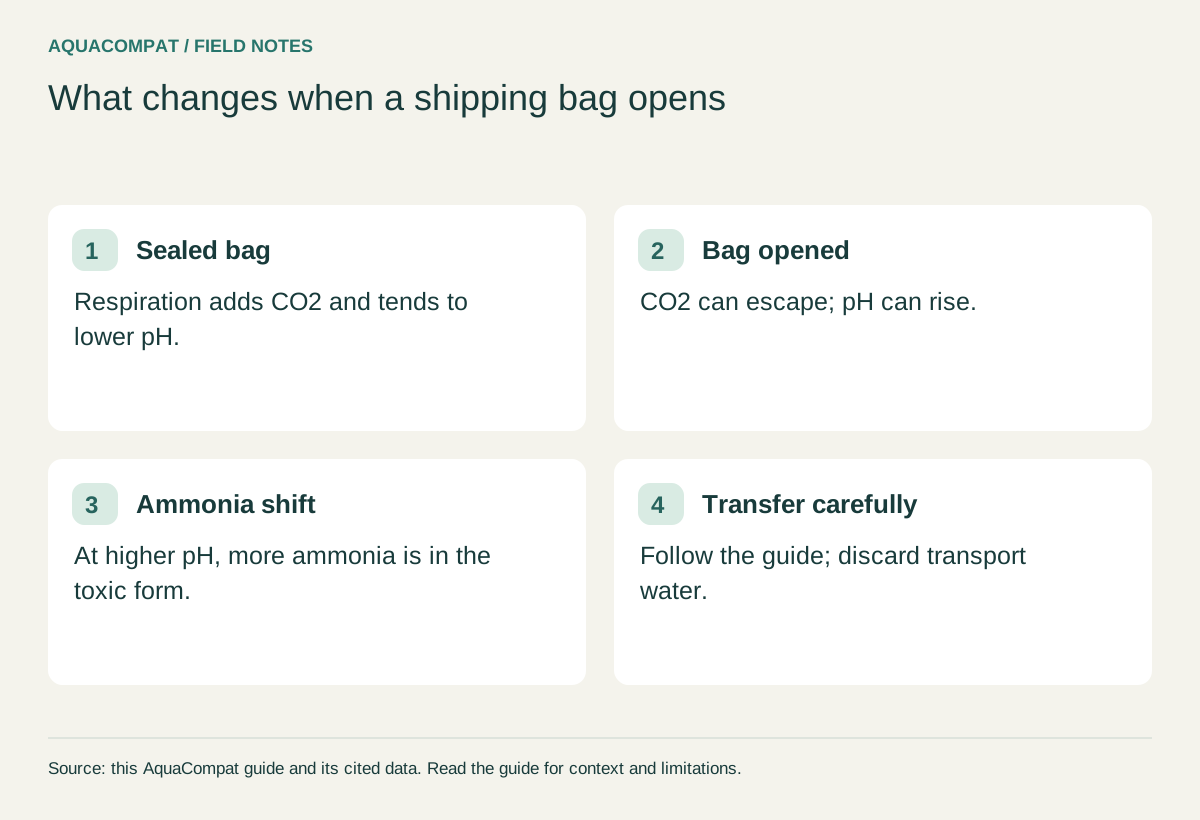
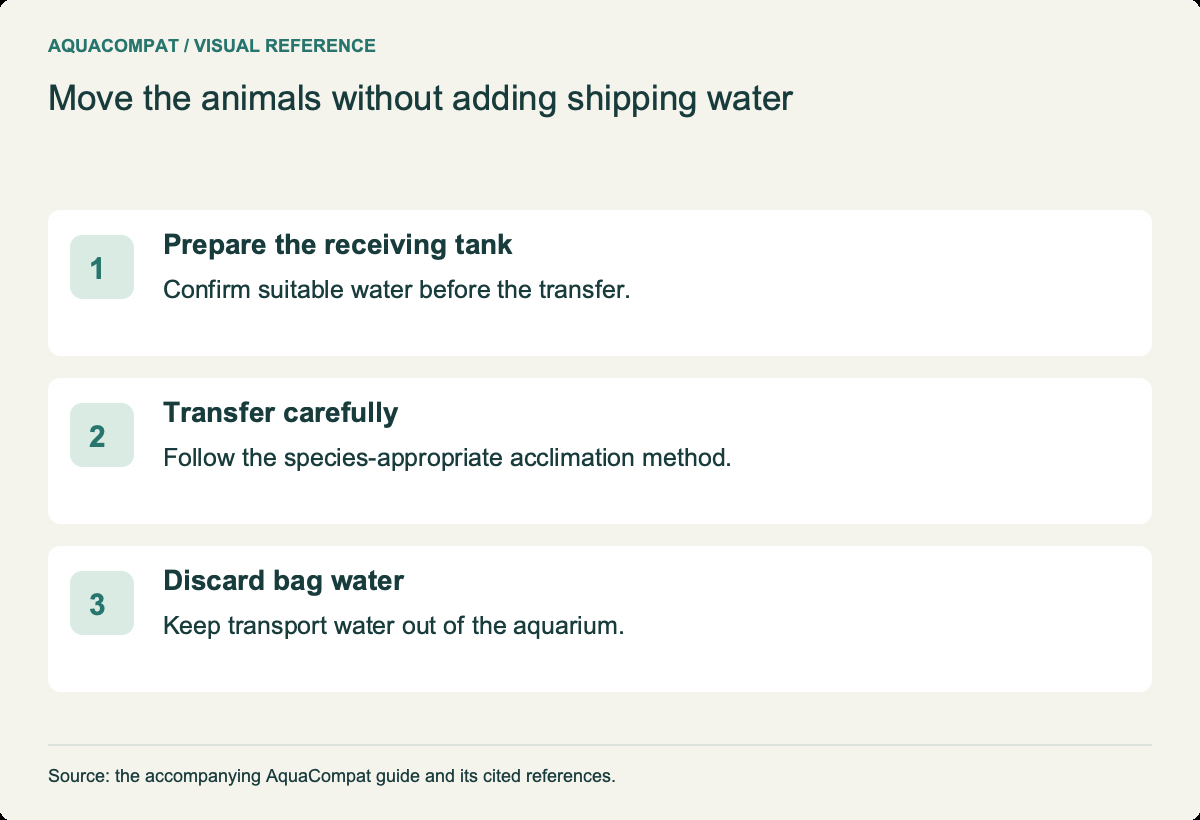
Move the animals without adding shipping water
SVG file · Appears in How to Acclimate New Fish: Drip vs Float
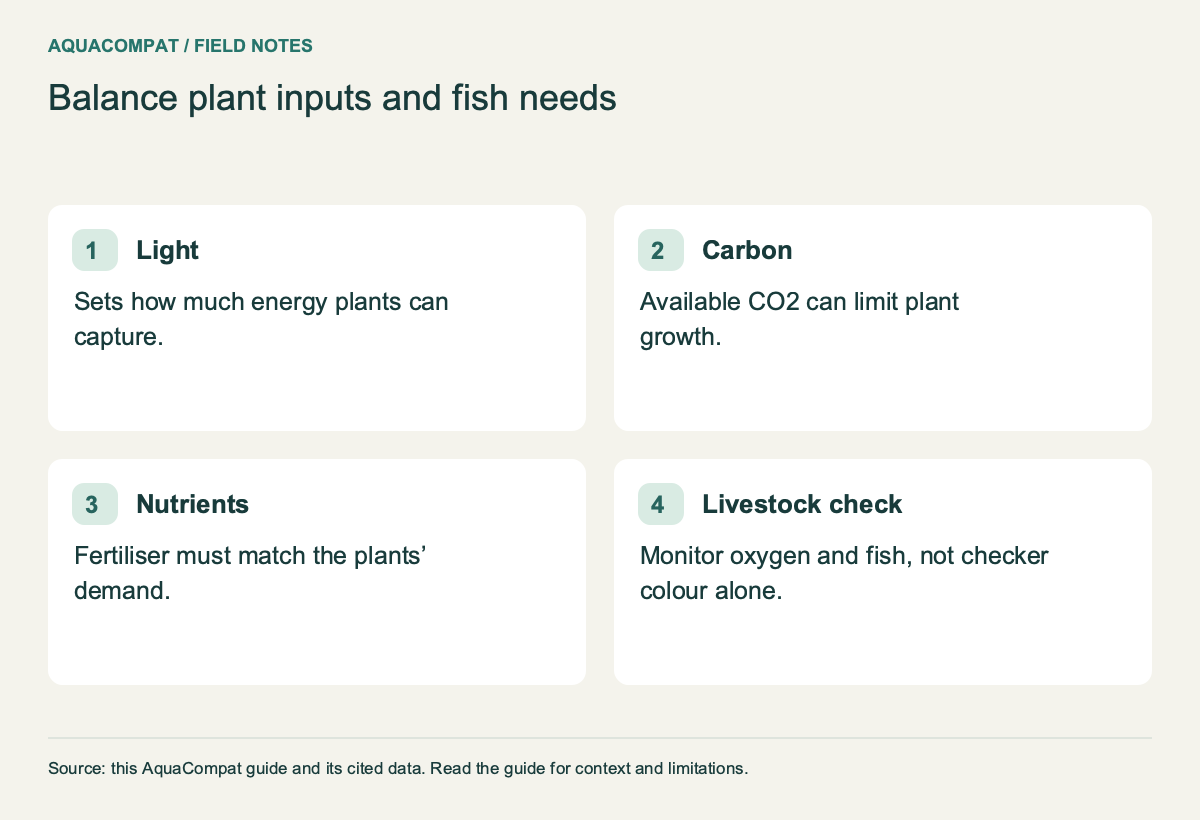
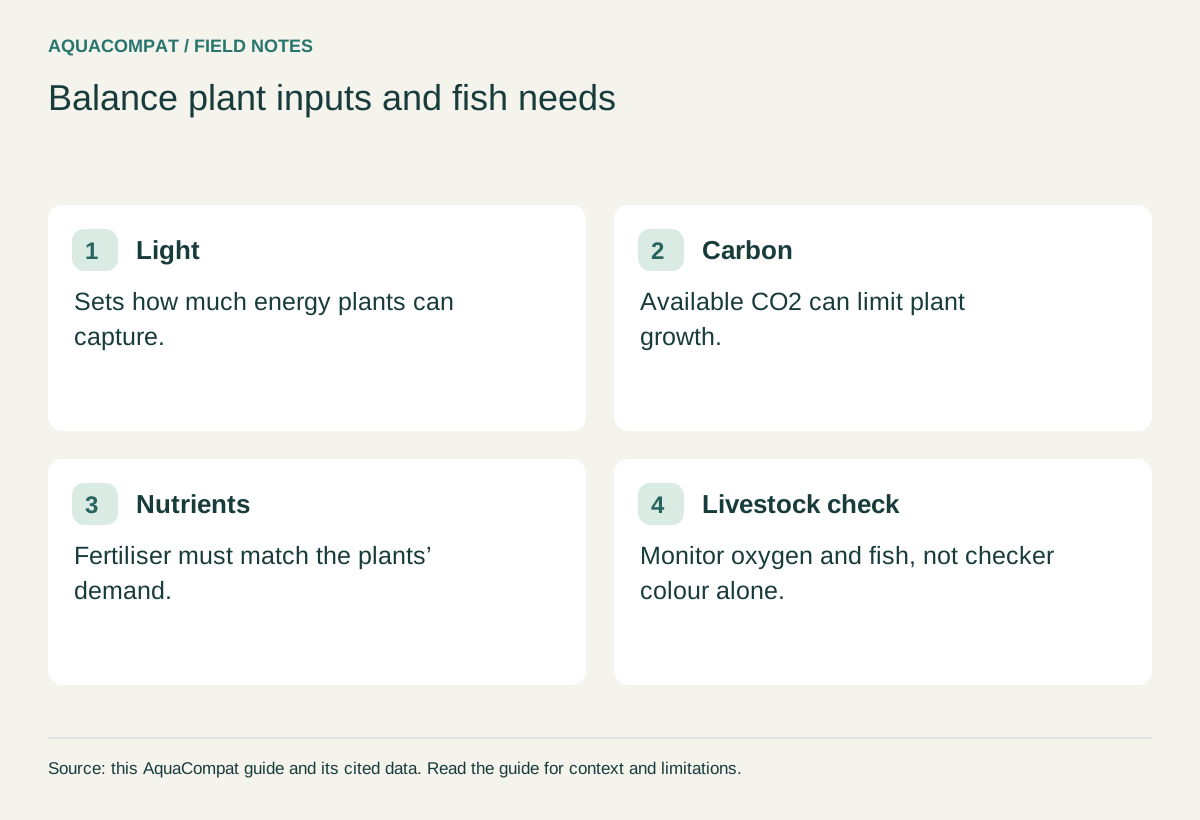
Balance plant inputs and fish needs
SVG file · Appears in CO2 Levels in Planted Tanks: How Much Do Plants Need?
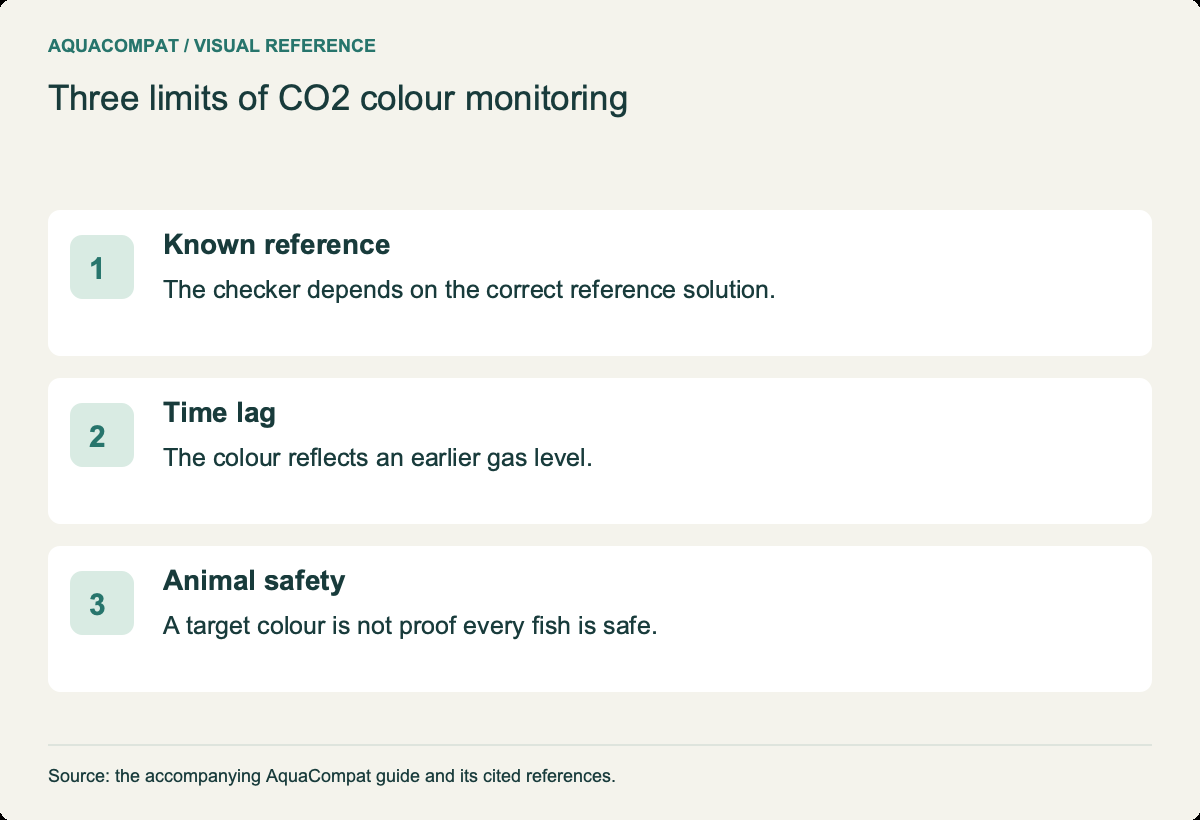
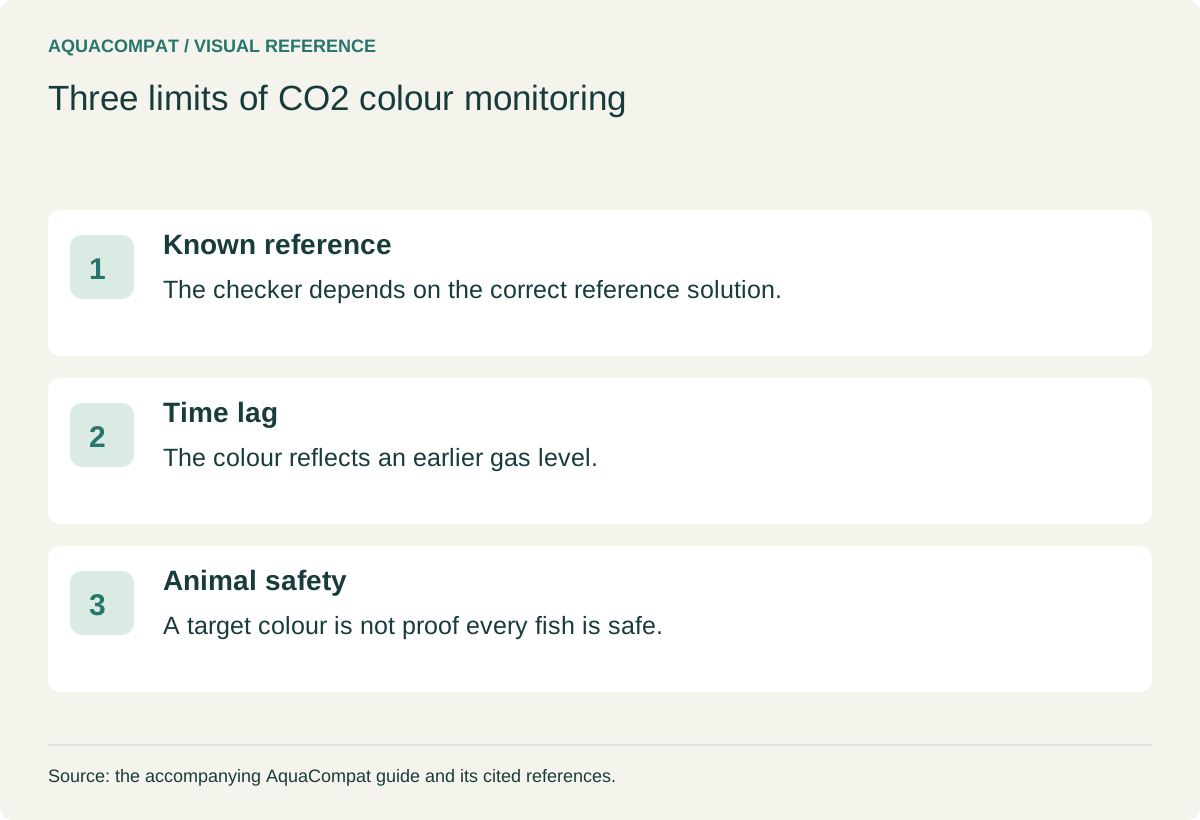
Three limits of CO2 colour monitoring
SVG file · Appears in CO2 Levels in Planted Tanks: How Much Do Plants Need?
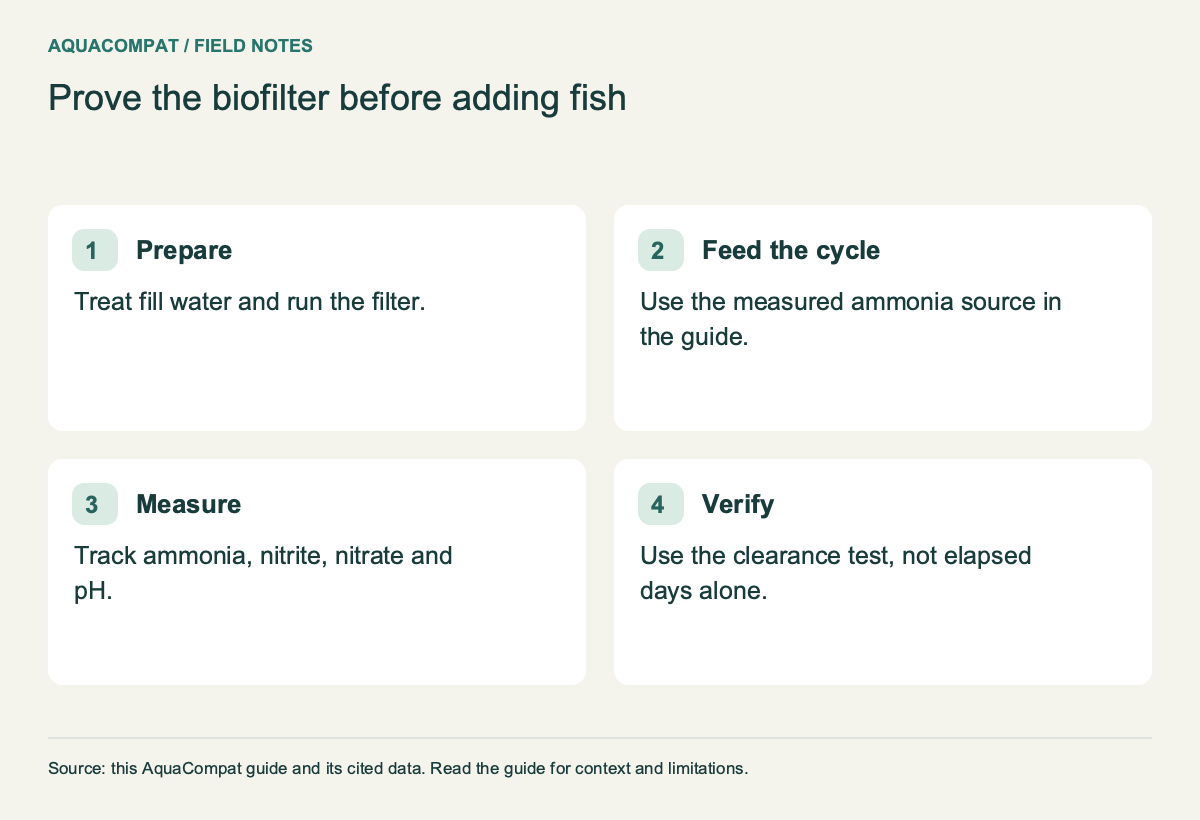
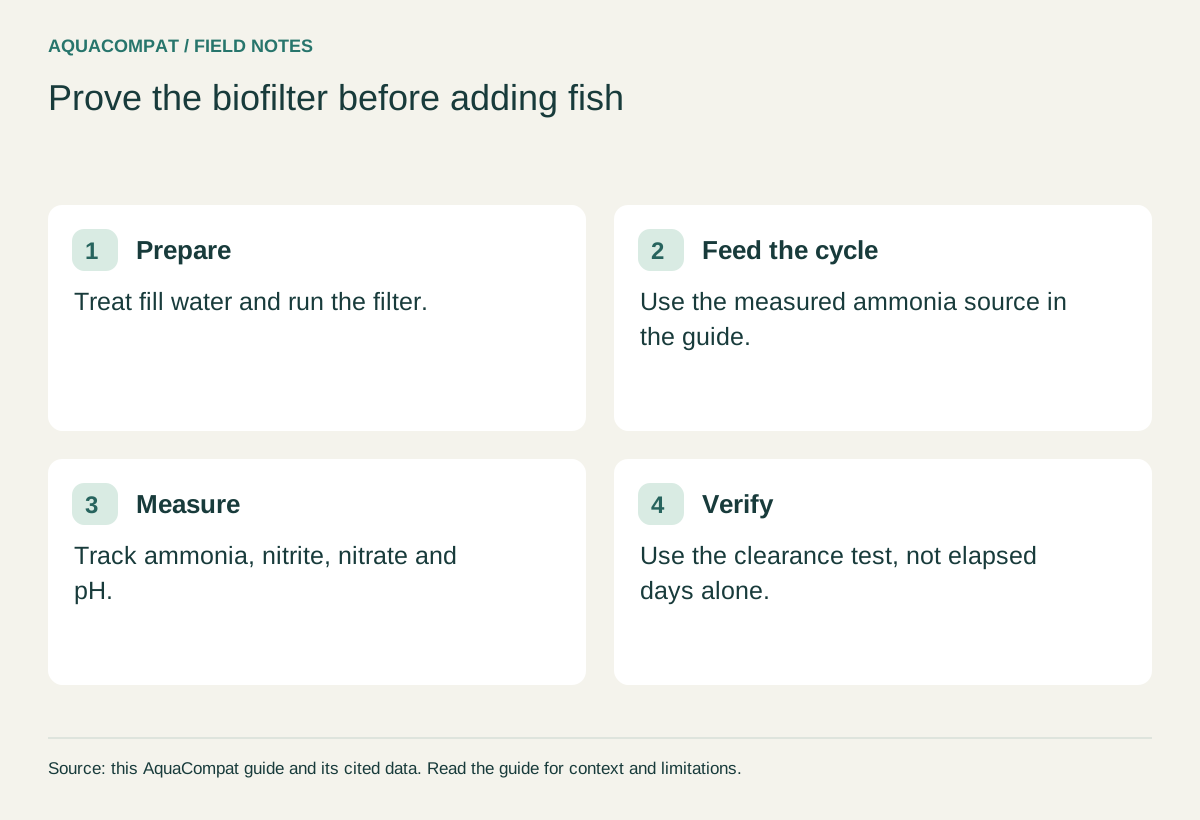
Prove the biofilter before adding fish
SVG file · Appears in How to Cycle a New Aquarium: Fishless Method
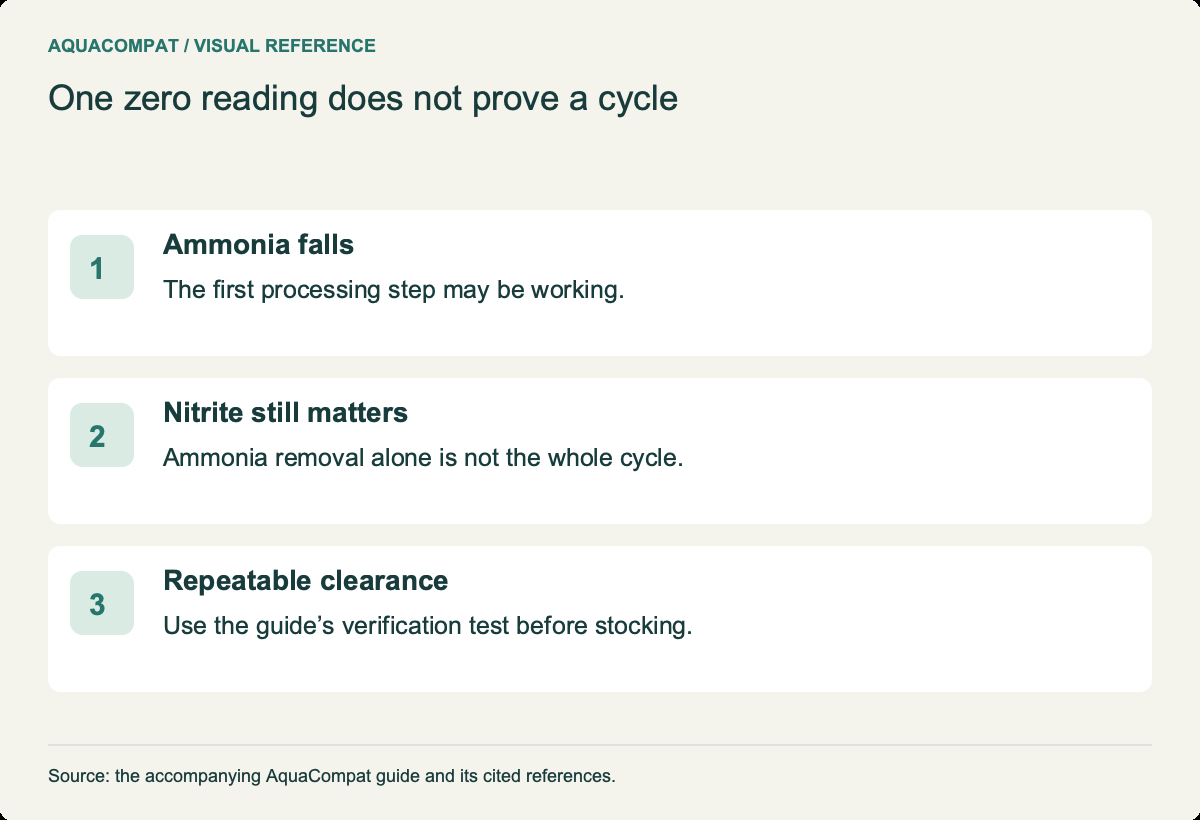
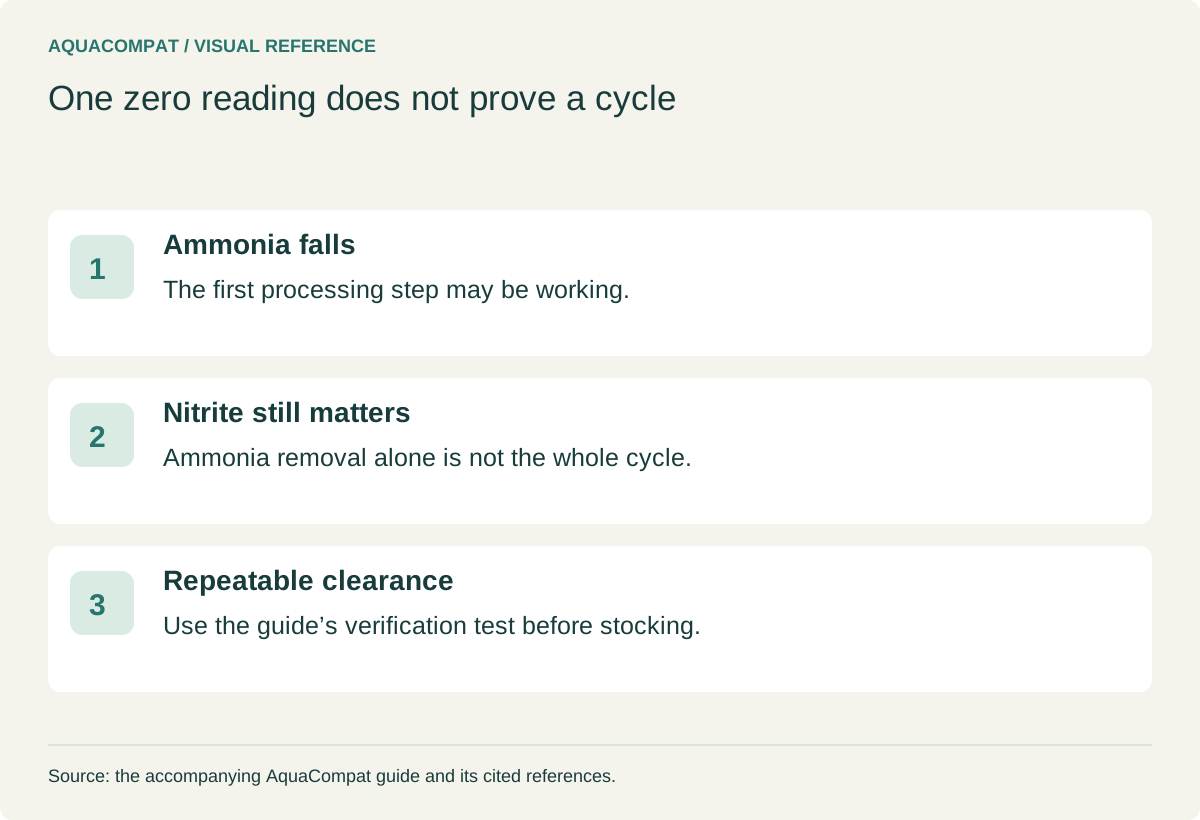
One zero reading does not prove a cycle
SVG file · Appears in How to Cycle a New Aquarium: Fishless Method
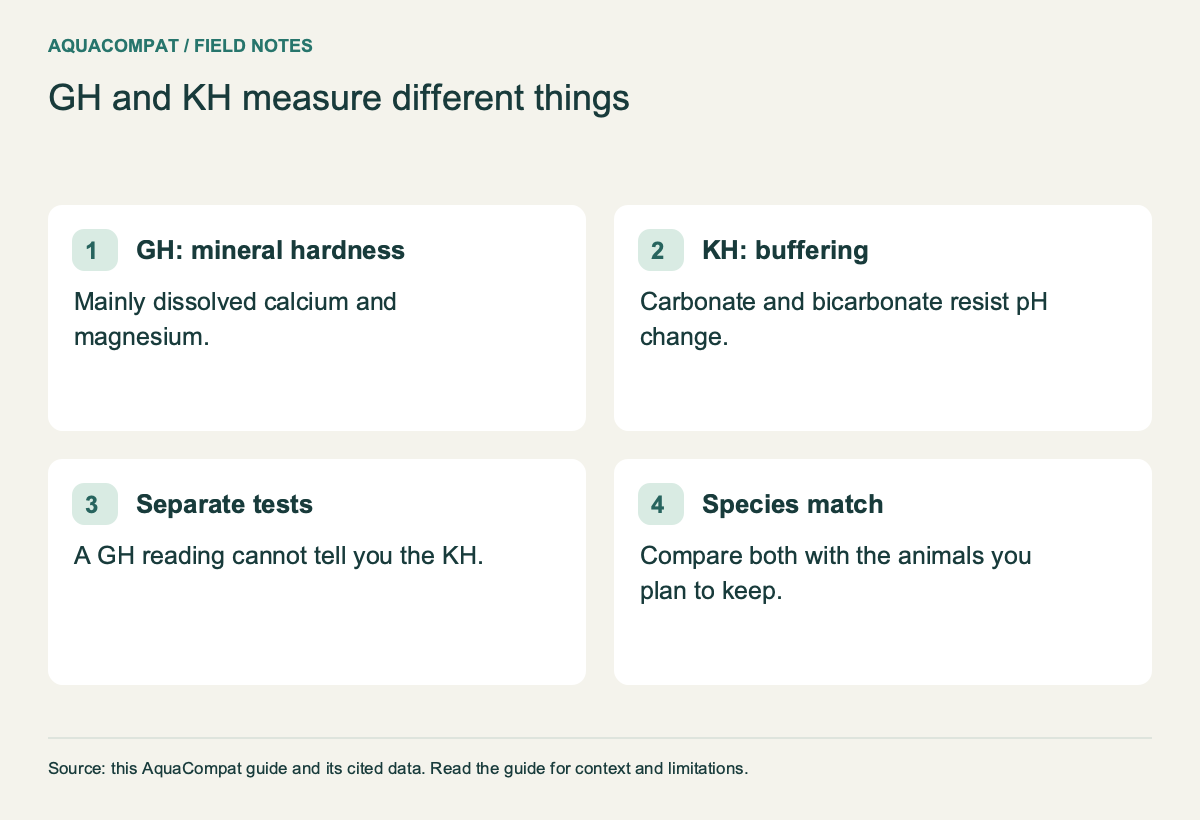
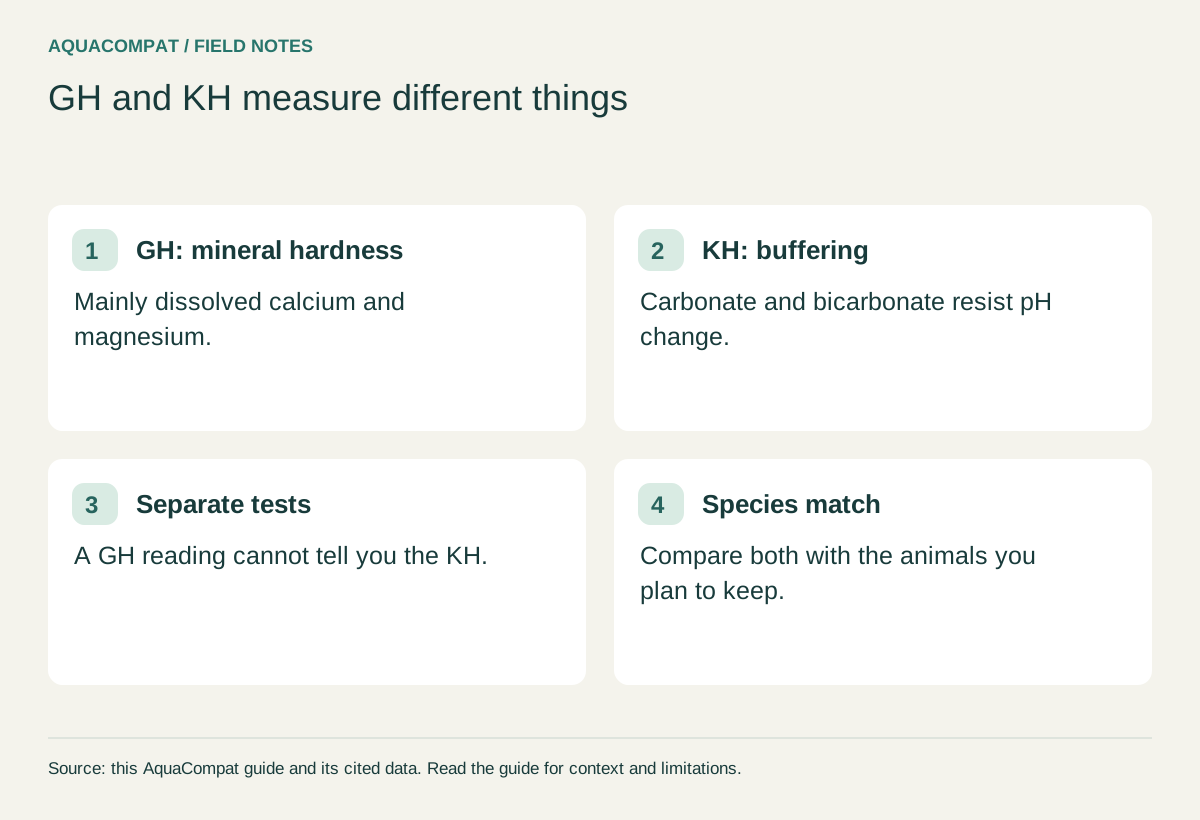
GH and KH measure different things
SVG file · Appears in GH and KH Explained: General and Carbonate Hardness in Aquariums
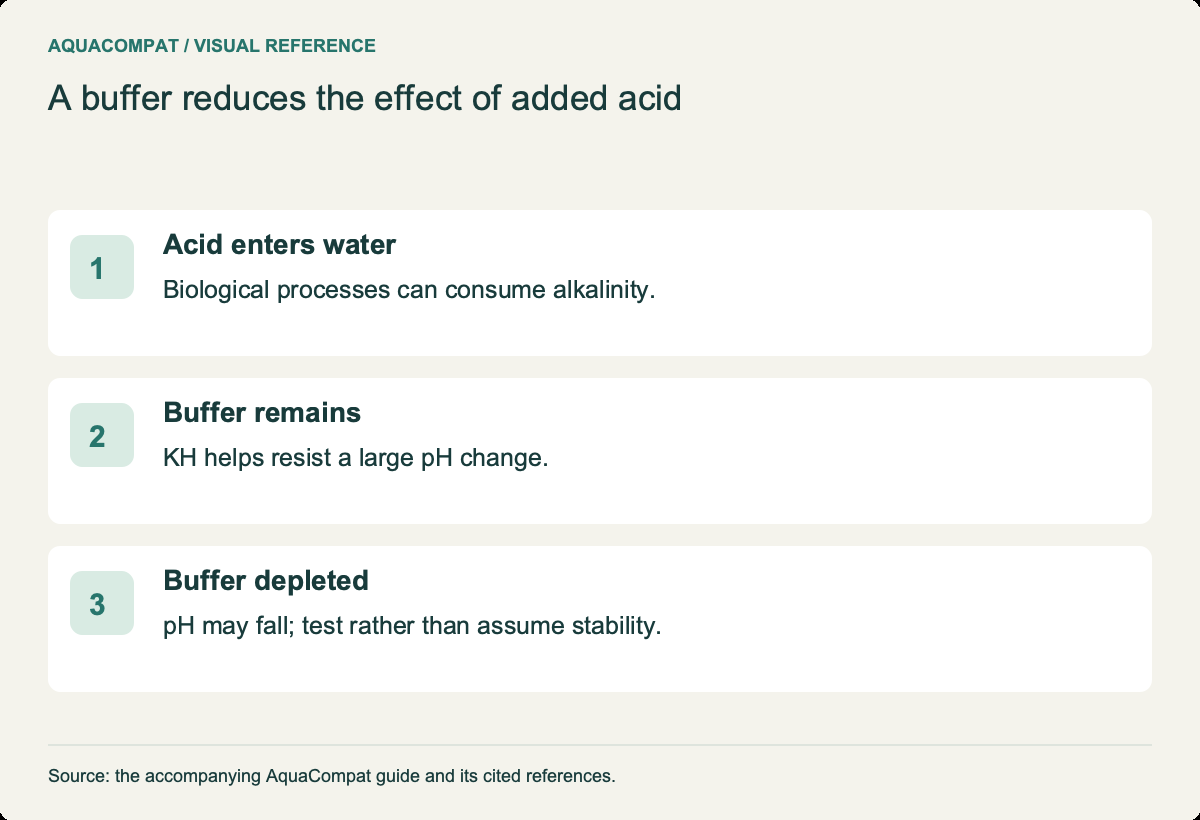
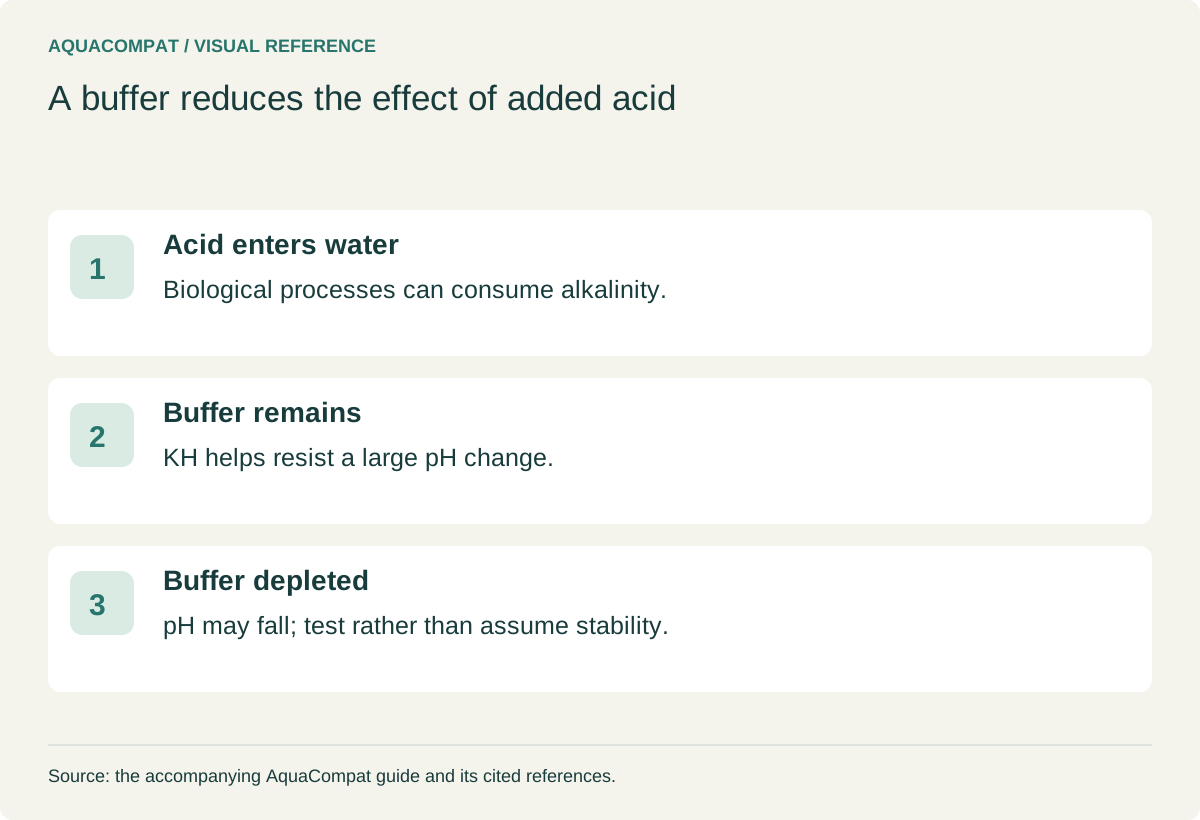
A buffer reduces the effect of added acid
SVG file · Appears in GH and KH Explained: General and Carbonate Hardness in Aquariums
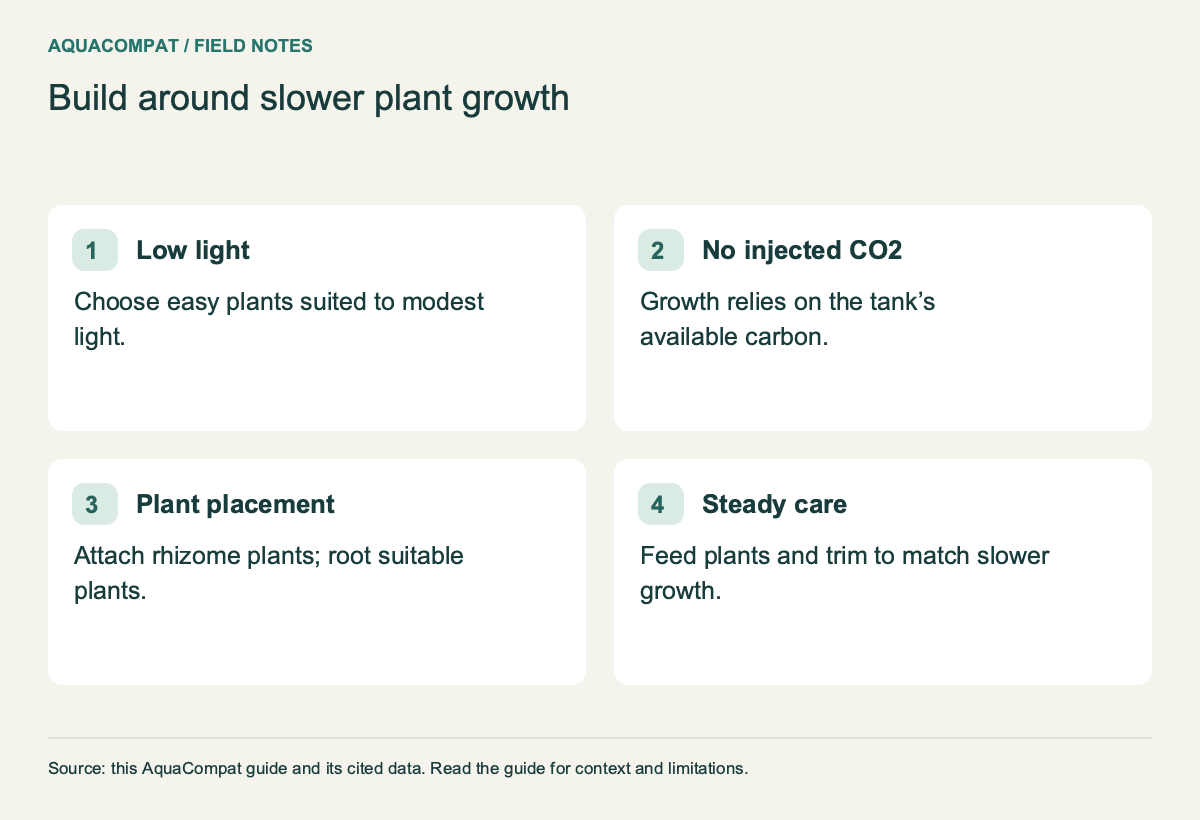
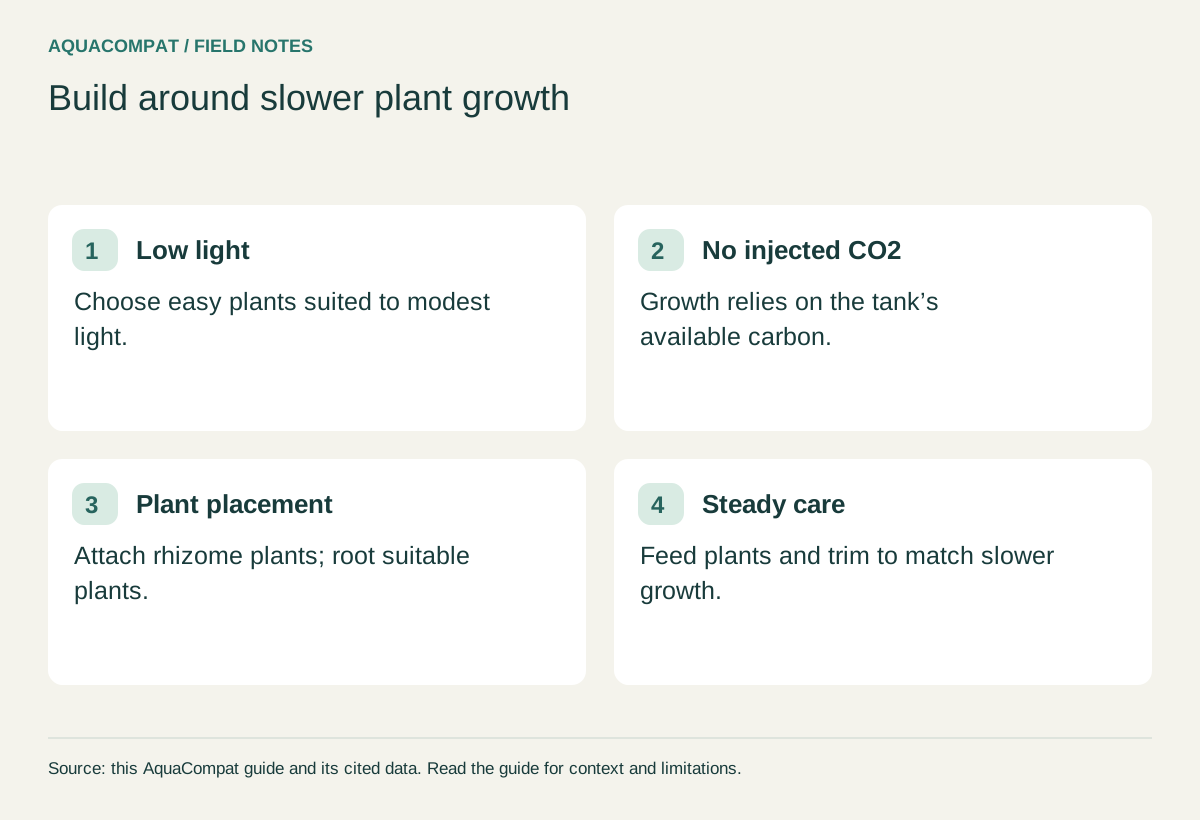
Build around slower plant growth
SVG file · Appears in Low-Tech Planted Tank Guide: No CO2 Needed
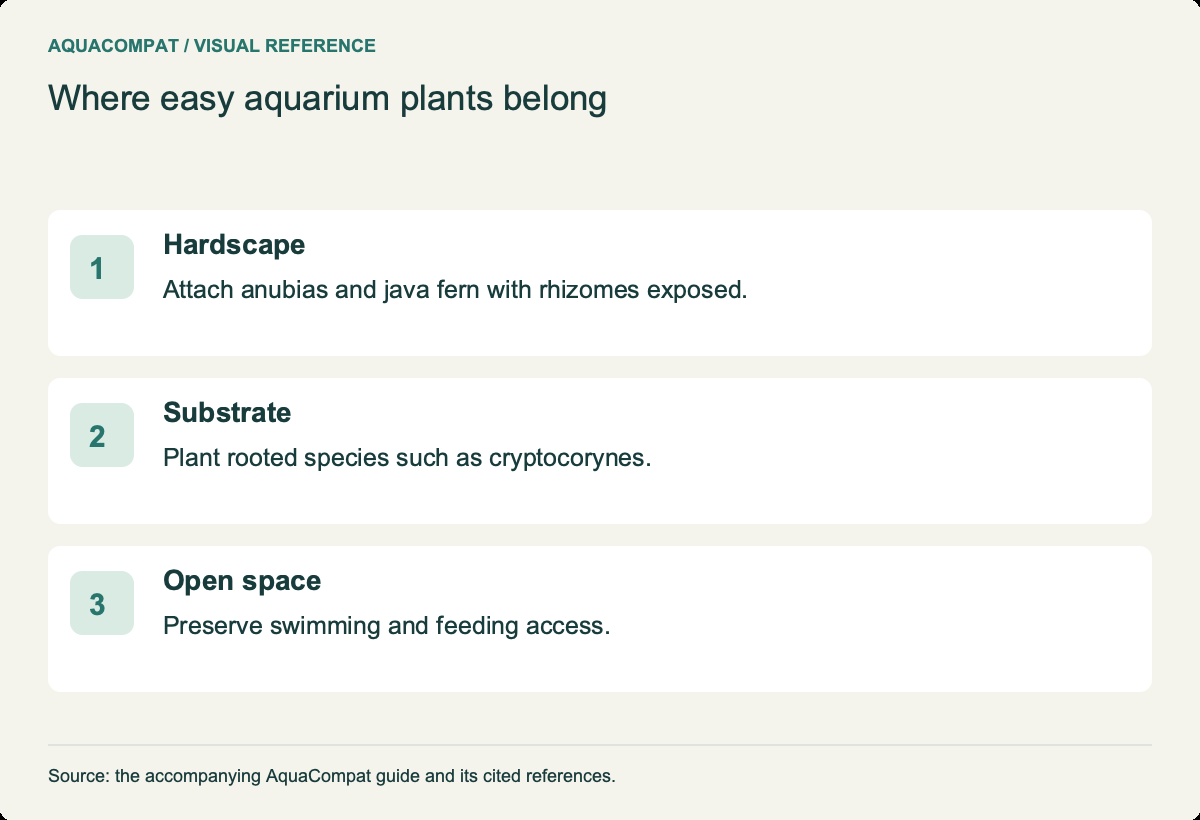
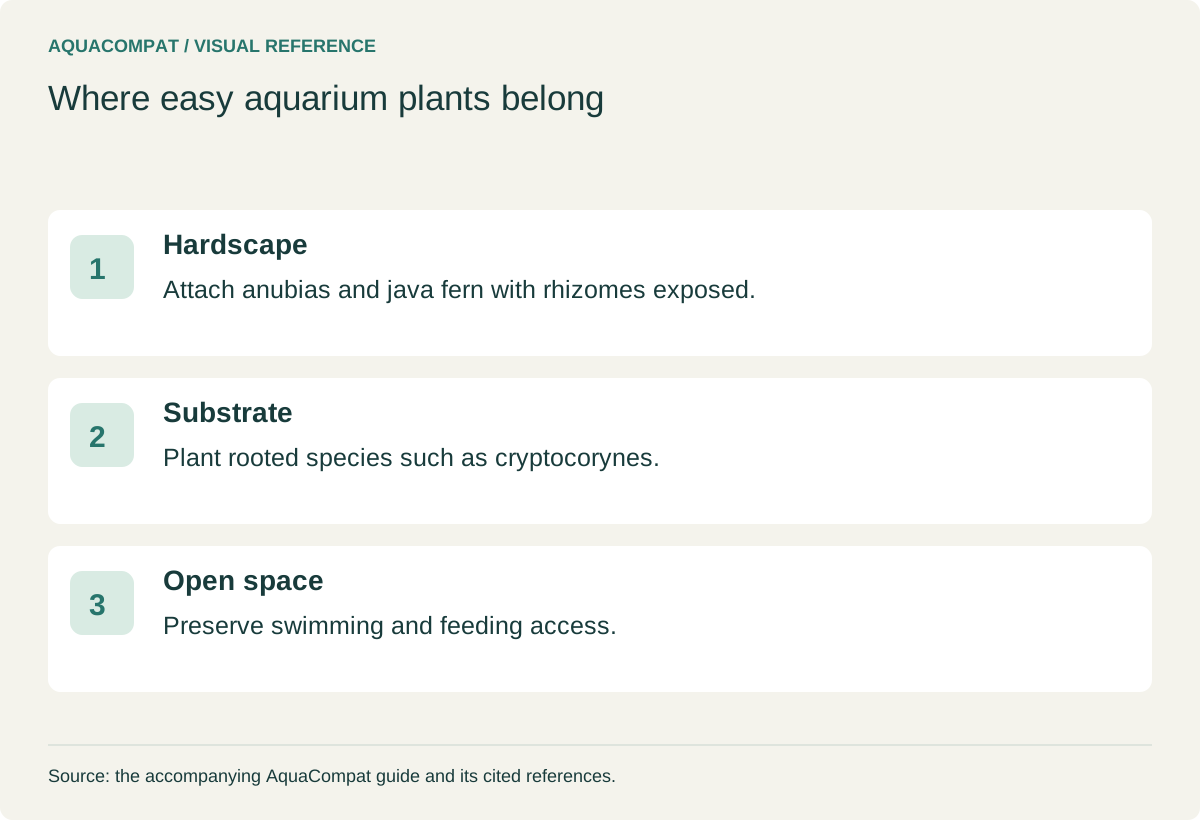
Where easy aquarium plants belong
SVG file · Appears in Low-Tech Planted Tank Guide: No CO2 Needed
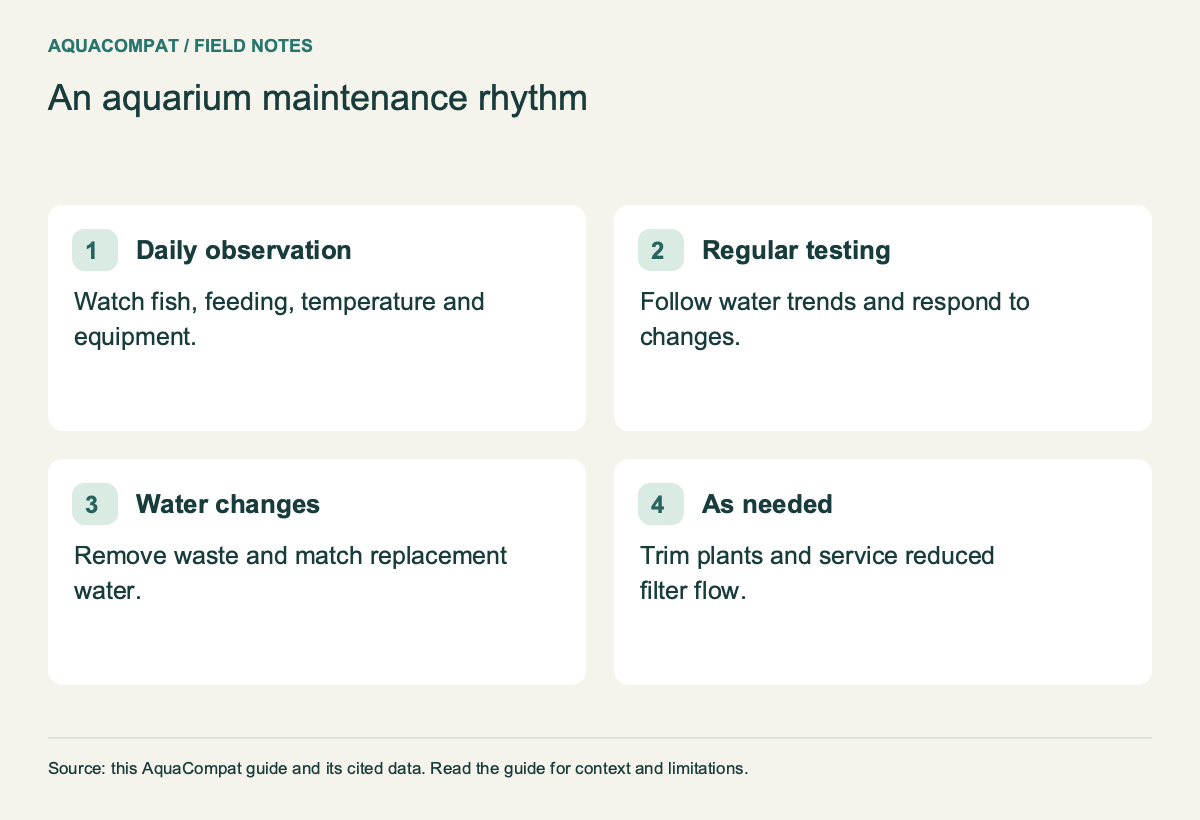
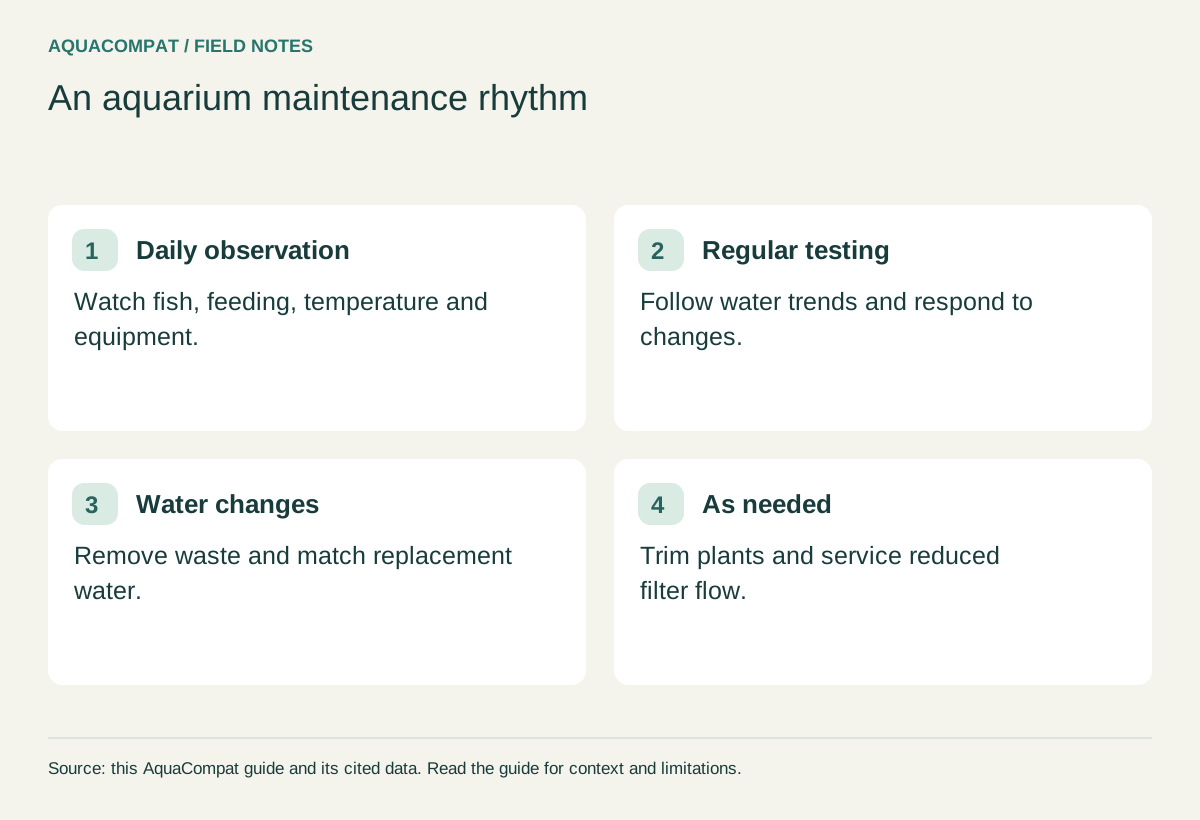
An aquarium maintenance rhythm
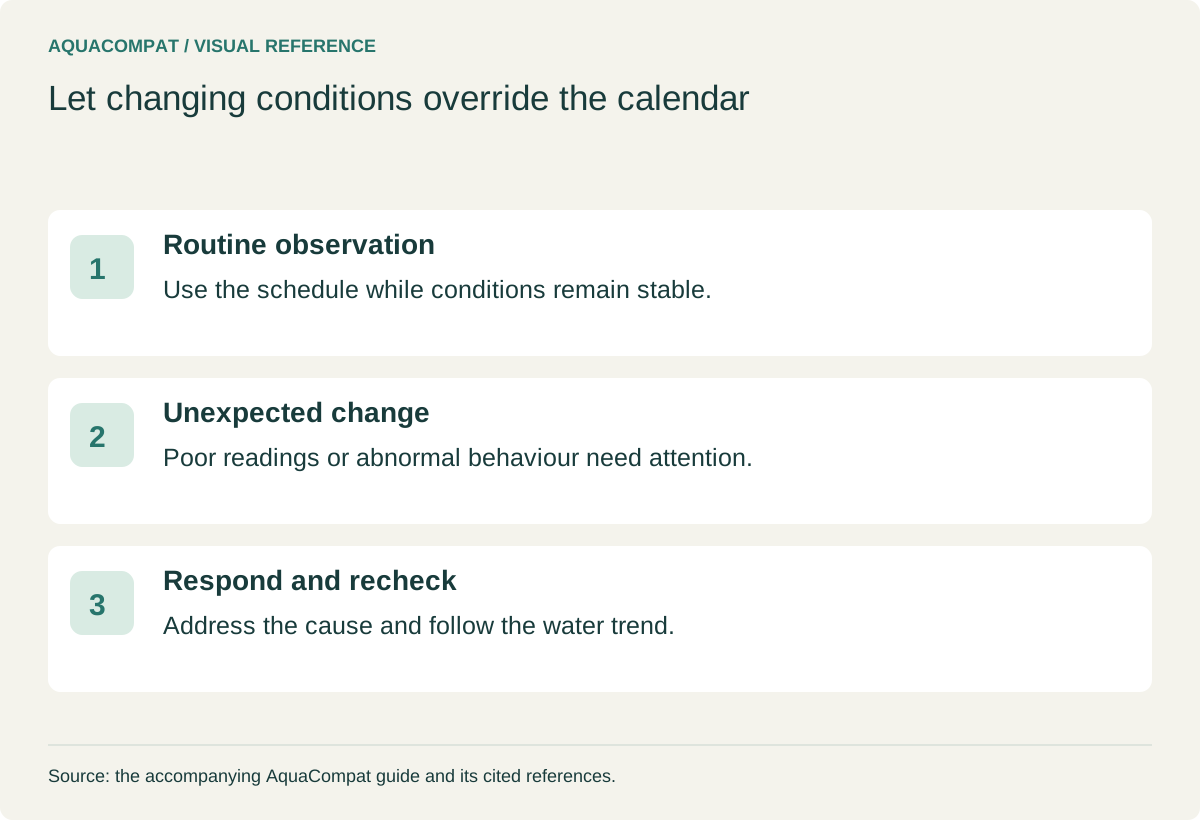
SVG file · Appears in Aquarium Maintenance Schedule: Daily, Weekly and Monthly Tasks
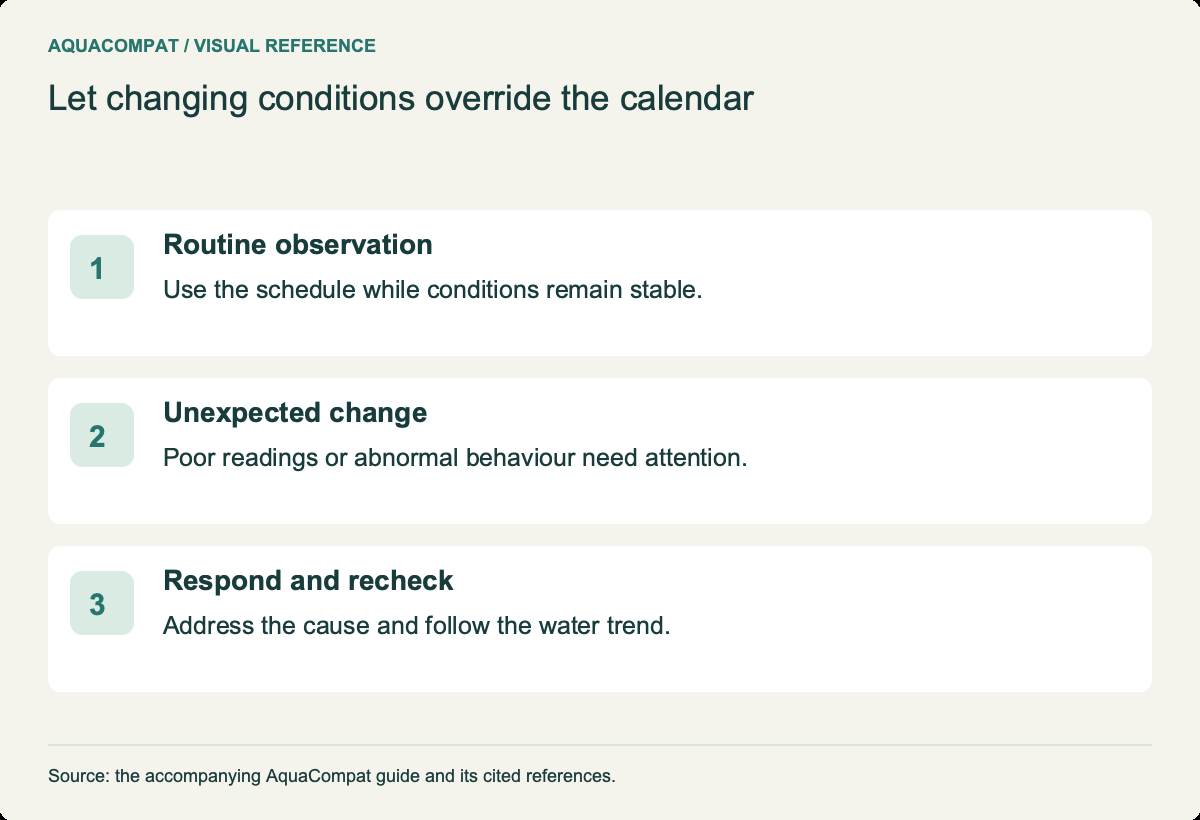
Let changing conditions override the calendar
SVG file · Appears in Aquarium Maintenance Schedule: Daily, Weekly and Monthly Tasks
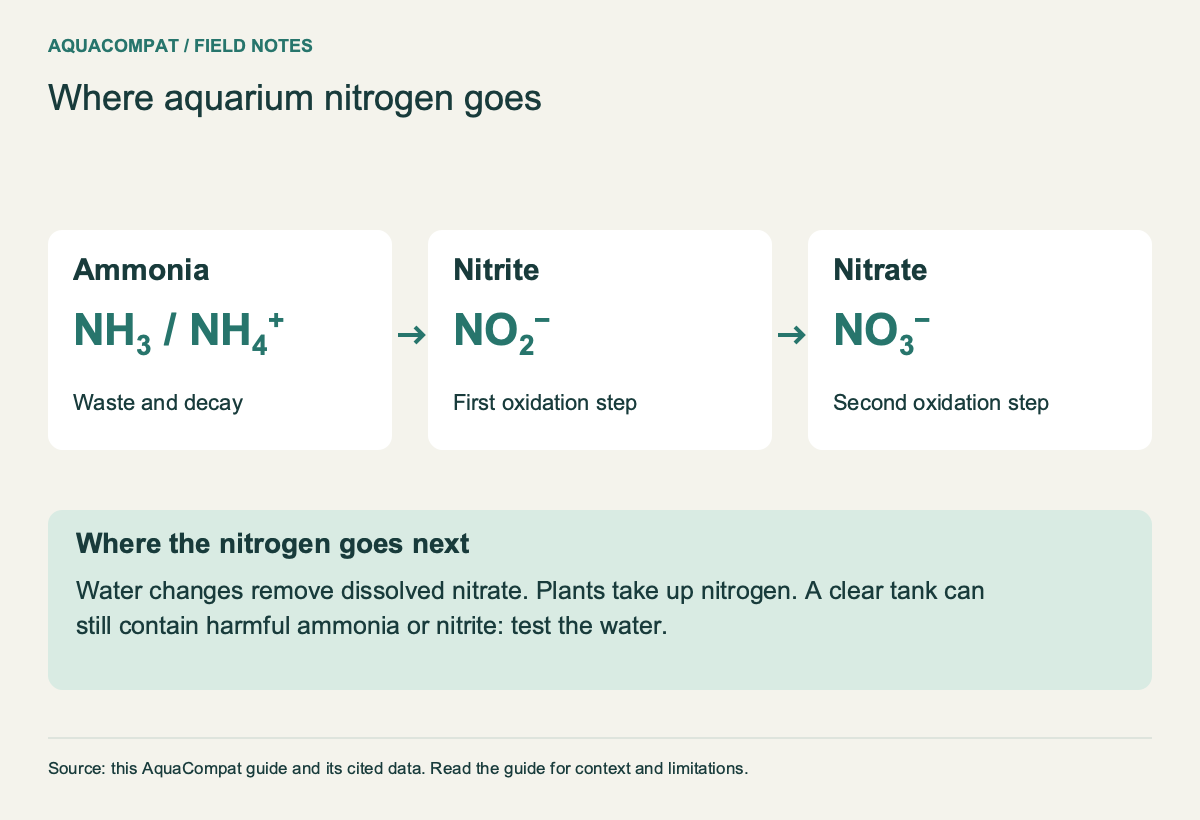
Where aquarium nitrogen goes
SVG file · Appears in The Aquarium Nitrogen Cycle: Ammonia, Nitrite and Nitrate
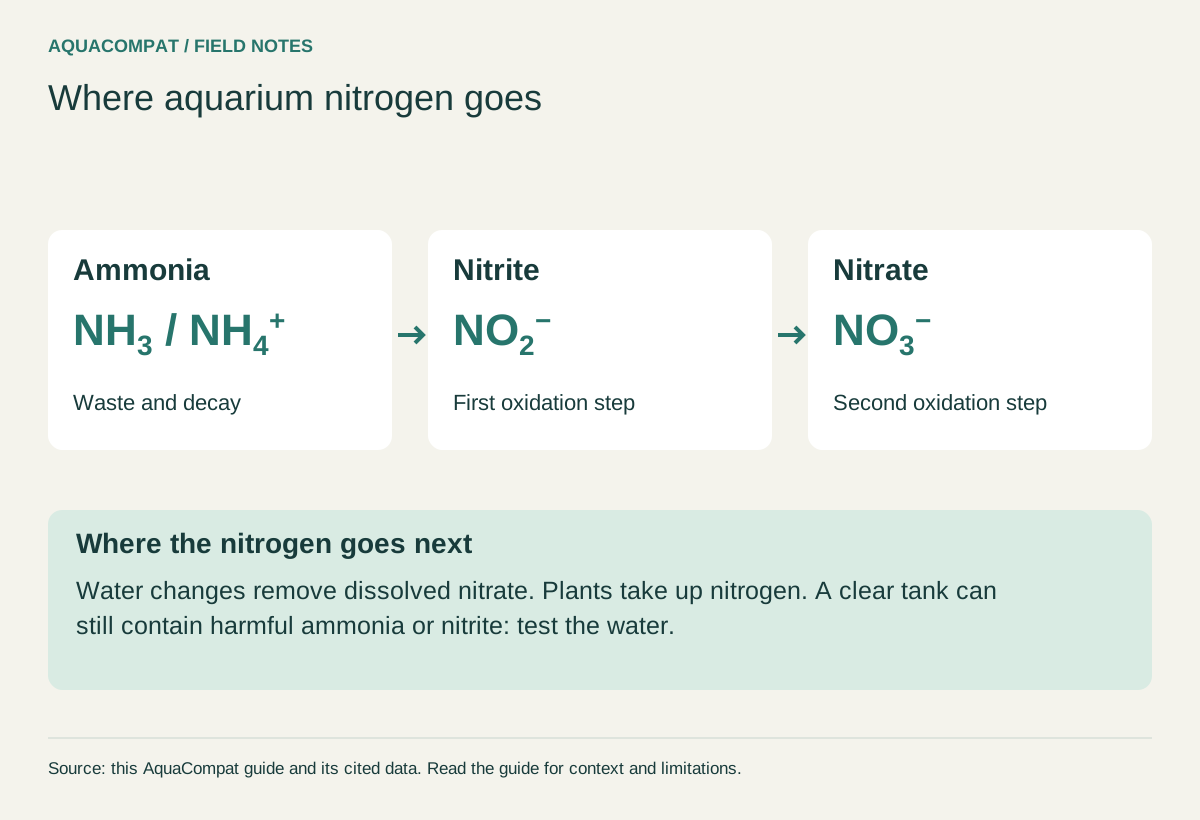
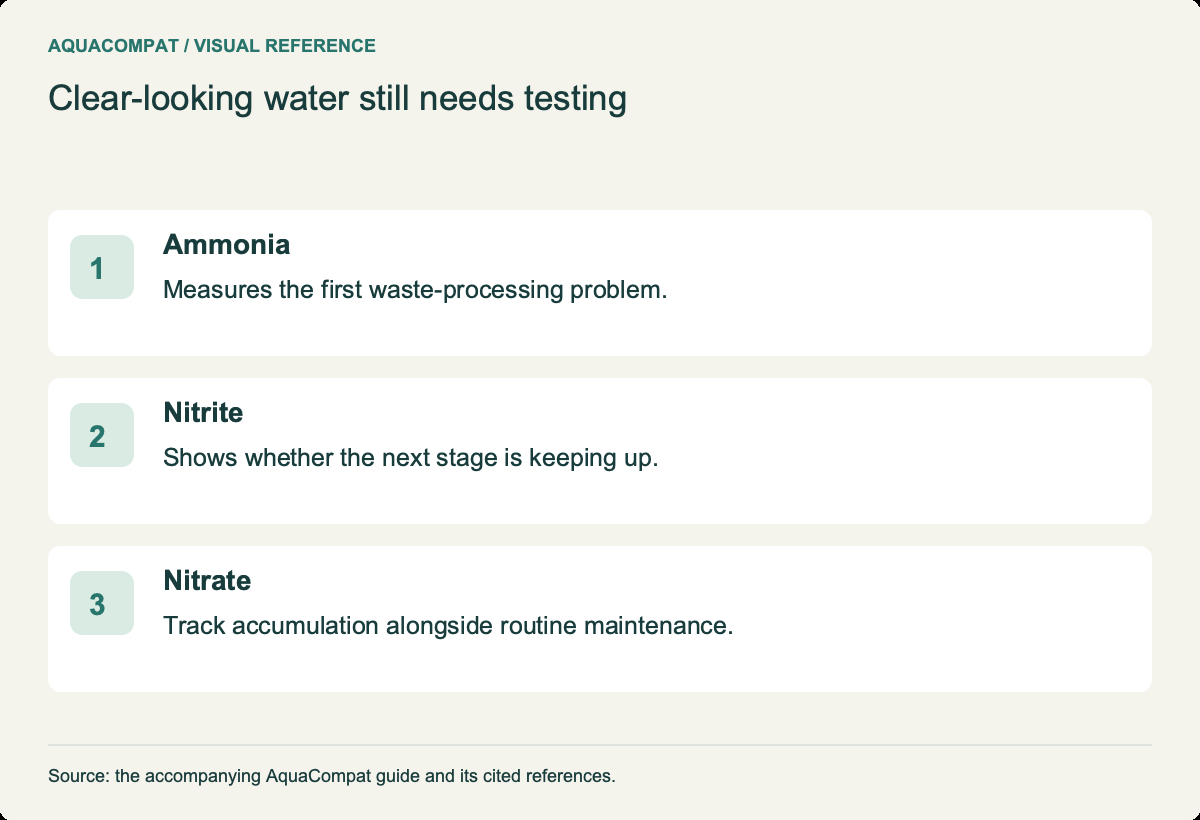
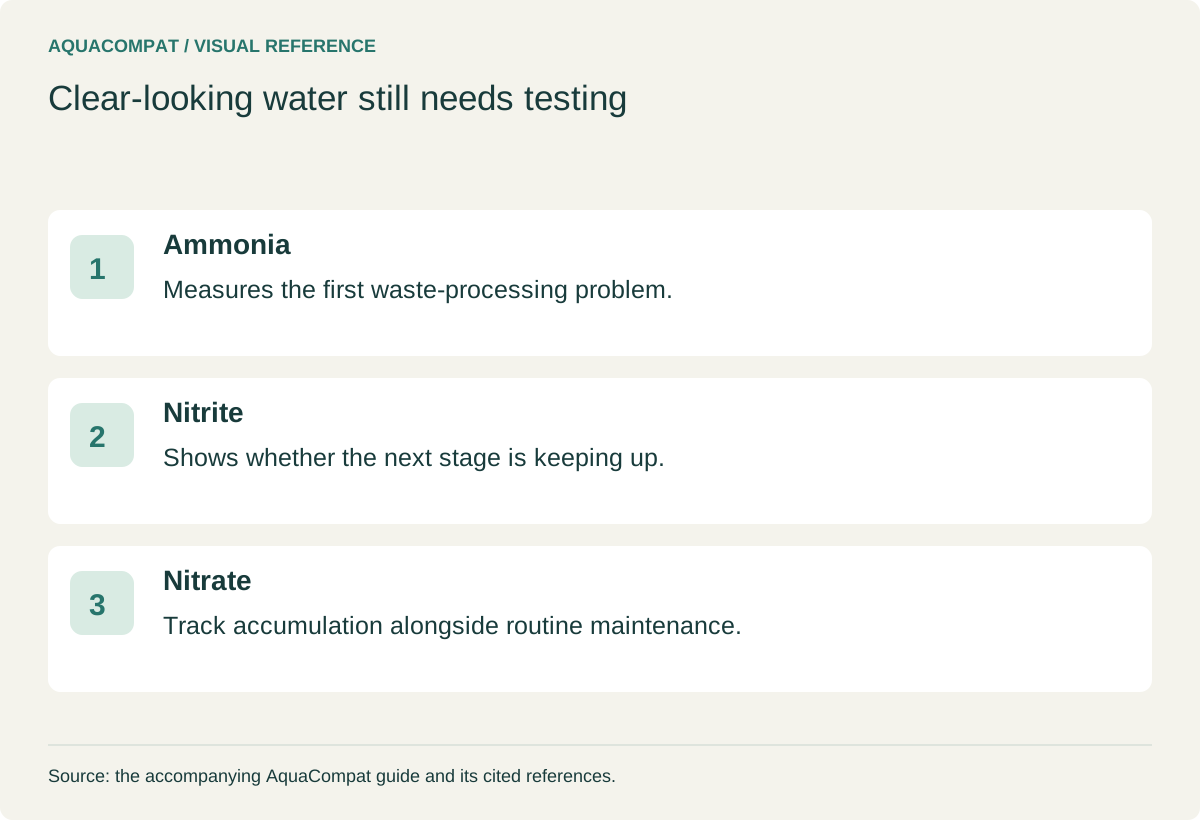
Clear-looking water still needs testing
SVG file · Appears in The Aquarium Nitrogen Cycle: Ammonia, Nitrite and Nitrate
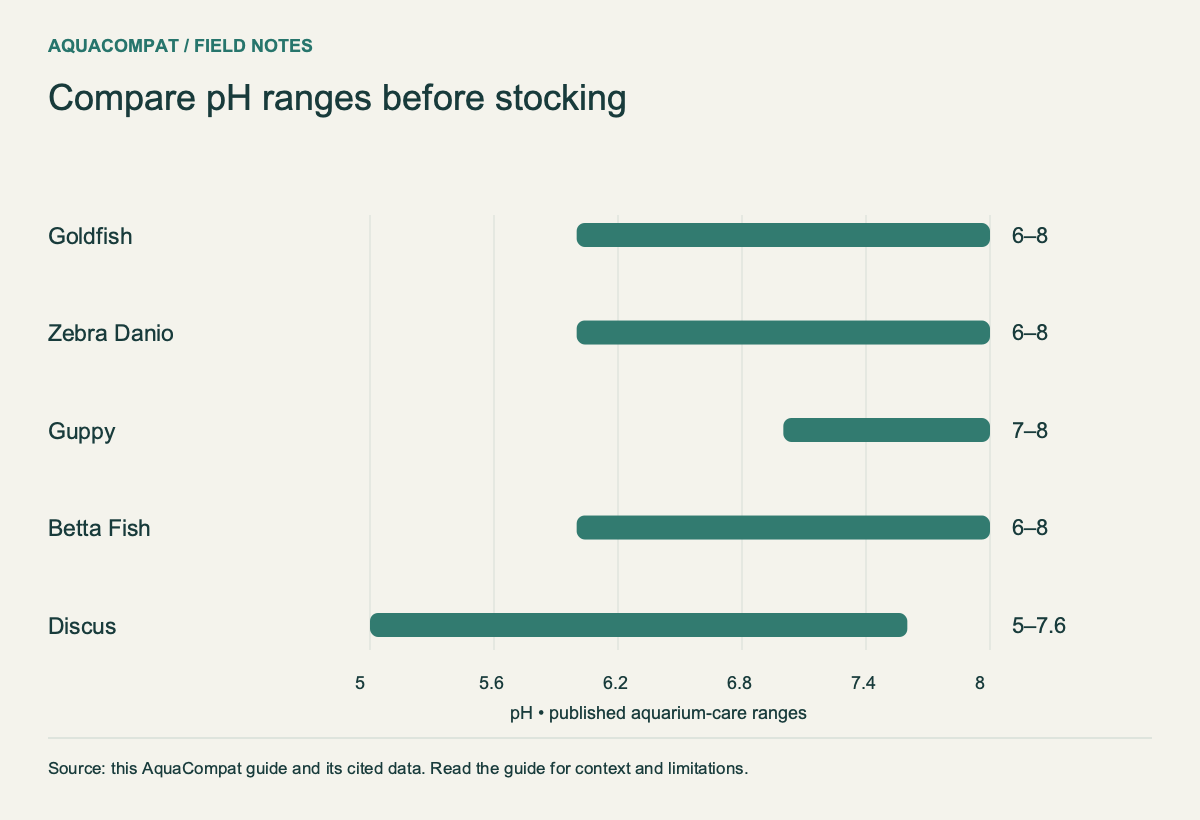
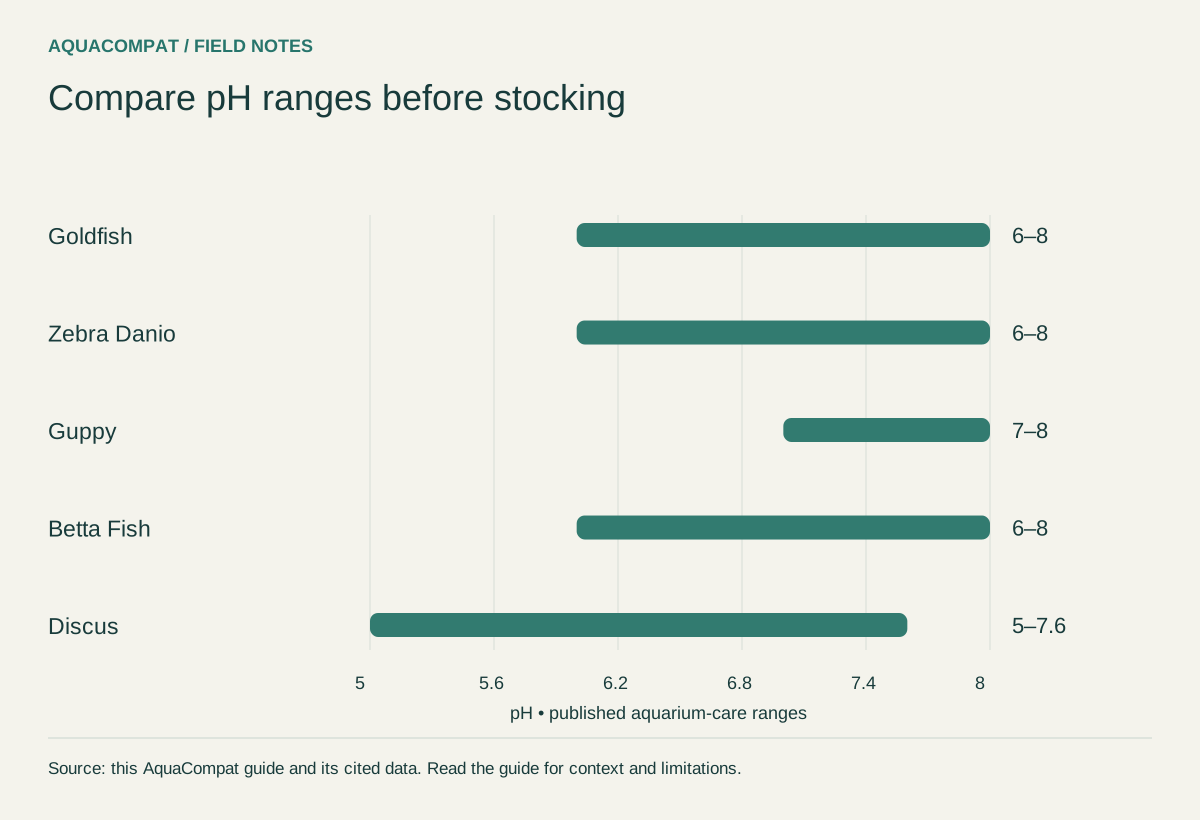
Compare pH ranges before stocking
SVG file · Appears in Aquarium pH: Ranges by Species and How to Change It
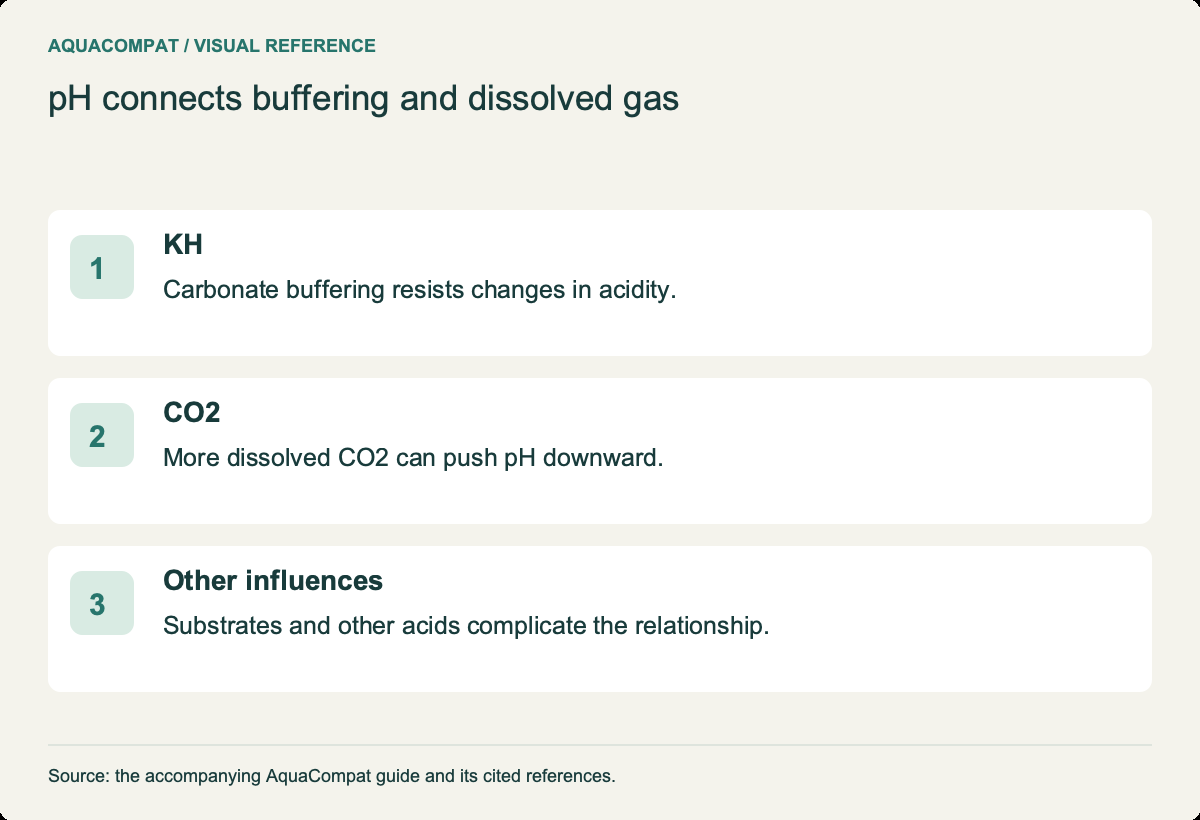
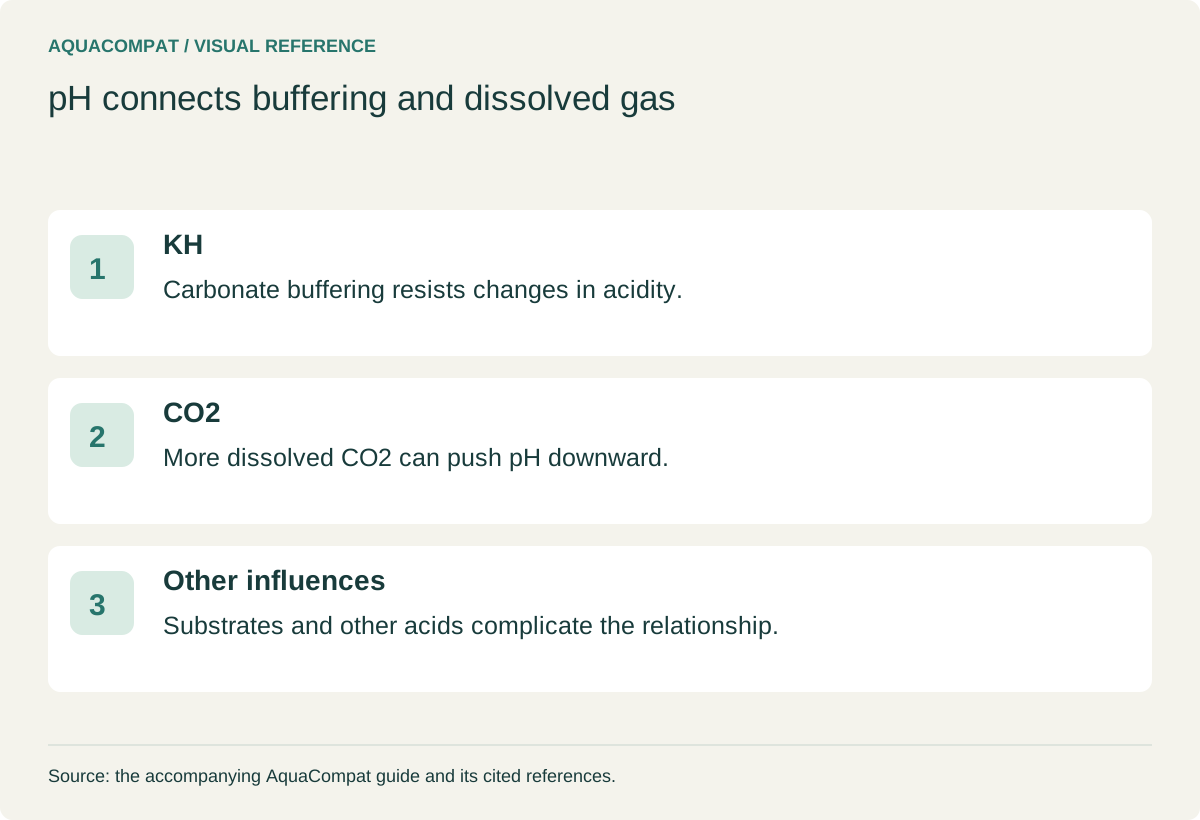
pH connects buffering and dissolved gas
SVG file · Appears in Aquarium pH: Ranges by Species and How to Change It
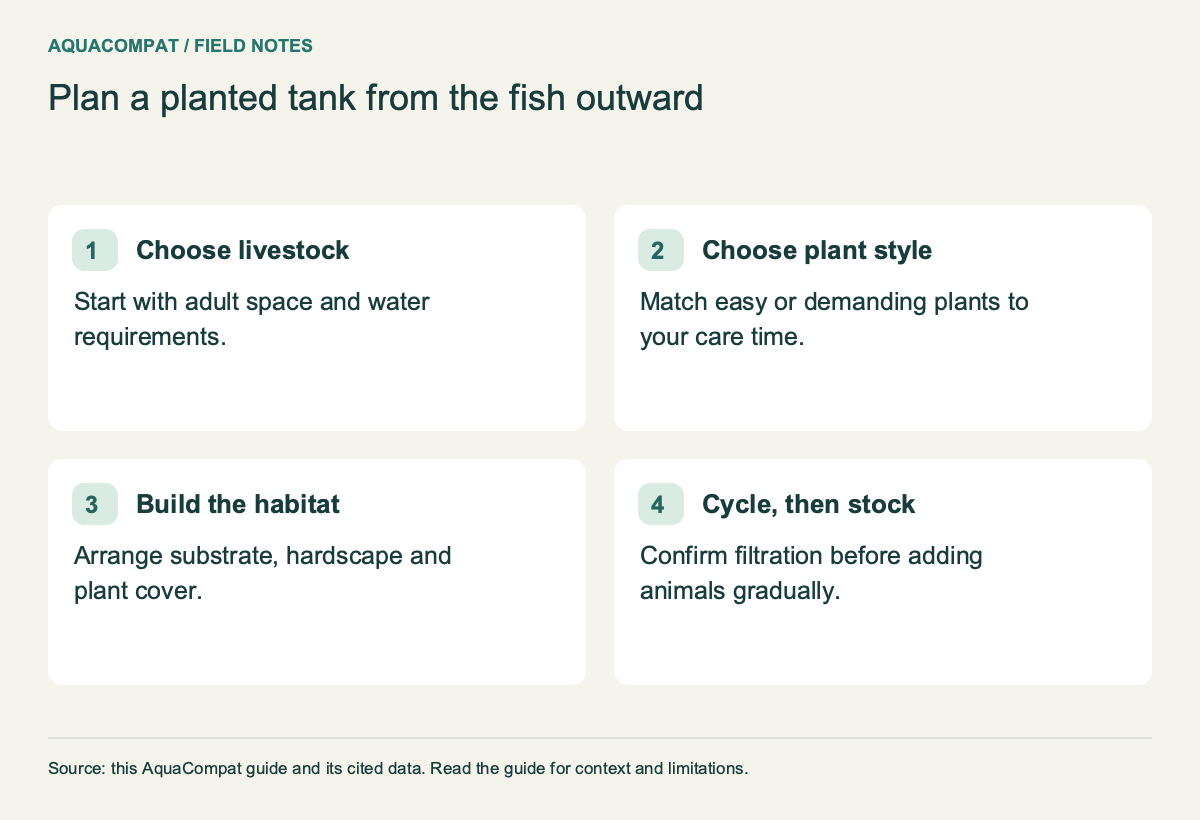
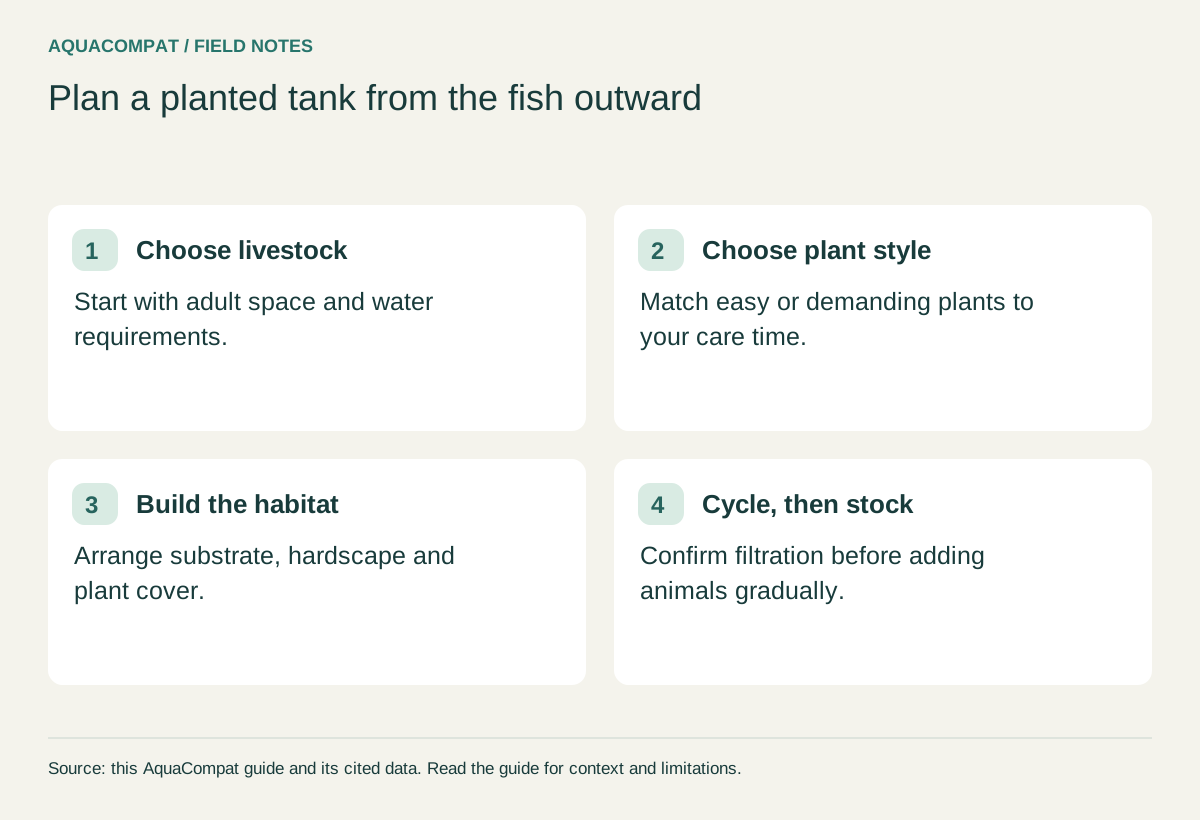
Plan a planted tank from the fish outward
SVG file · Appears in How to Start a Planted Tank: Substrate, Light, Plants and CO2
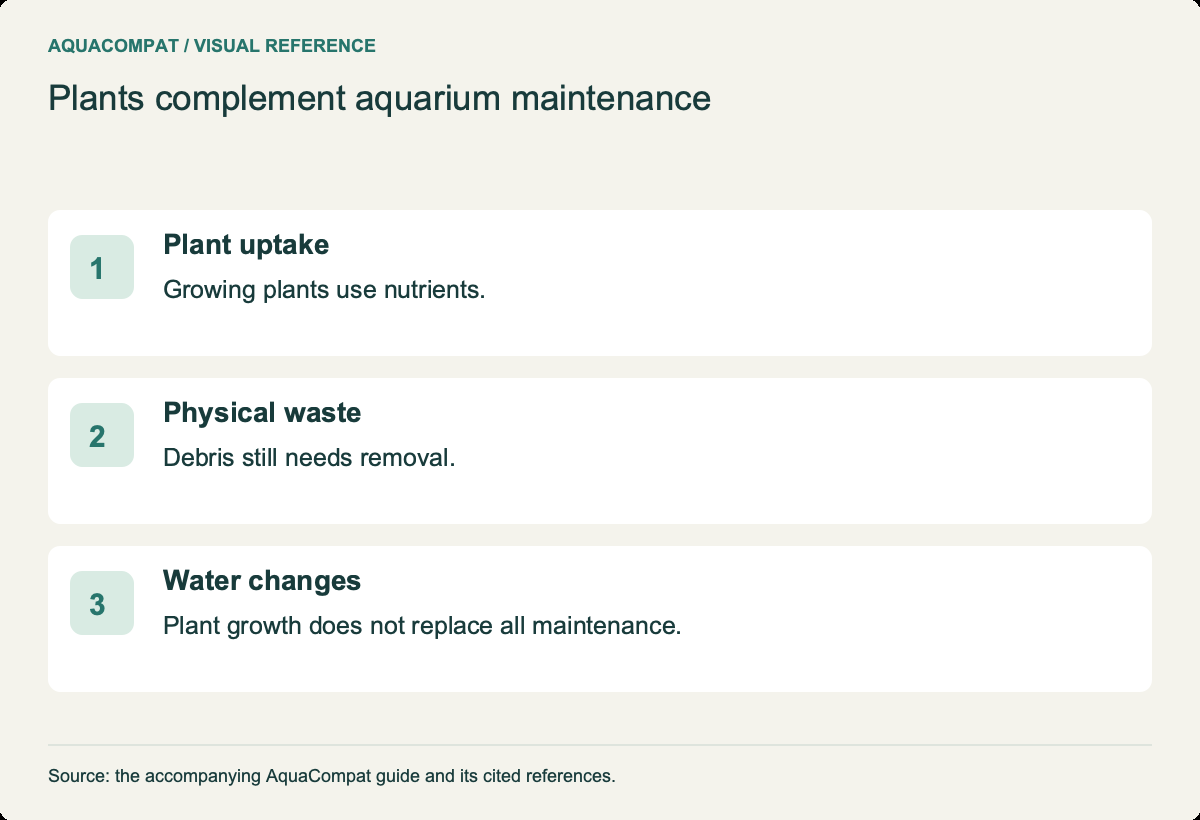
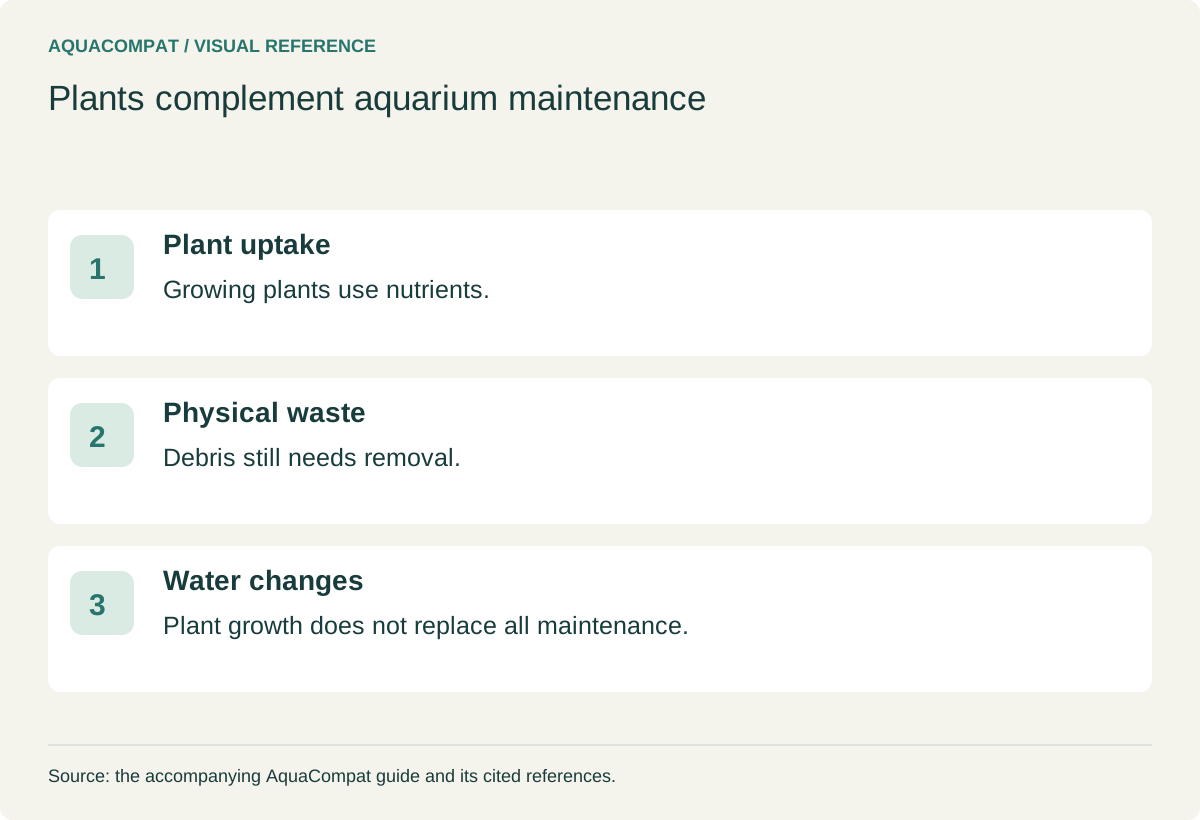
Plants complement aquarium maintenance
SVG file · Appears in How to Start a Planted Tank: Substrate, Light, Plants and CO2
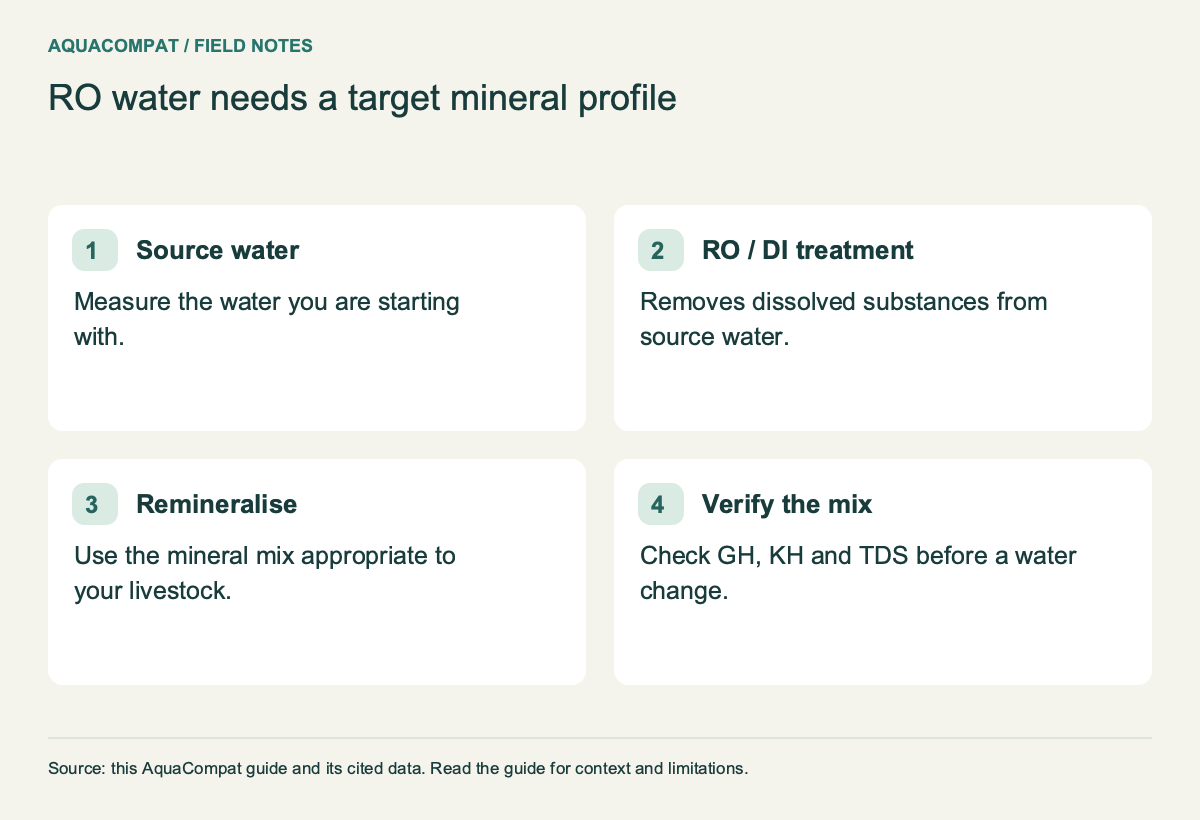
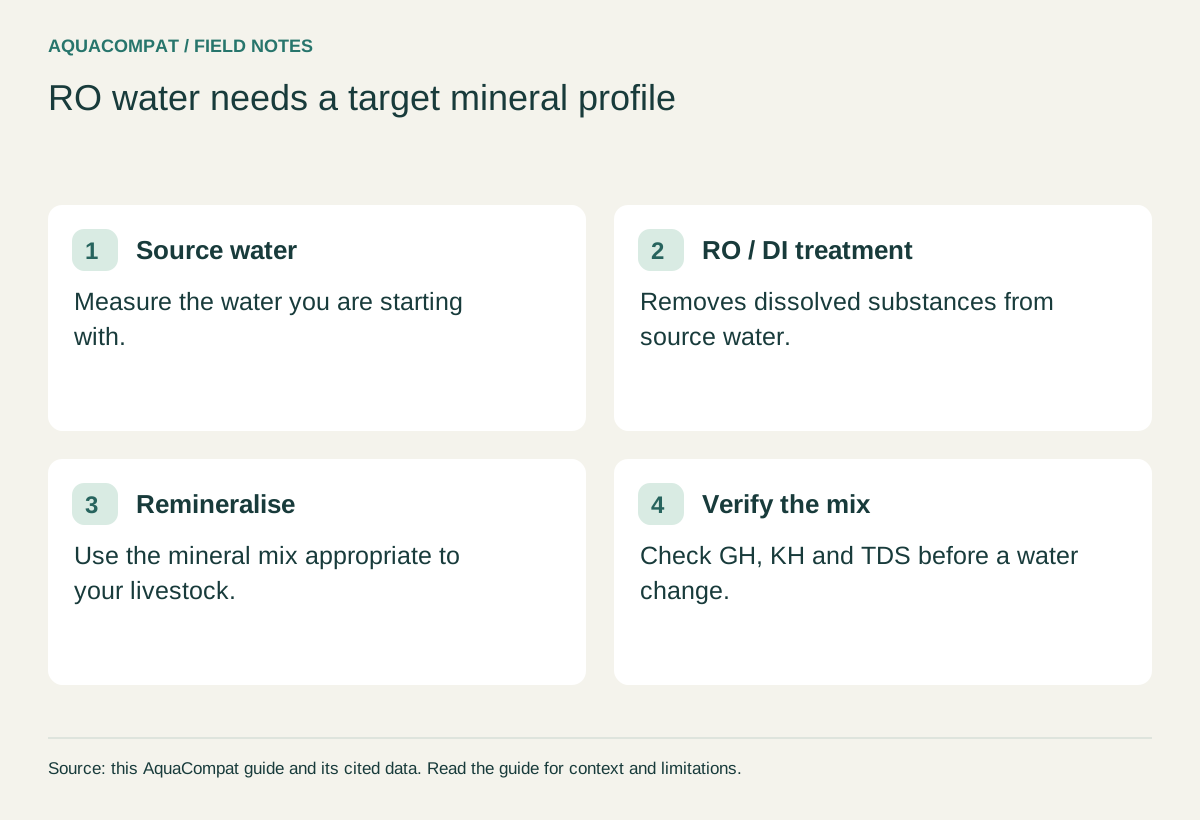
RO water needs a target mineral profile
SVG file · Appears in RO/DI Water for Aquariums: When You Need It
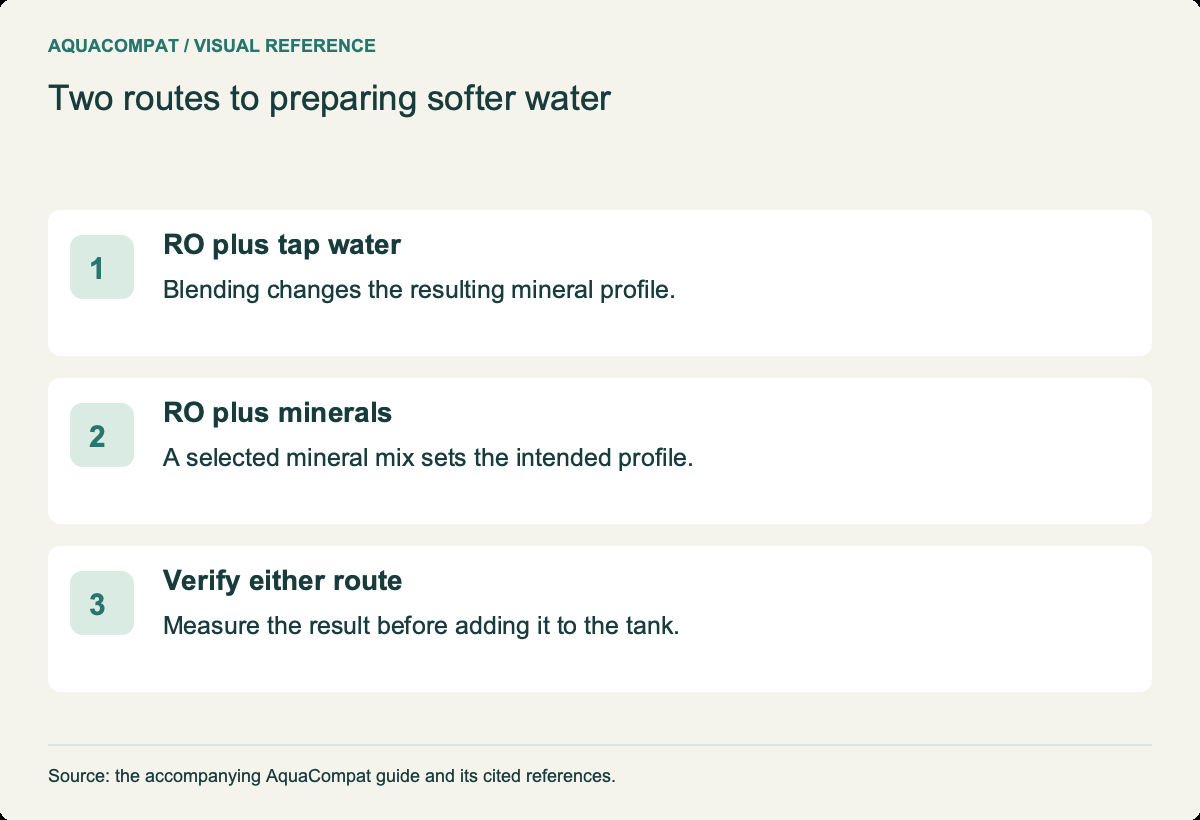
Two routes to preparing softer water
SVG file · Appears in RO/DI Water for Aquariums: When You Need It
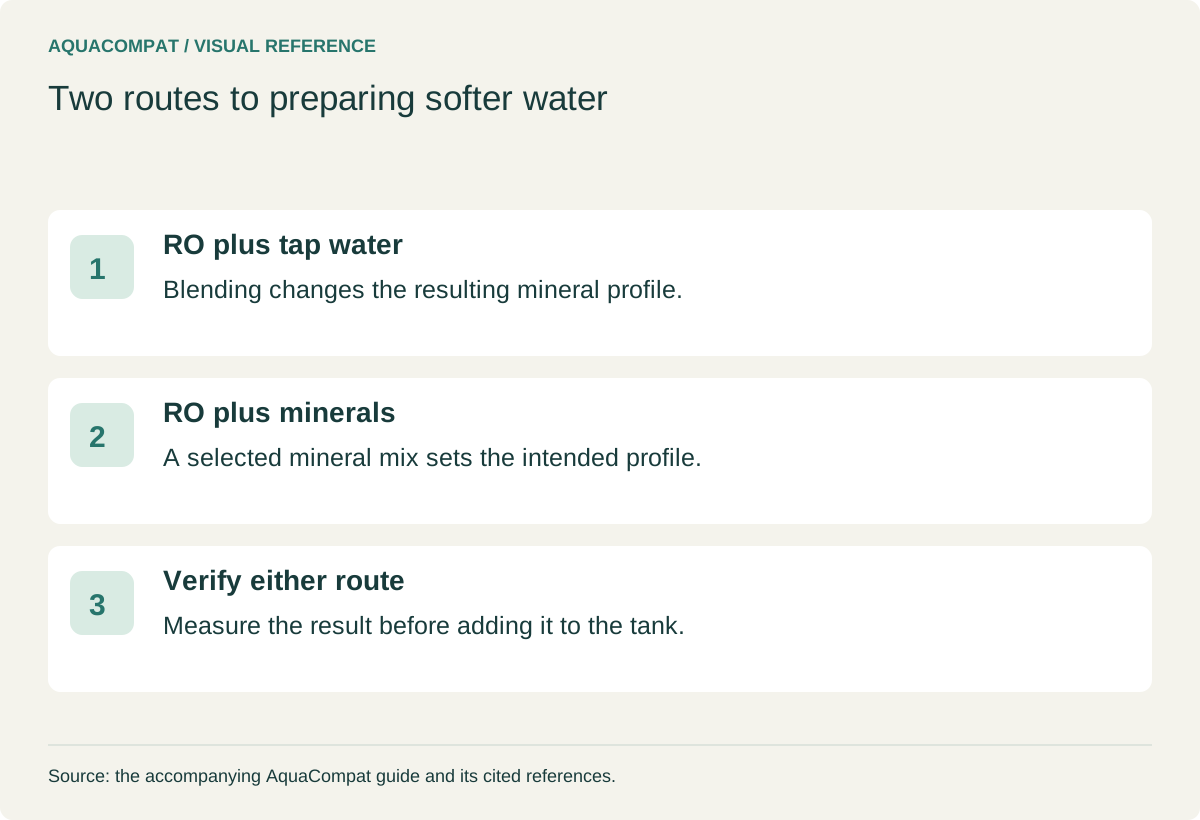
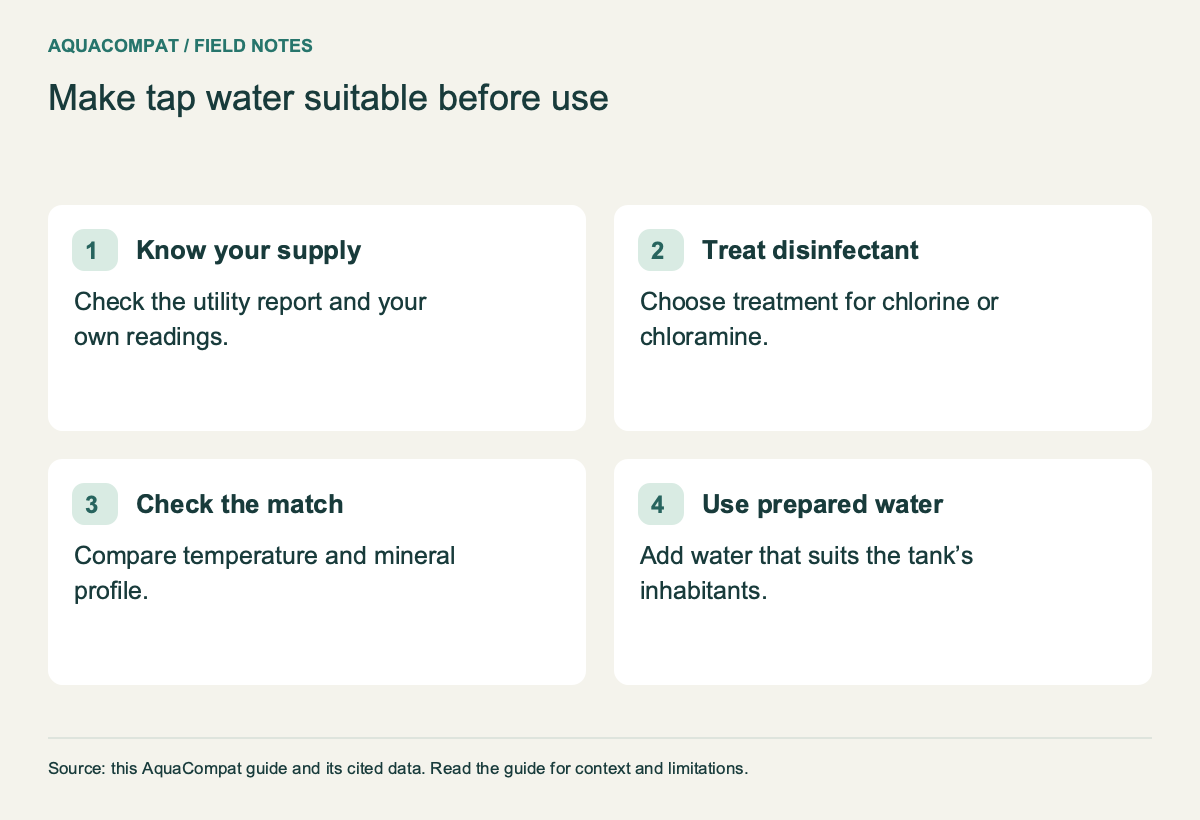
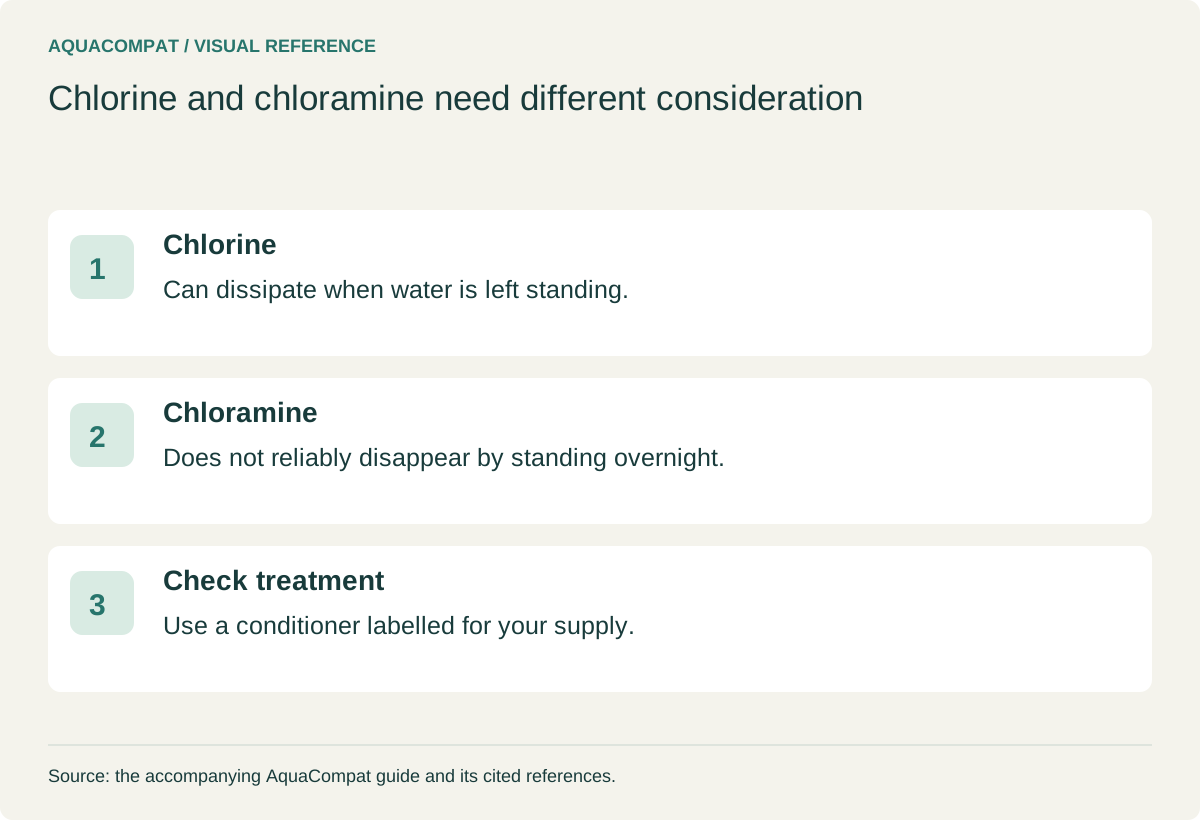
Make tap water suitable before use
SVG file · Appears in Tap Water for Aquariums: How to Test and Treat It
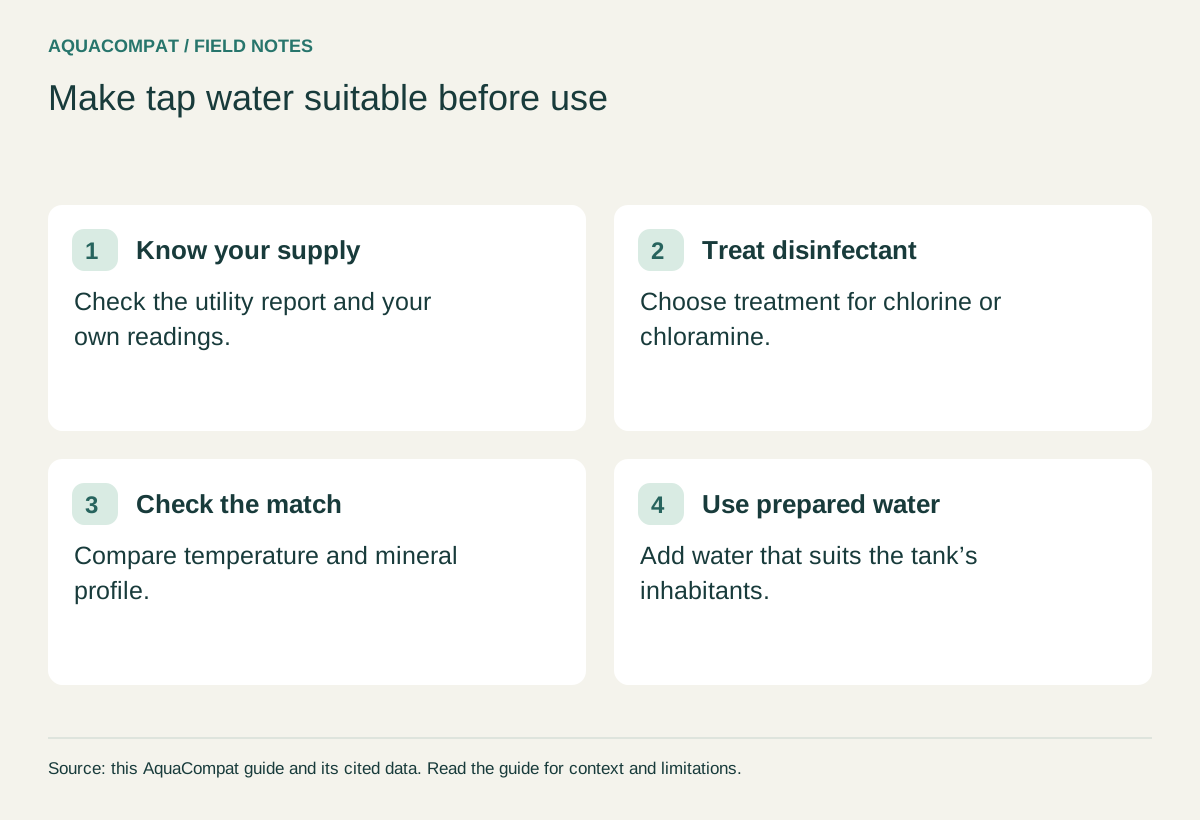
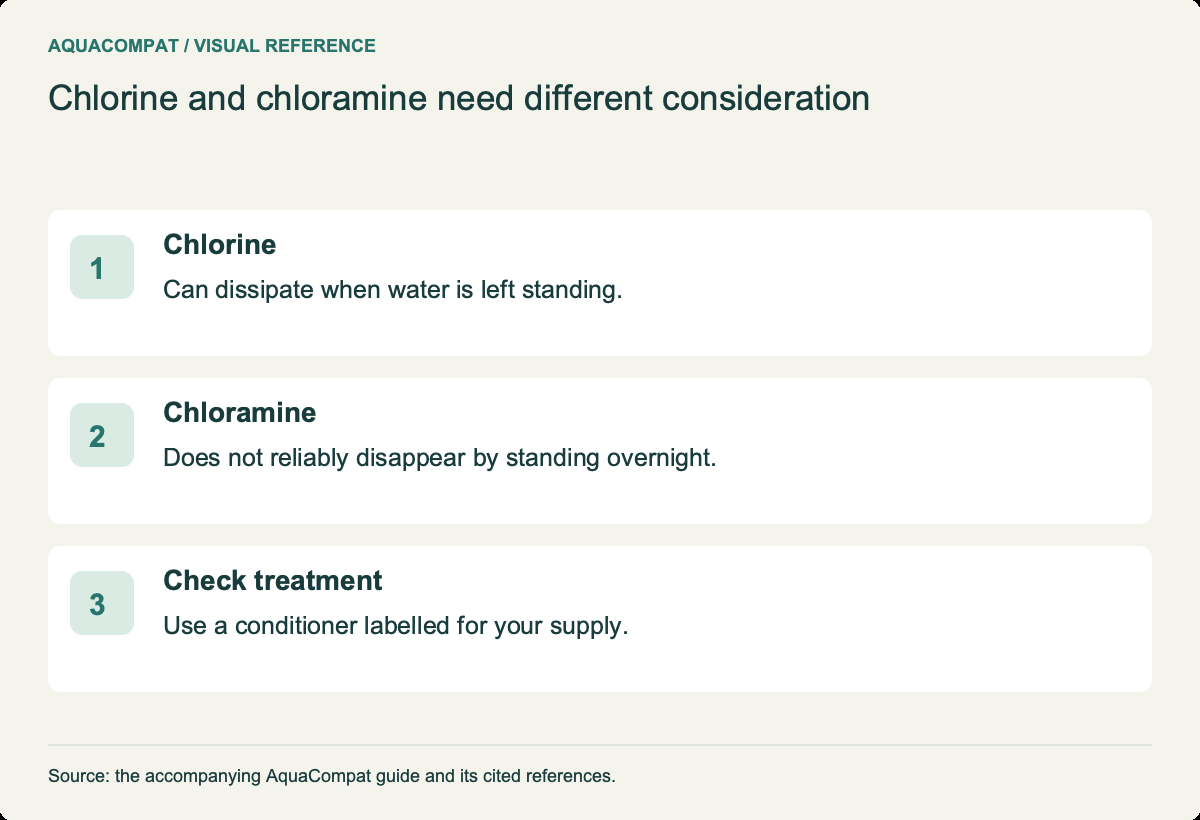
Chlorine and chloramine need different consideration
SVG file · Appears in Tap Water for Aquariums: How to Test and Treat It
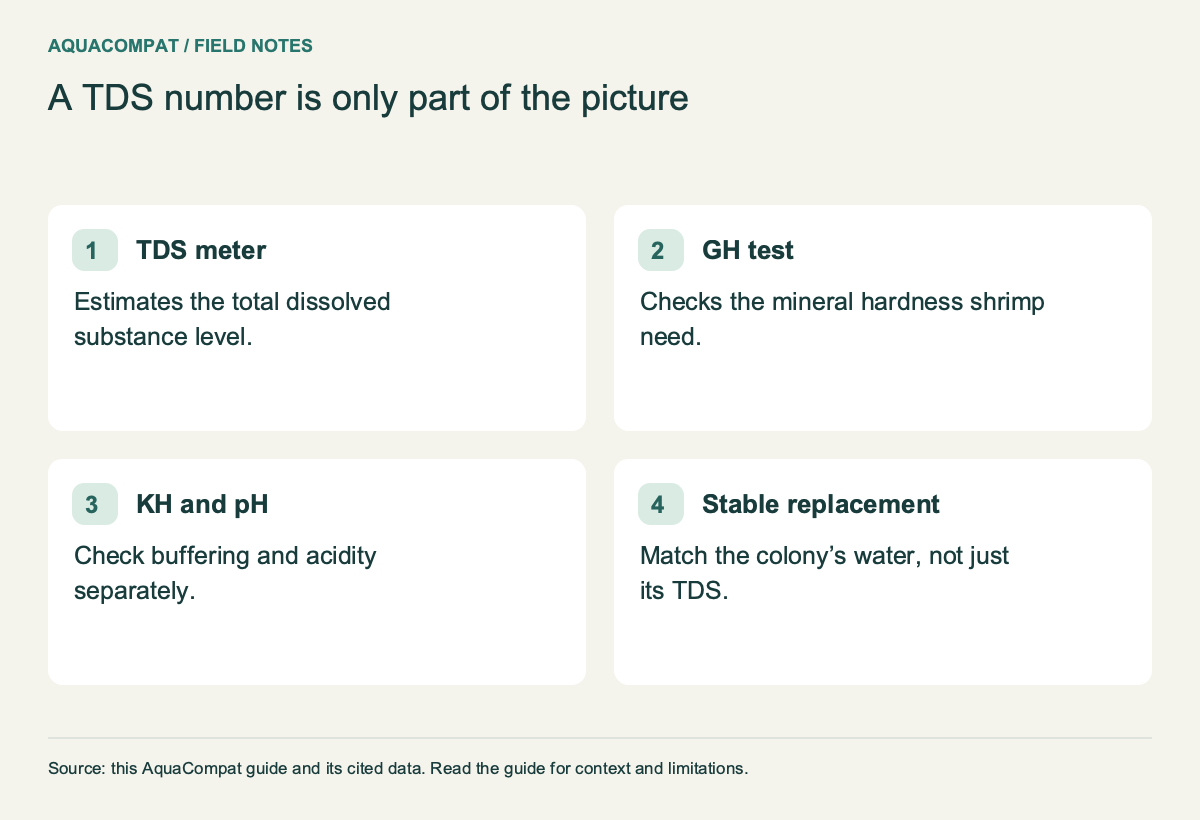
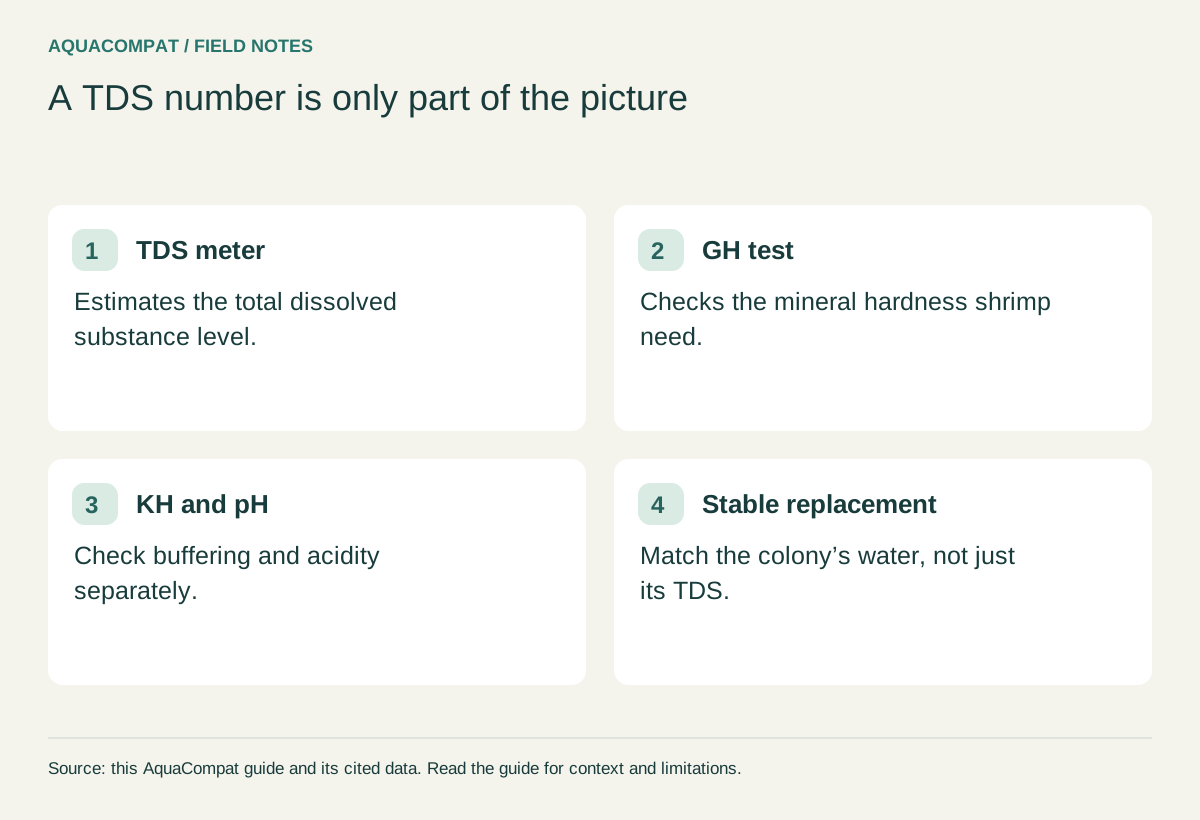
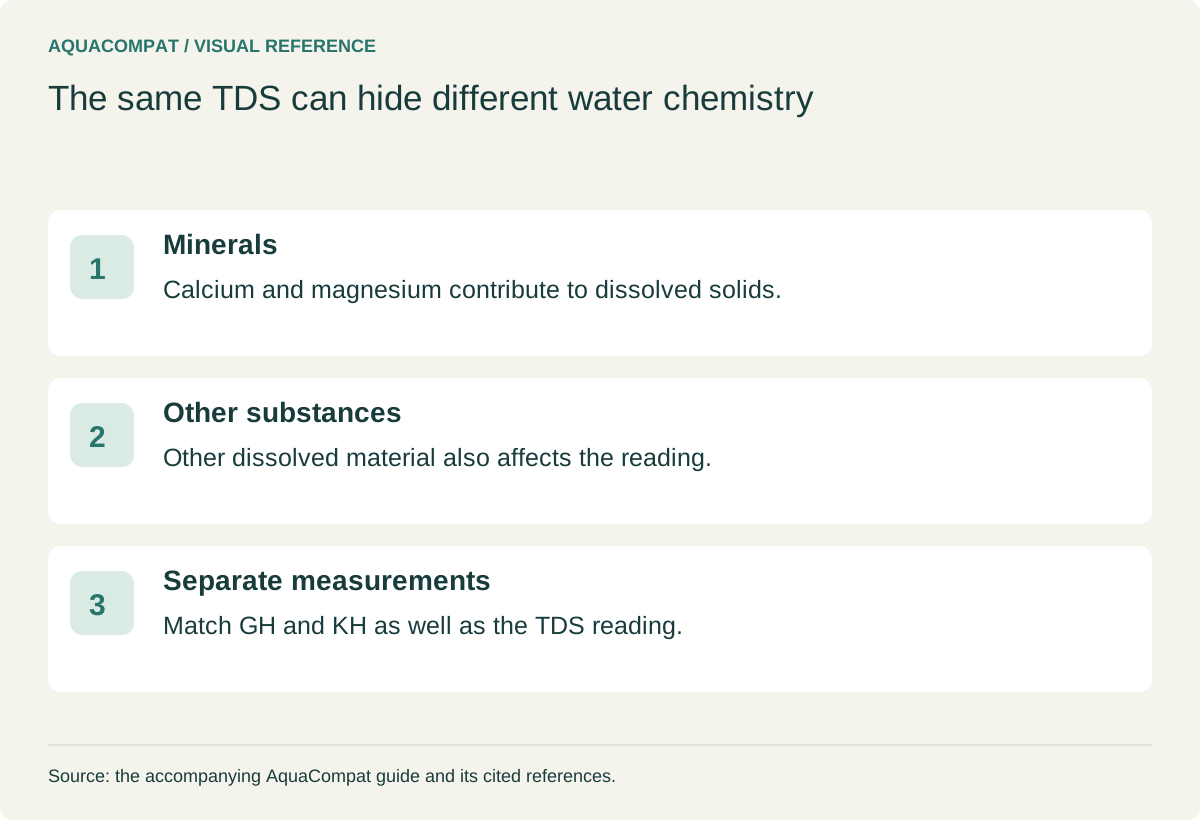
A TDS number is only part of the picture
SVG file · Appears in TDS in Shrimp Tanks: Ranges for Neocaridina and Caridina
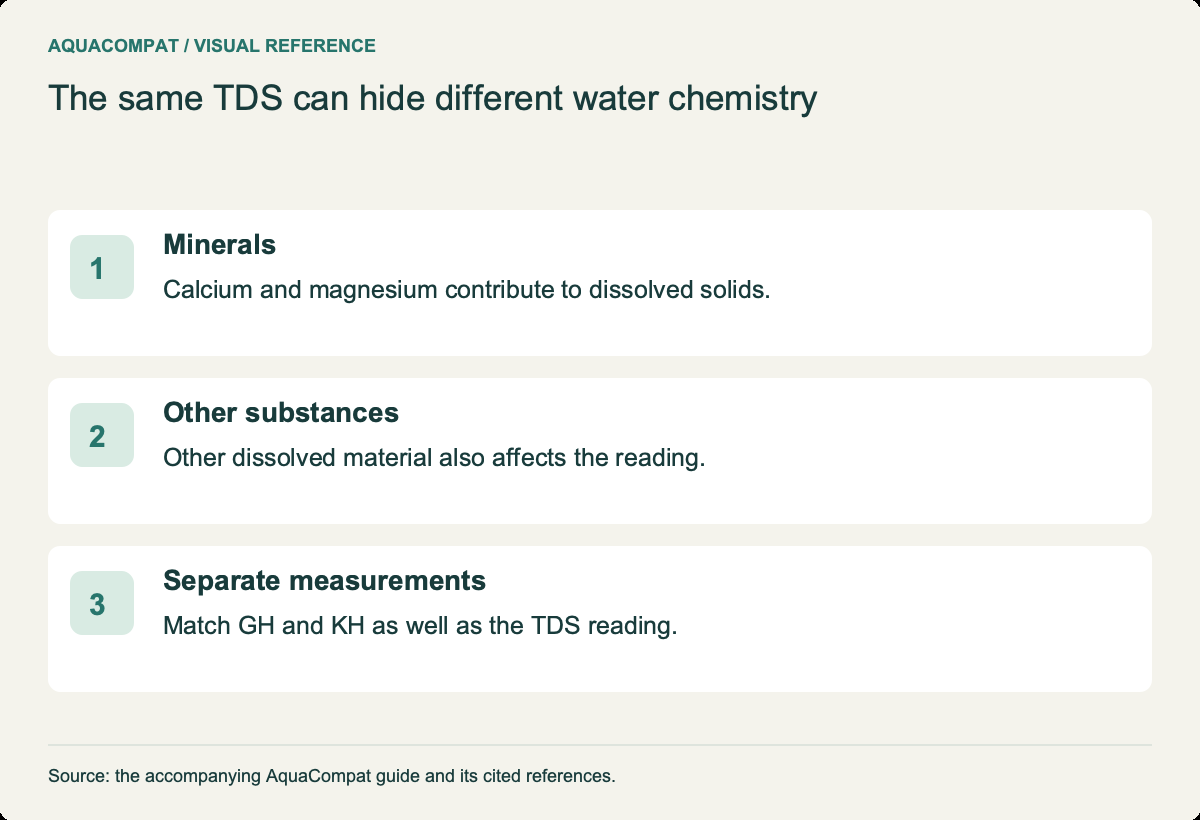
The same TDS can hide different water chemistry
SVG file · Appears in TDS in Shrimp Tanks: Ranges for Neocaridina and Caridina
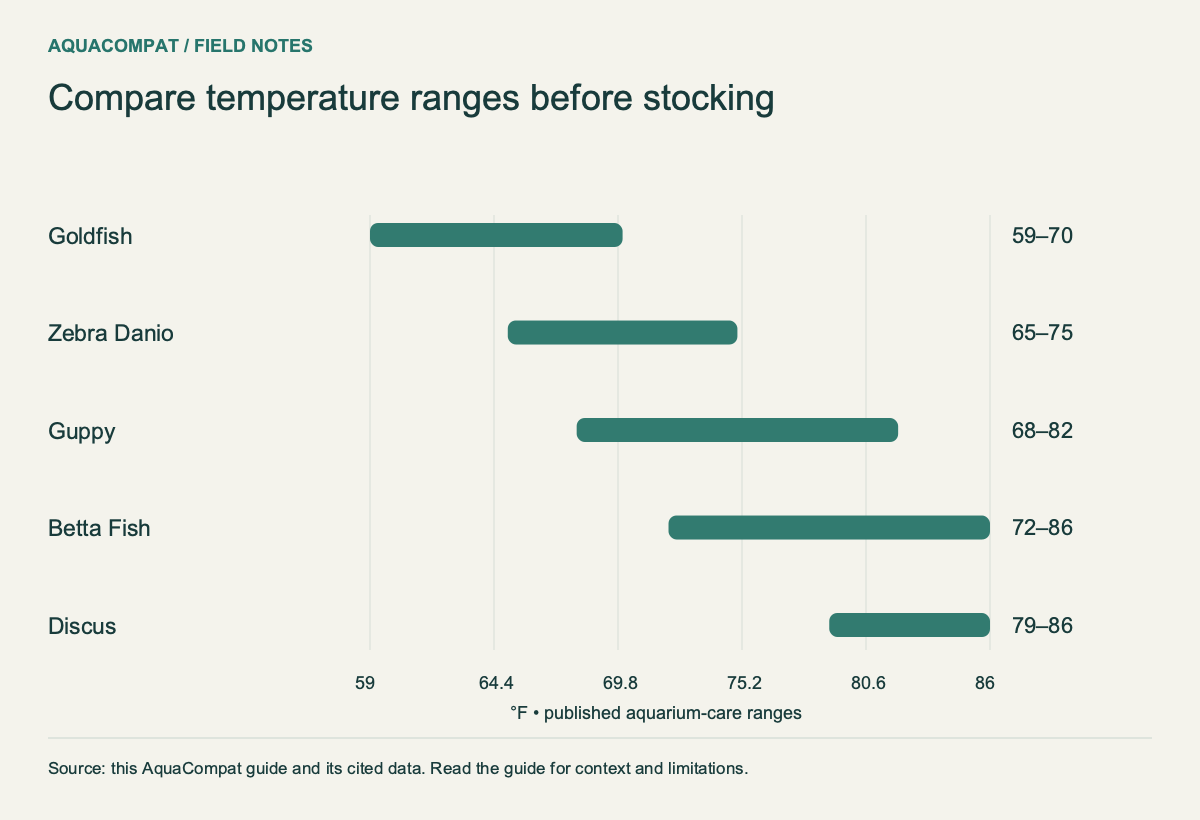
Compare temperature ranges before stocking
SVG file · Appears in Aquarium Temperature Guide by Species
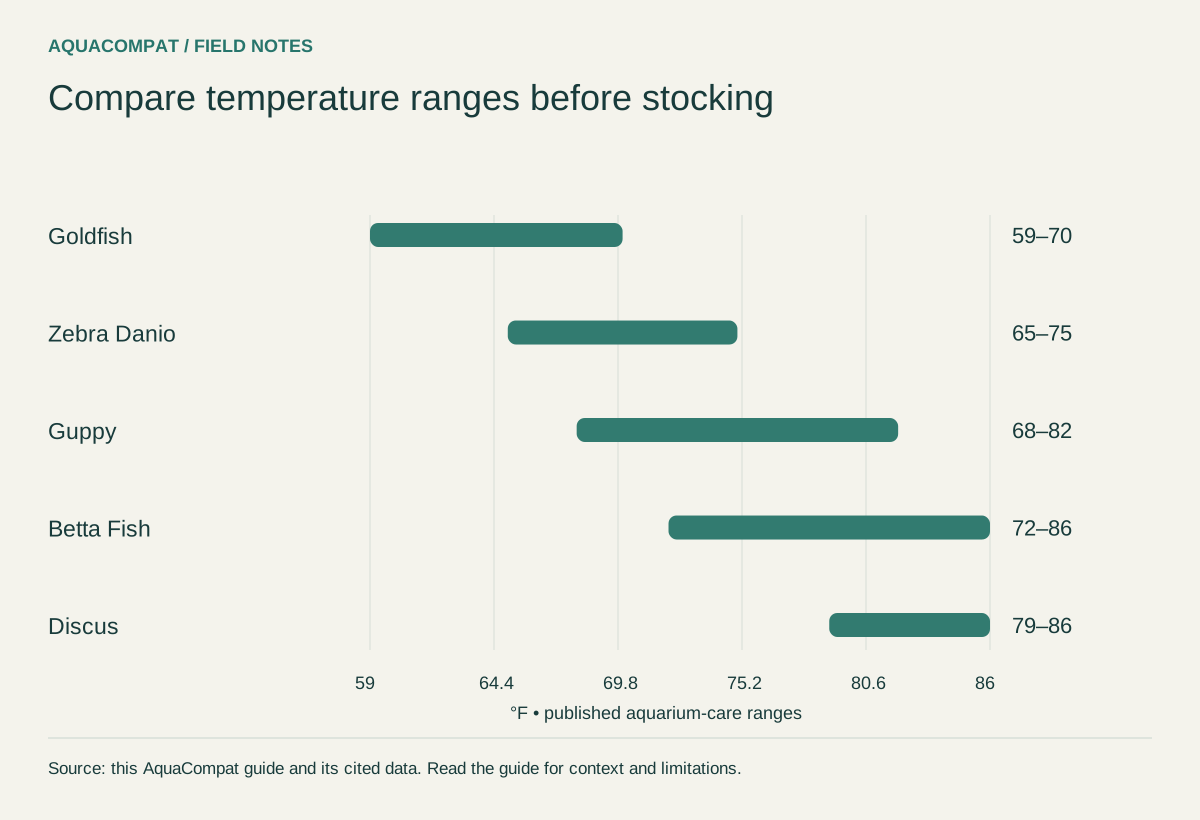
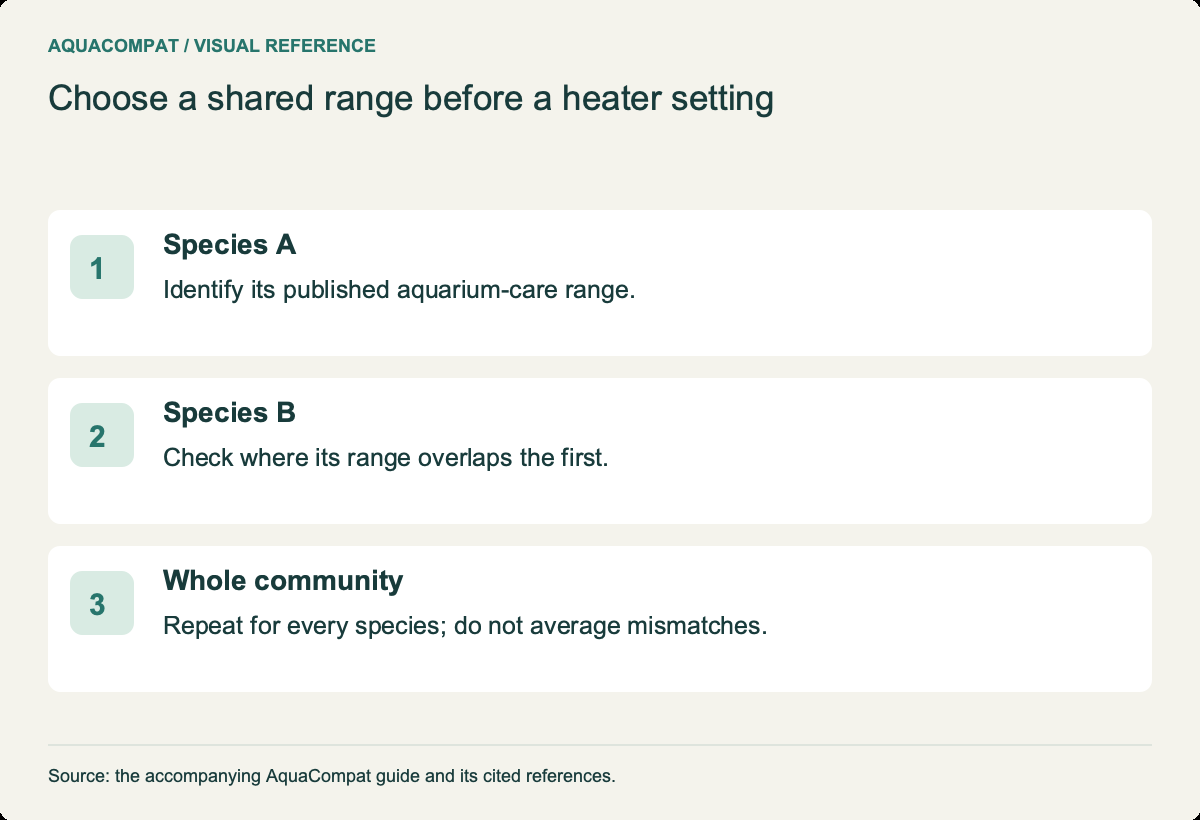
Choose a shared range before a heater setting
SVG file · Appears in Aquarium Temperature Guide by Species
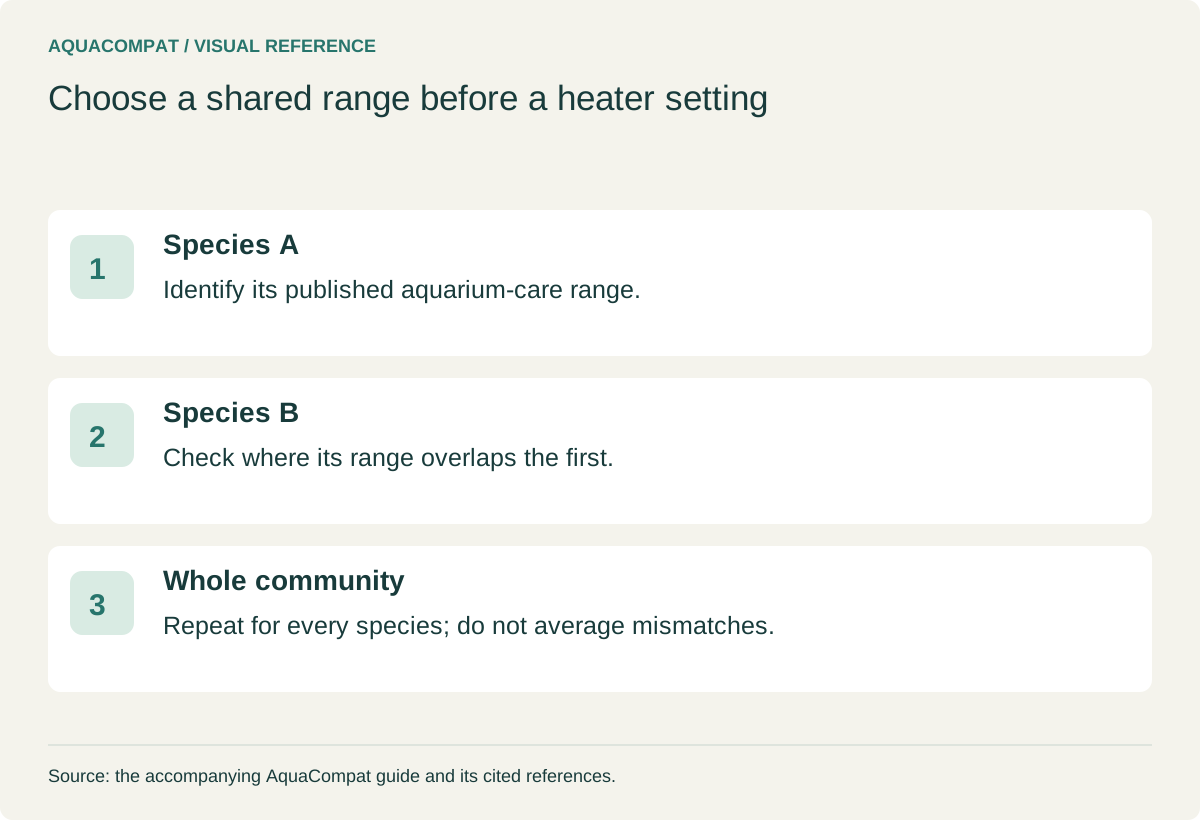
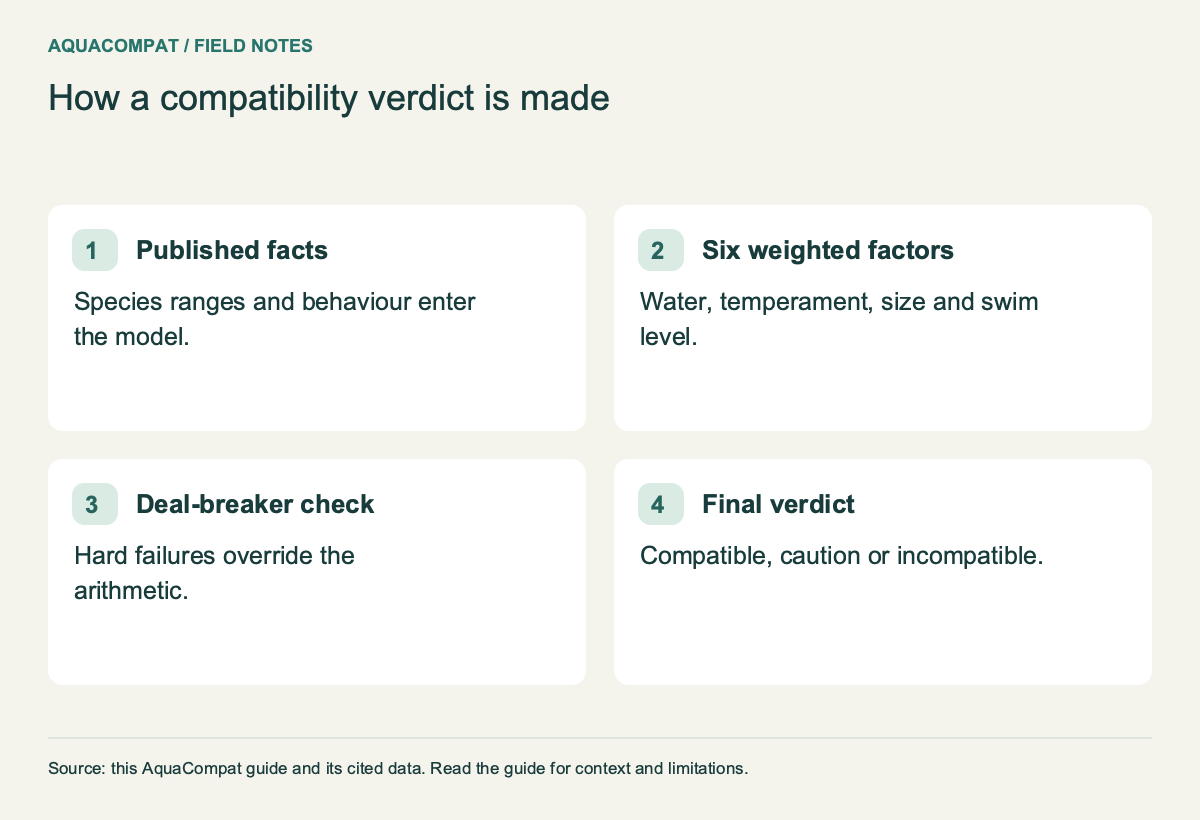
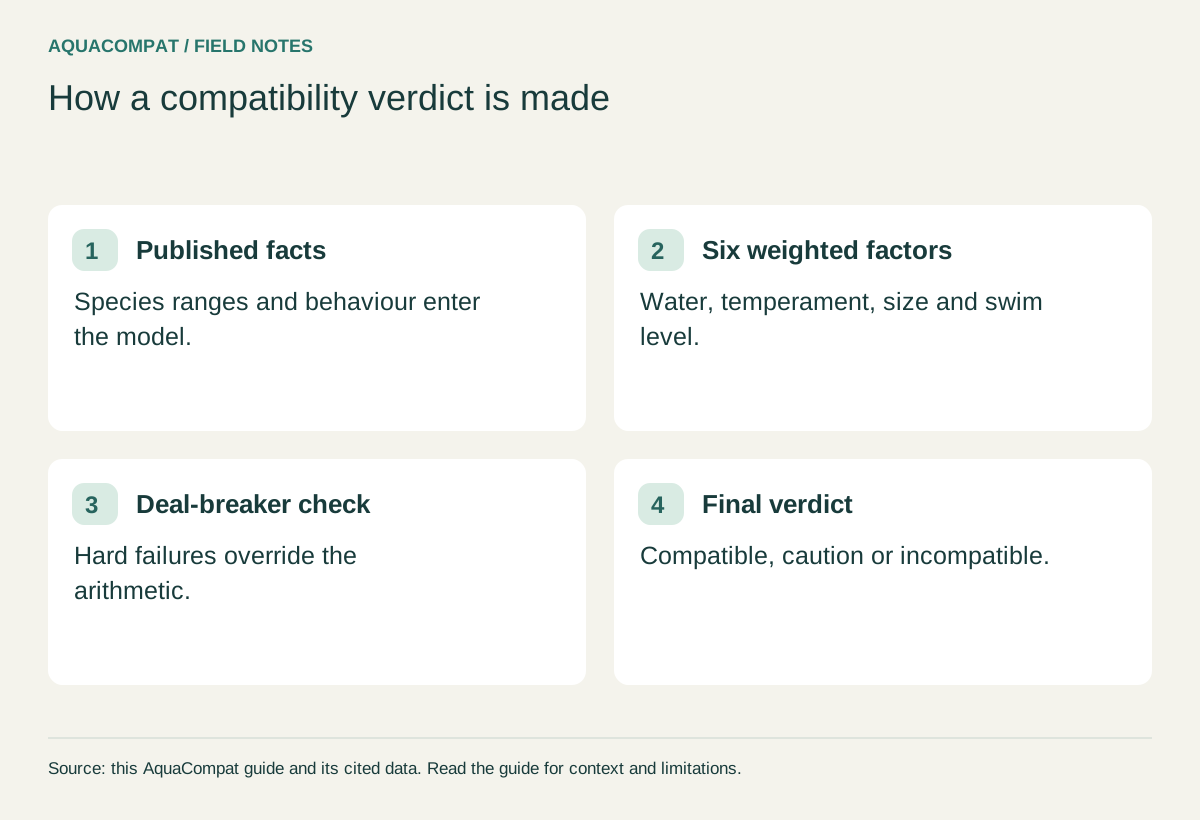
How a compatibility verdict is made
SVG file · Appears in How AquaCompat Builds Compatibility Verdicts
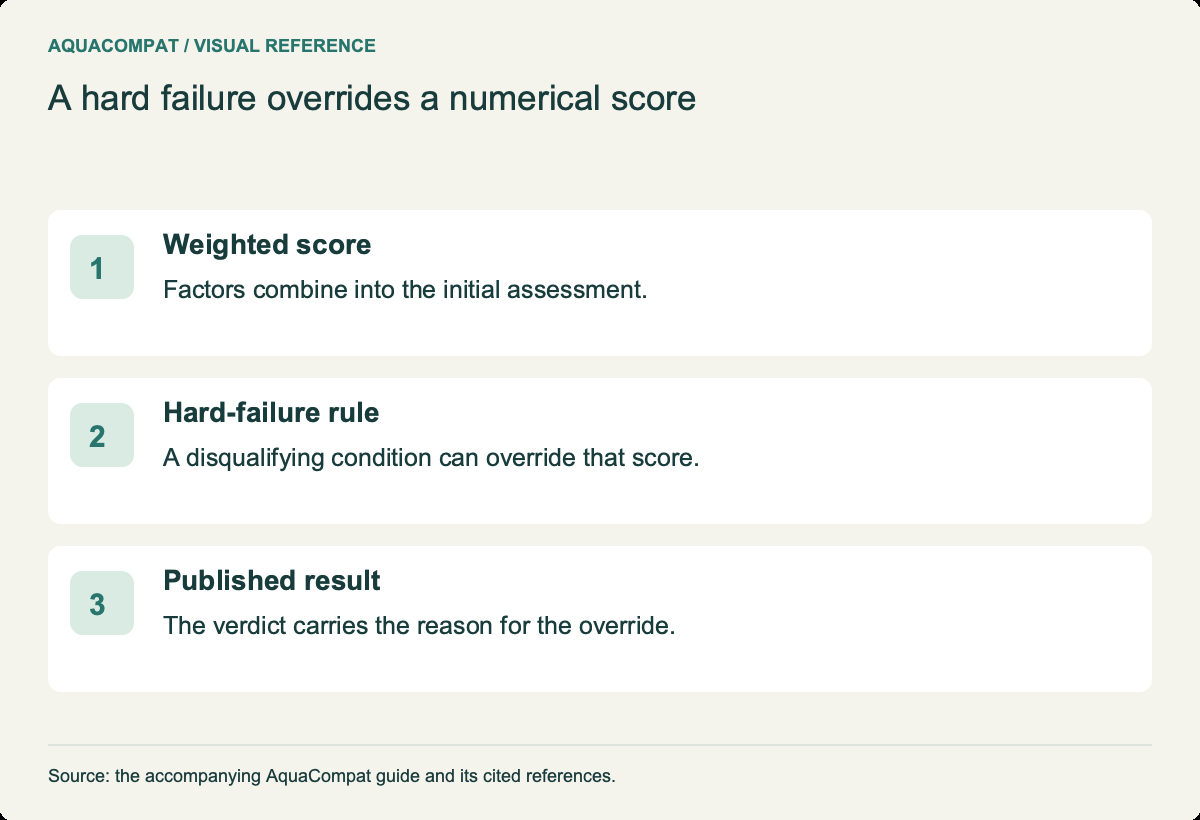
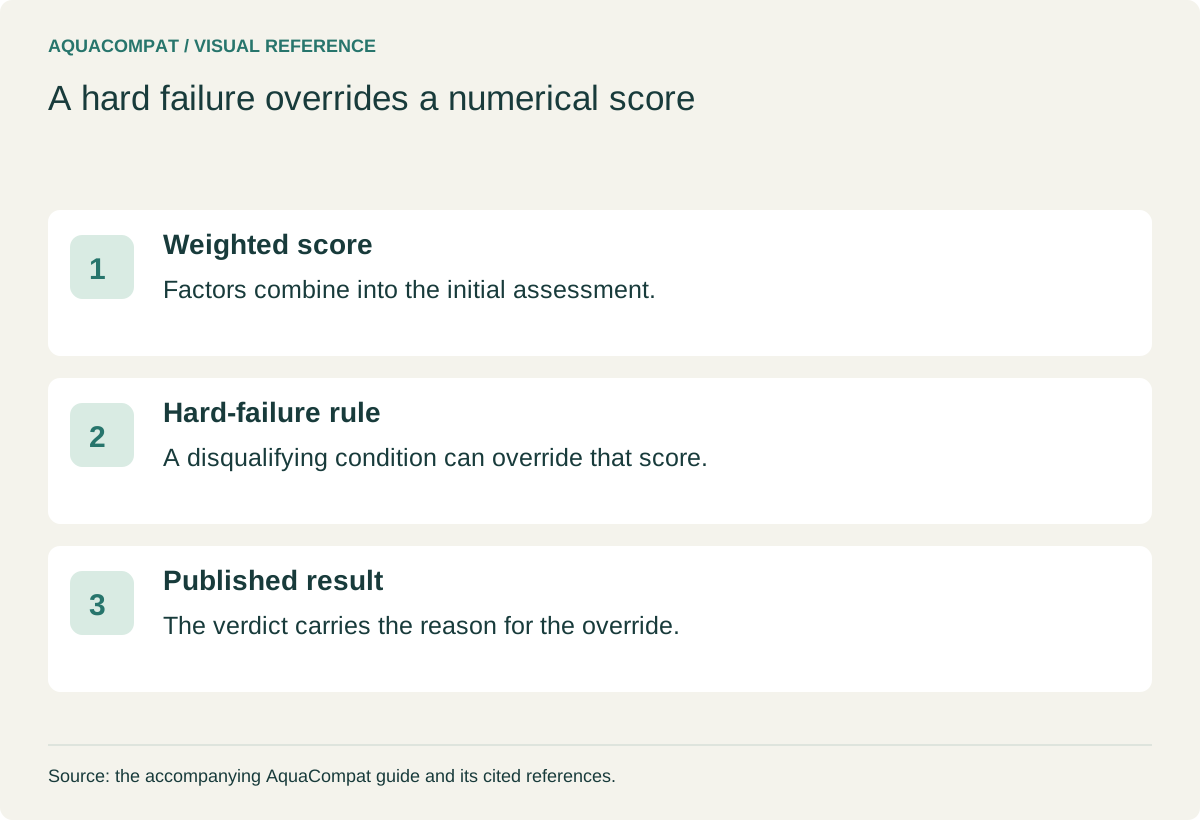
A hard failure overrides a numerical score
SVG file · Appears in How AquaCompat Builds Compatibility Verdicts
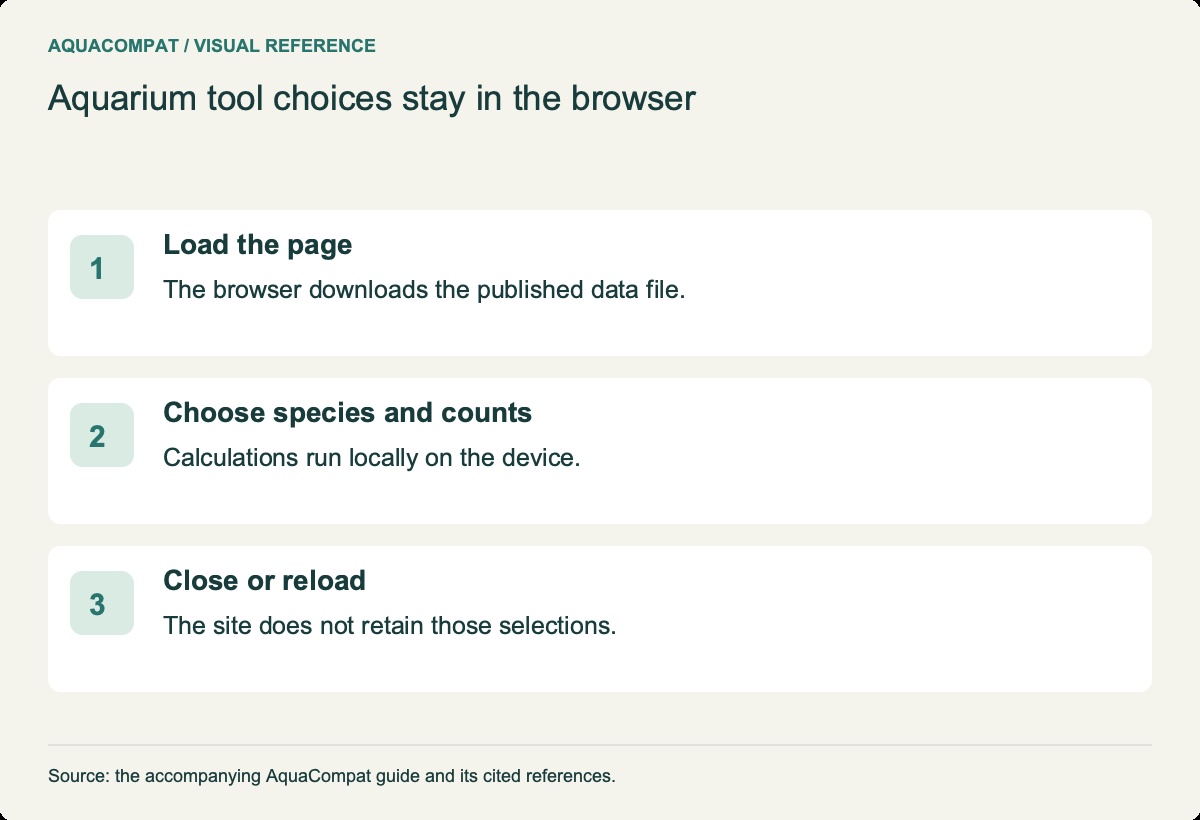
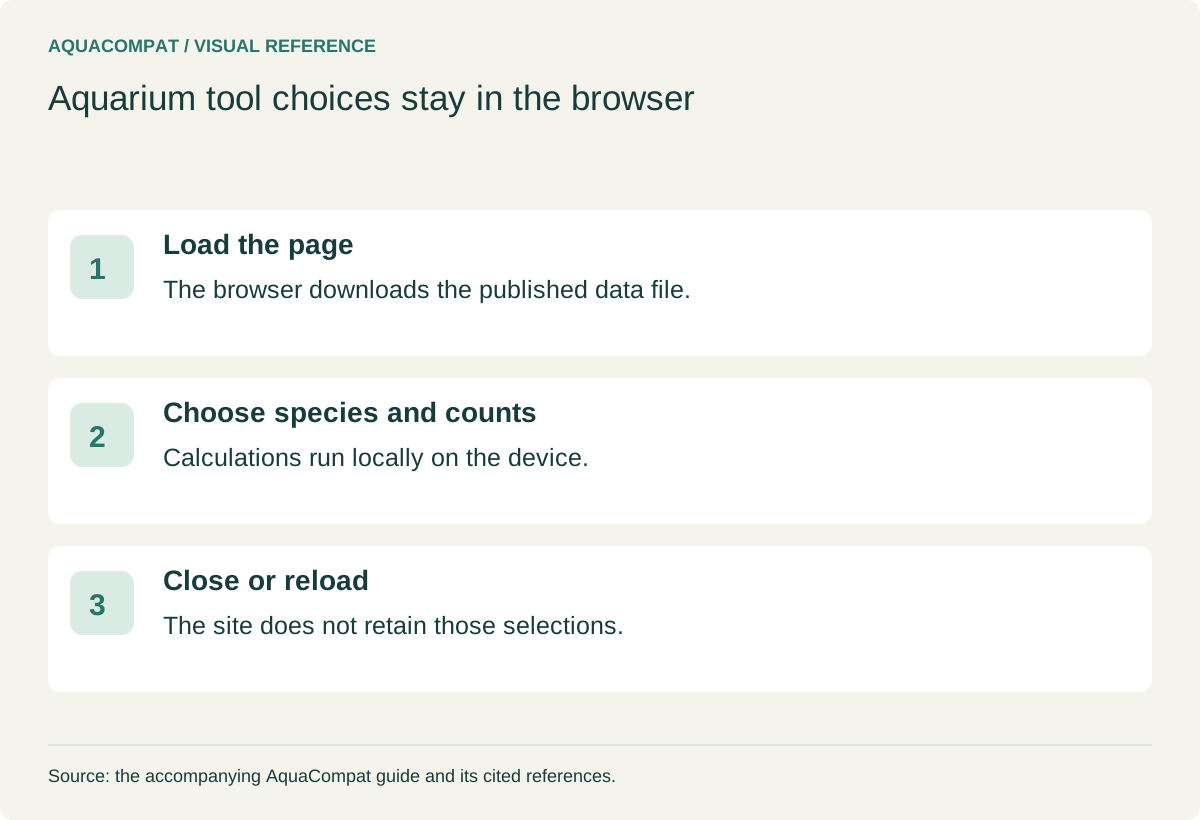
Aquarium tool choices stay in the browser
SVG file · Appears in AquaCompat Privacy Policy
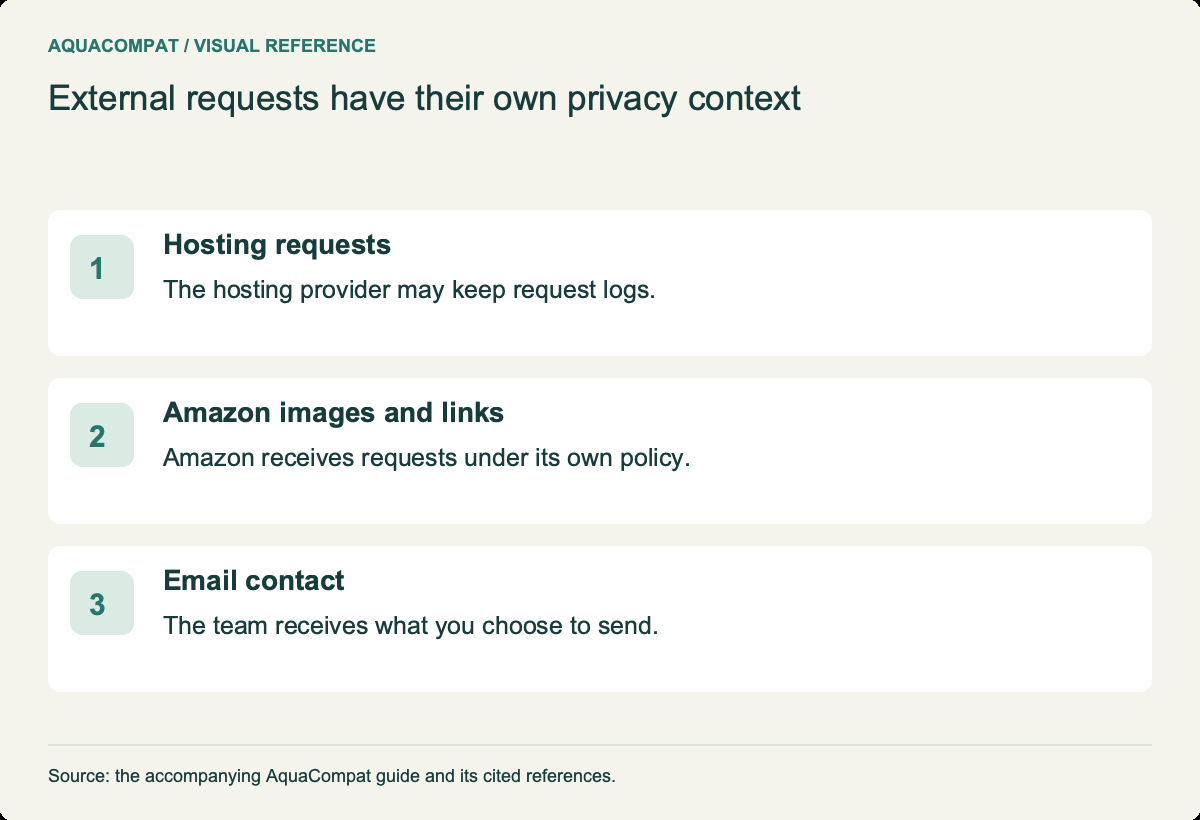
External requests have their own privacy context
SVG file · Appears in AquaCompat Privacy Policy
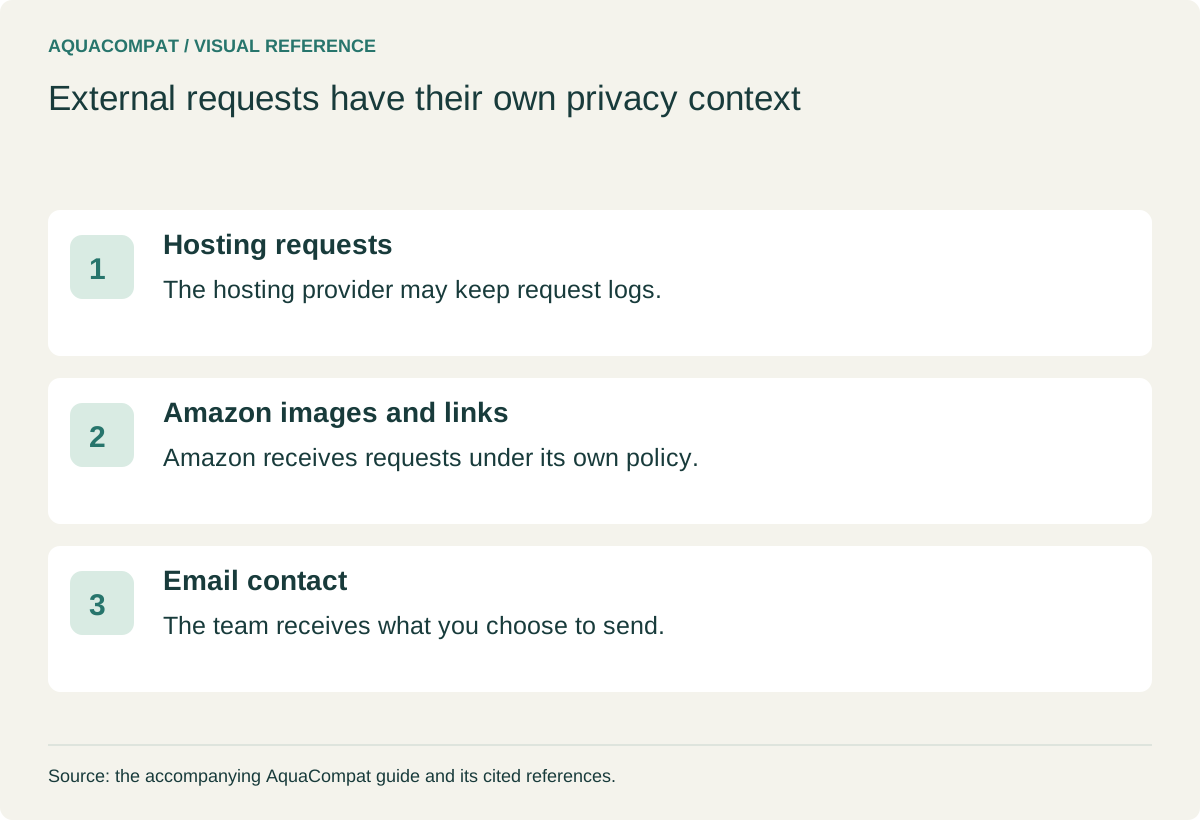
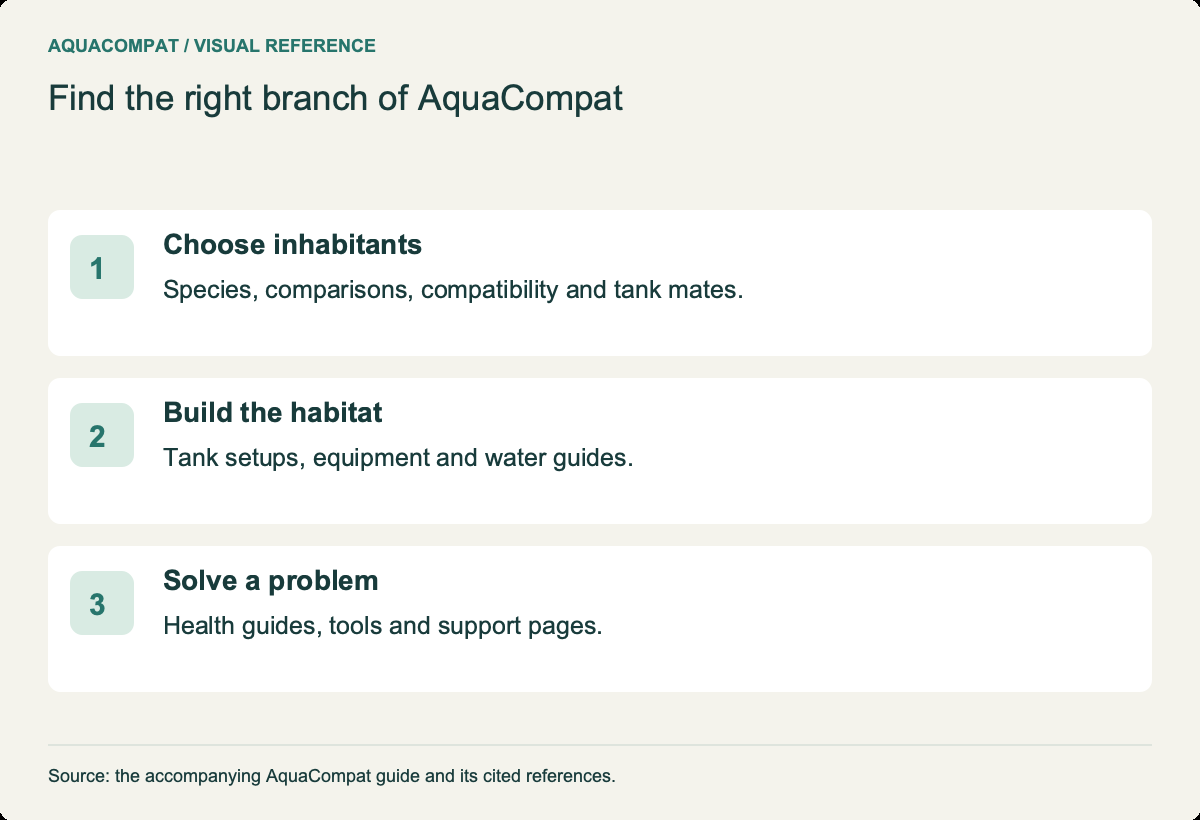
Find the right branch of AquaCompat
SVG file · Appears in AquaCompat Sitemap
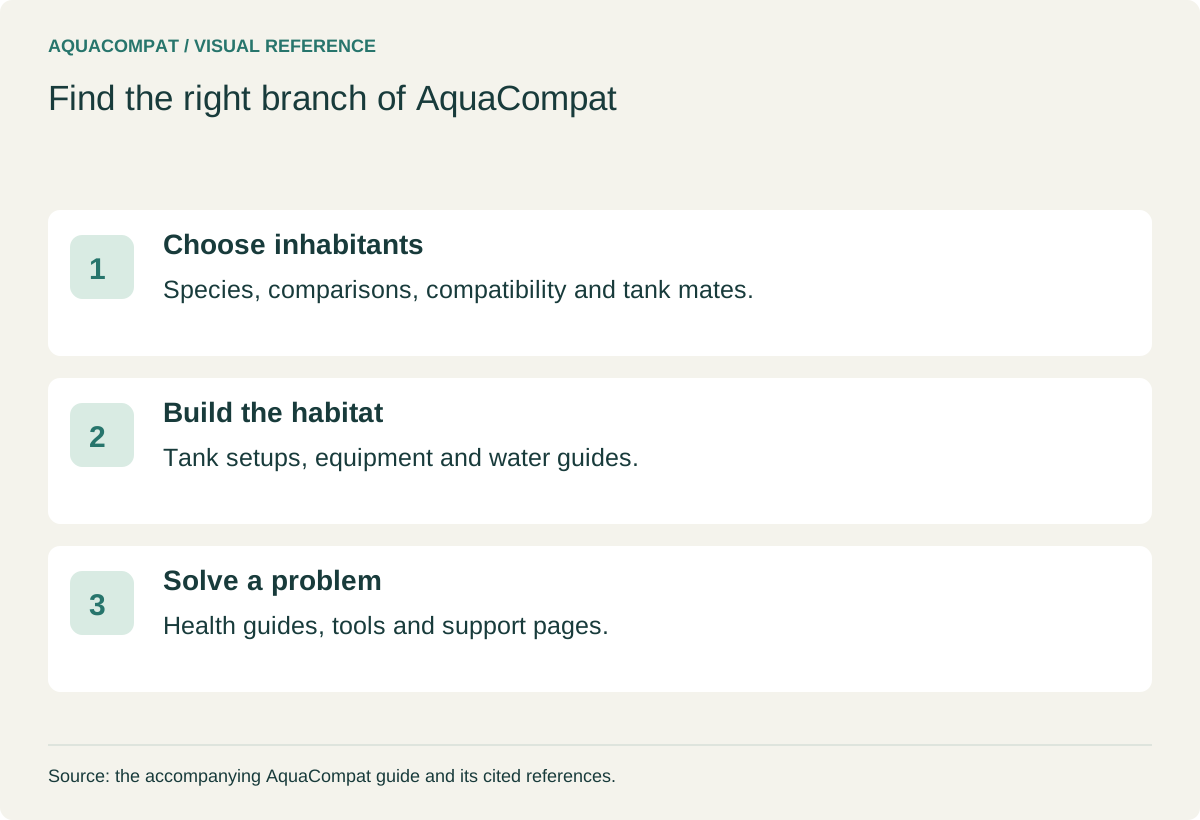
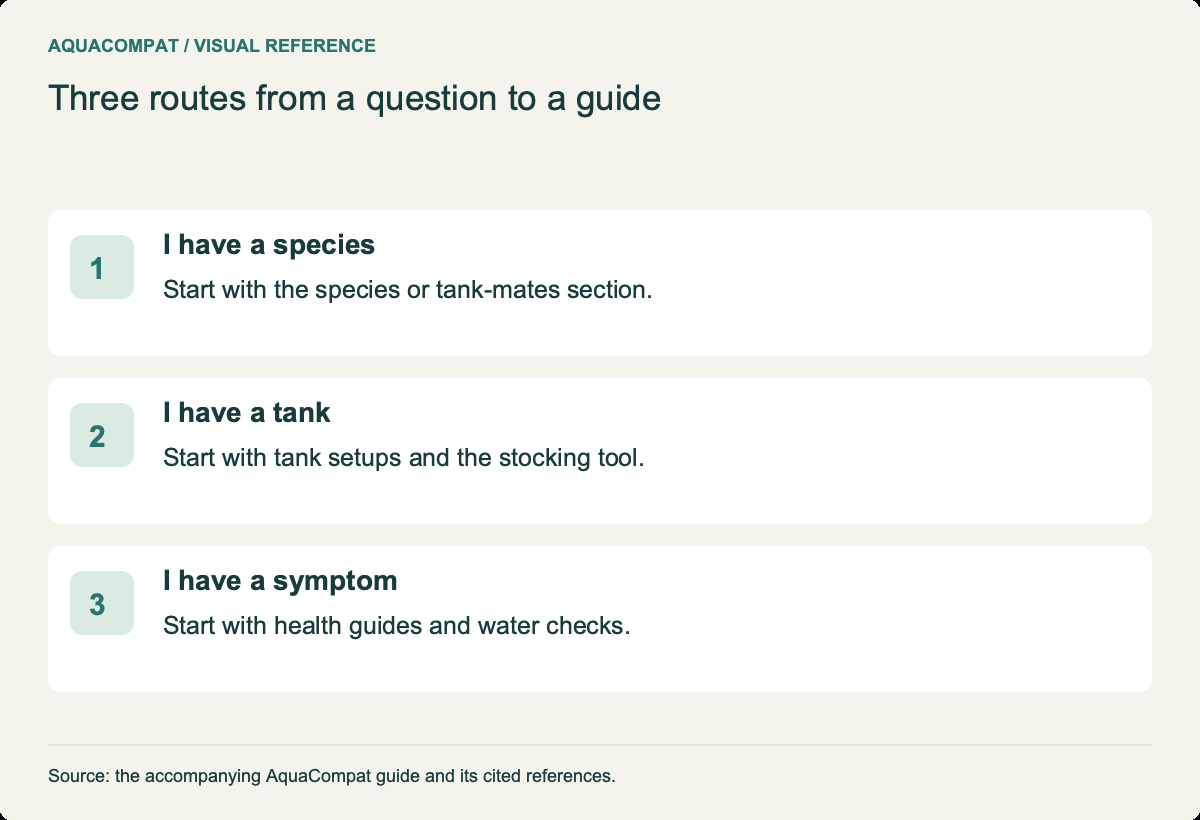
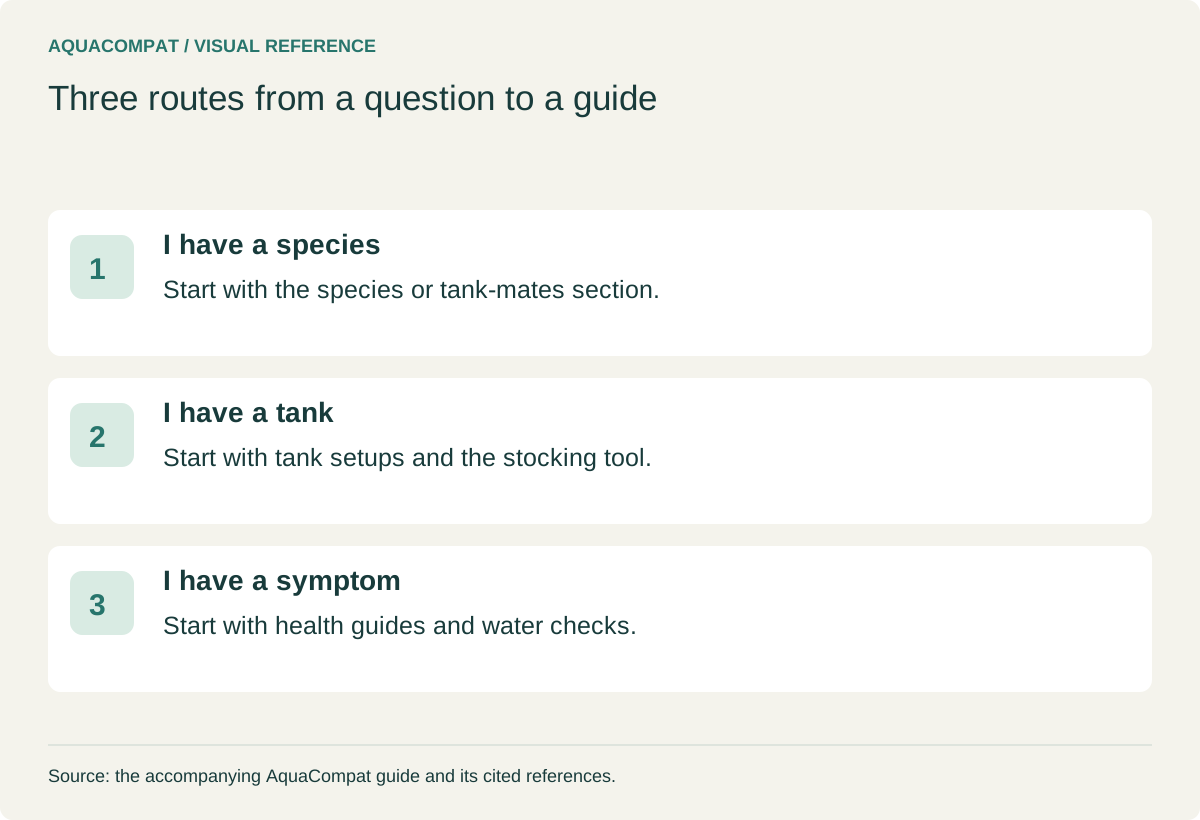
Three routes from a question to a guide
SVG file · Appears in AquaCompat Sitemap
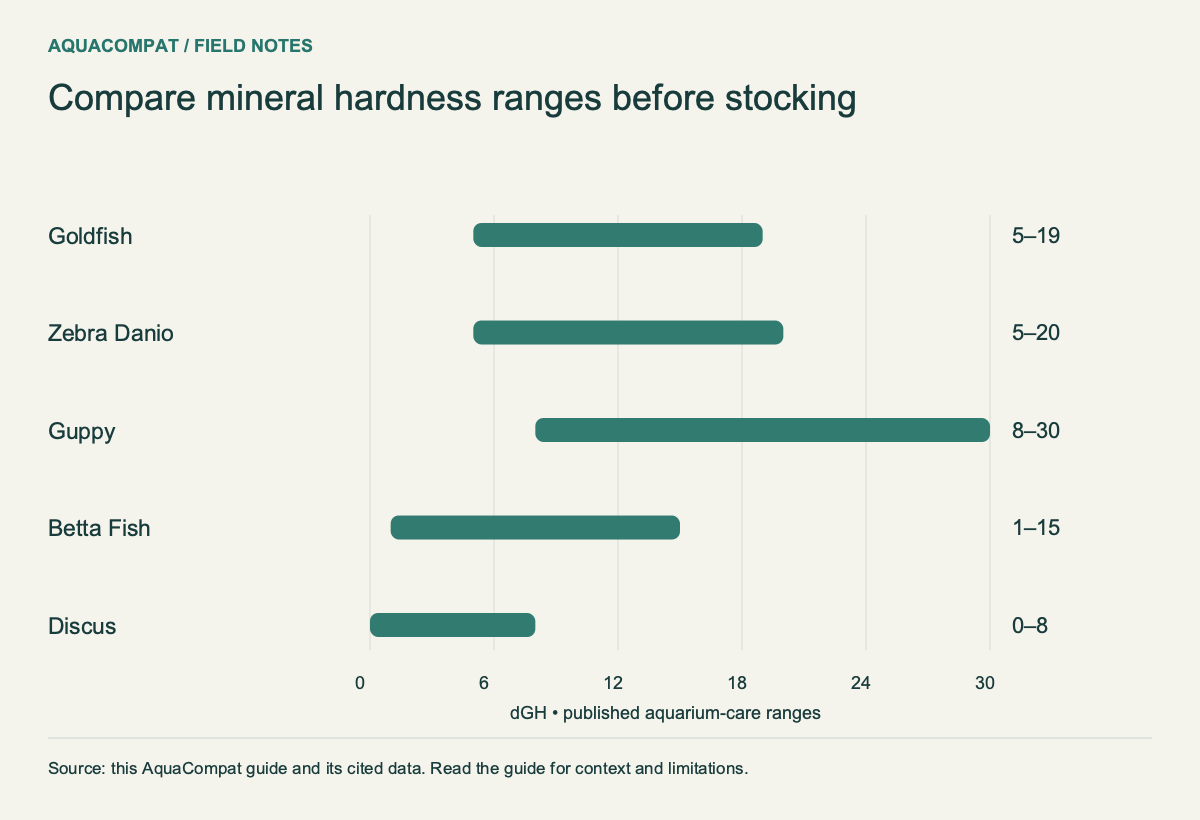
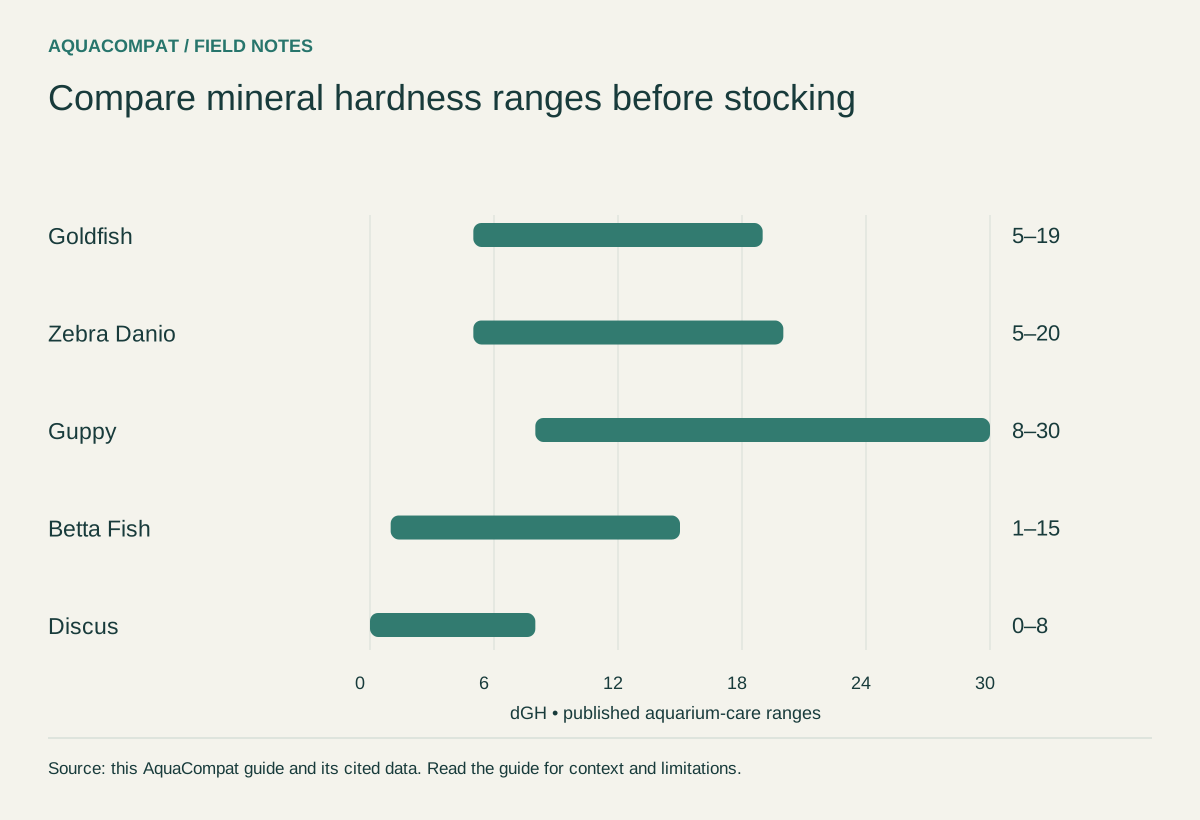
Compare mineral hardness ranges before stocking
SVG file · Appears in Freshwater Aquarium Species: Care Data for 22 Fish, Shrimp and Snails
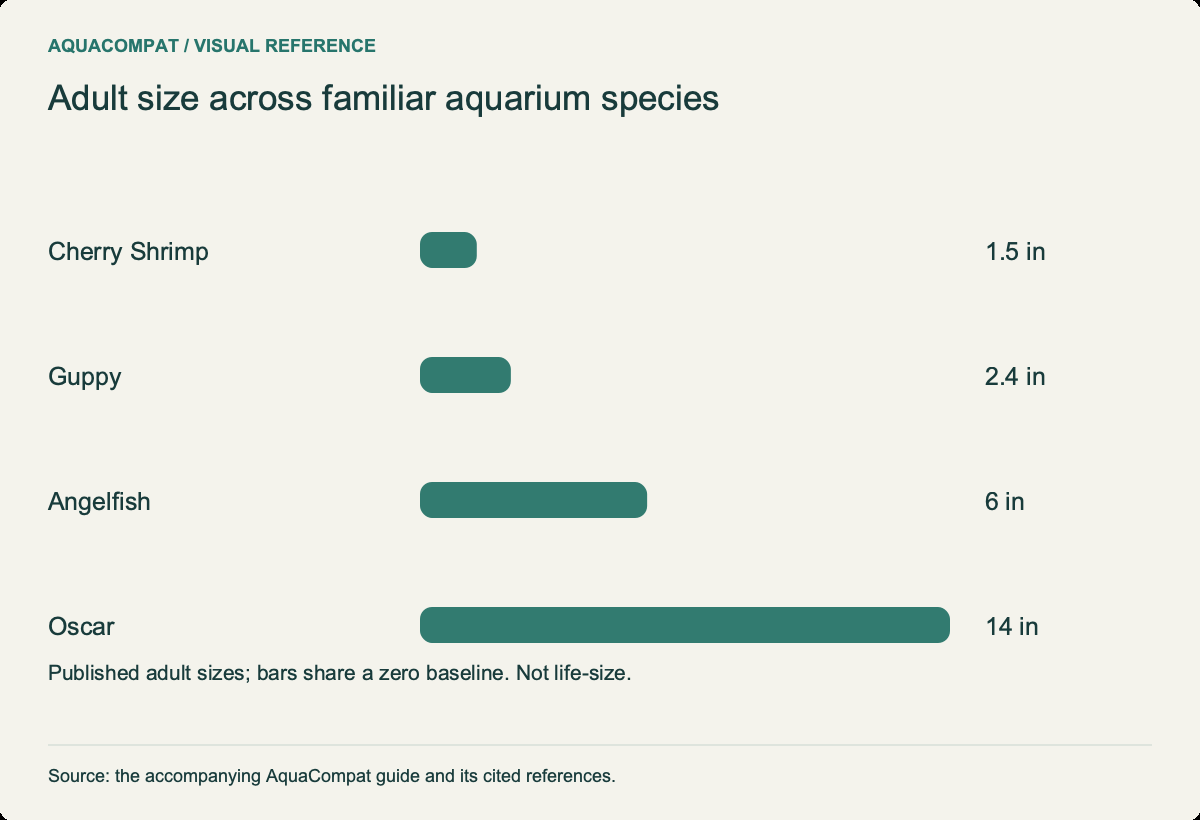
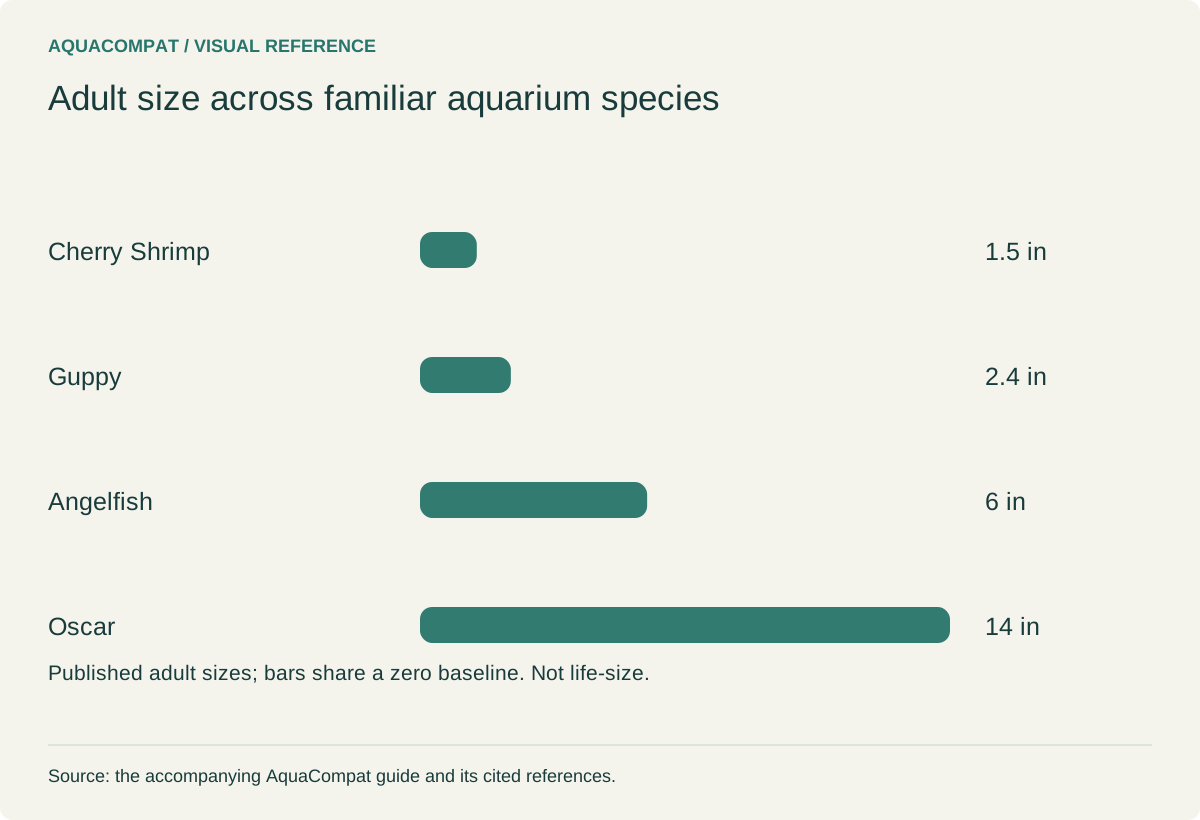
Adult size across familiar aquarium species
SVG file · Appears in Freshwater Aquarium Species: Care Data for 22 Fish, Shrimp and Snails
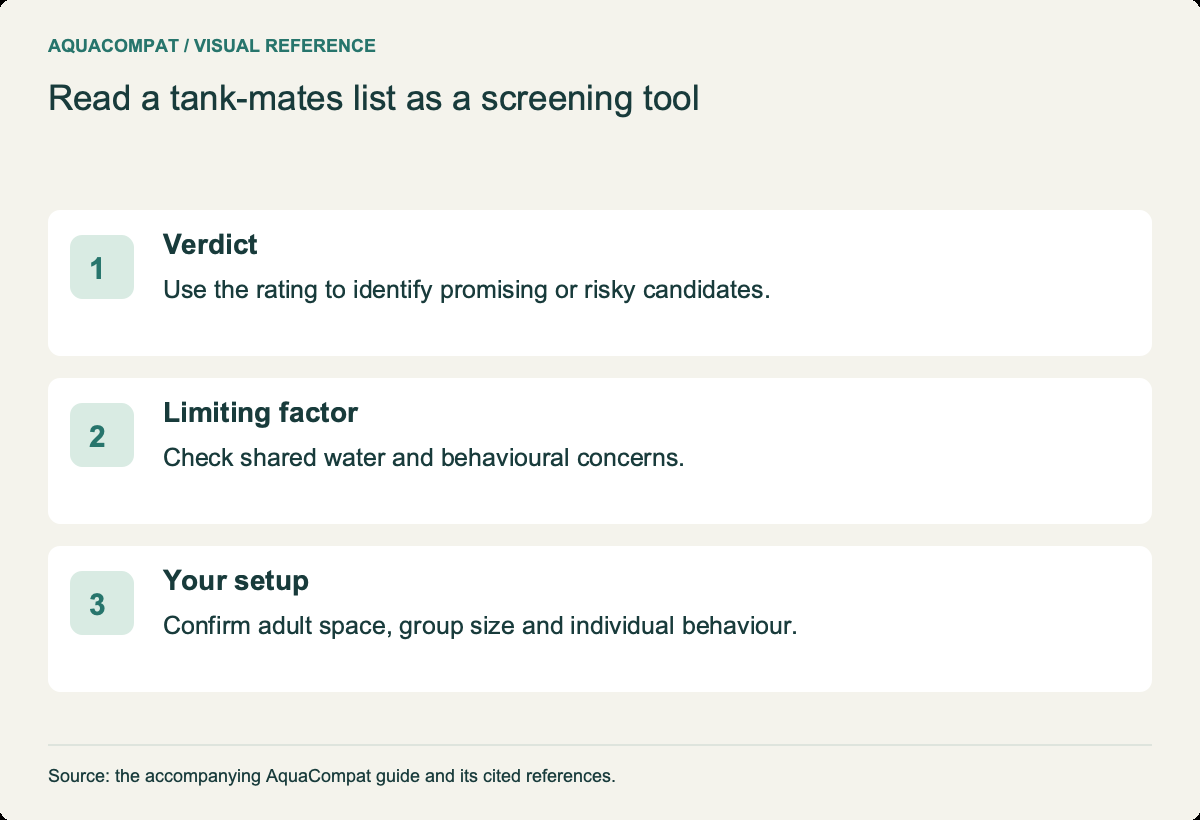
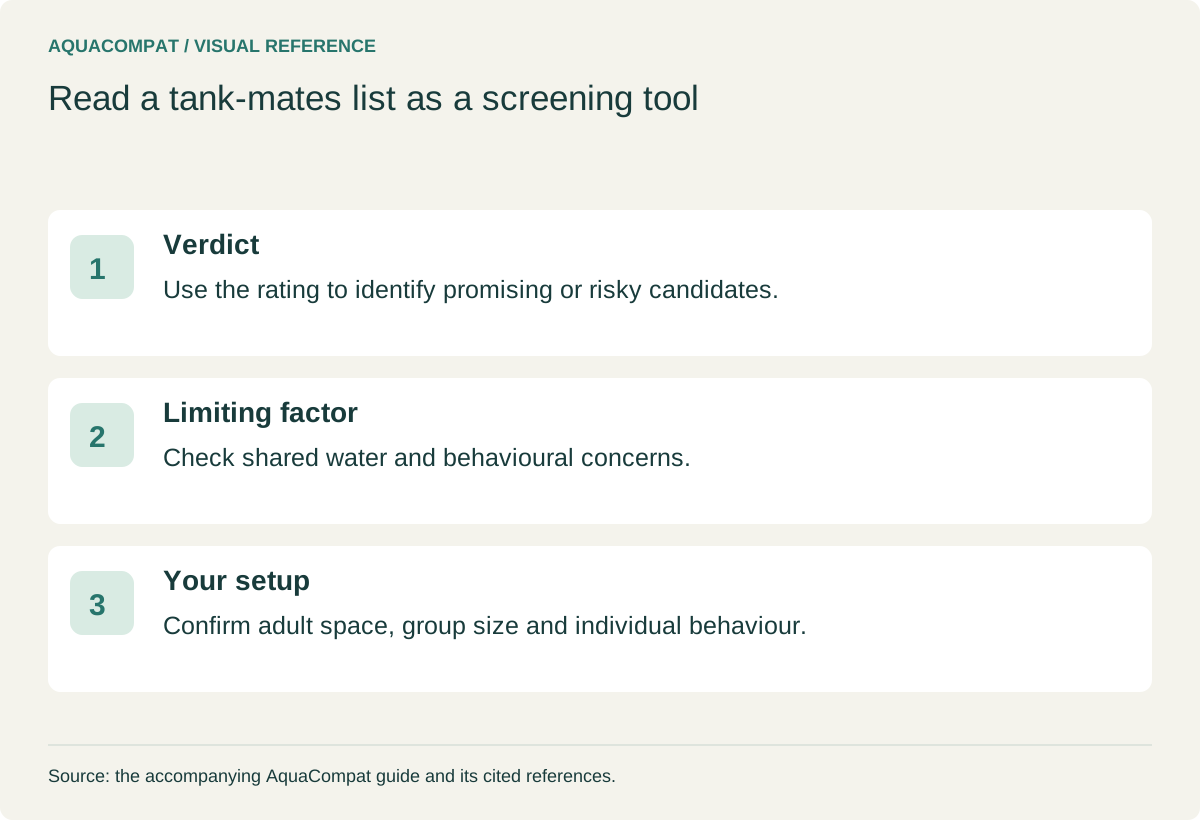
Read a tank-mates list as a screening tool
SVG file · Appears in Tank Mates by Species
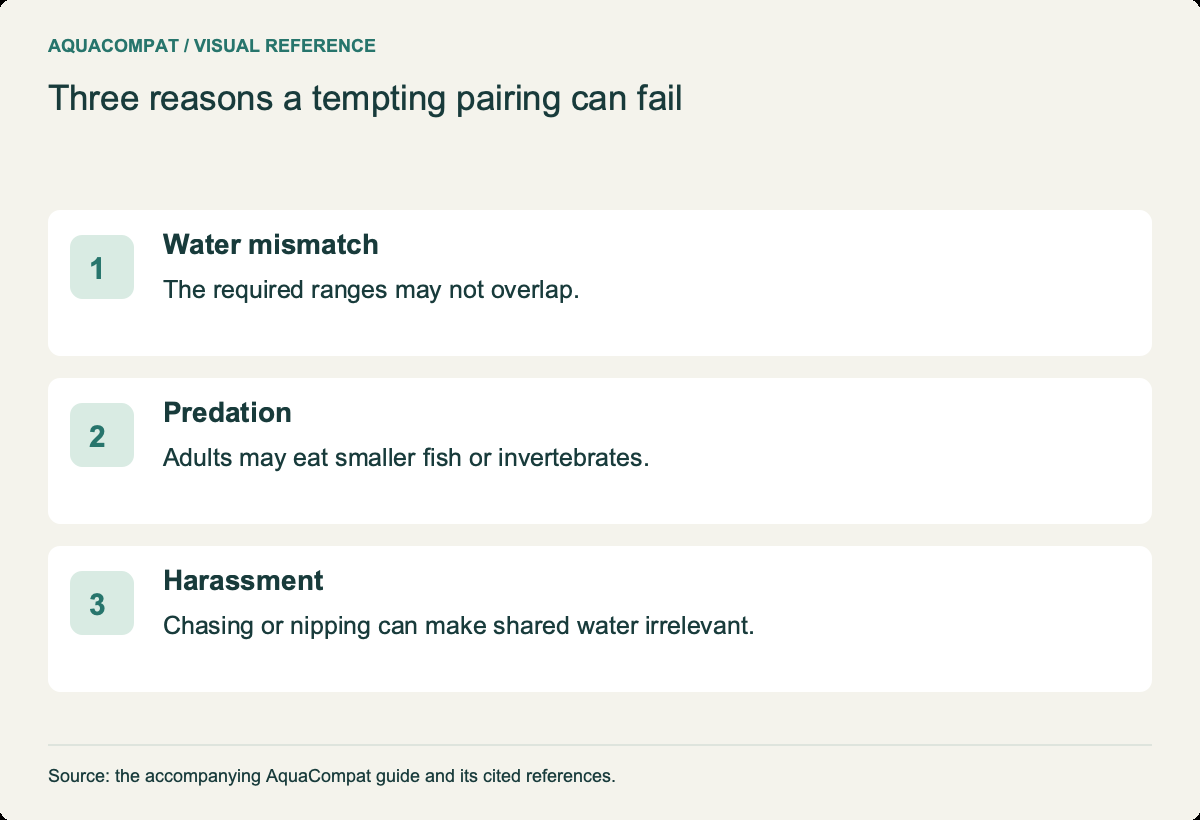
Three reasons a tempting pairing can fail
SVG file · Appears in Tank Mates by Species
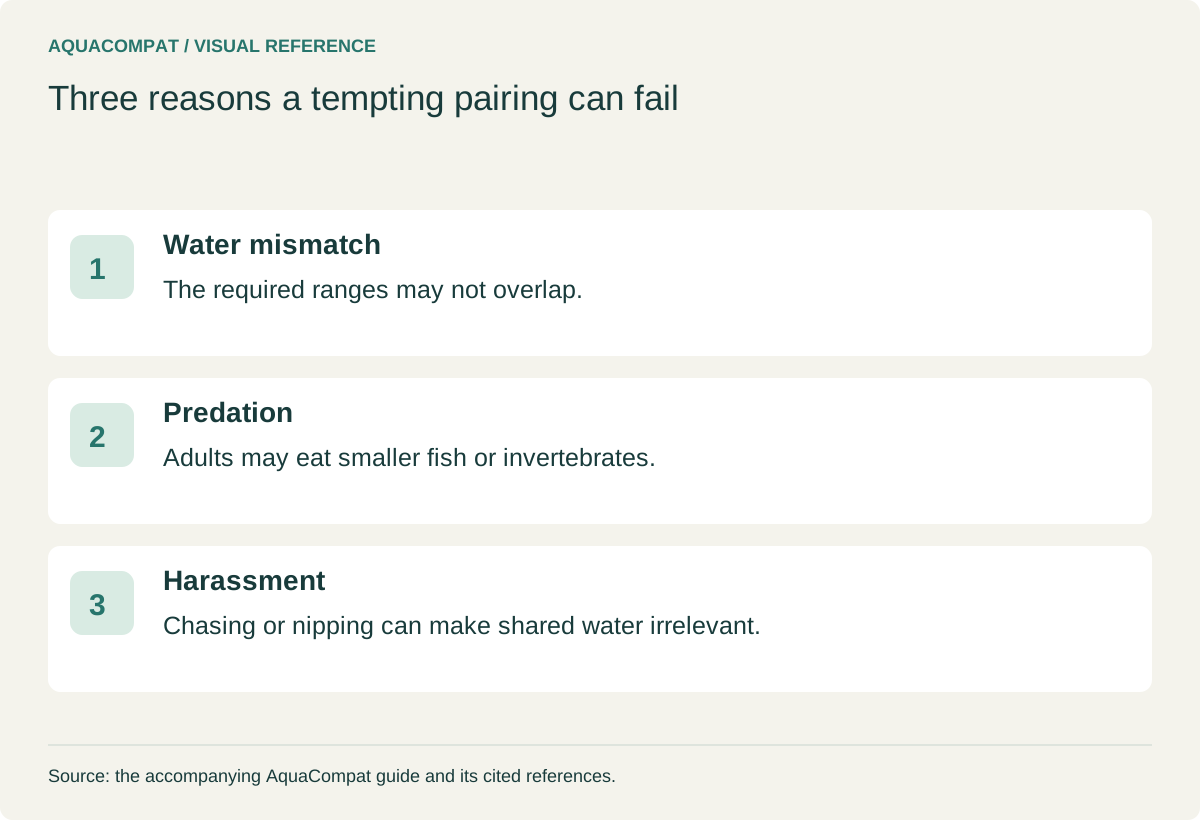
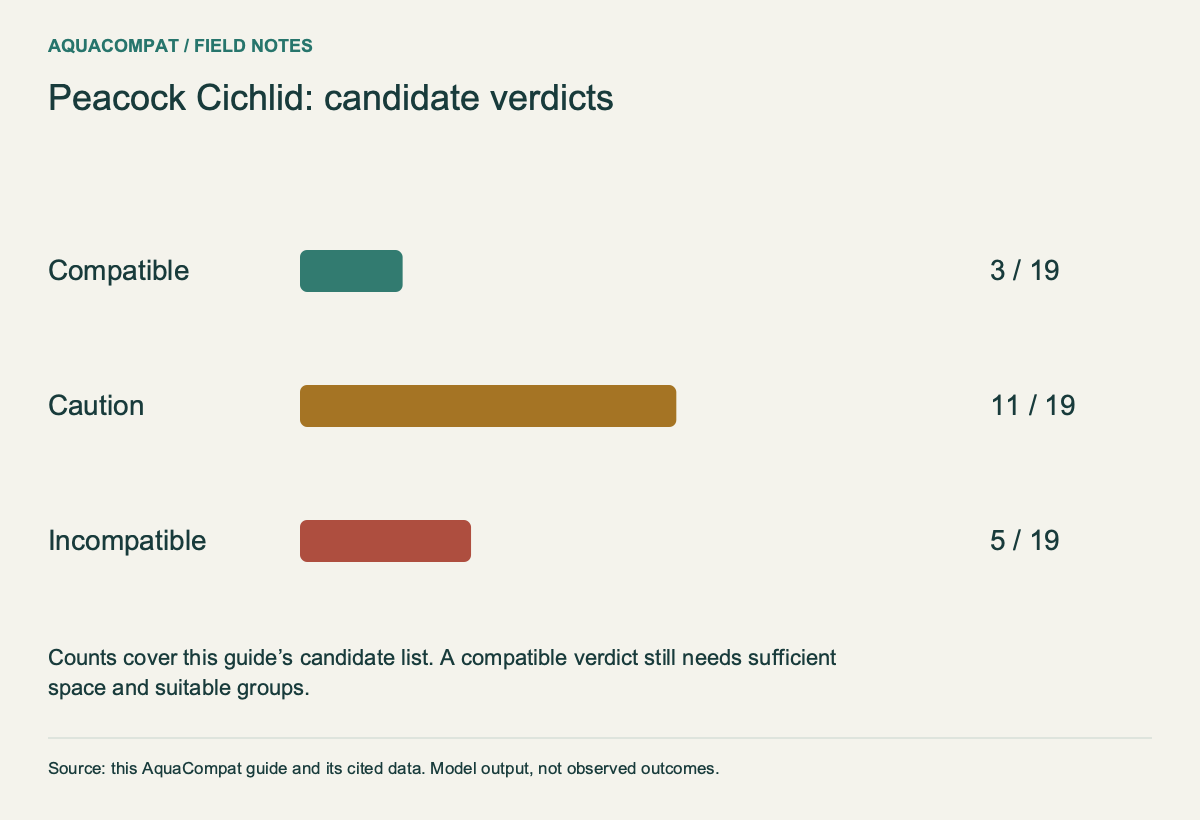
Peacock Cichlid: candidate verdicts
SVG file · Appears in African Cichlid Tank Mates and Compatibility
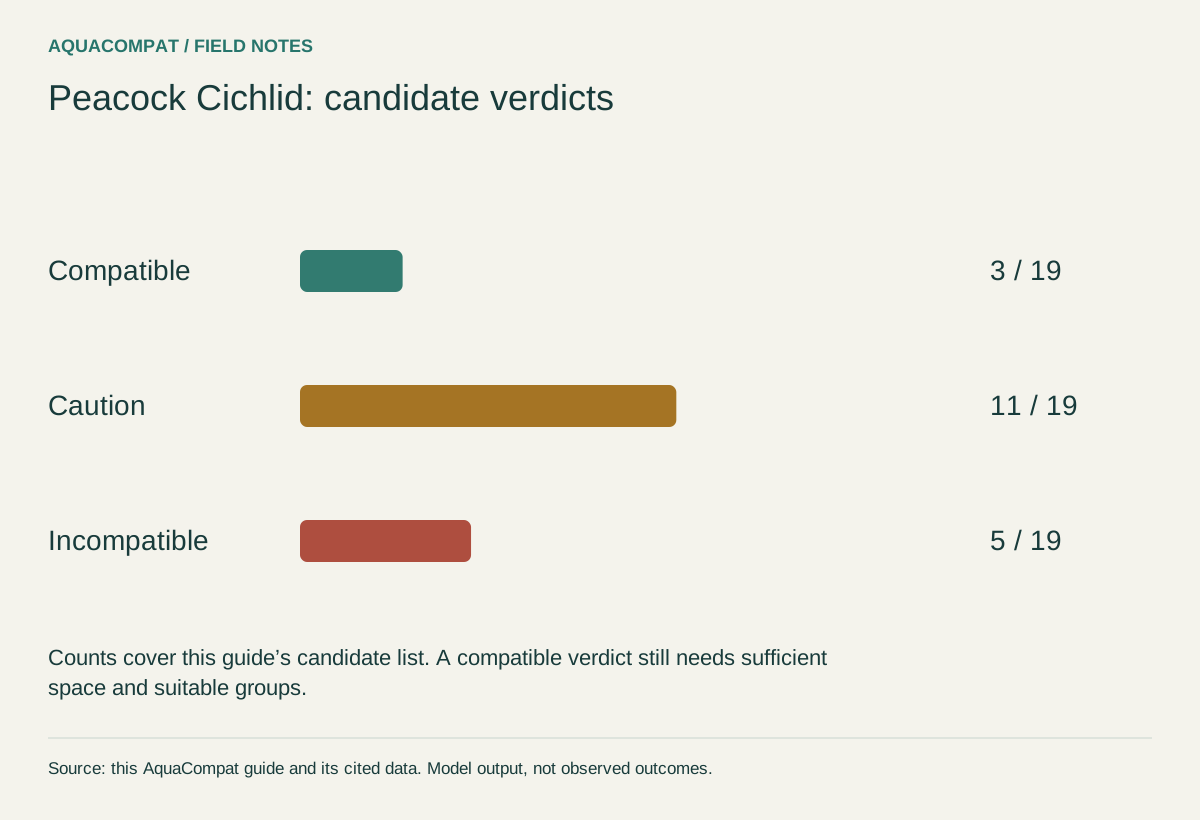
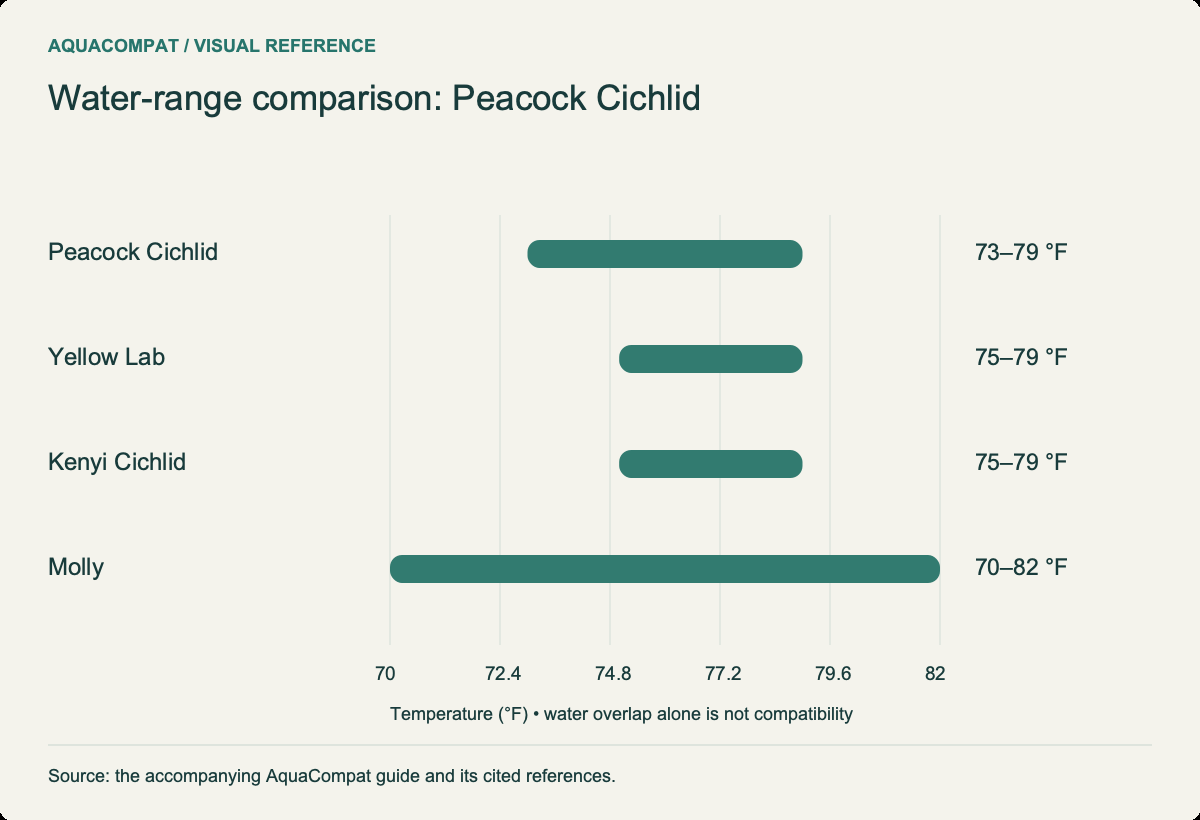
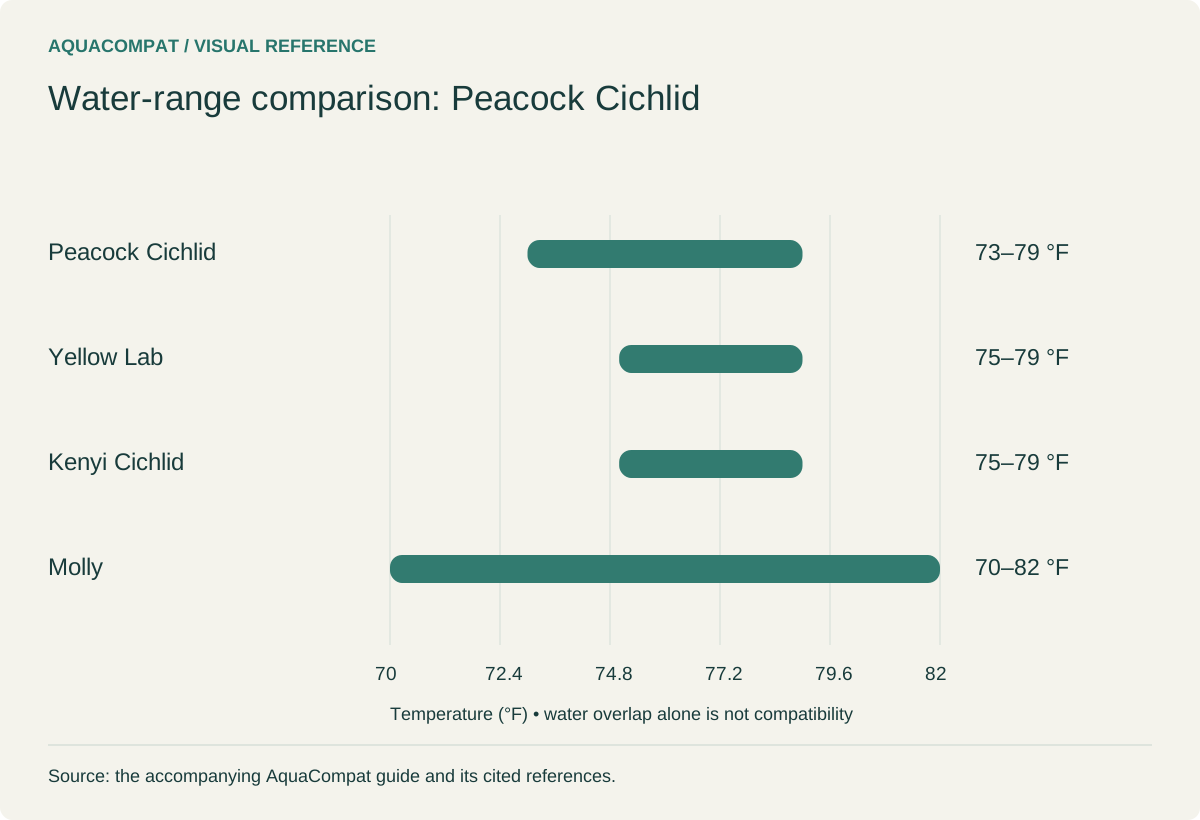
Water-range comparison: Peacock Cichlid
SVG file · Appears in African Cichlid Tank Mates and Compatibility
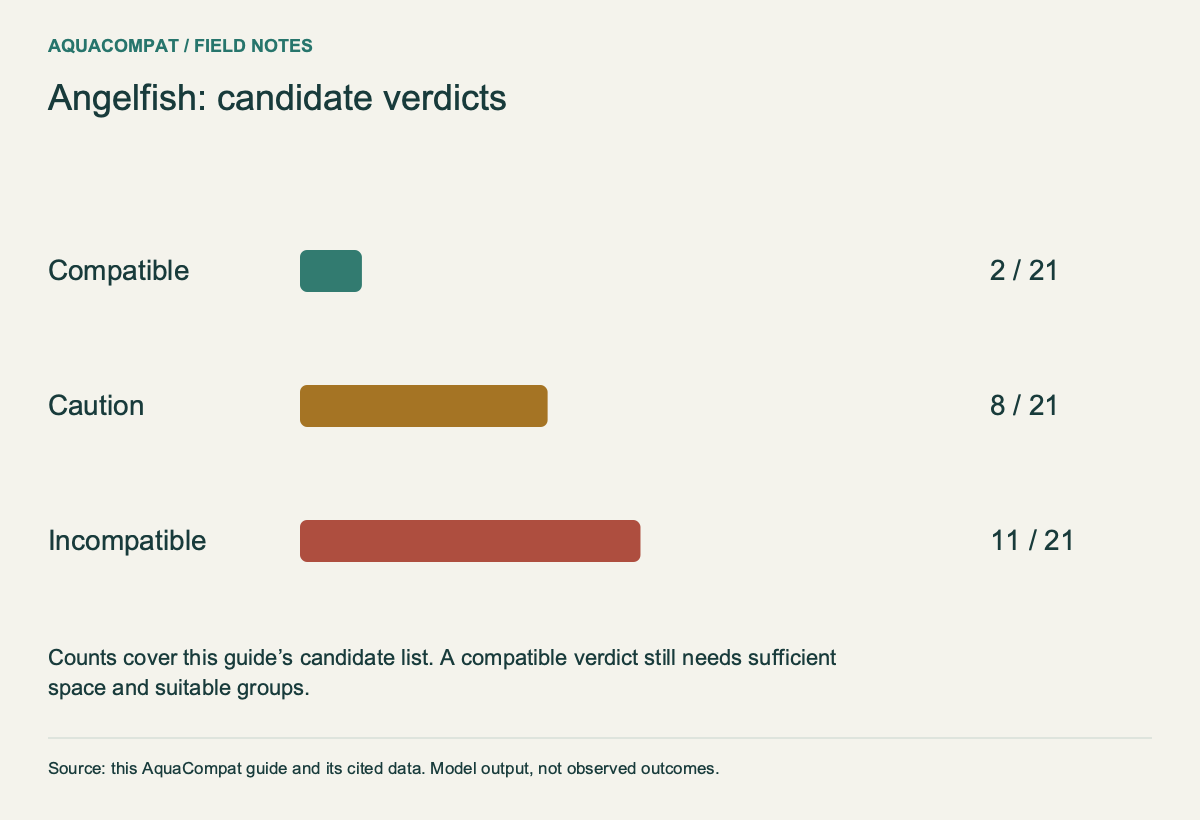
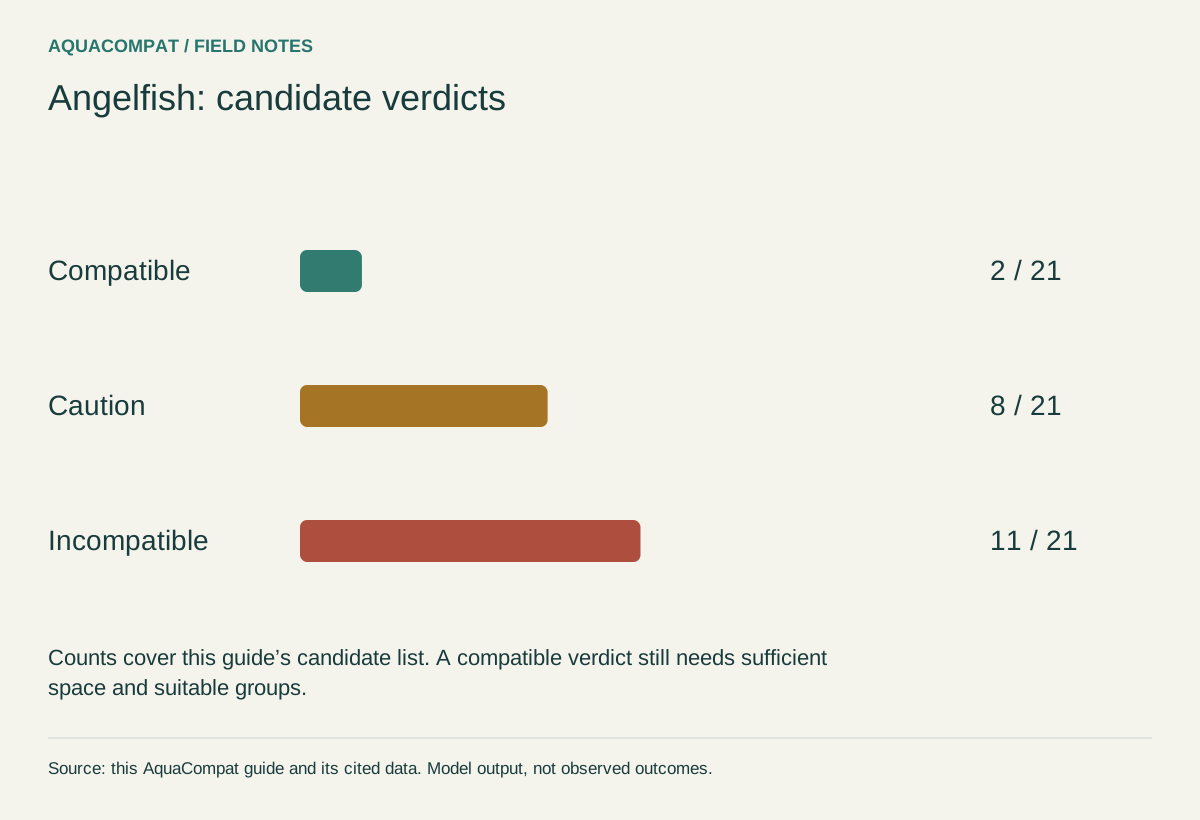
Angelfish: candidate verdicts
SVG file · Appears in Best Angelfish Tank Mates
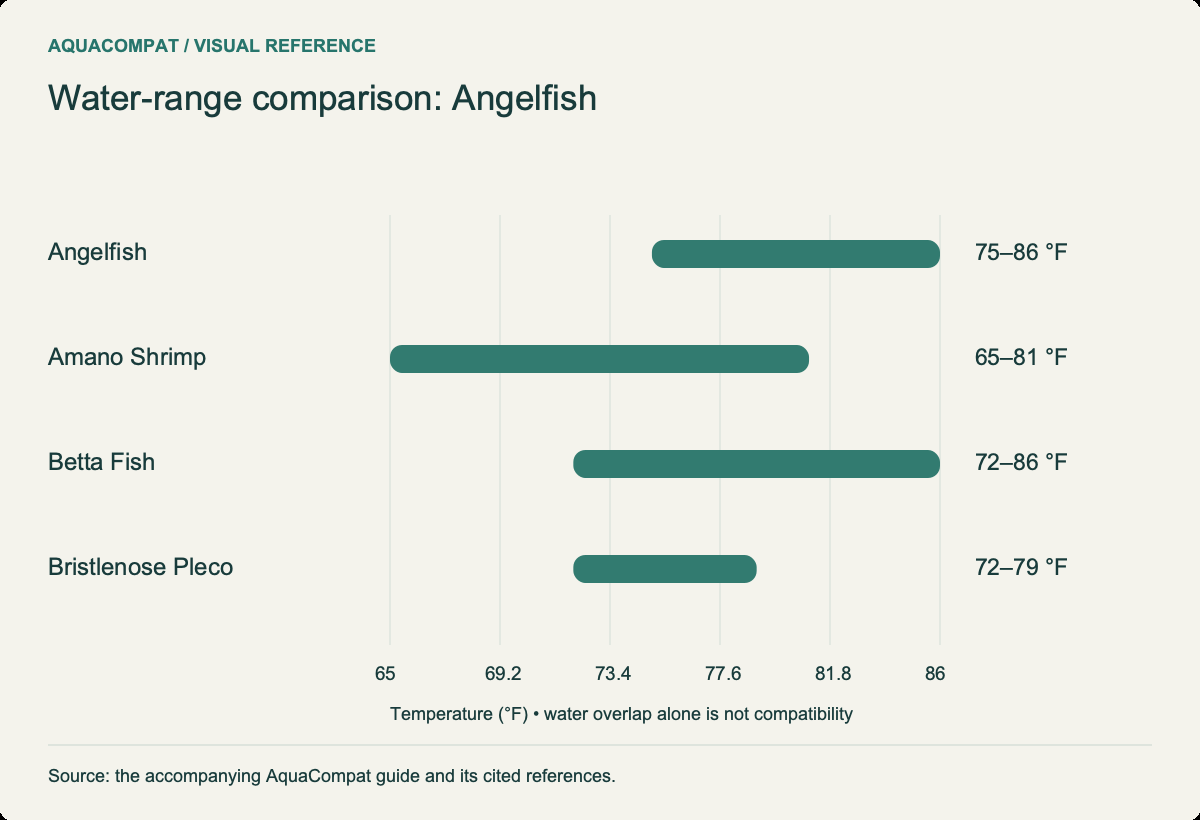
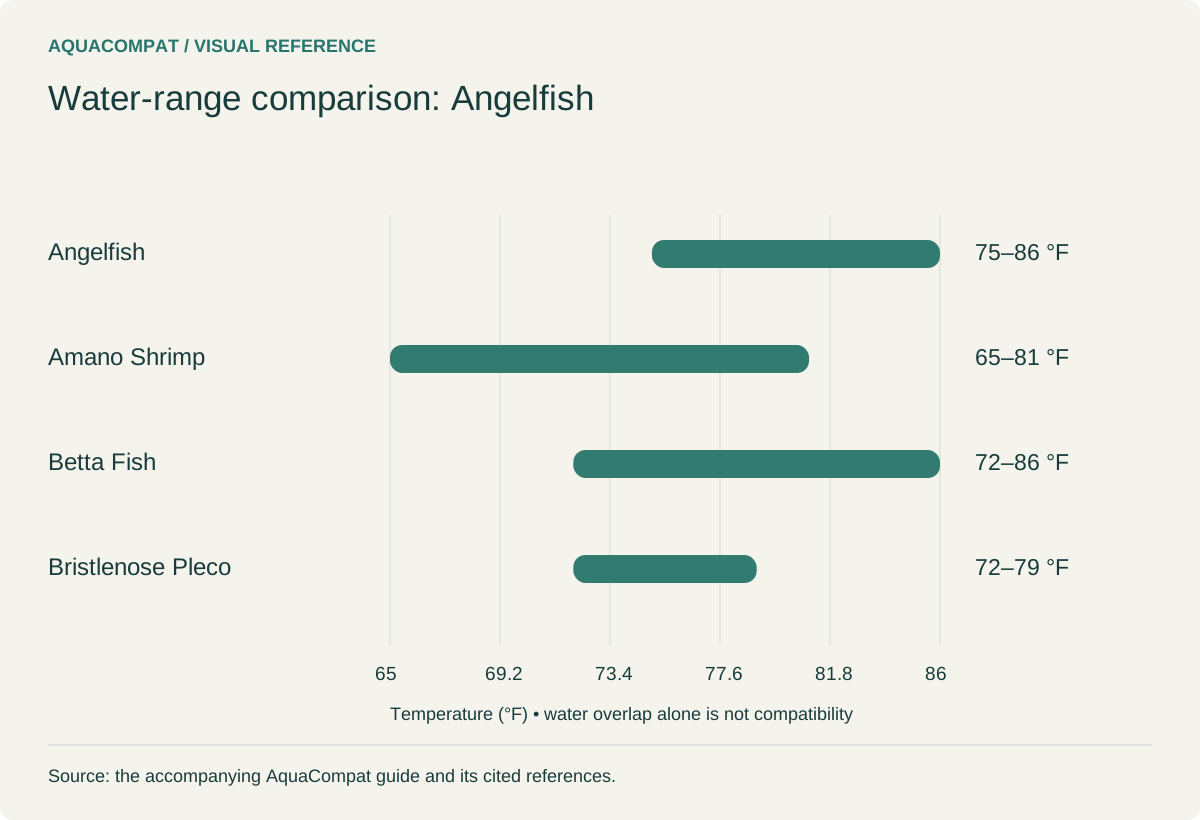
Water-range comparison: Angelfish
SVG file · Appears in Best Angelfish Tank Mates
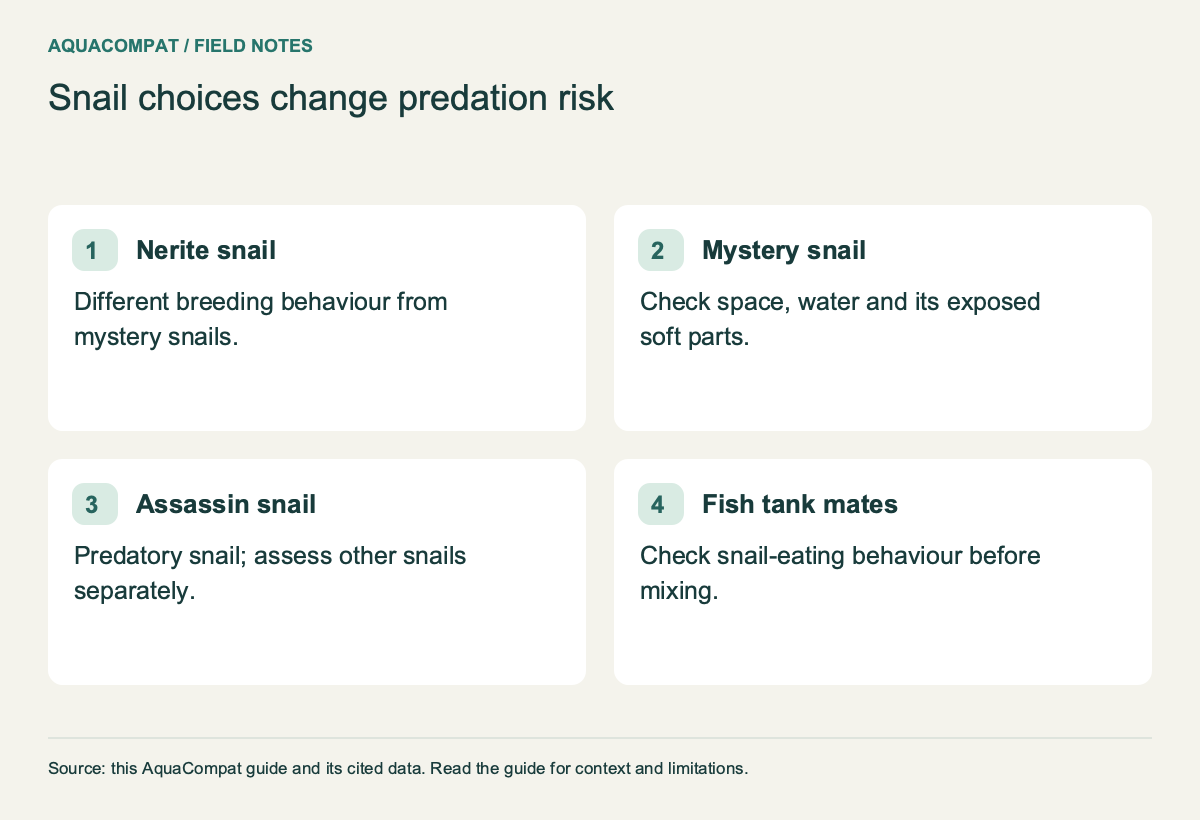
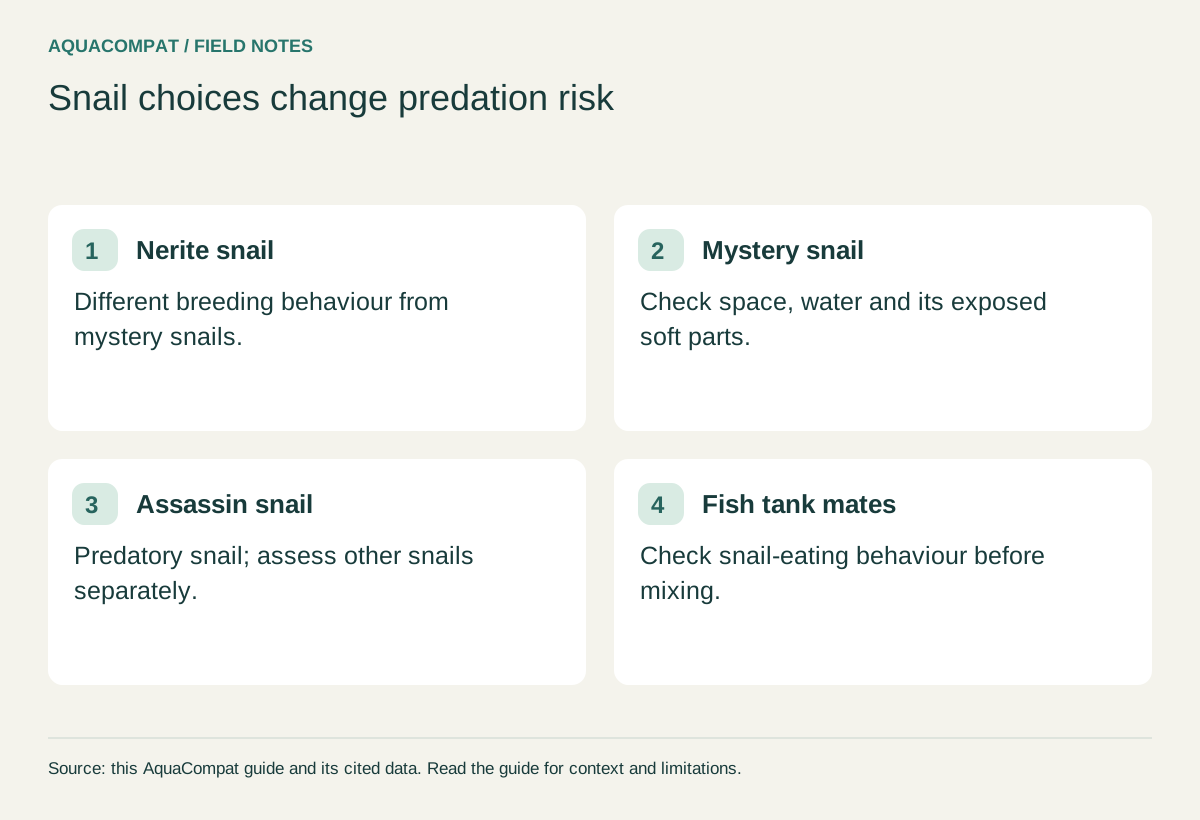
Snail choices change predation risk
SVG file · Appears in Aquarium Snail Tank Mates and Compatibility
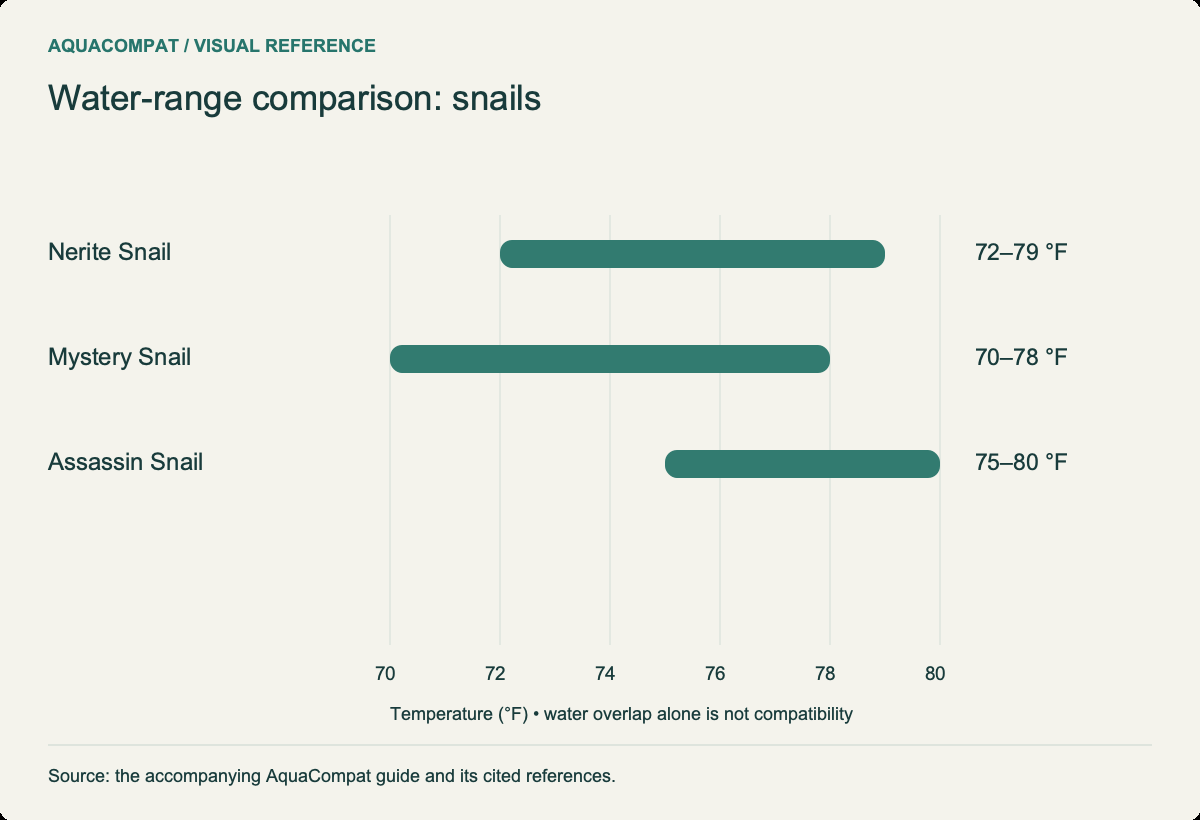
Water-range comparison: snails
SVG file · Appears in Aquarium Snail Tank Mates and Compatibility
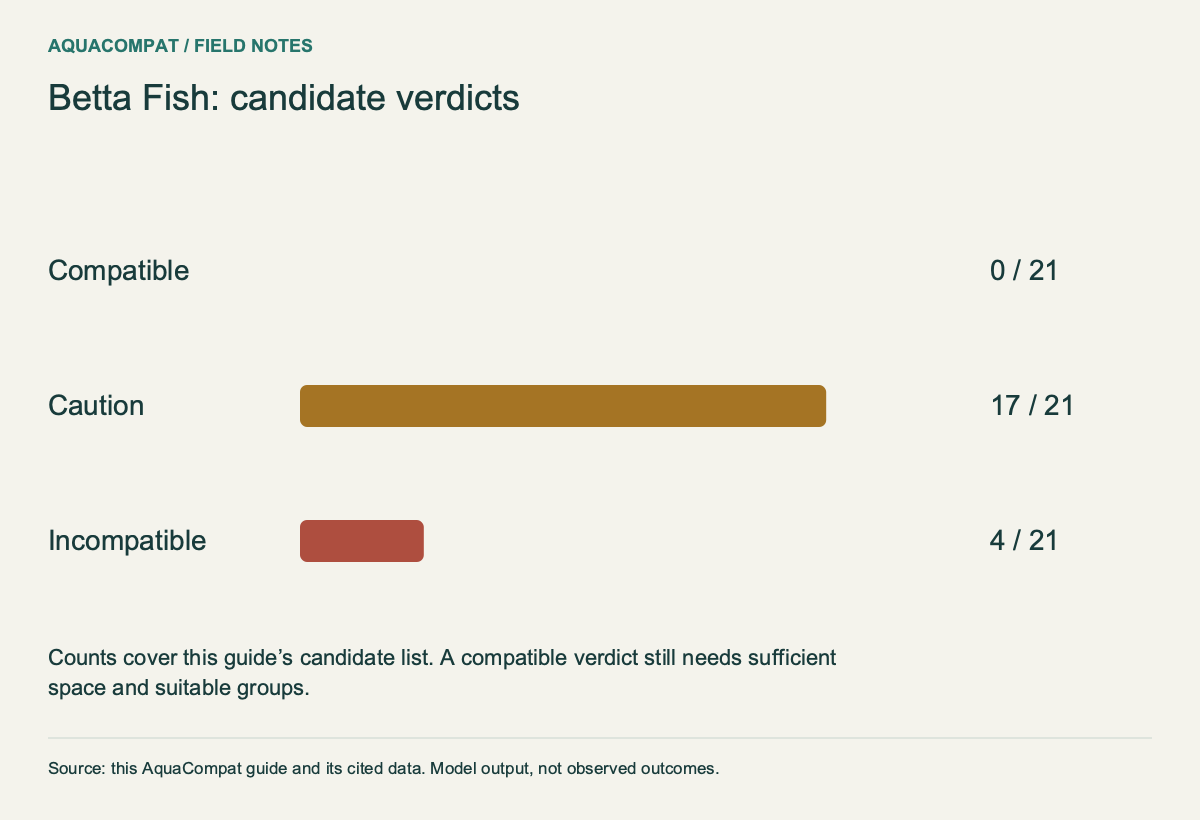
Betta Fish: candidate verdicts
SVG file · Appears in Best Betta Fish Tank Mates
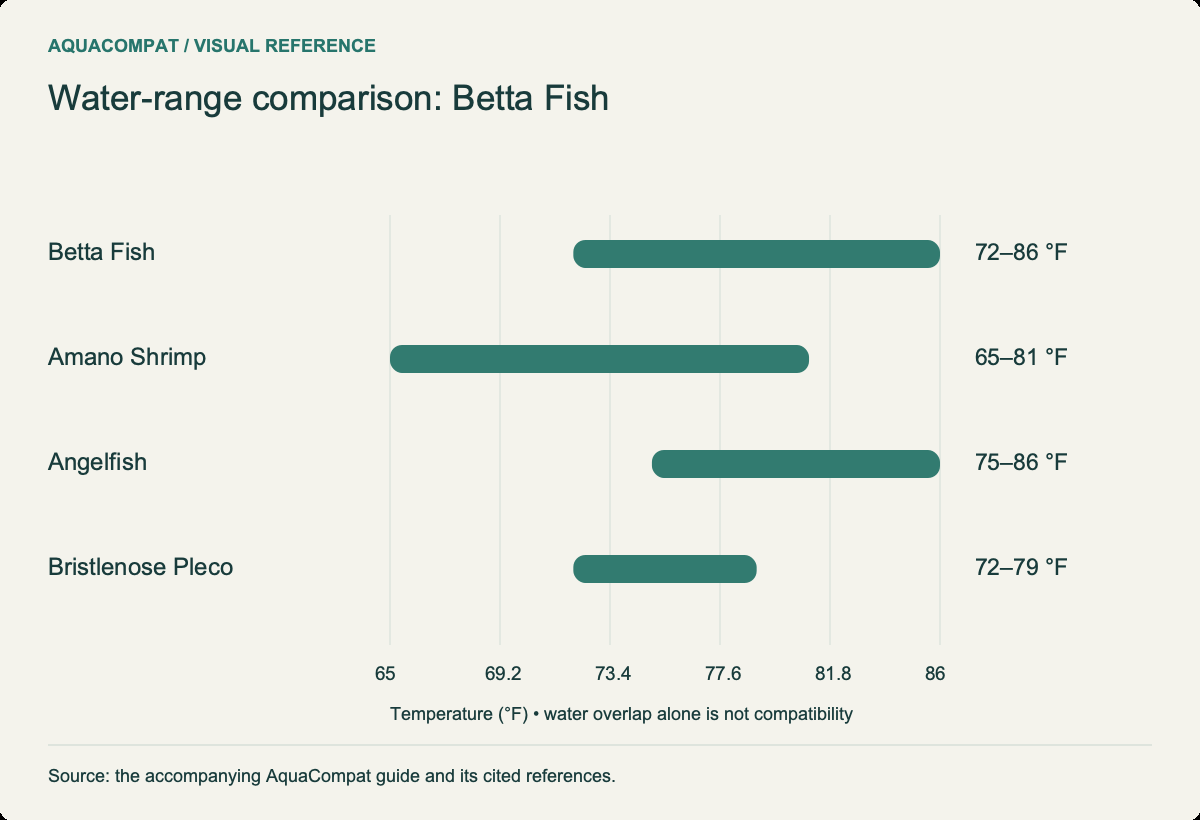
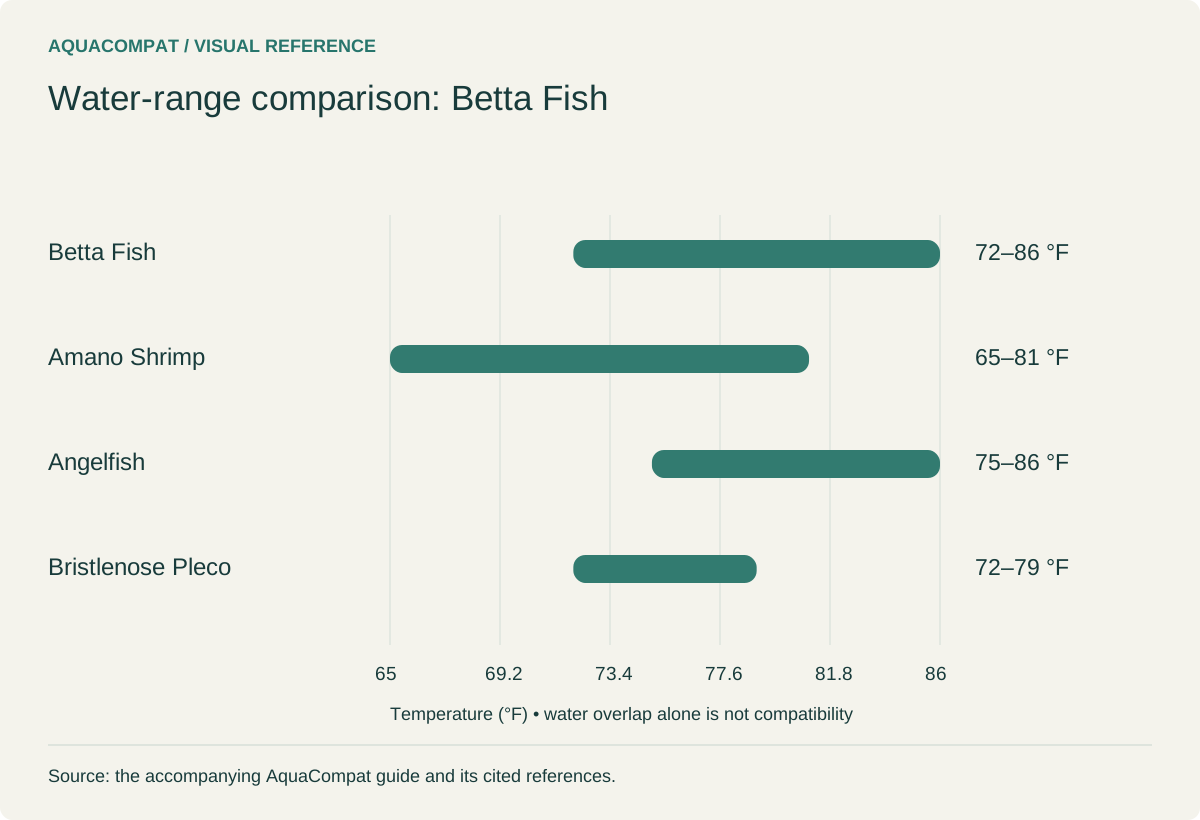
Water-range comparison: Betta Fish
SVG file · Appears in Best Betta Fish Tank Mates
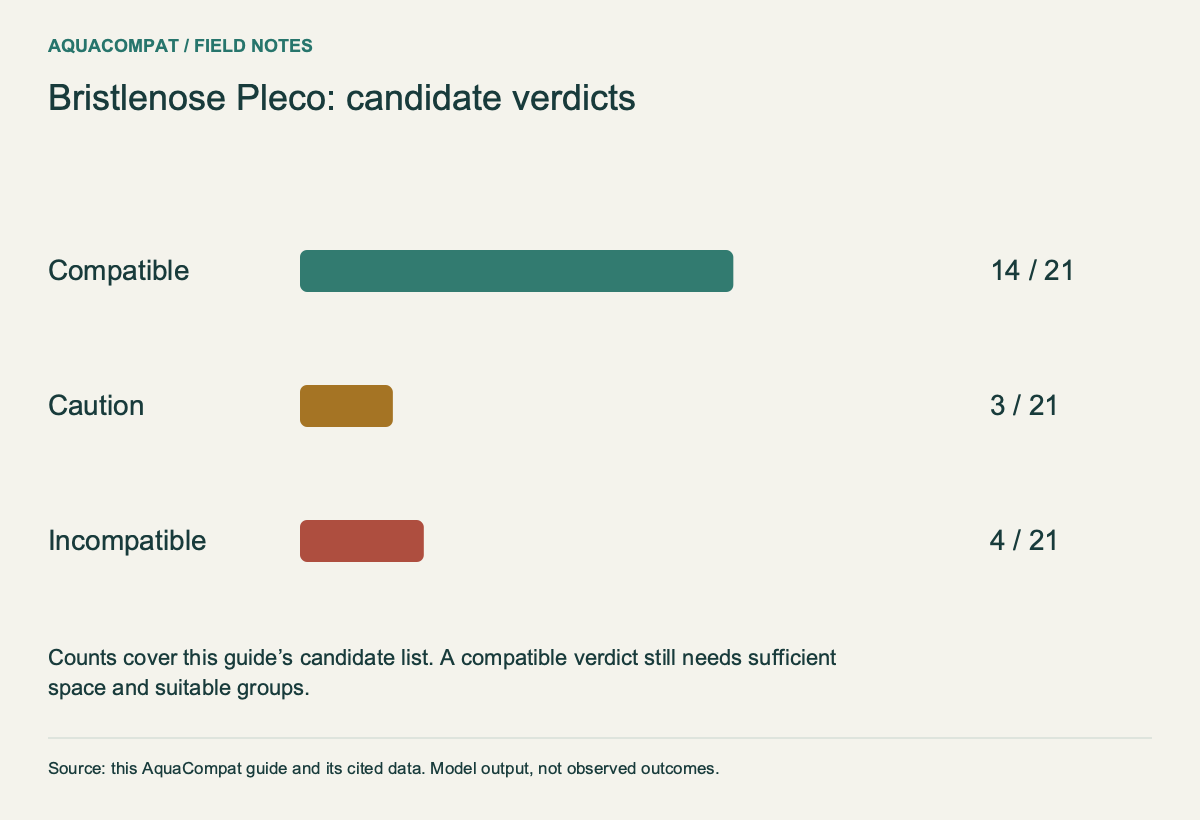
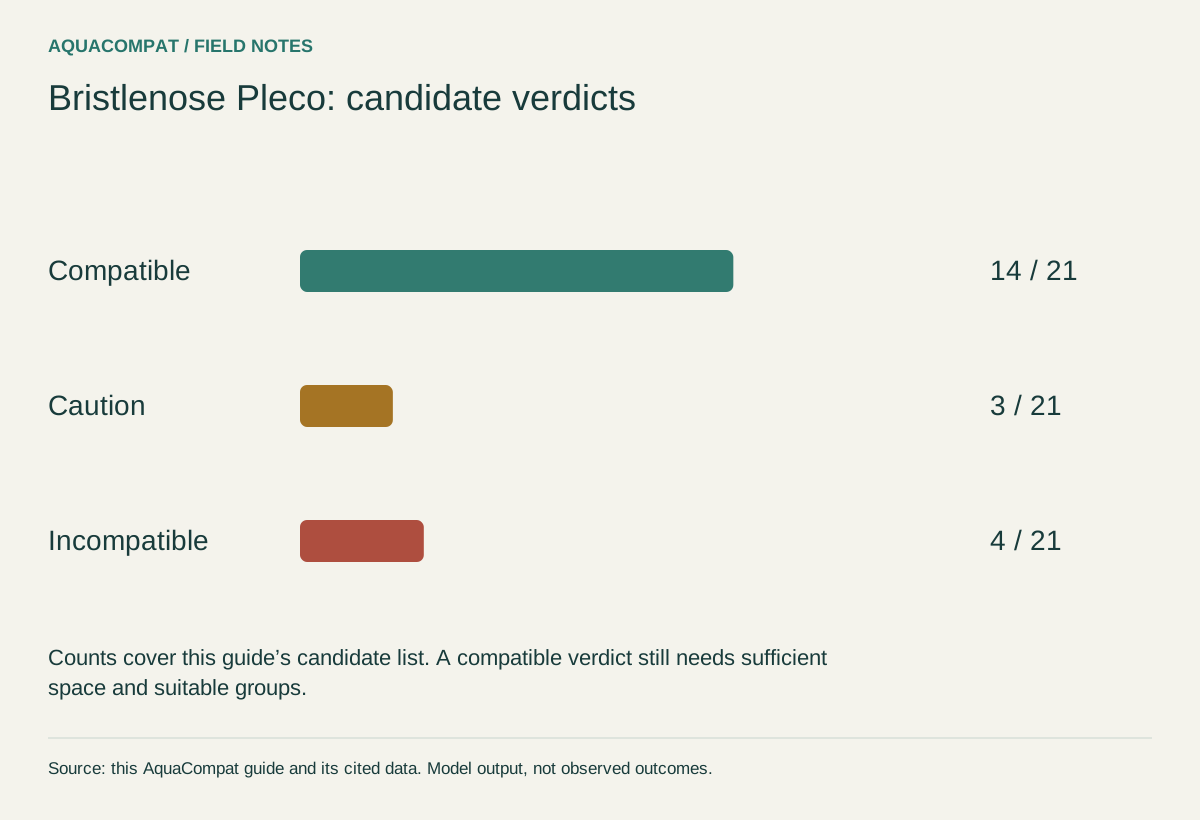
Bristlenose Pleco: candidate verdicts
SVG file · Appears in Best Bristlenose Pleco Tank Mates
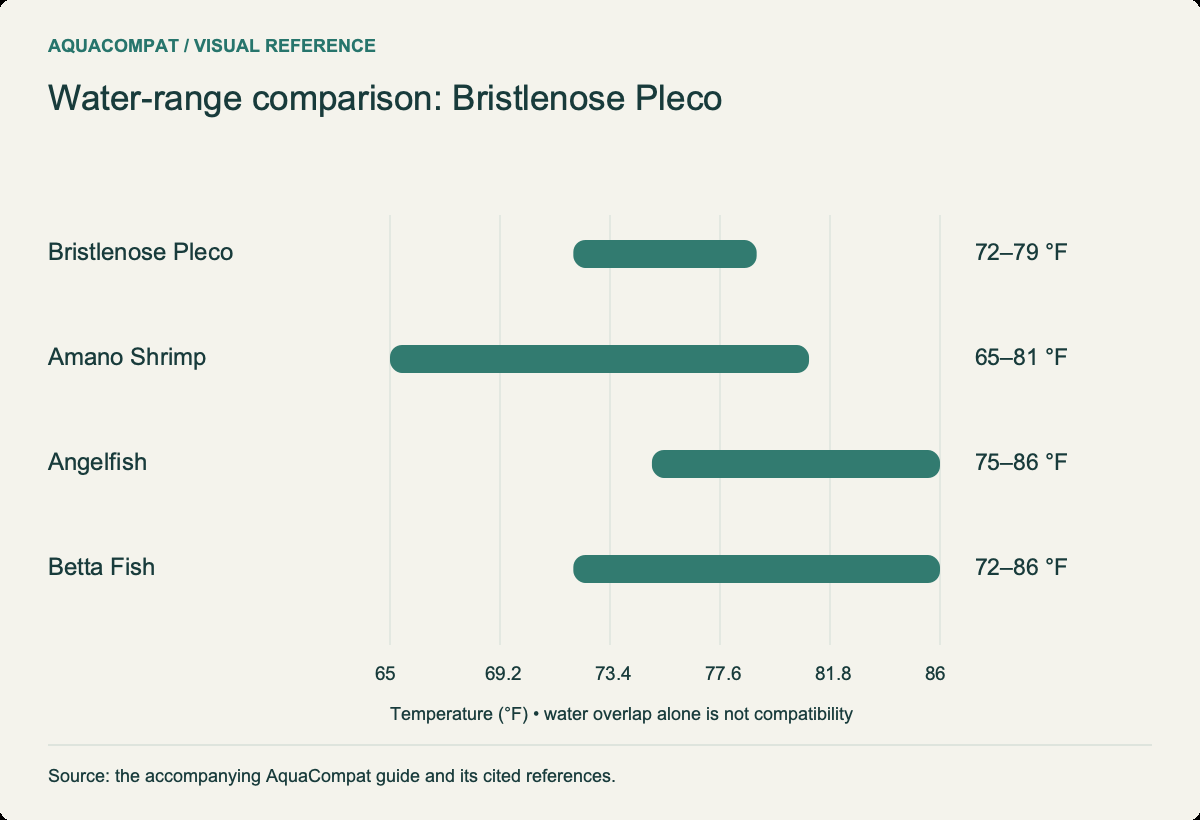
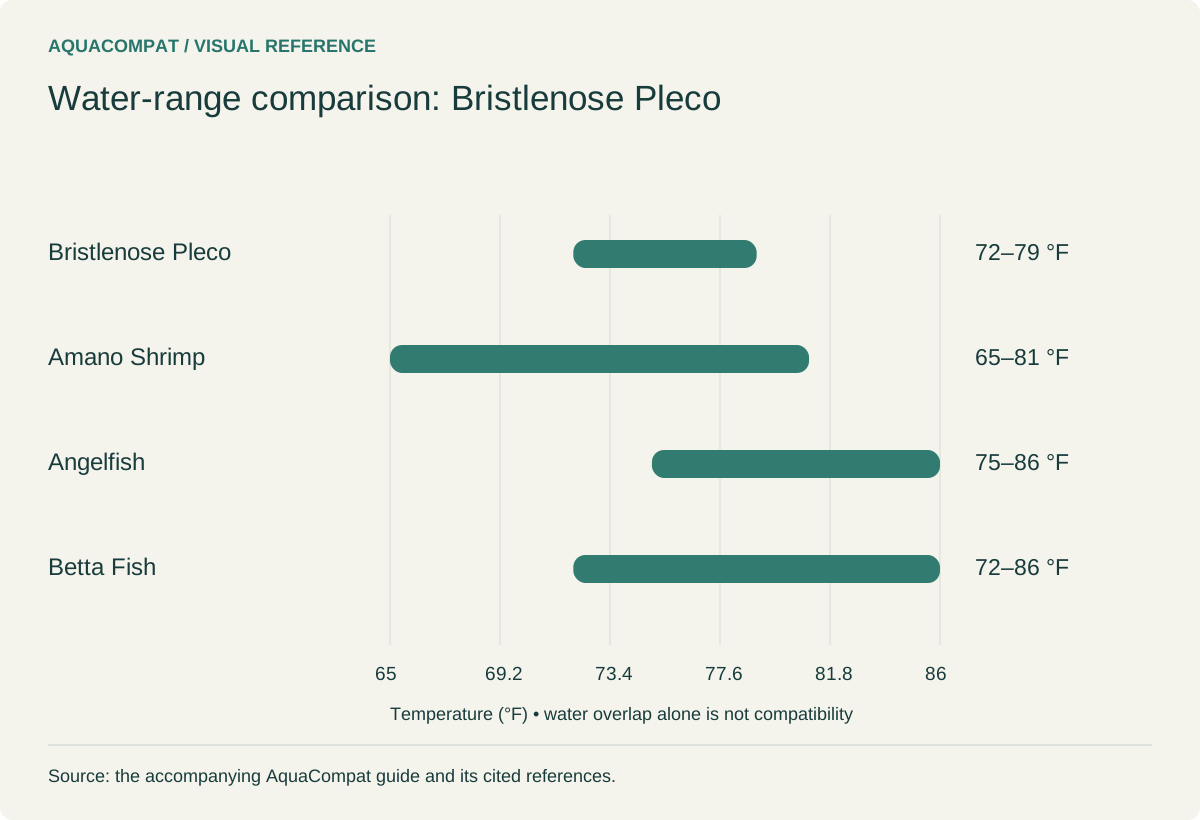
Water-range comparison: Bristlenose Pleco
SVG file · Appears in Best Bristlenose Pleco Tank Mates
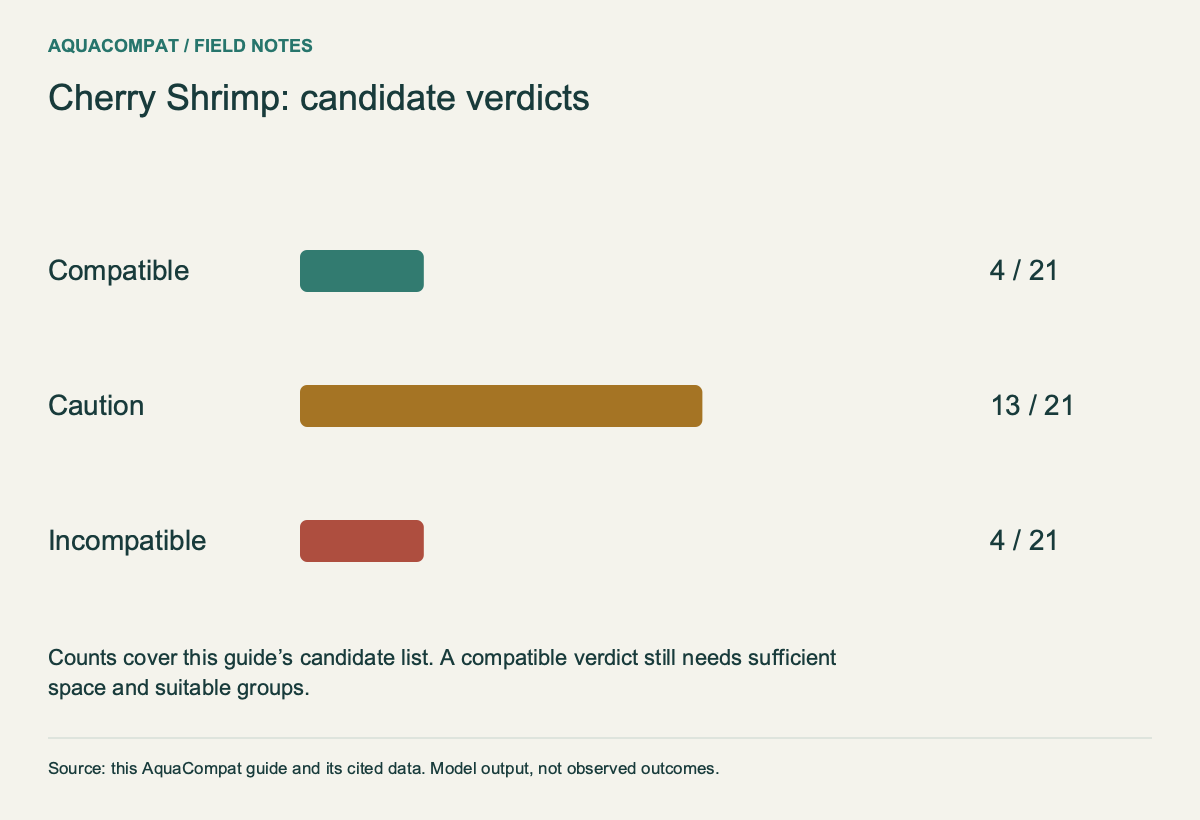
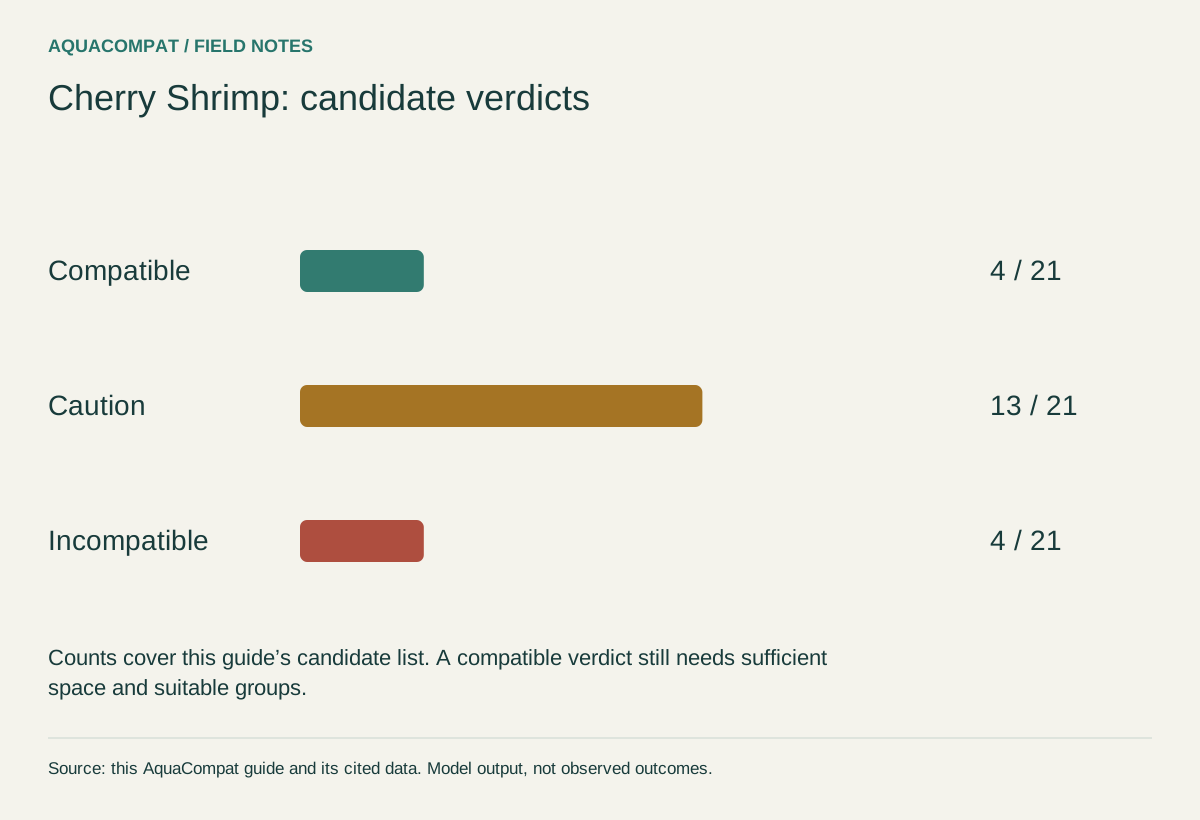
Cherry Shrimp: candidate verdicts
SVG file · Appears in Best Cherry Shrimp Tank Mates
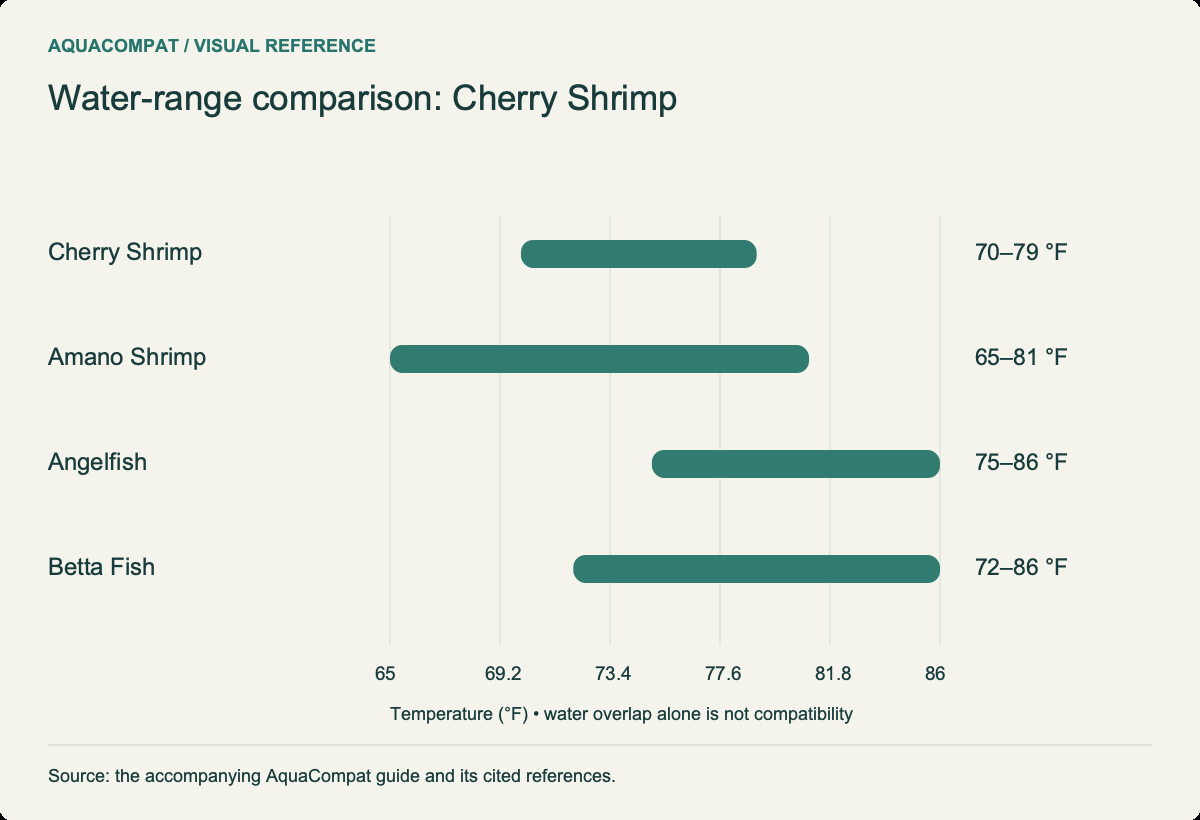
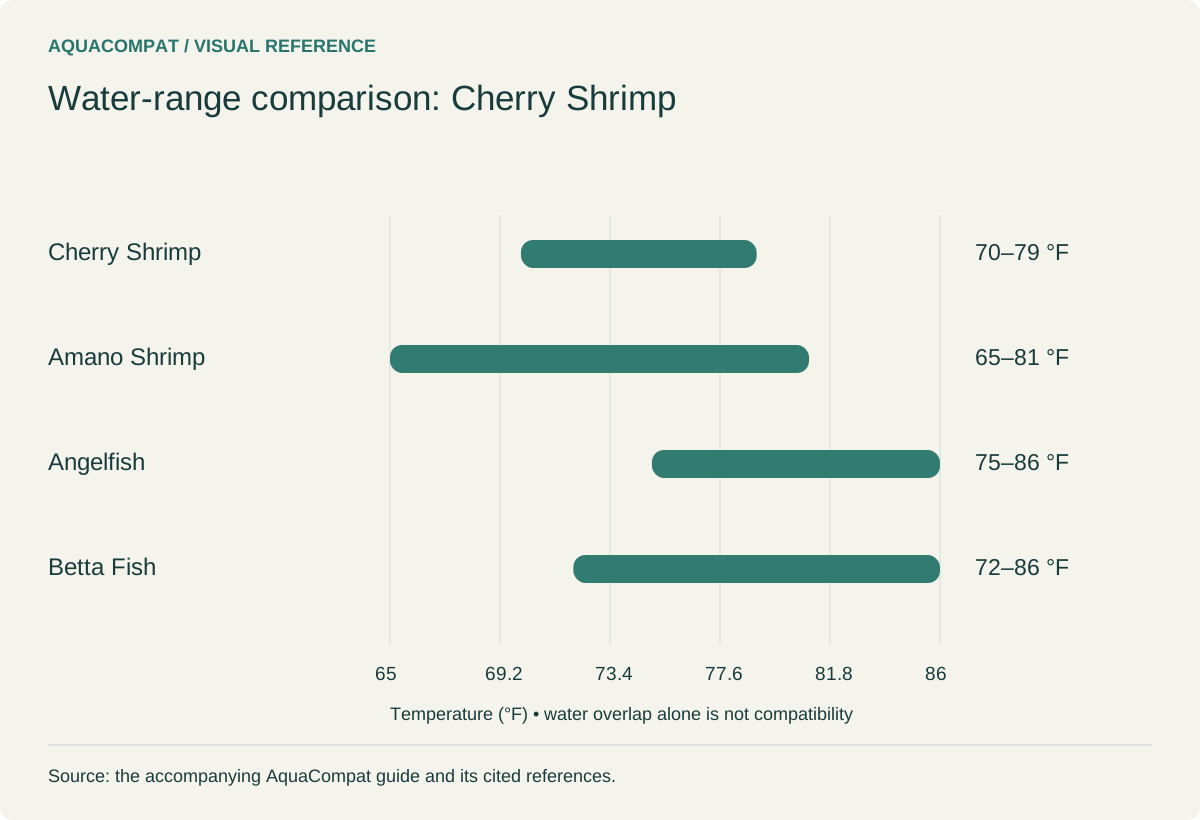
Water-range comparison: Cherry Shrimp
SVG file · Appears in Best Cherry Shrimp Tank Mates
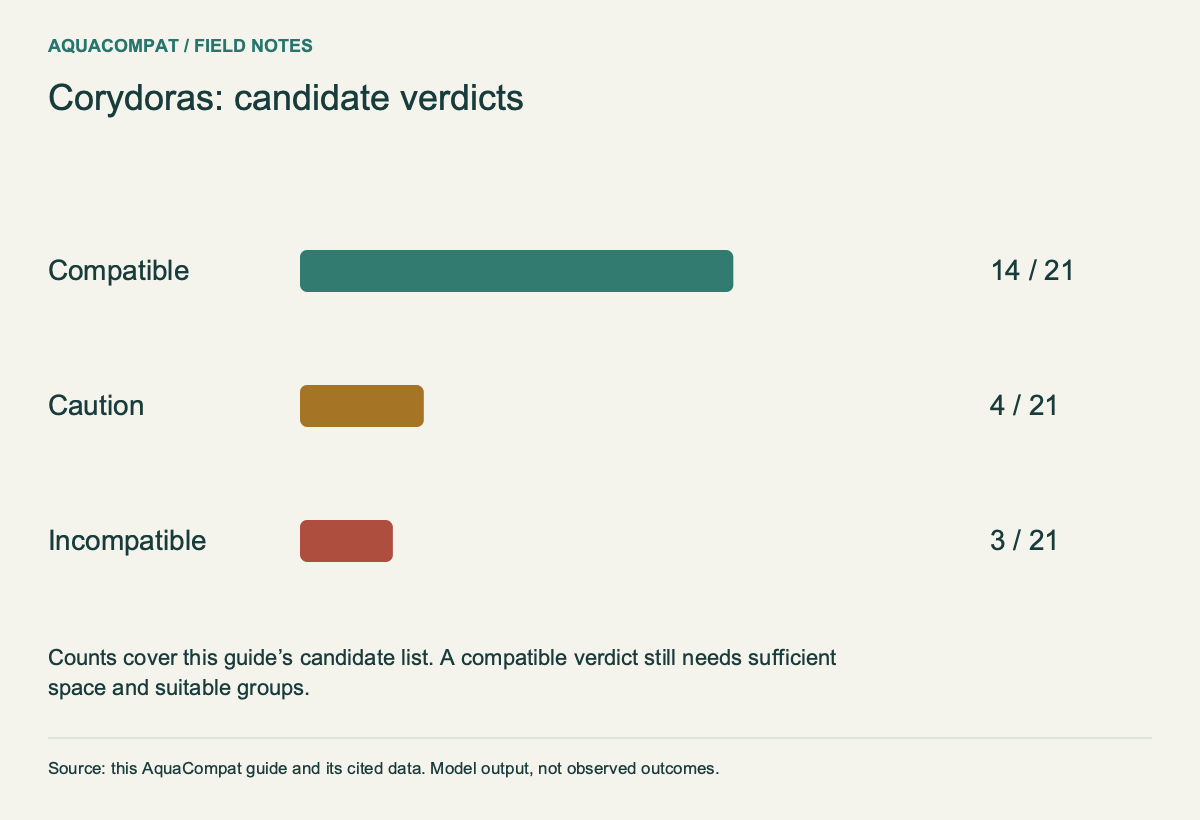
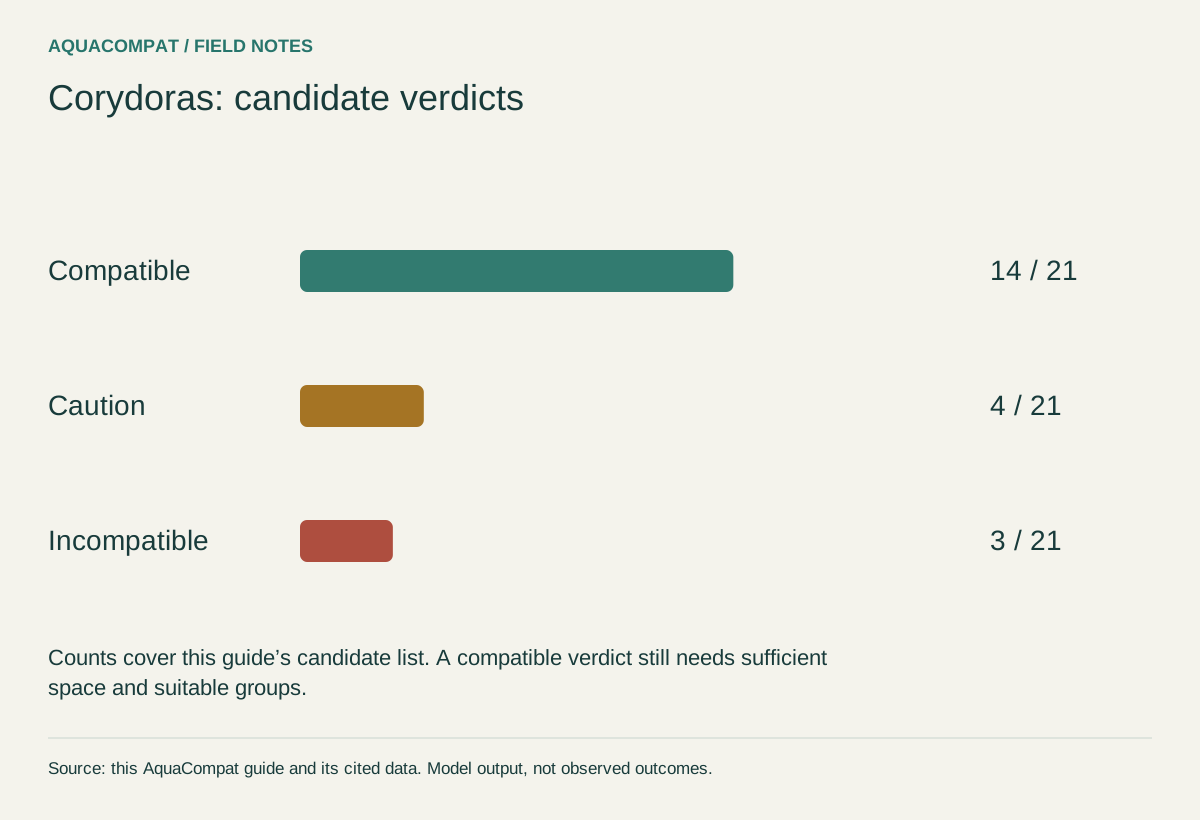
Corydoras: candidate verdicts
SVG file · Appears in Best Corydoras Tank Mates
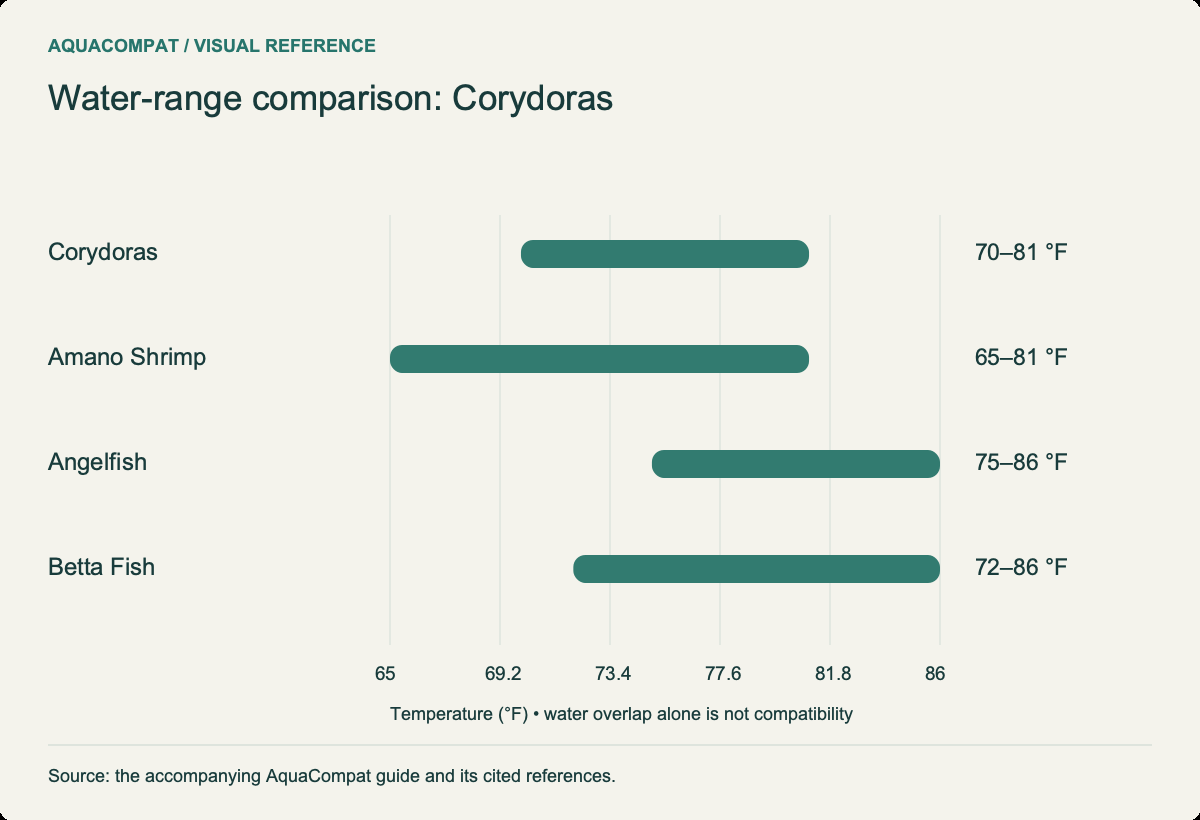
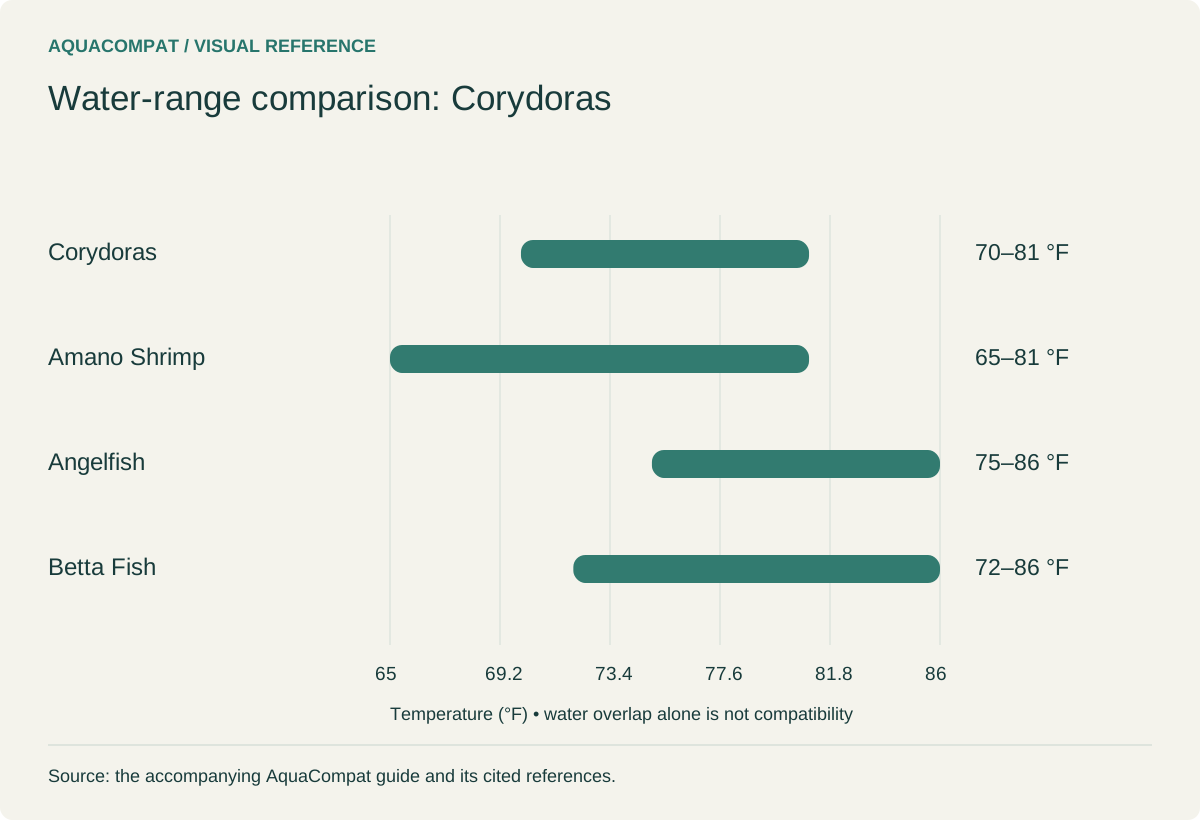
Water-range comparison: Corydoras
SVG file · Appears in Best Corydoras Tank Mates
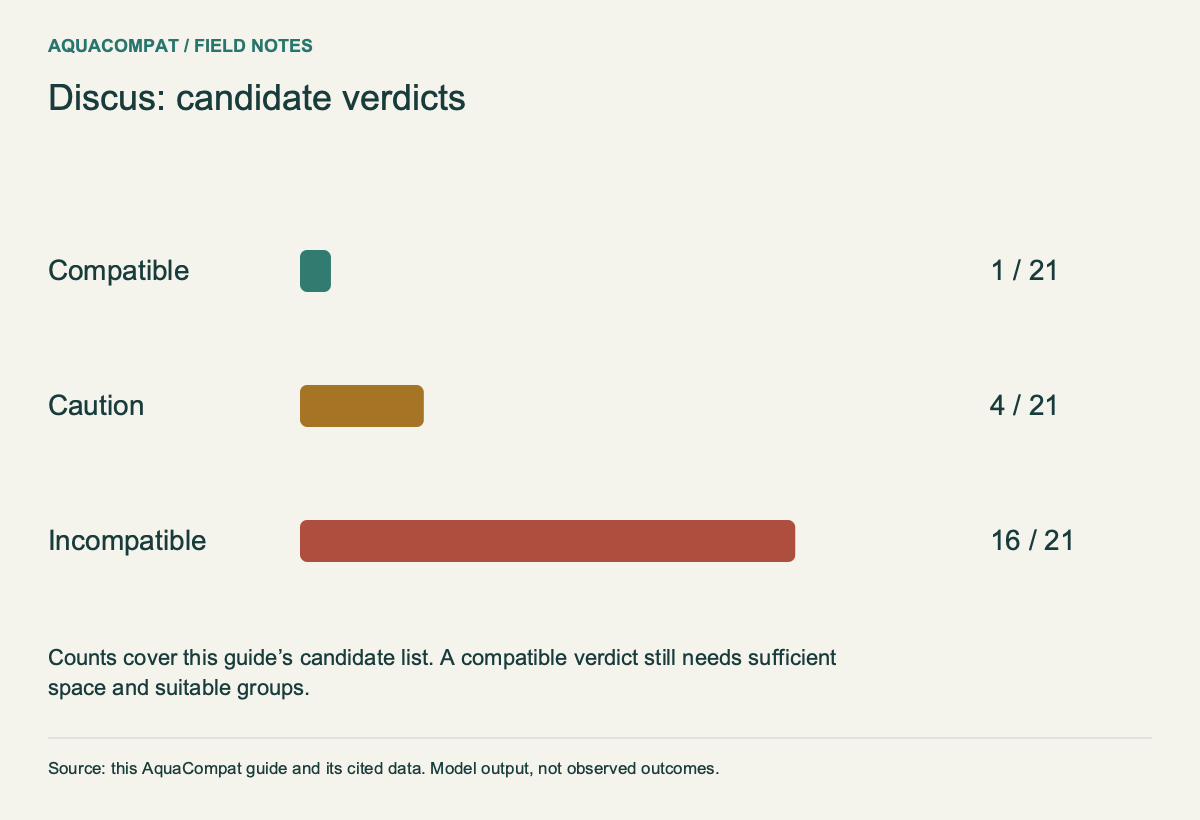
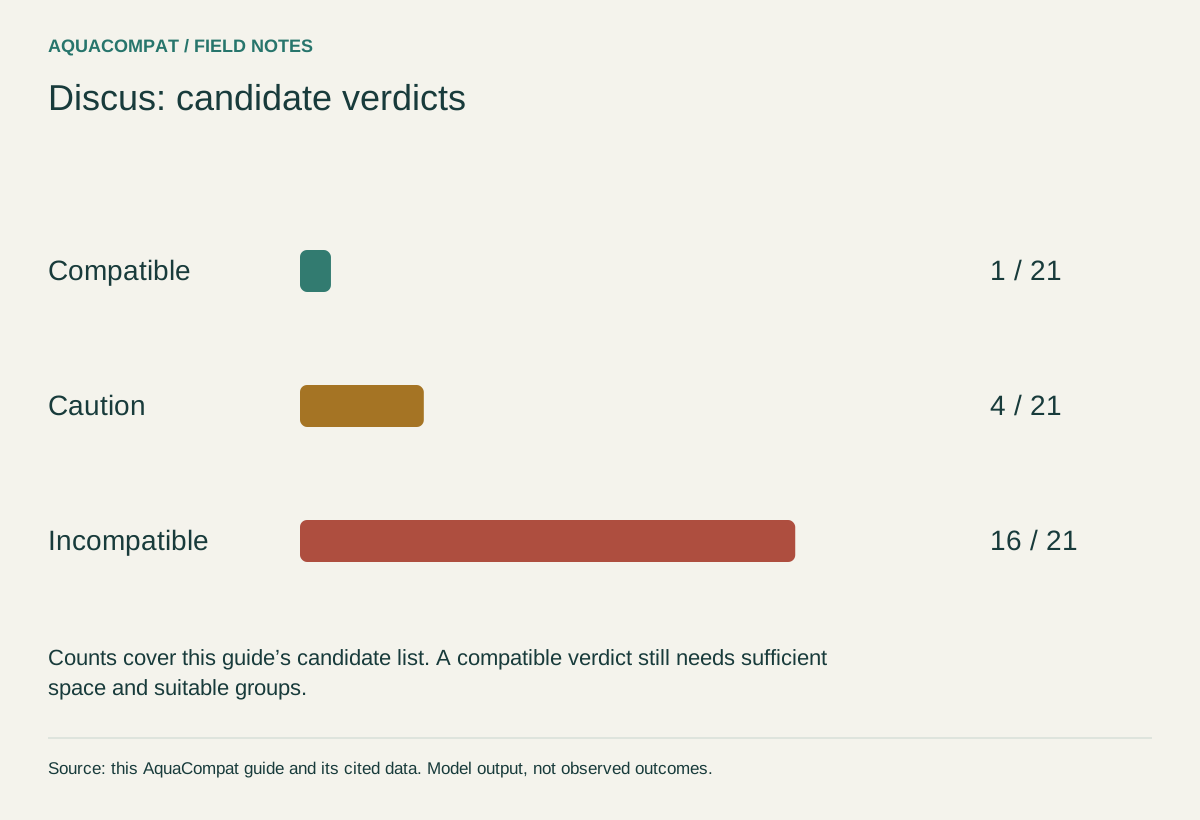
Discus: candidate verdicts
SVG file · Appears in Best Discus Tank Mates
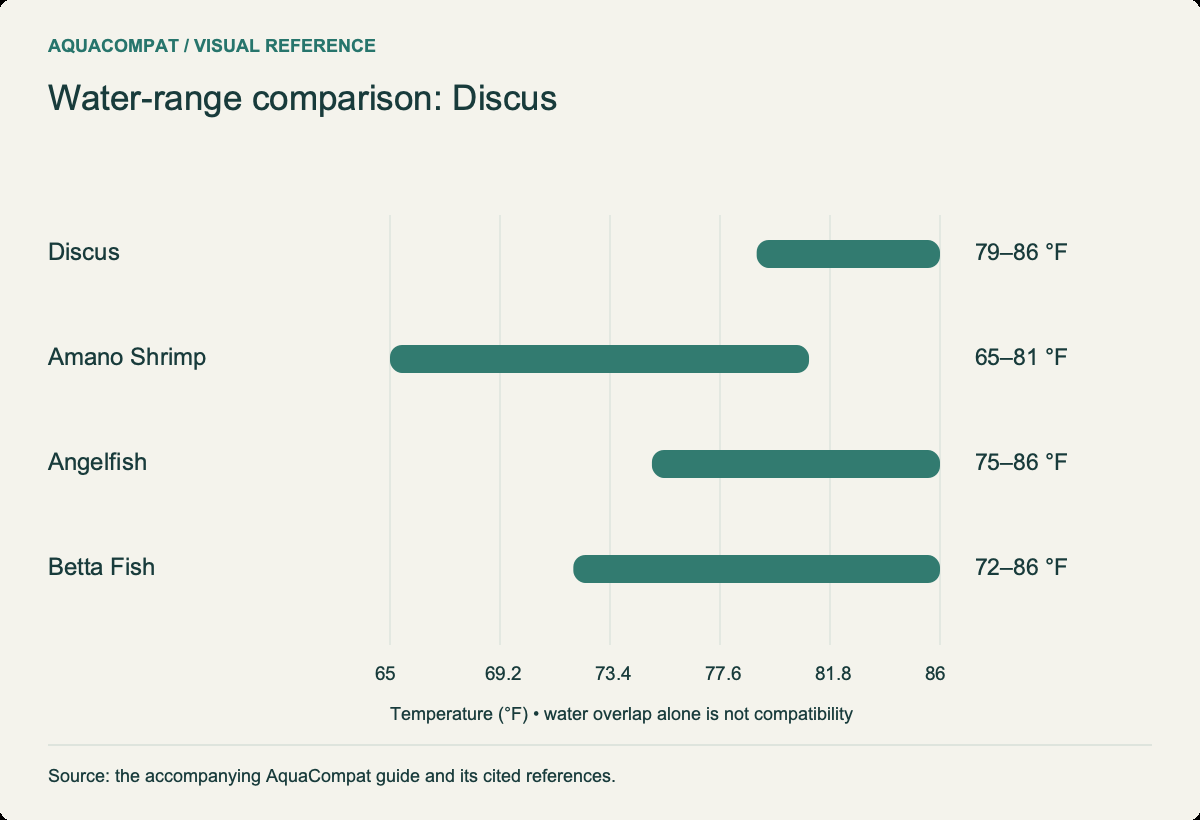
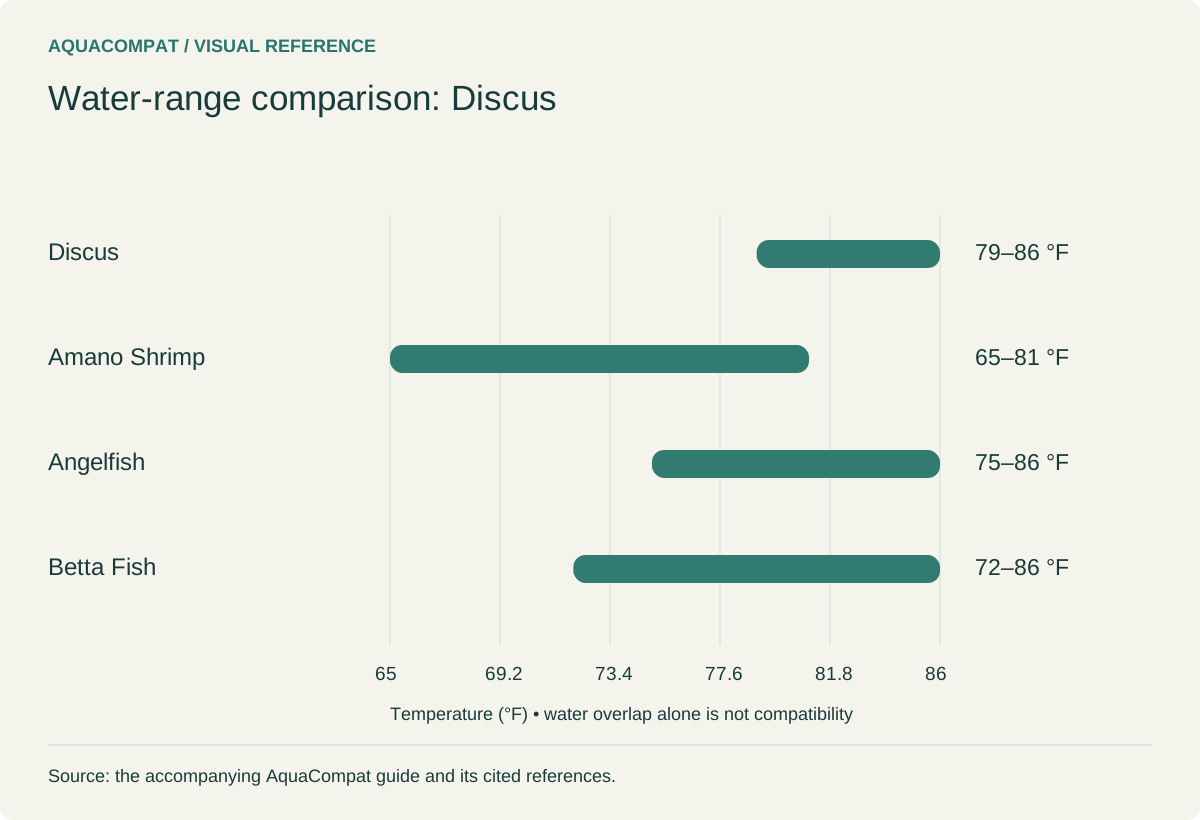
Water-range comparison: Discus
SVG file · Appears in Best Discus Tank Mates
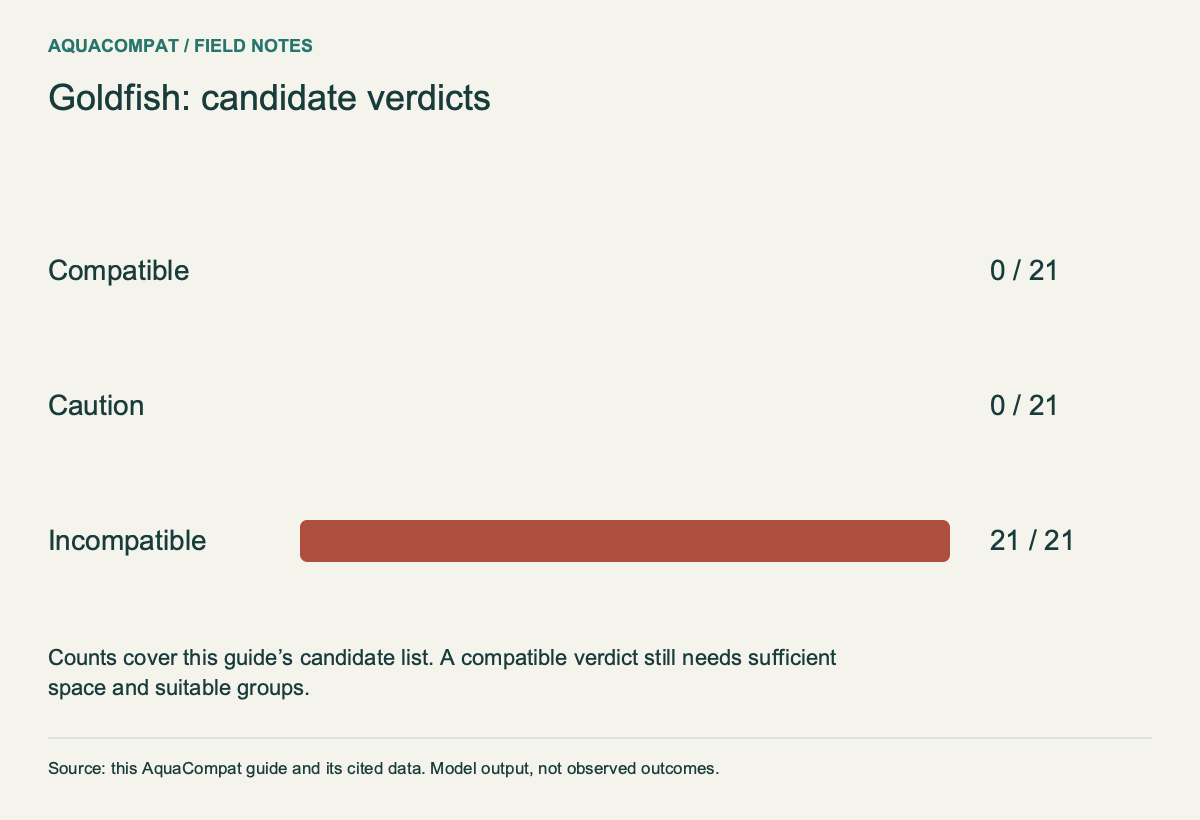
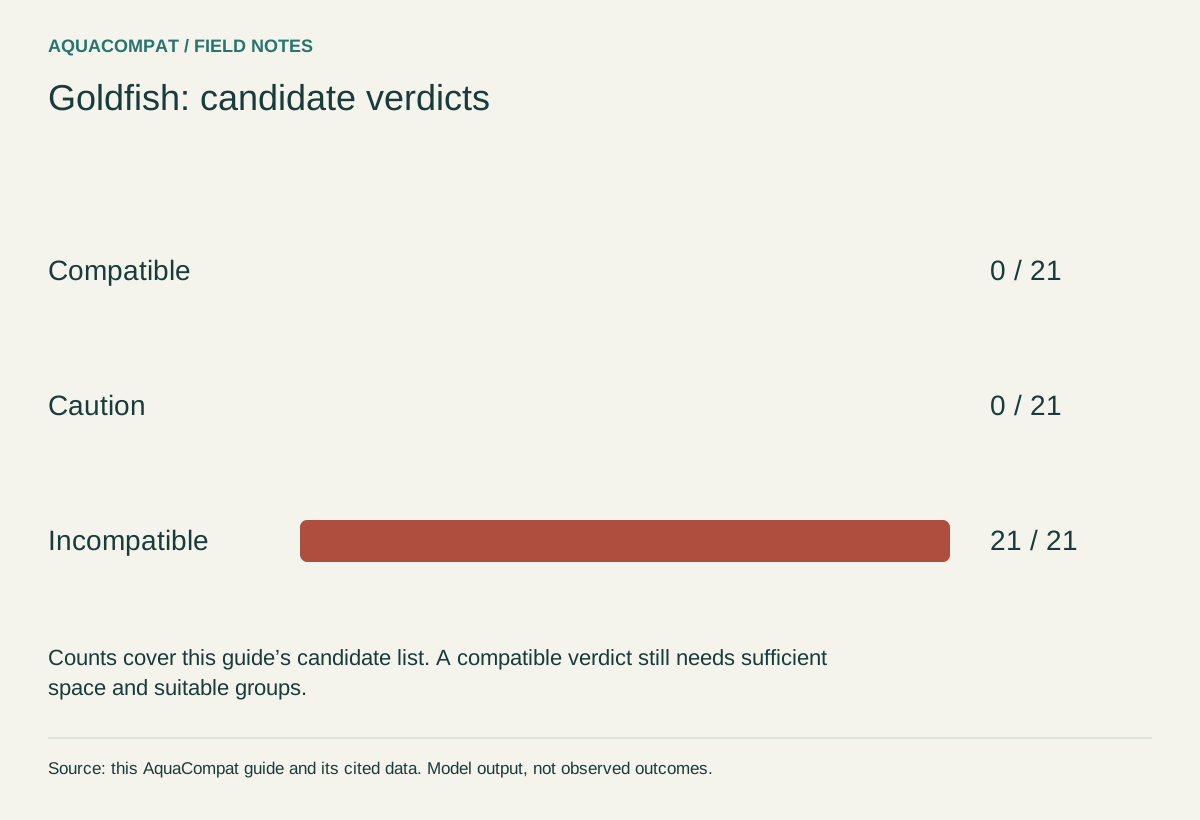
Goldfish: candidate verdicts
SVG file · Appears in Best Goldfish Tank Mates
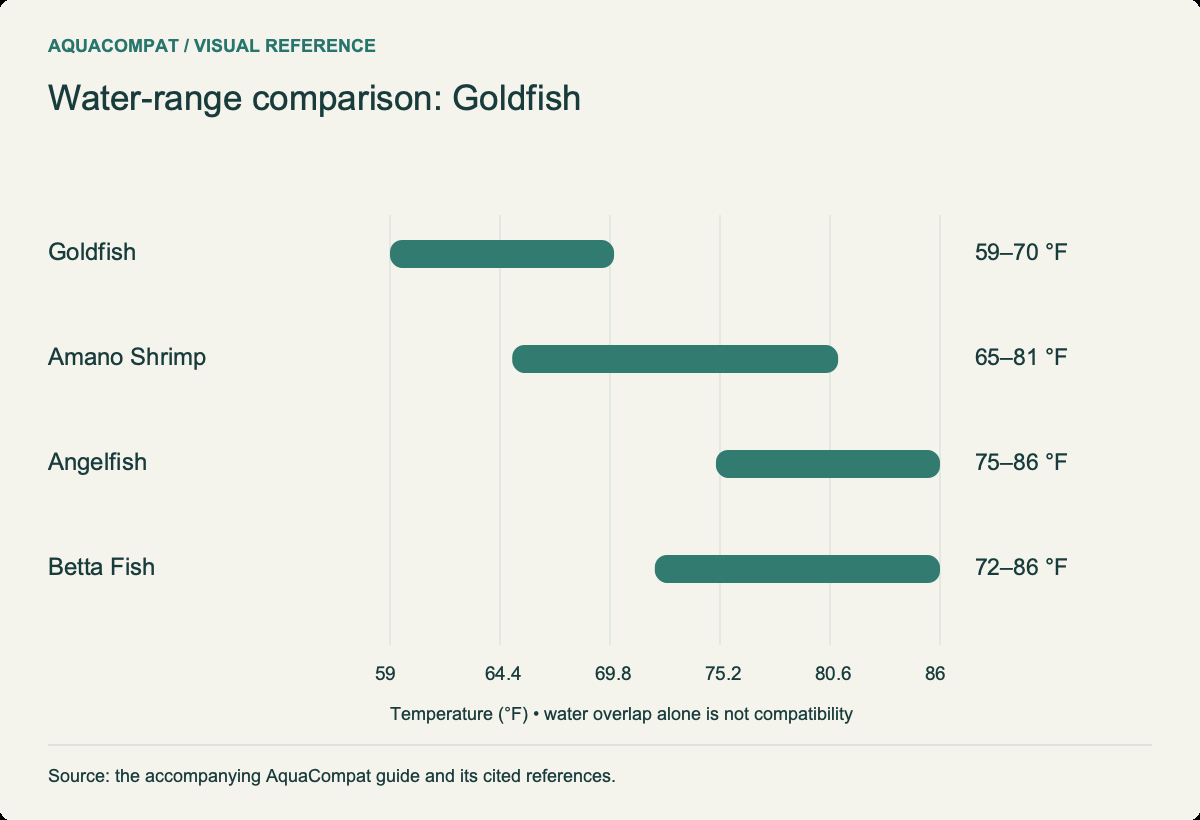
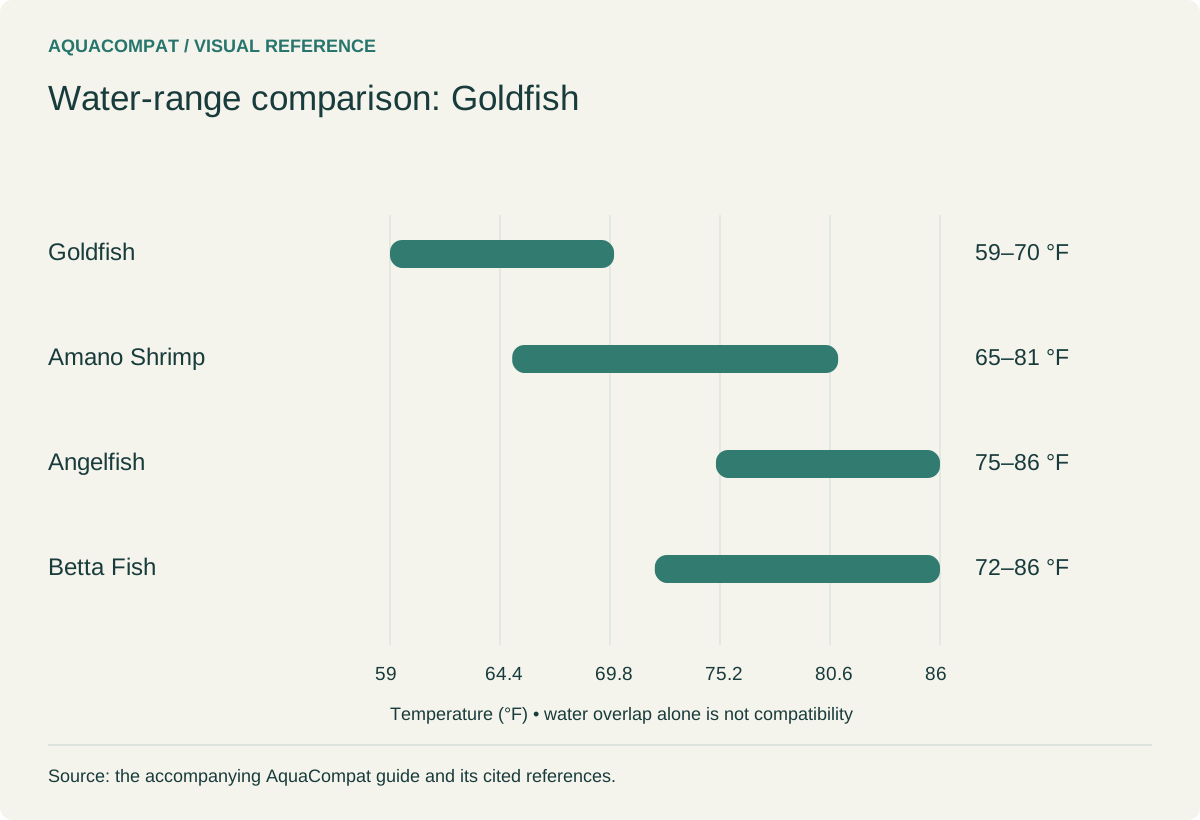
Water-range comparison: Goldfish
SVG file · Appears in Best Goldfish Tank Mates
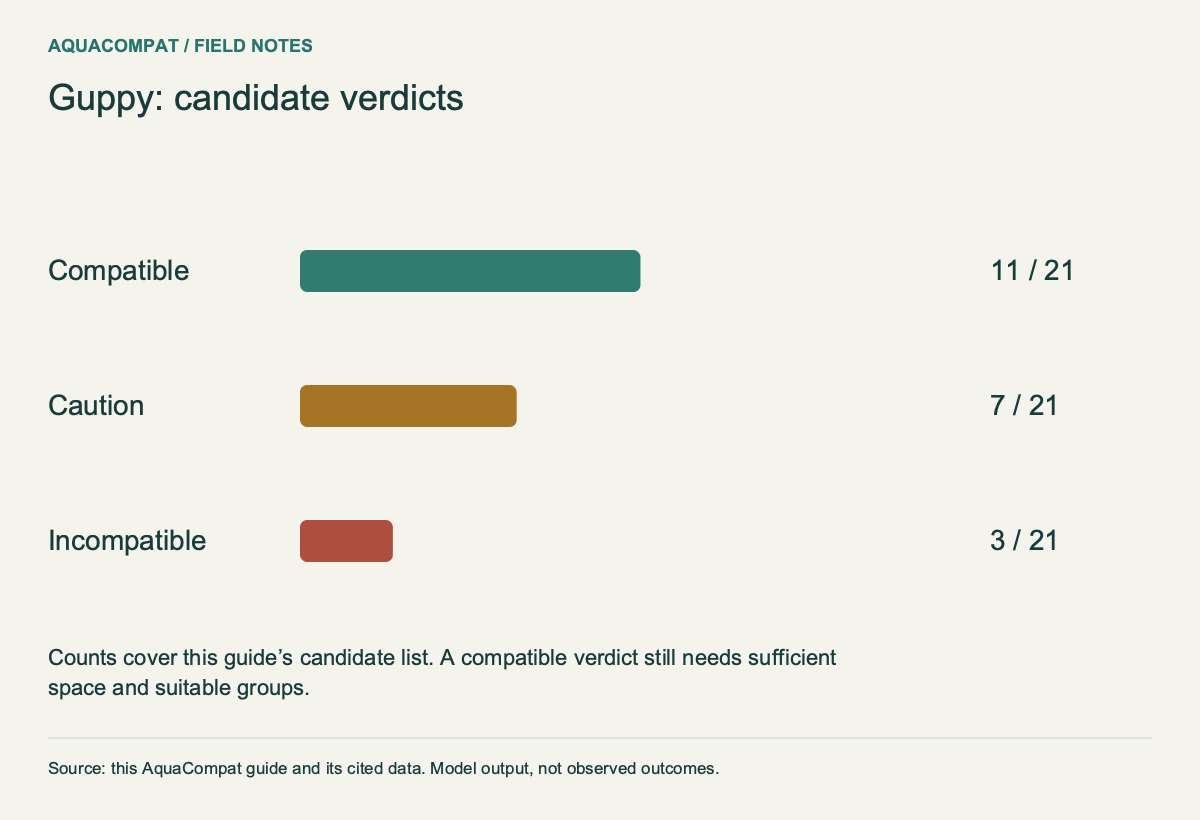
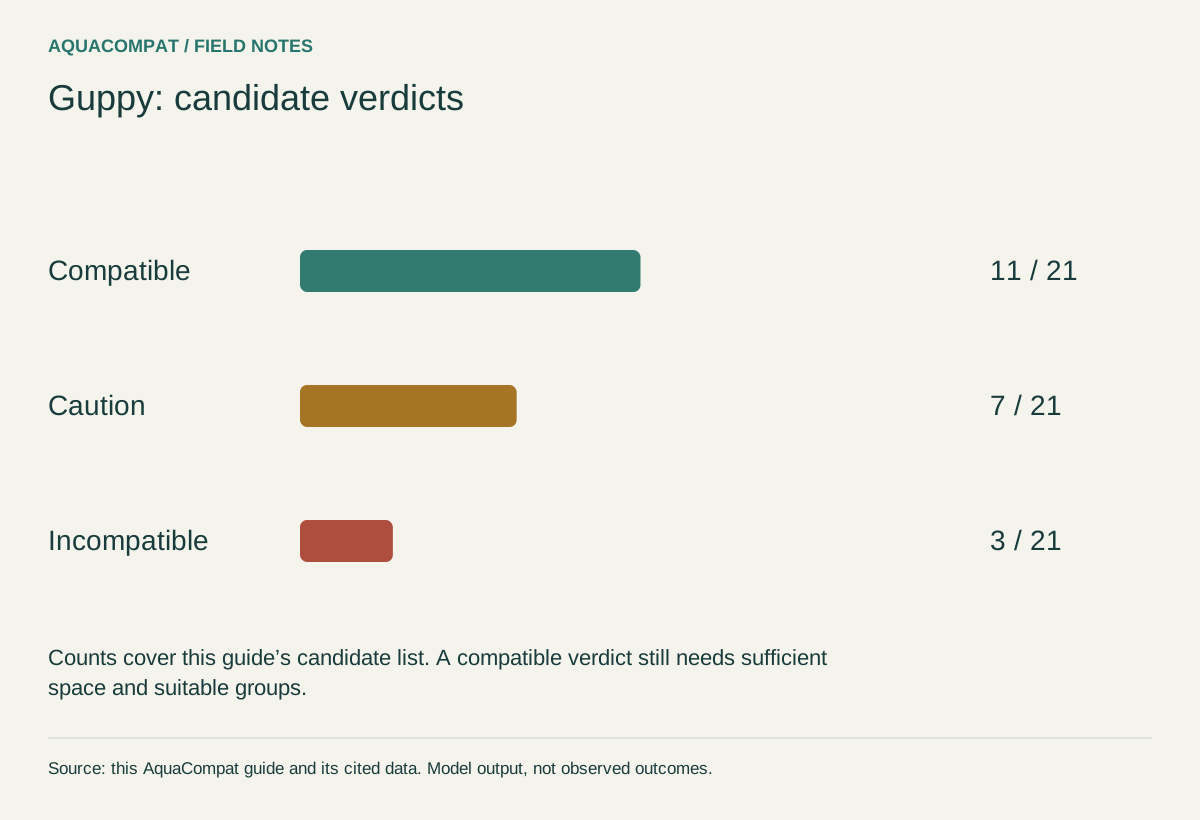
Guppy: candidate verdicts
SVG file · Appears in Best Guppy Tank Mates
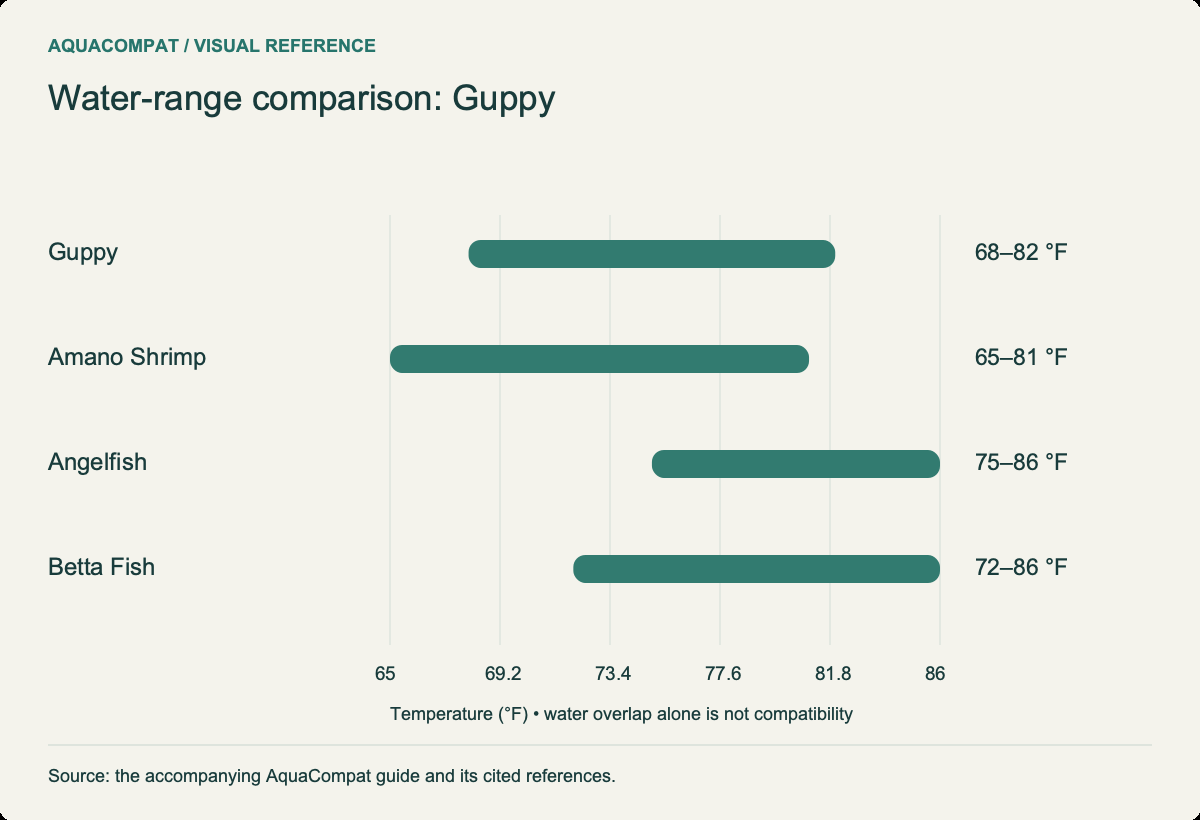
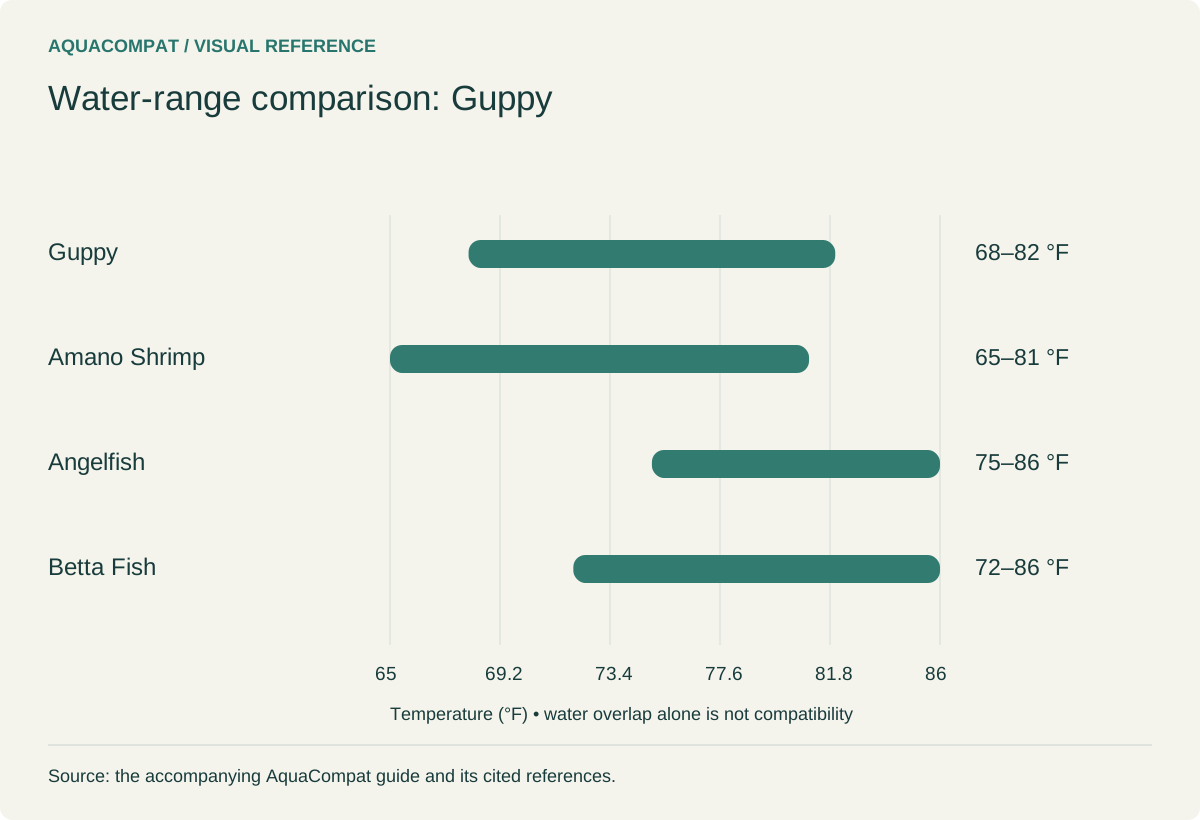
Water-range comparison: Guppy
SVG file · Appears in Best Guppy Tank Mates
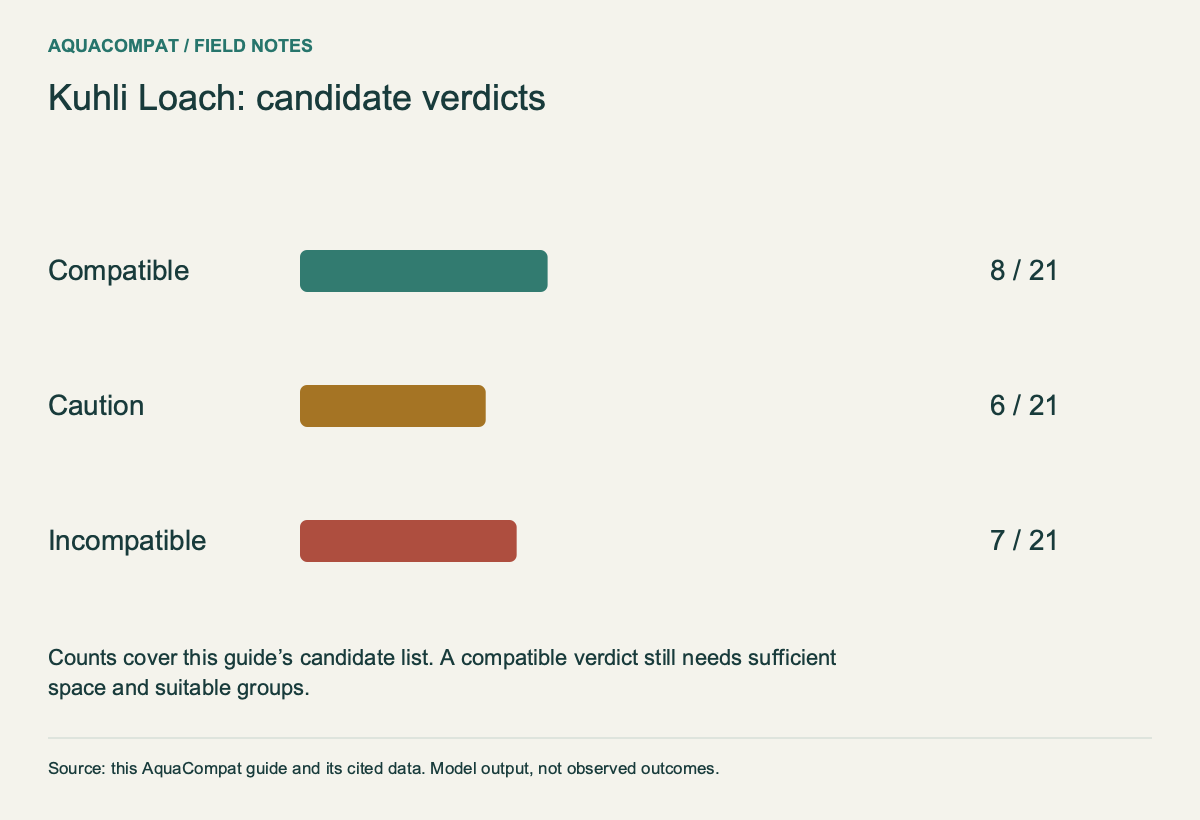
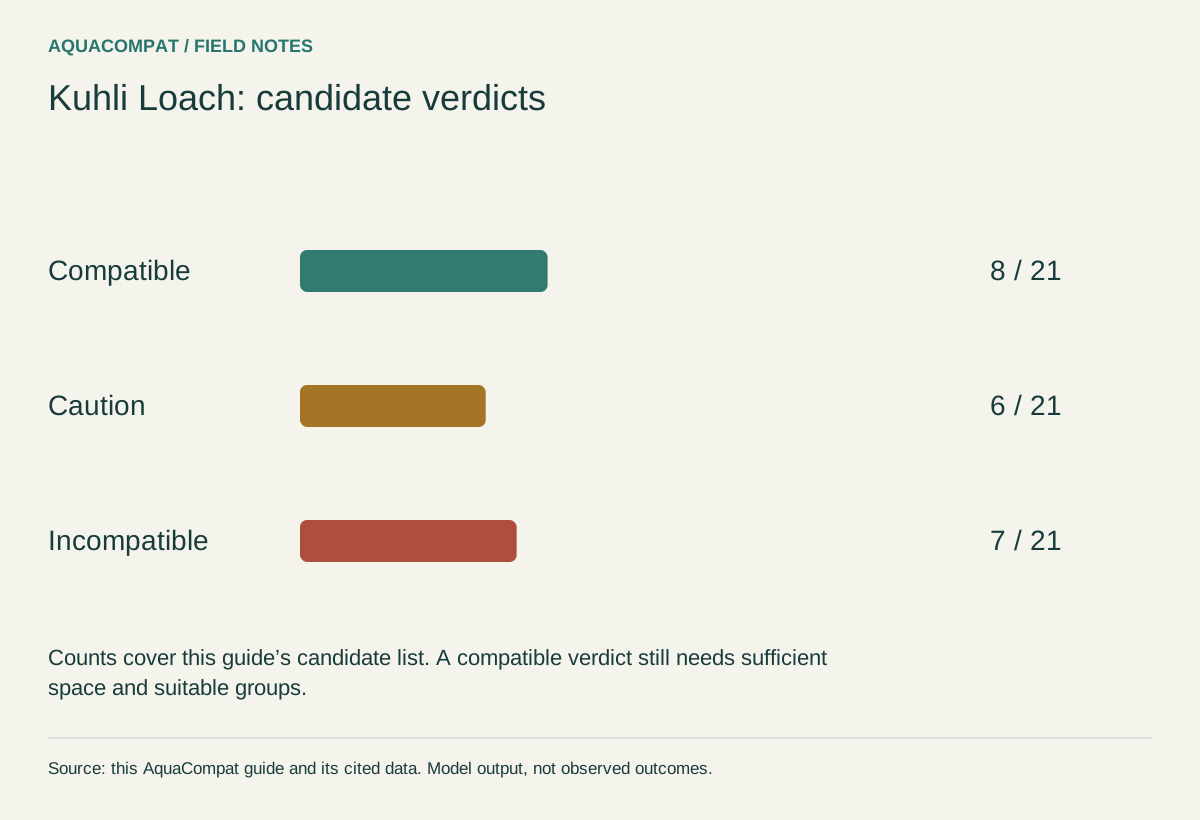
Kuhli Loach: candidate verdicts
SVG file · Appears in Best Kuhli Loach Tank Mates
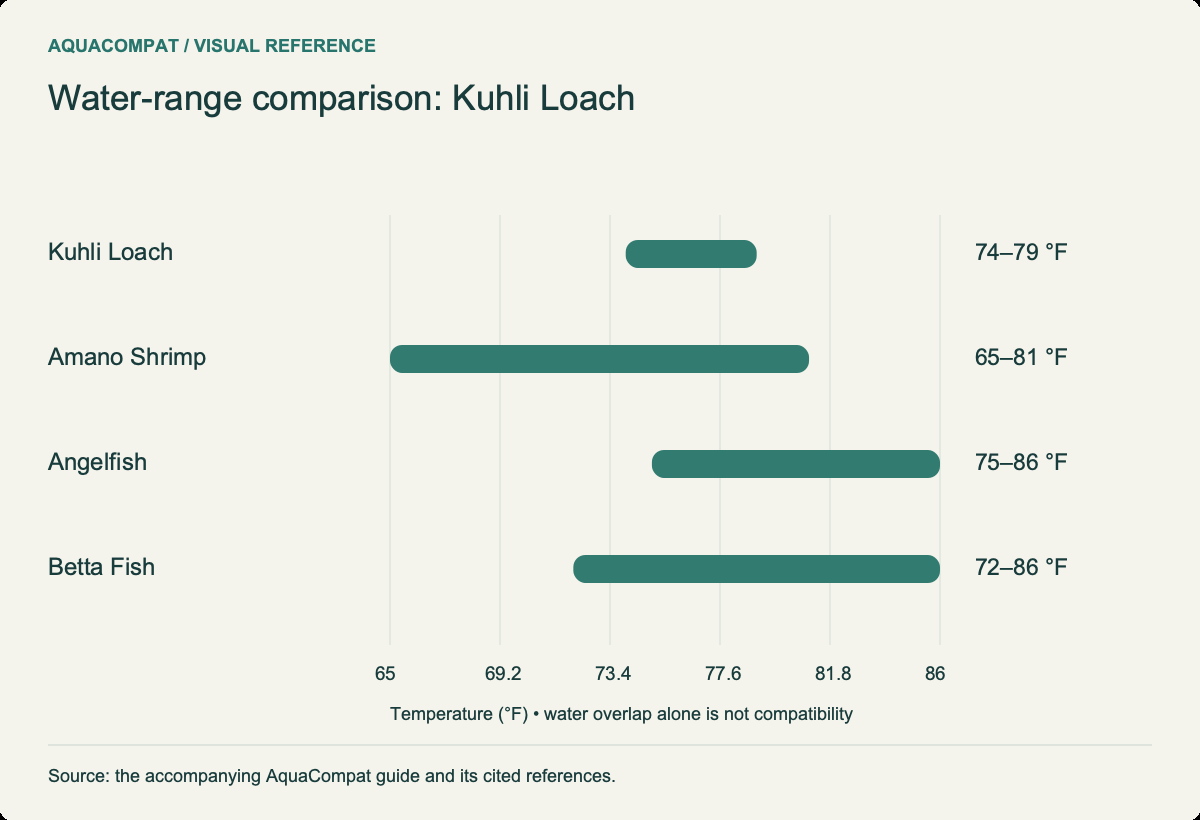
Water-range comparison: Kuhli Loach
SVG file · Appears in Best Kuhli Loach Tank Mates
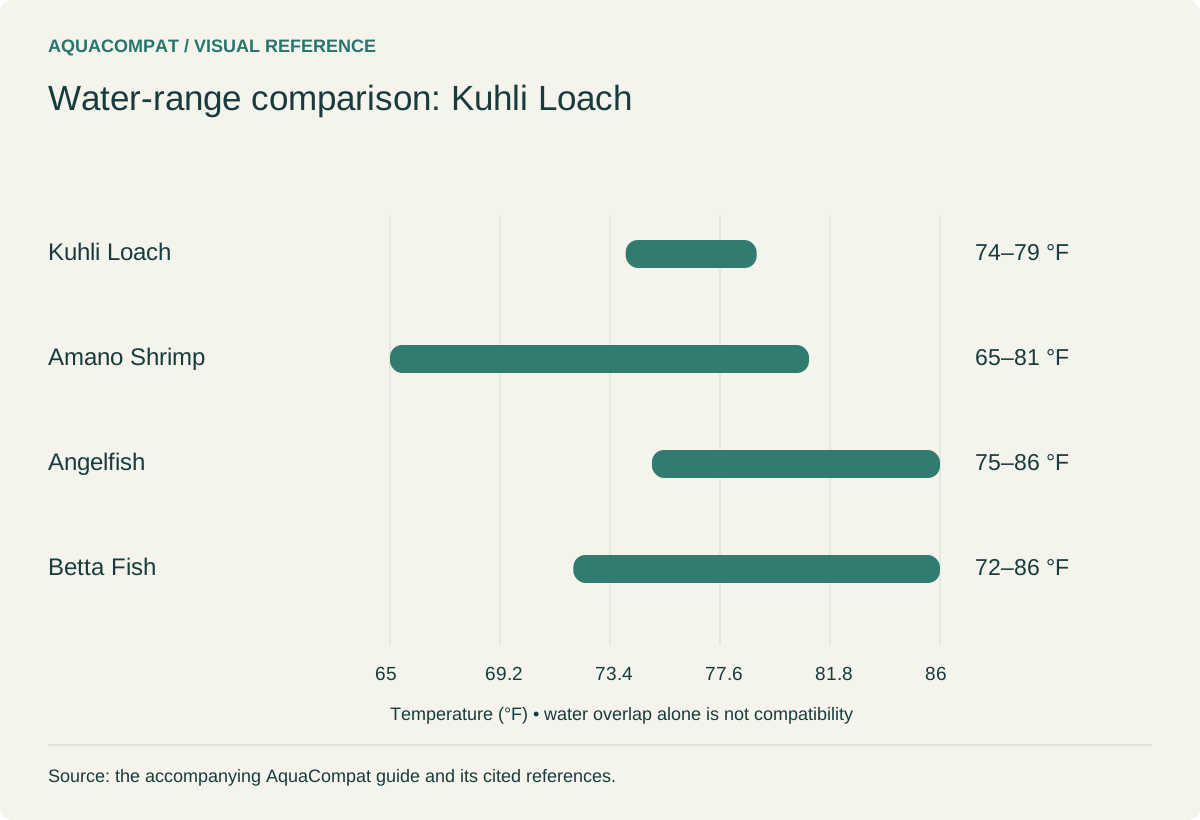
Oscar: candidate verdicts
SVG file · Appears in Best Oscar Tank Mates
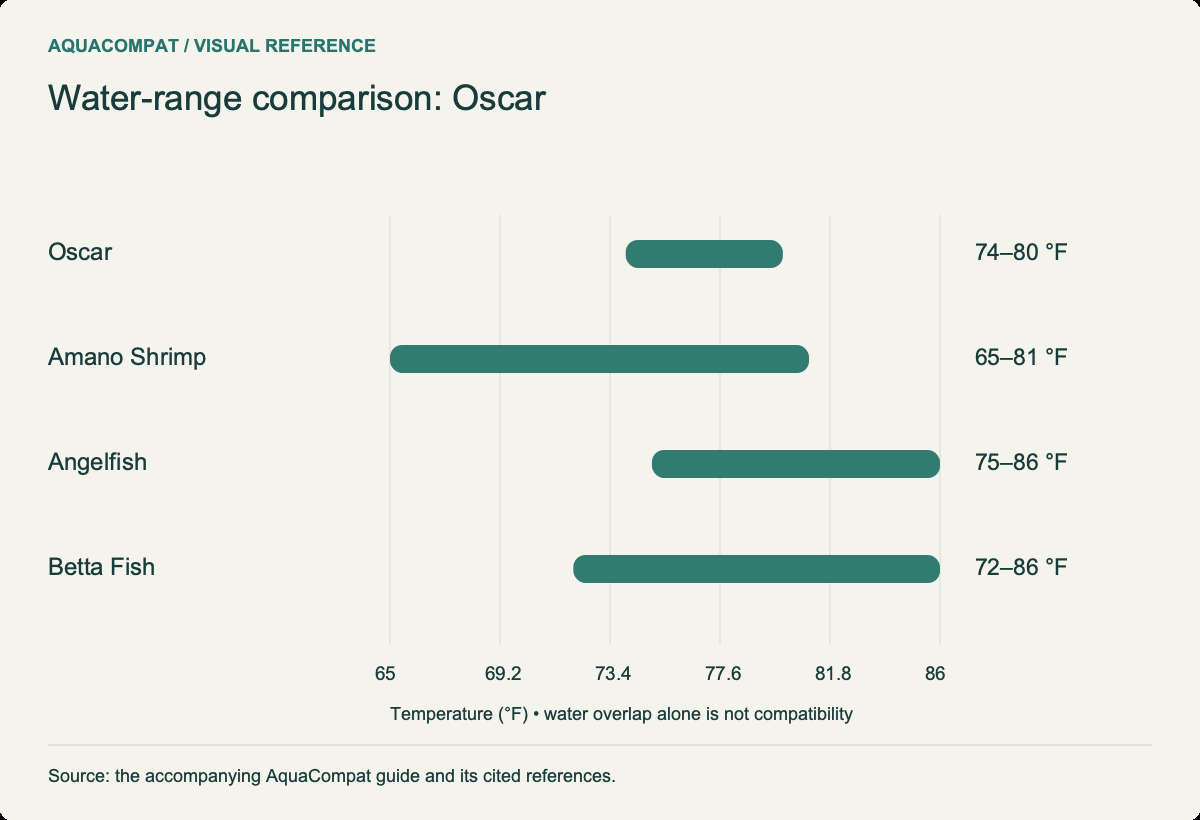
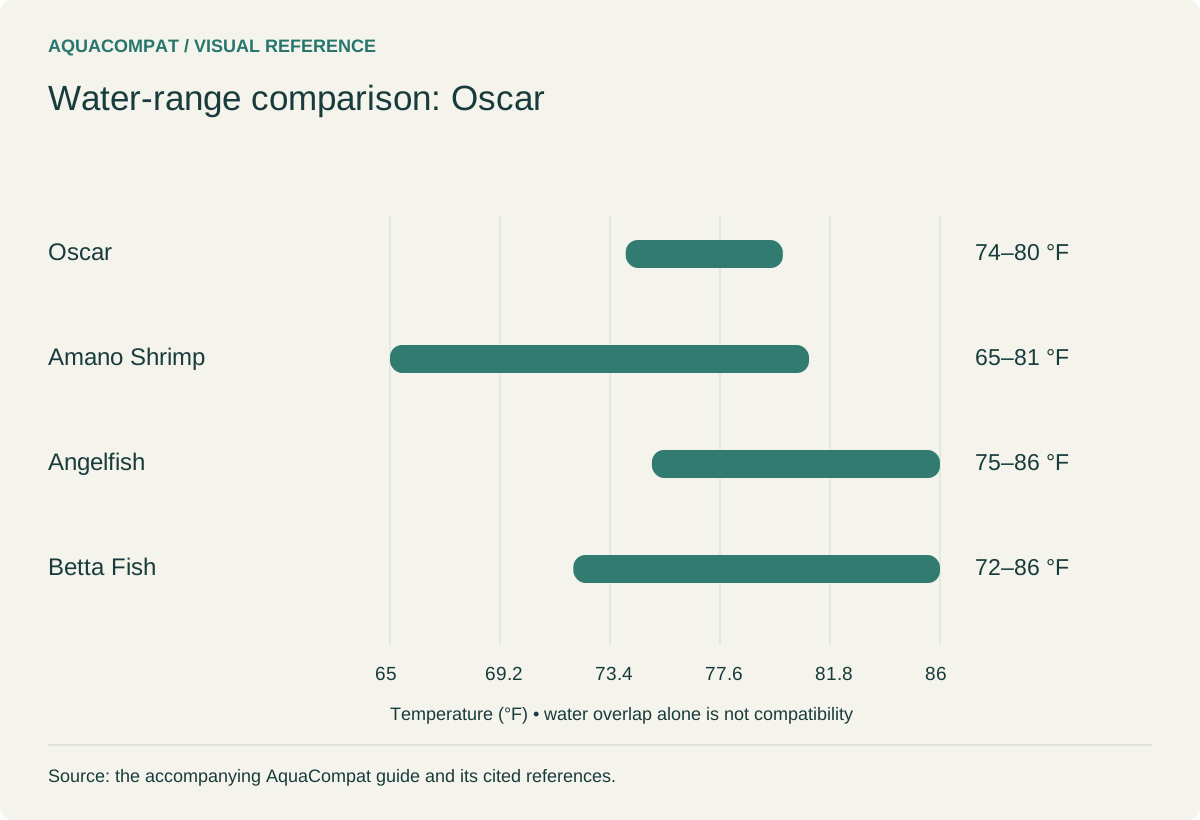
Water-range comparison: Oscar
SVG file · Appears in Best Oscar Tank Mates
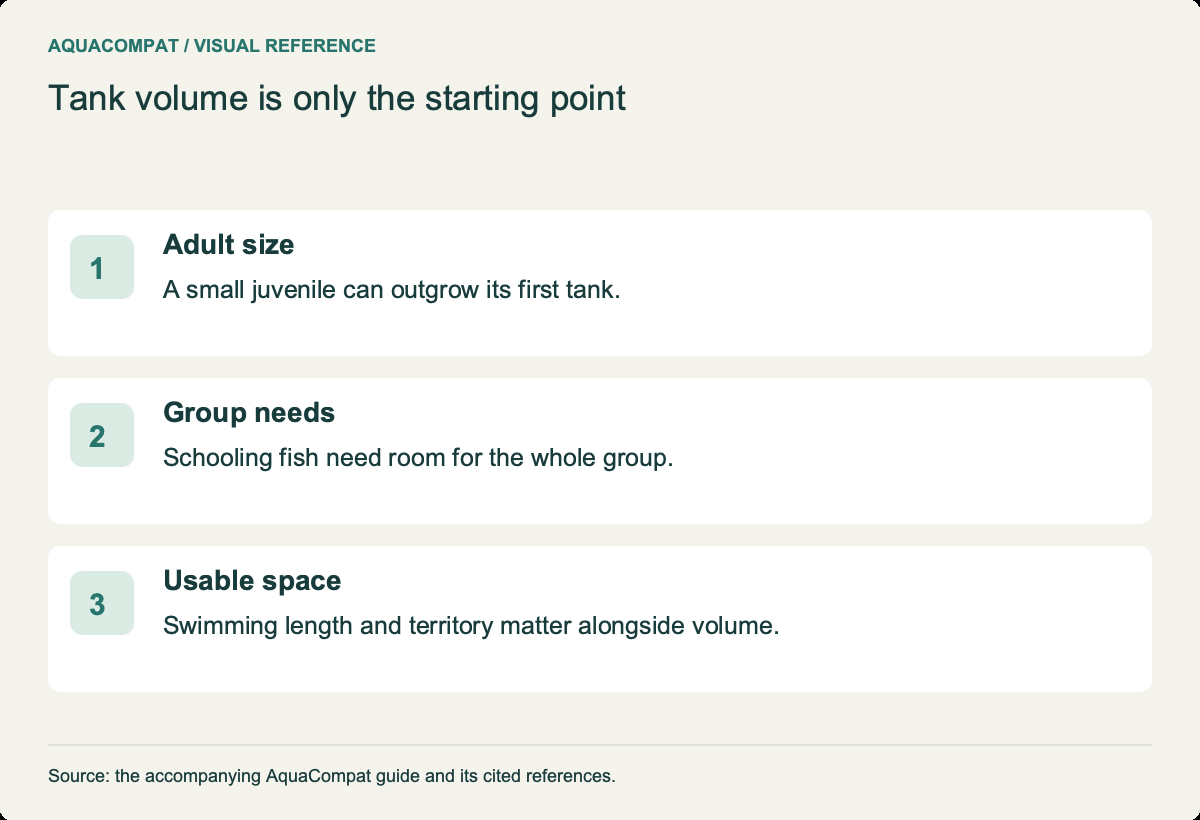
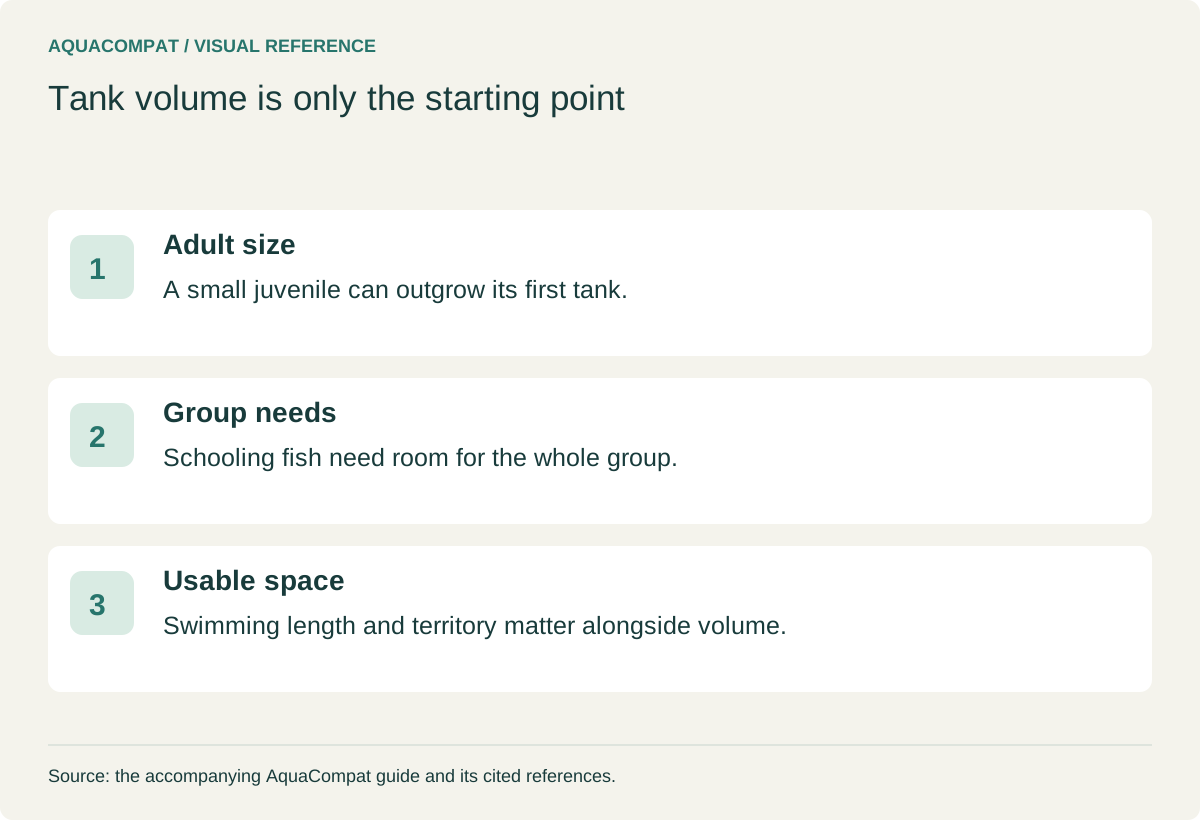
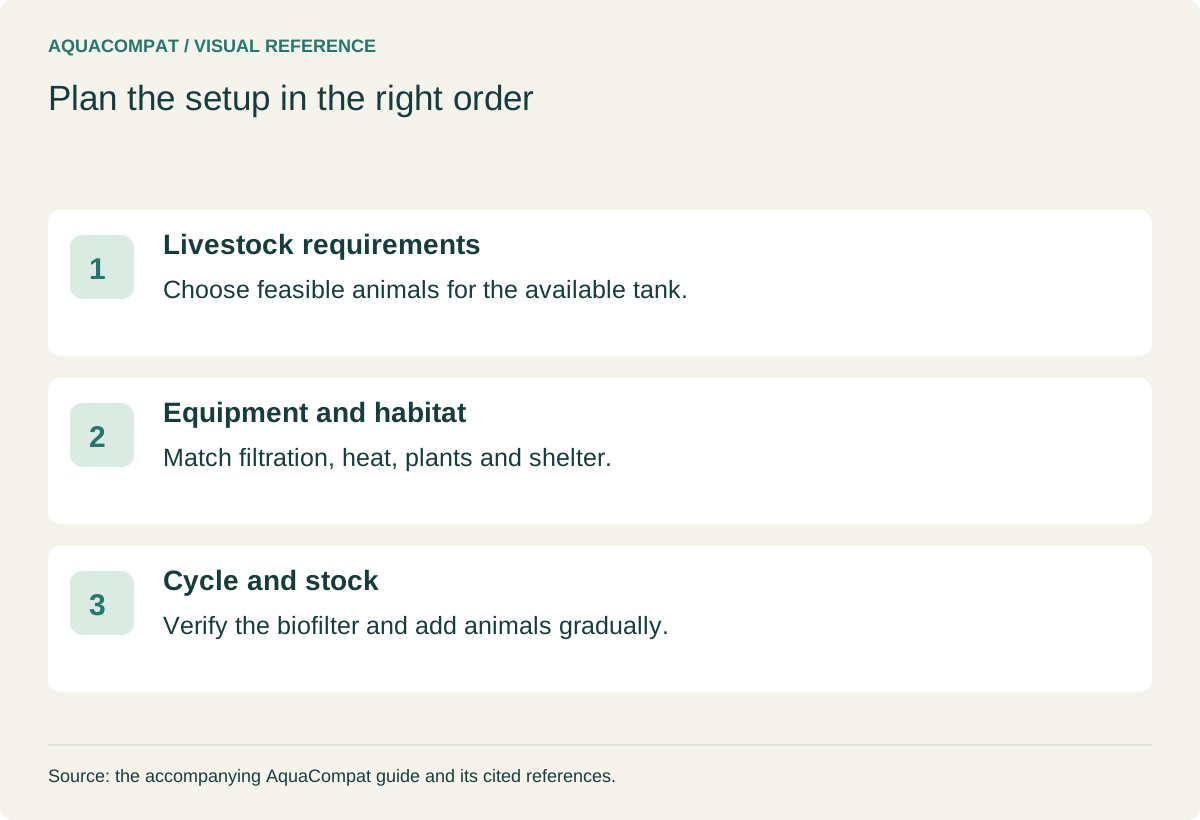
Tank volume is only the starting point
SVG file · Appears in Tank Setups by Size: Which Fish Fit Each Aquarium
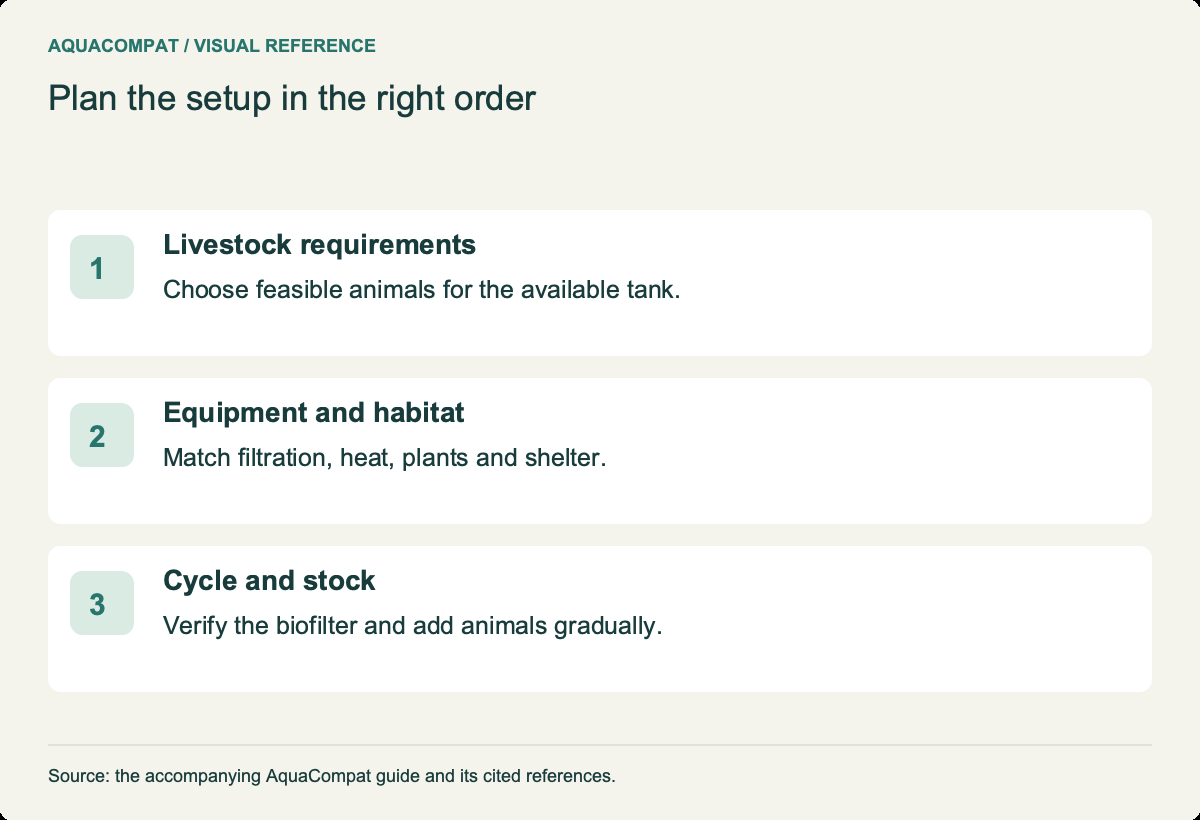
Plan the setup in the right order
SVG file · Appears in Tank Setups by Size: Which Fish Fit Each Aquarium
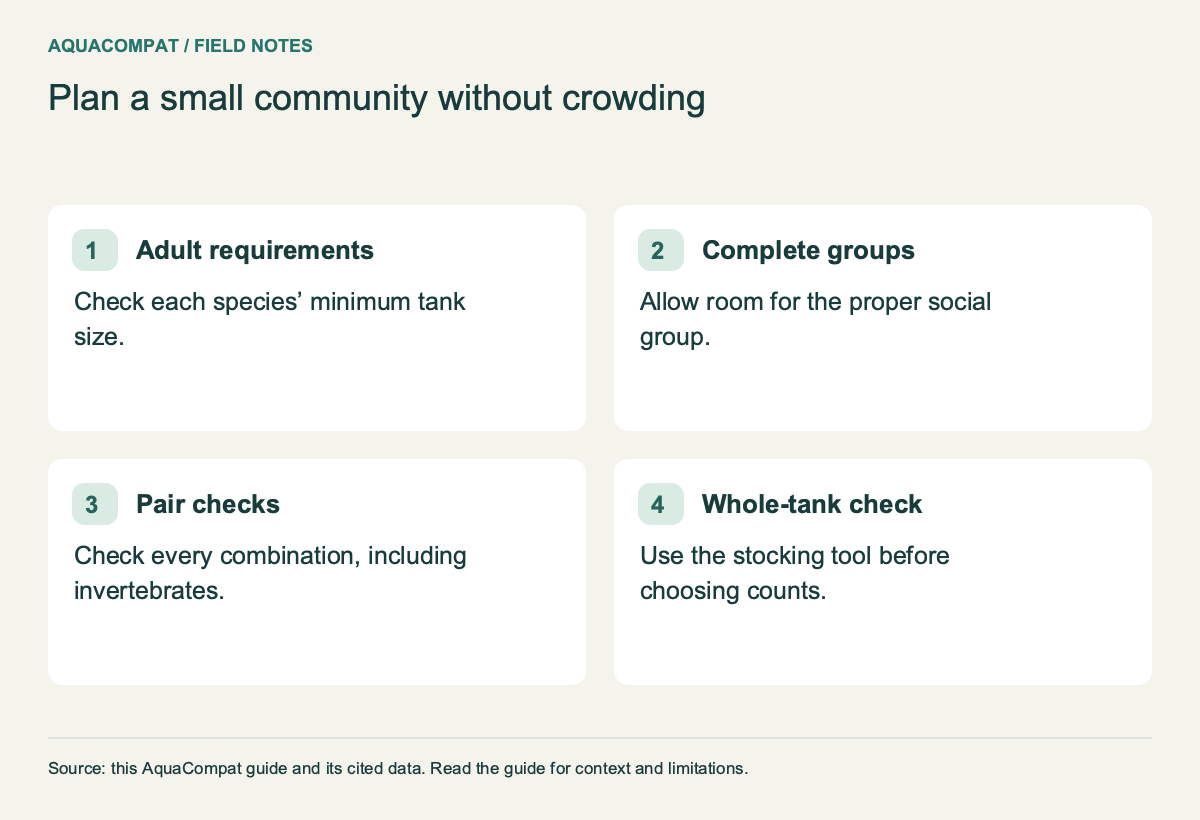
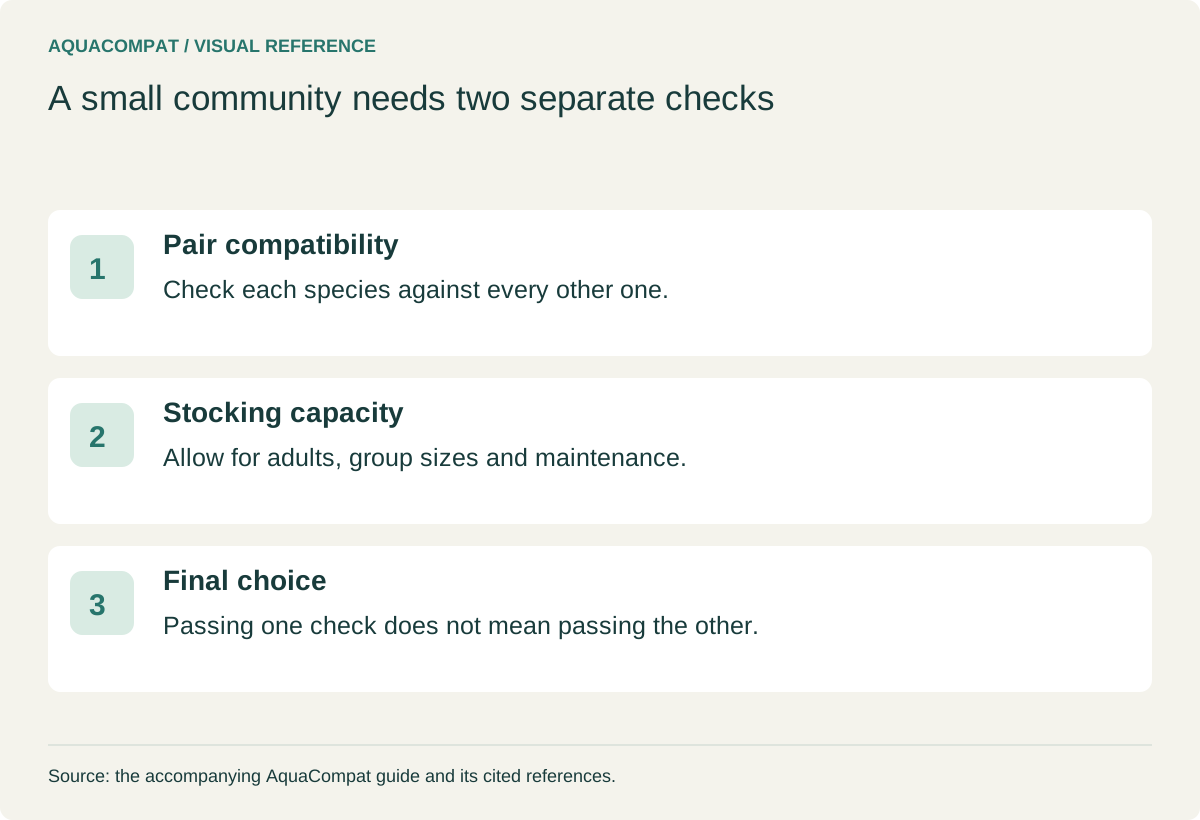
Plan a small community without crowding
SVG file · Appears in Best Fish for a 10-Gallon Community Tank
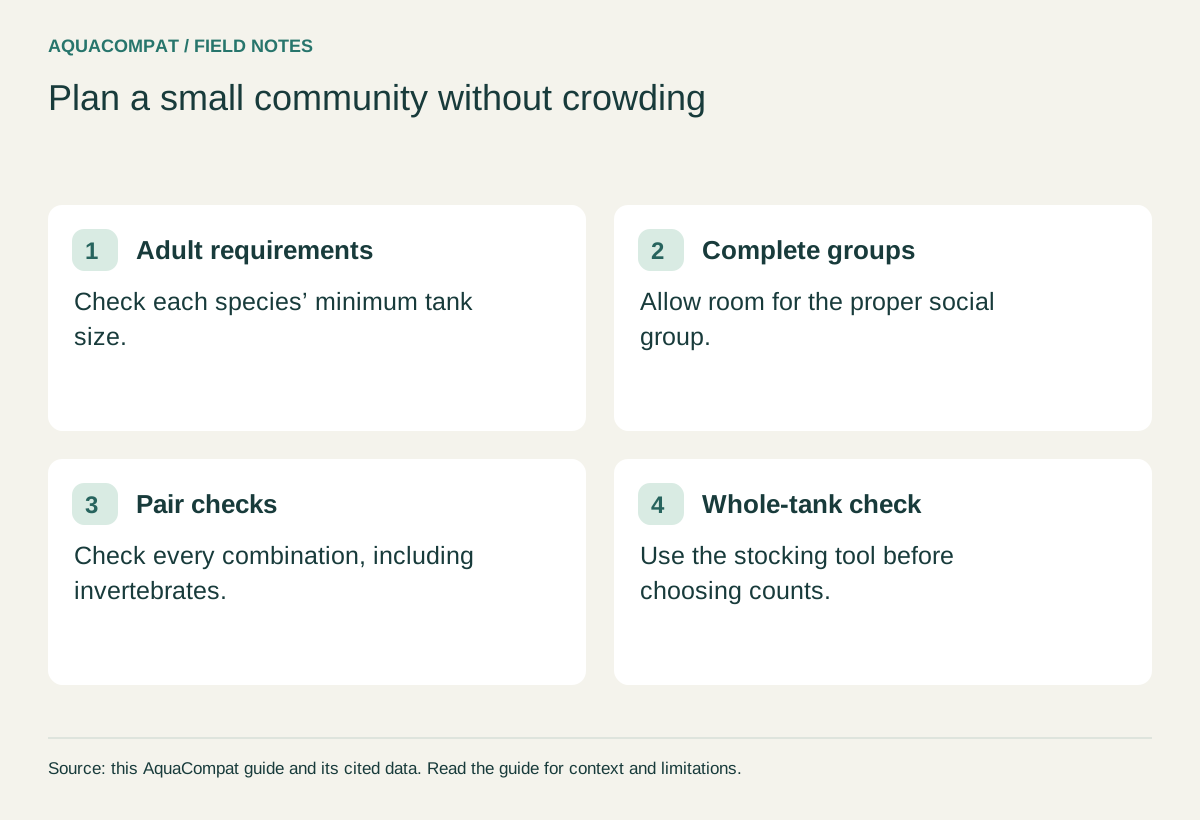
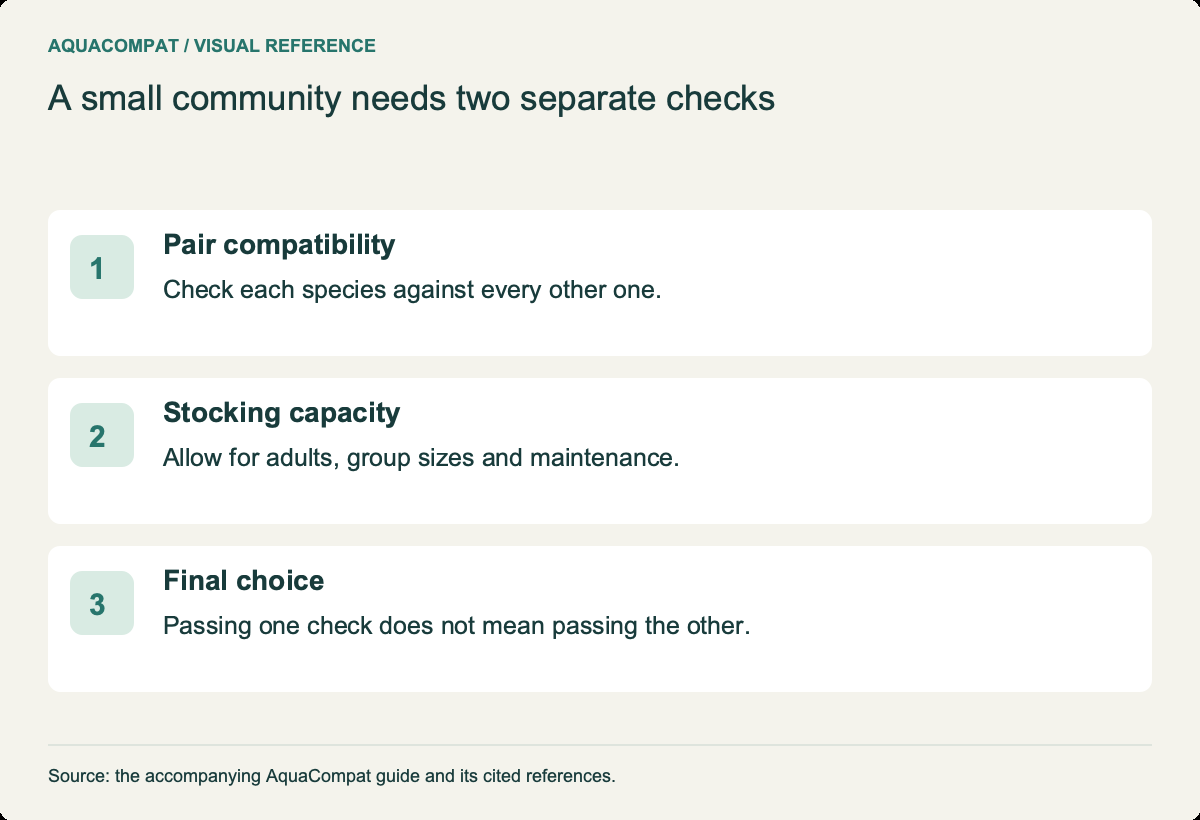
A small community needs two separate checks
SVG file · Appears in Best Fish for a 10-Gallon Community Tank
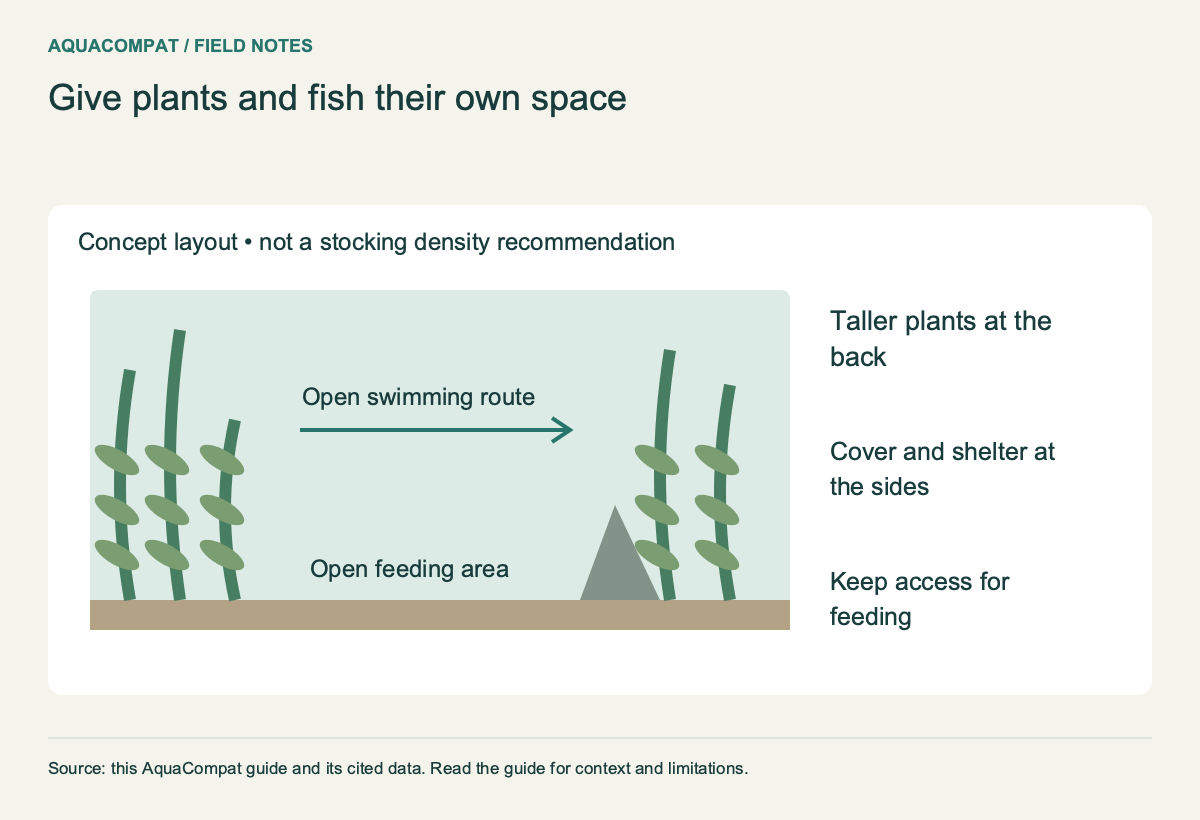
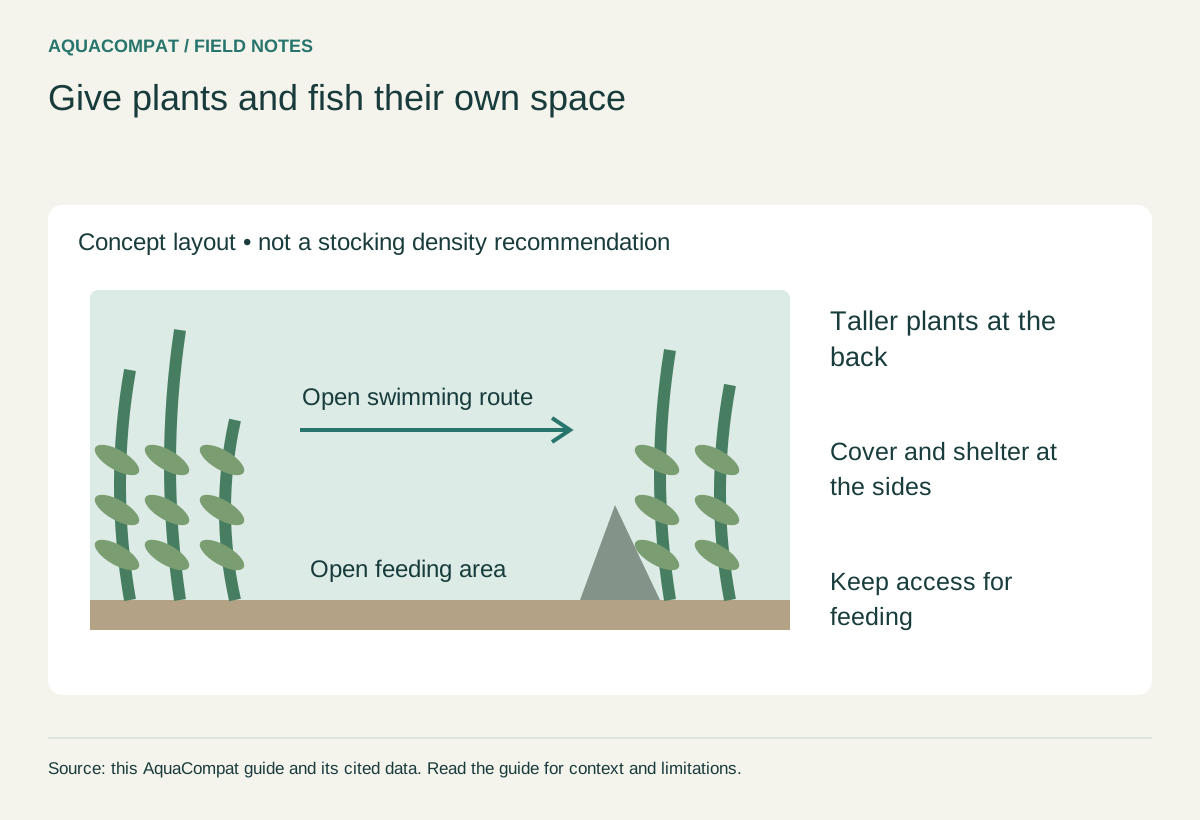
Give plants and fish their own space
SVG file · Appears in Best Fish for a 20-Gallon Planted Tank
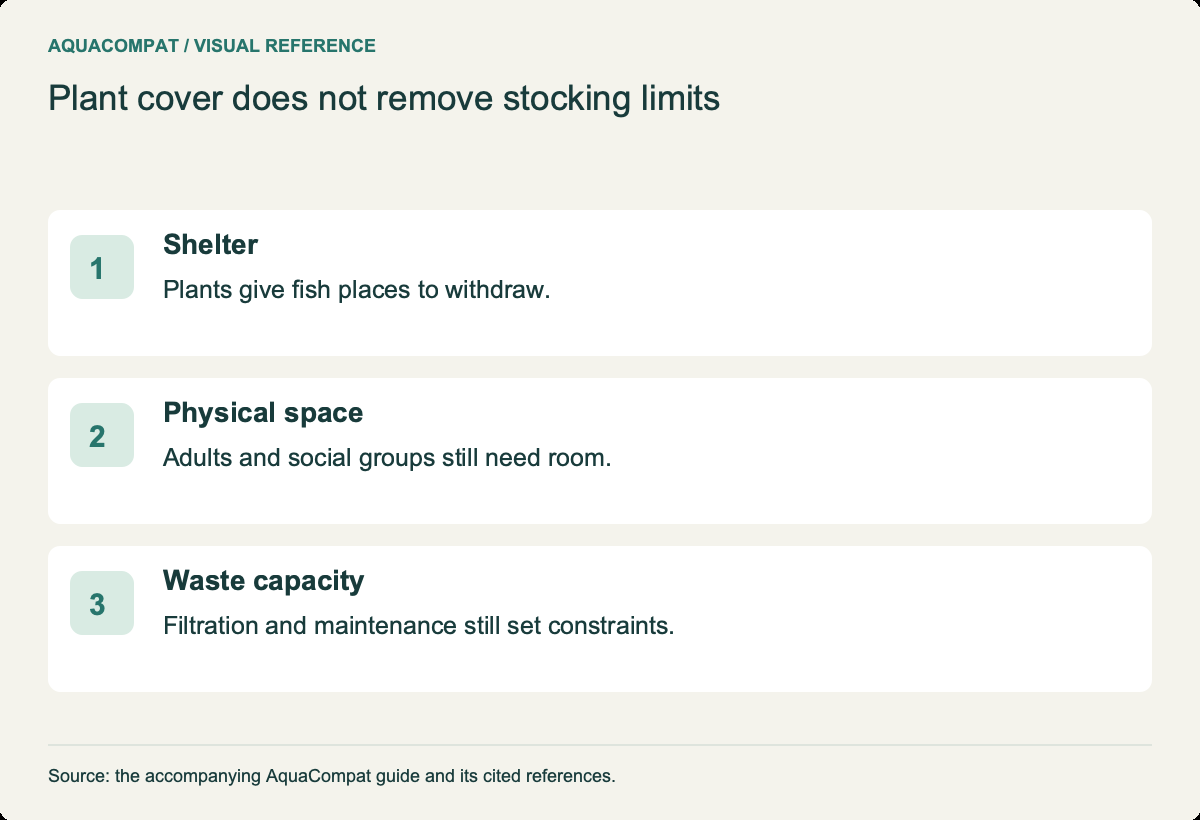
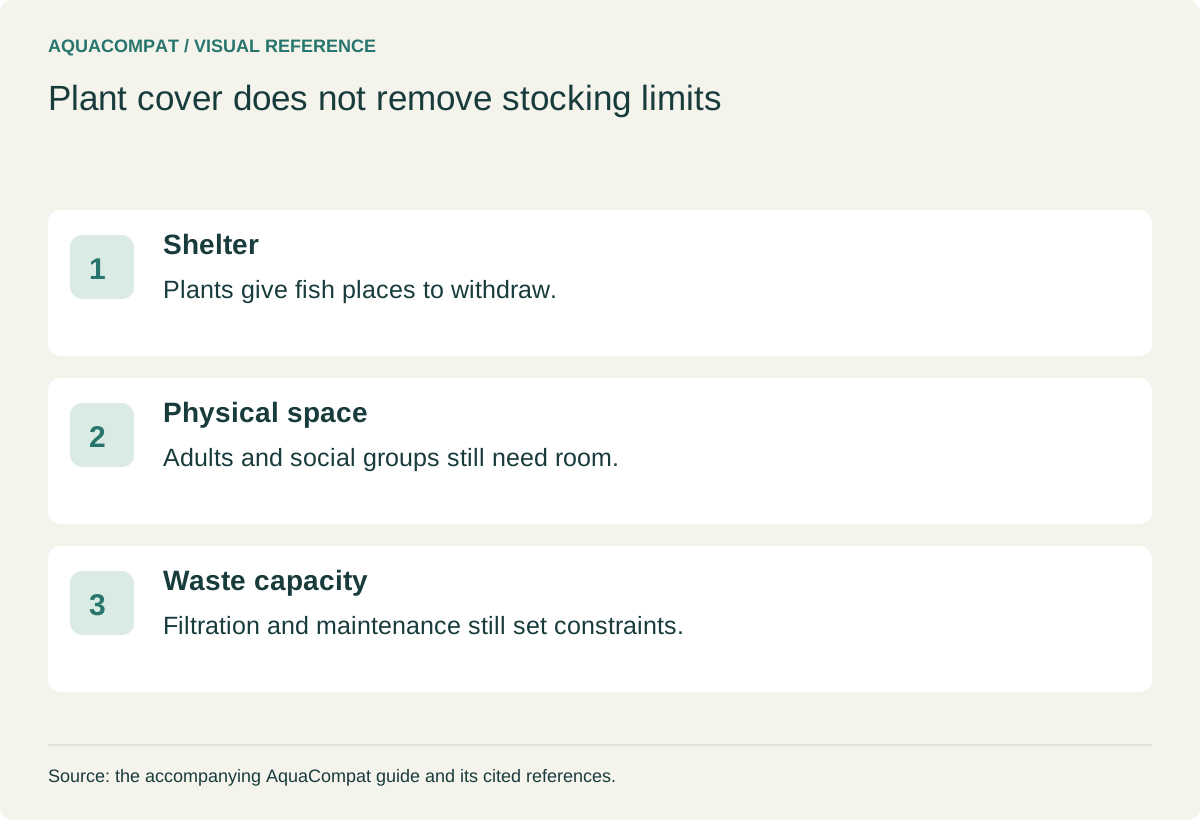
Plant cover does not remove stocking limits
SVG file · Appears in Best Fish for a 20-Gallon Planted Tank
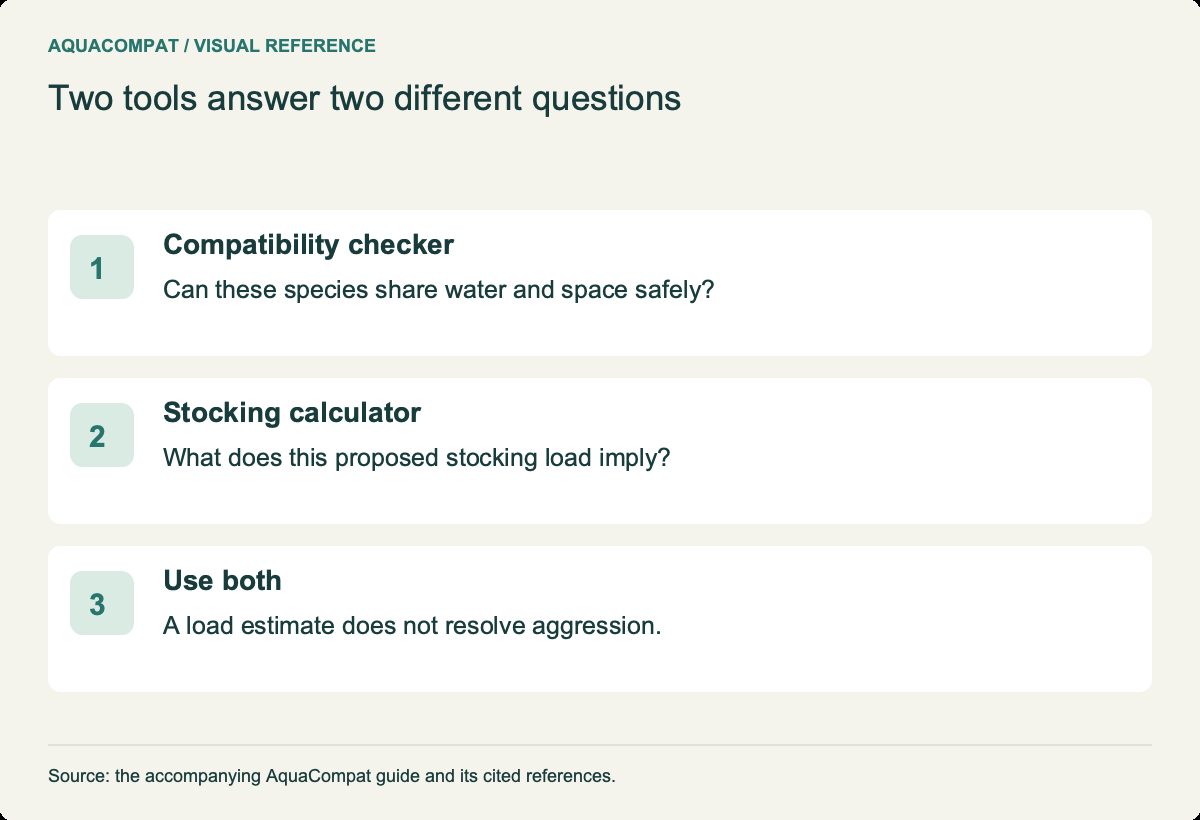
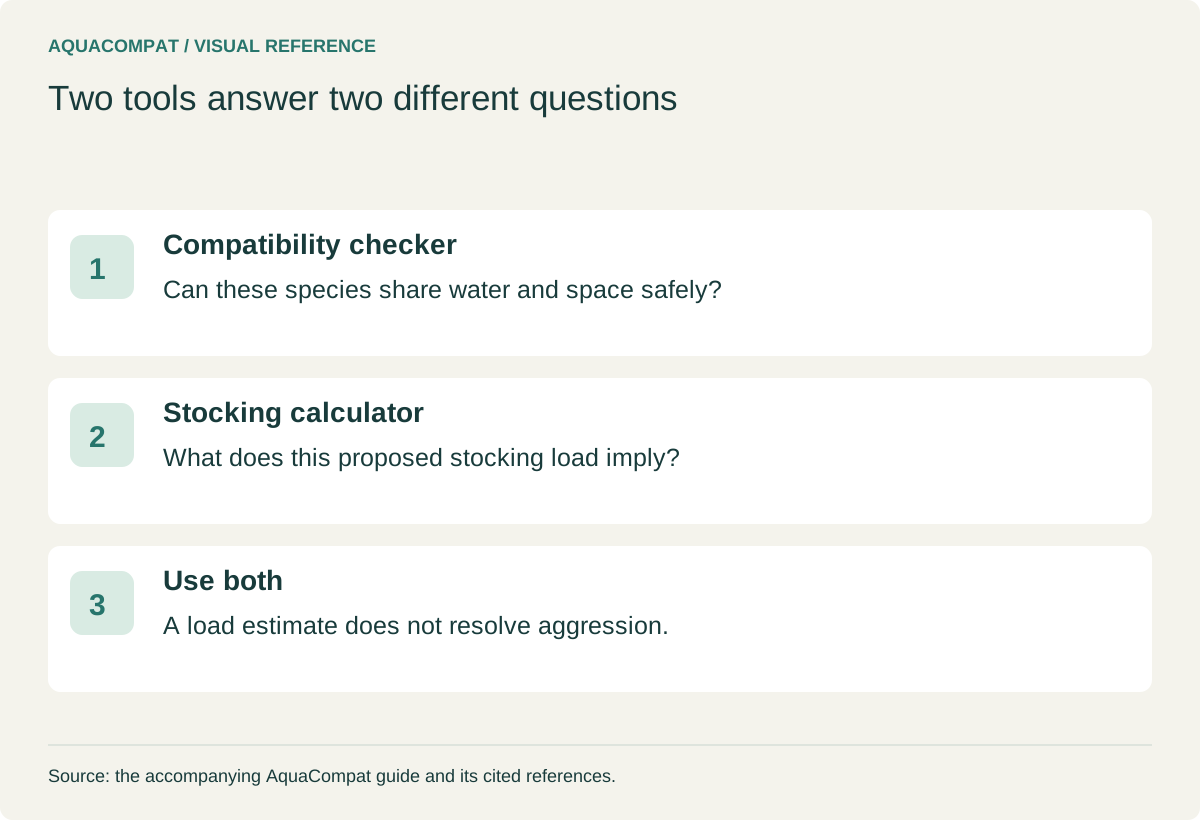
Two tools answer two different questions
SVG file · Appears in Free Aquarium Tools for Compatibility and Stocking
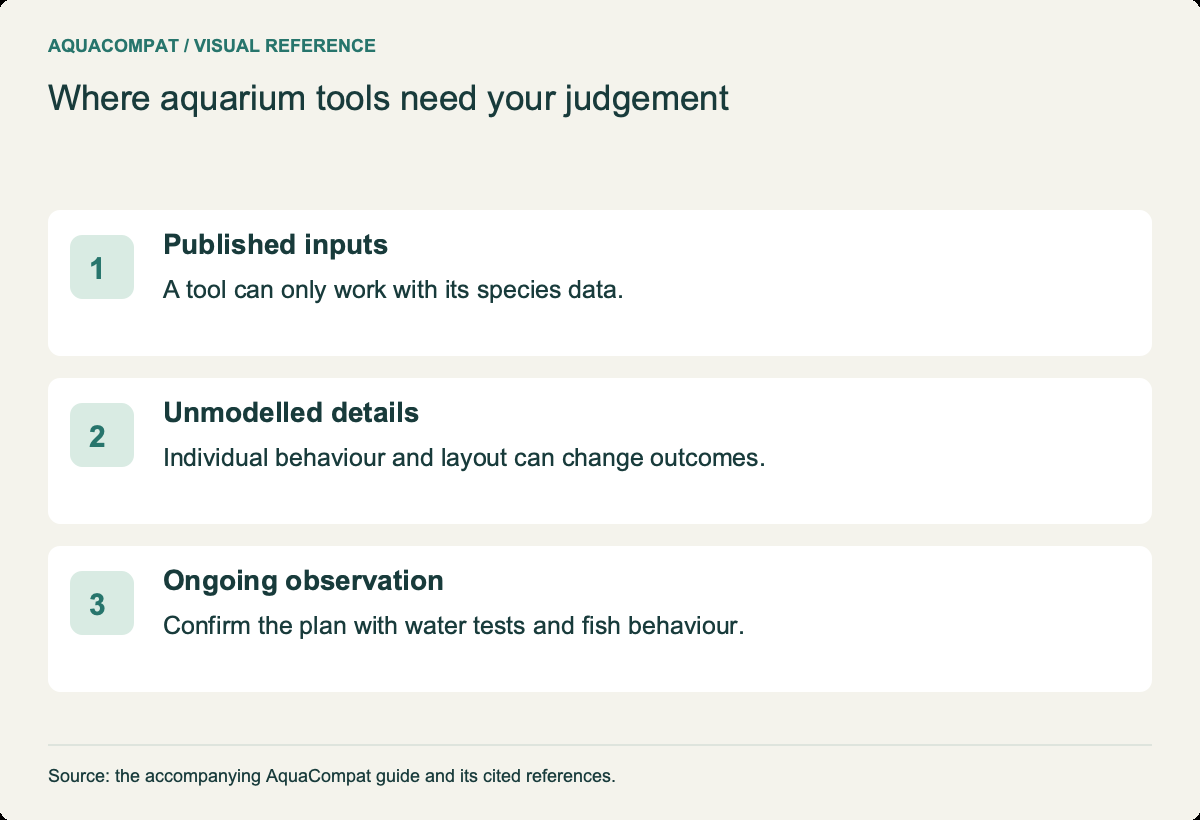
Where aquarium tools need your judgement
SVG file · Appears in Free Aquarium Tools for Compatibility and Stocking
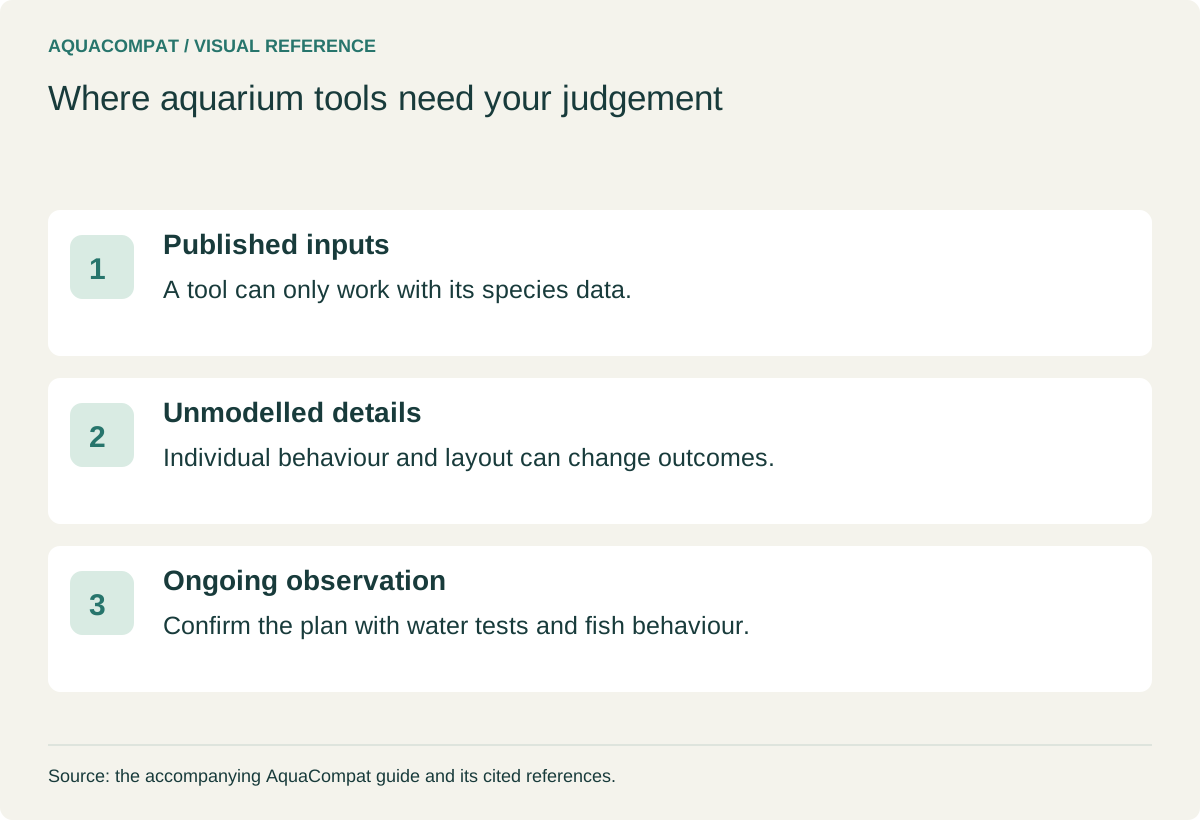
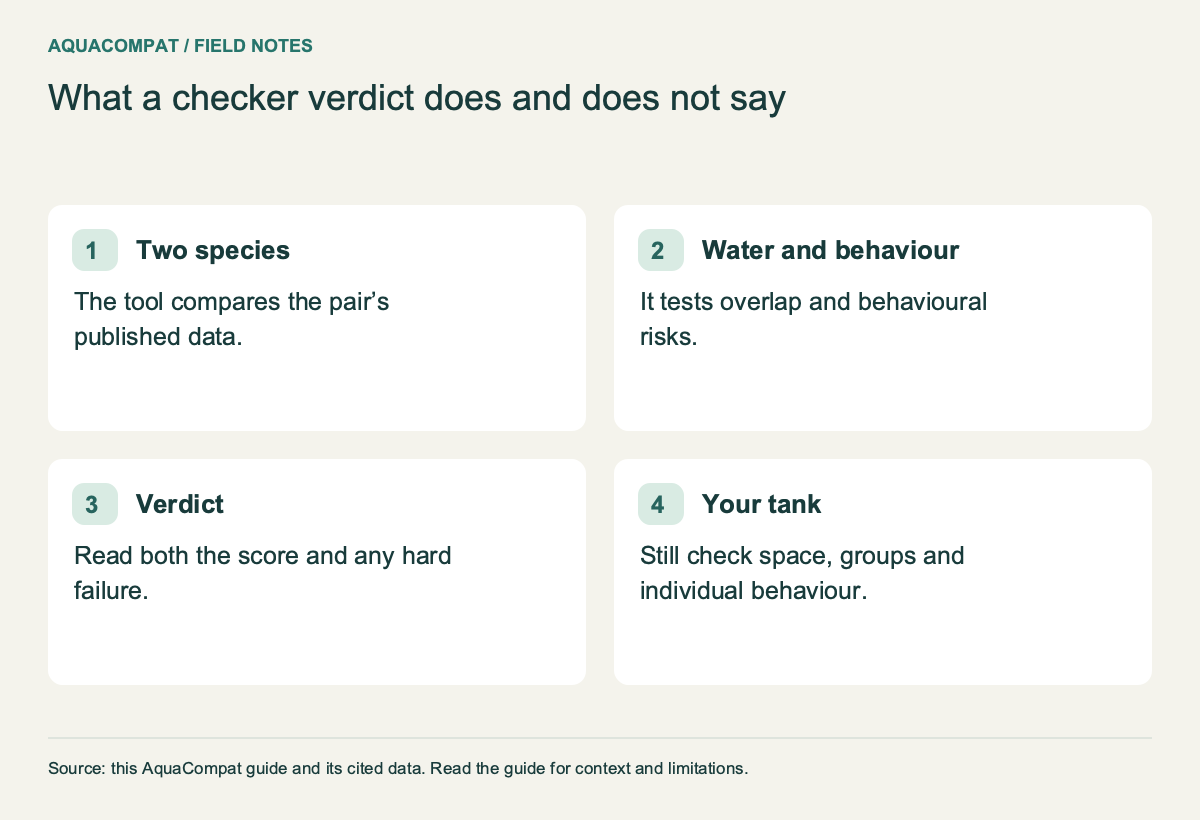
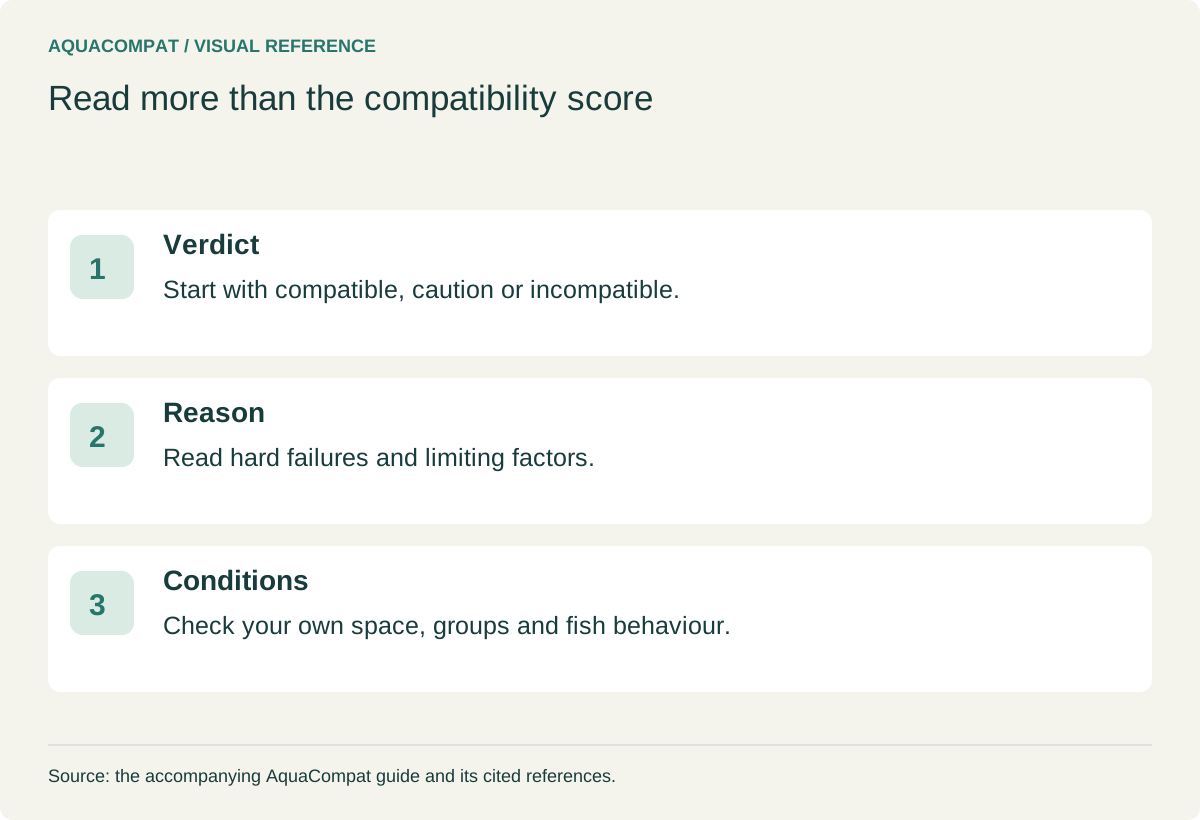
What a checker verdict does and does not say
SVG file · Appears in Fish Compatibility Checker: Can These Species Live Together?
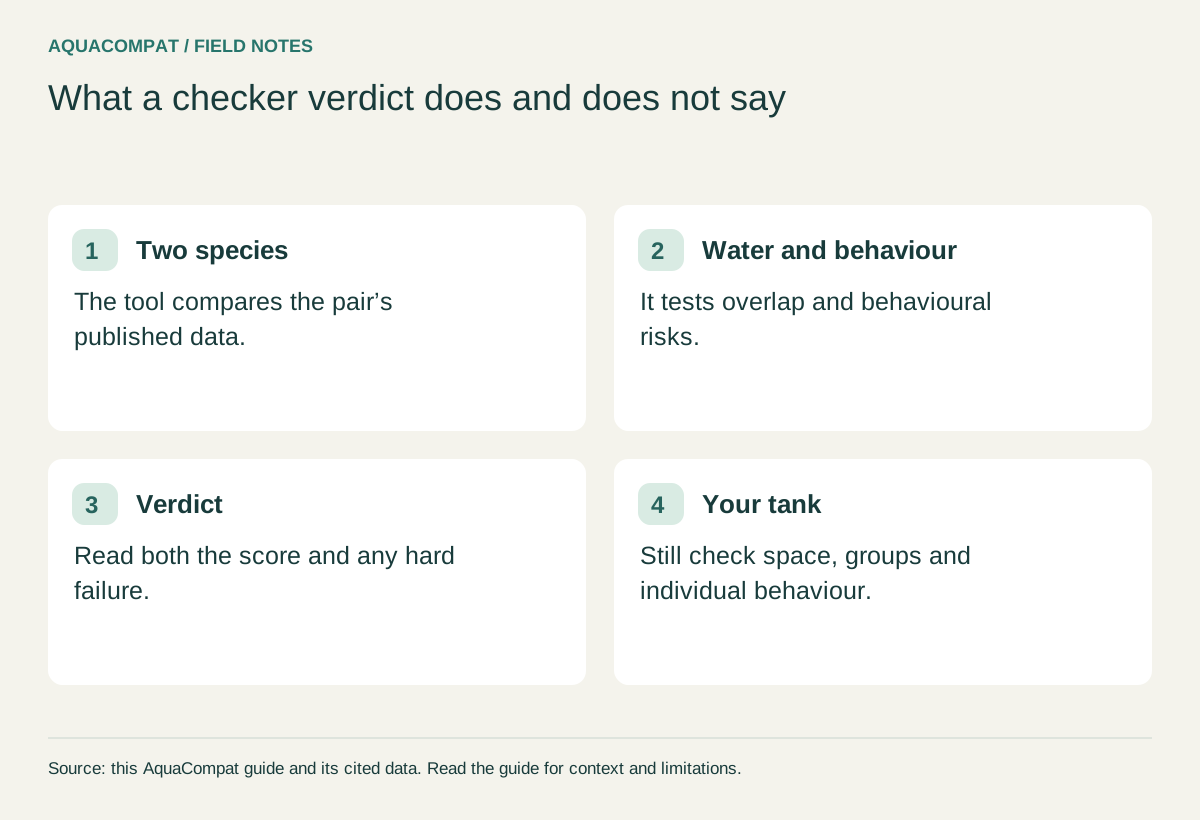
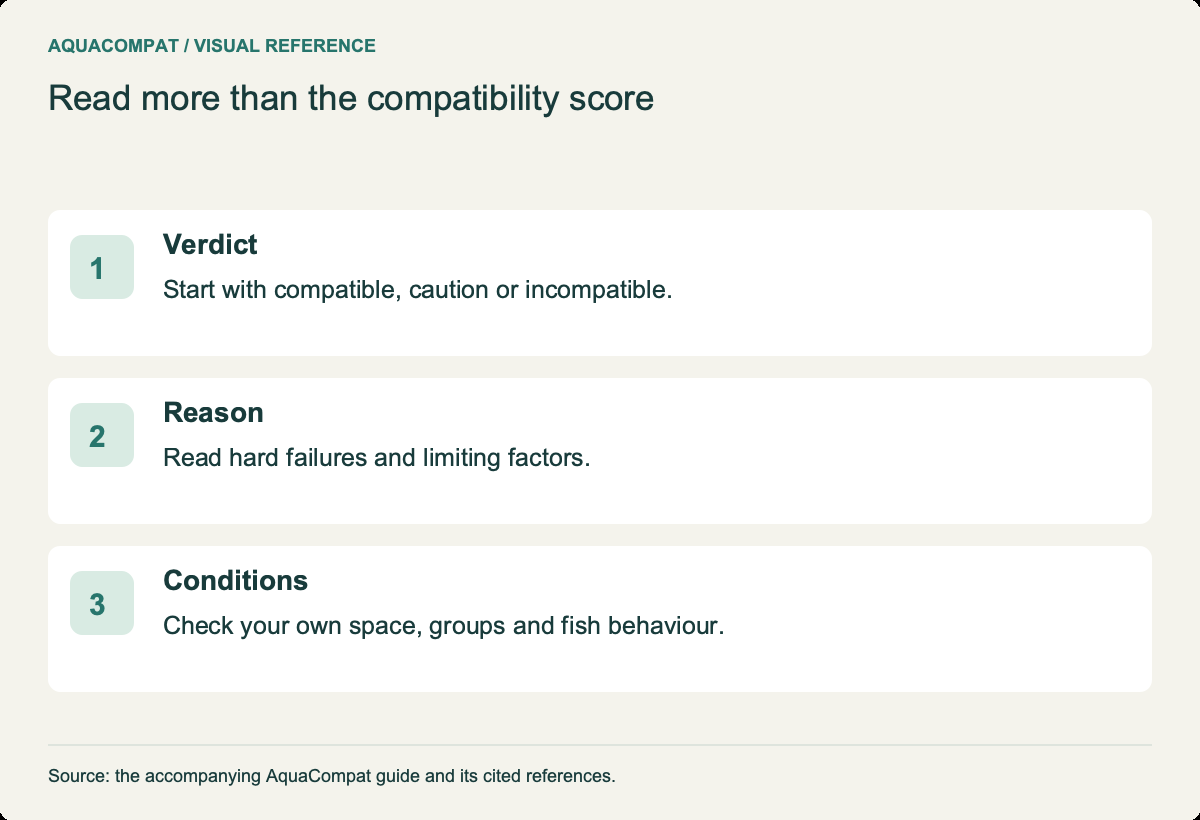
Read more than the compatibility score
SVG file · Appears in Fish Compatibility Checker: Can These Species Live Together?
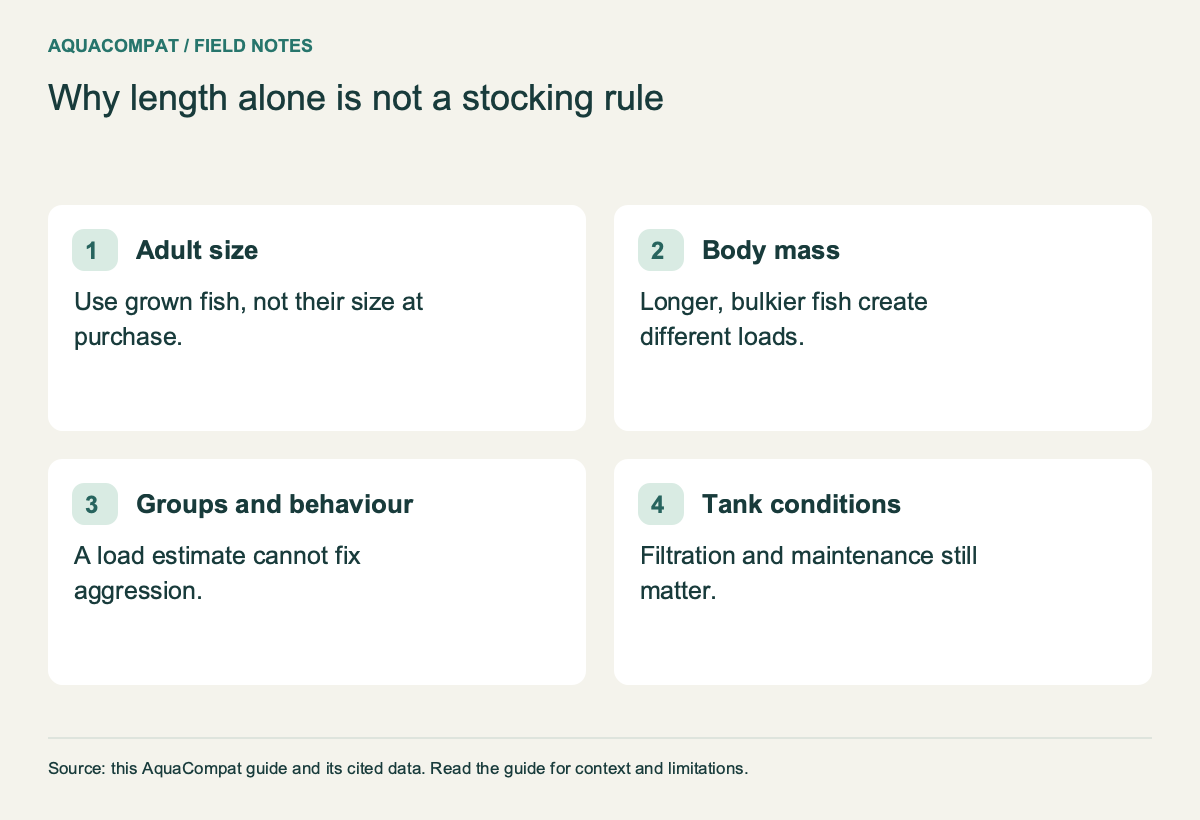
Why length alone is not a stocking rule
SVG file · Appears in Aquarium Stocking Calculator: Will These Fish Fit Your Tank?
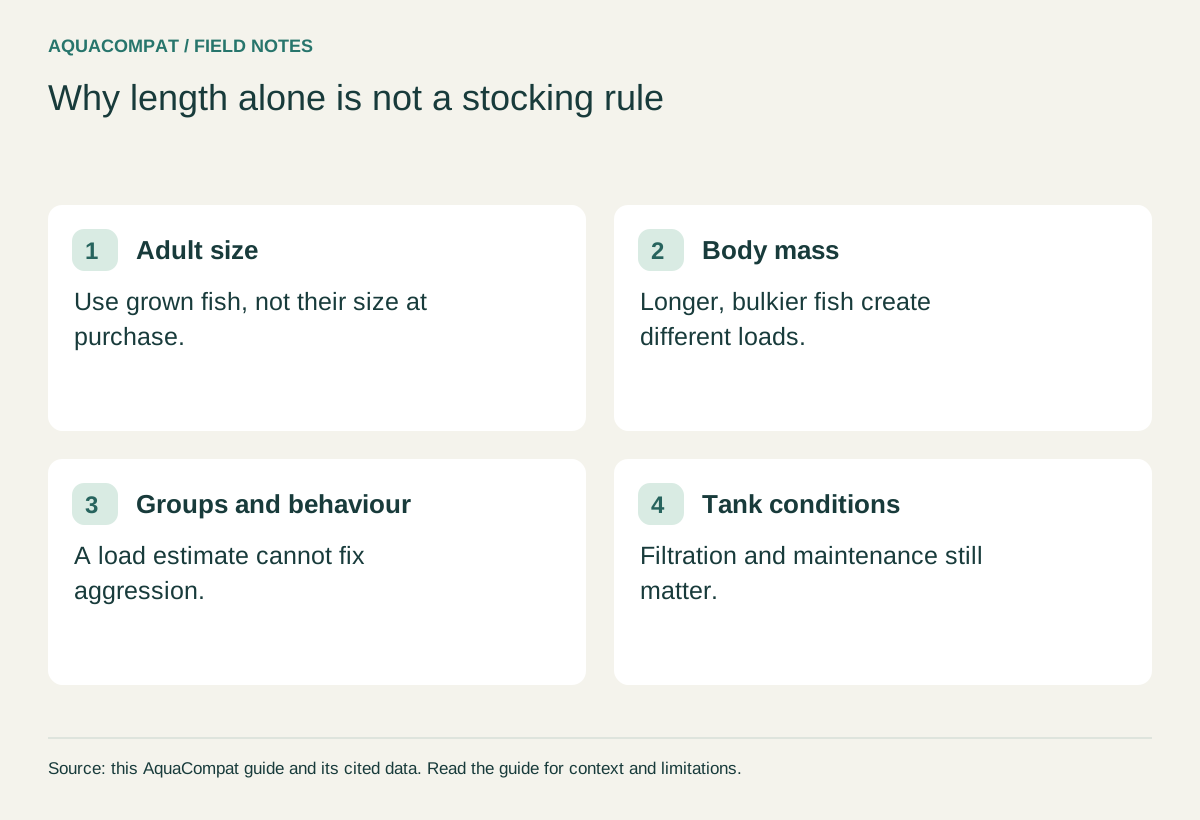
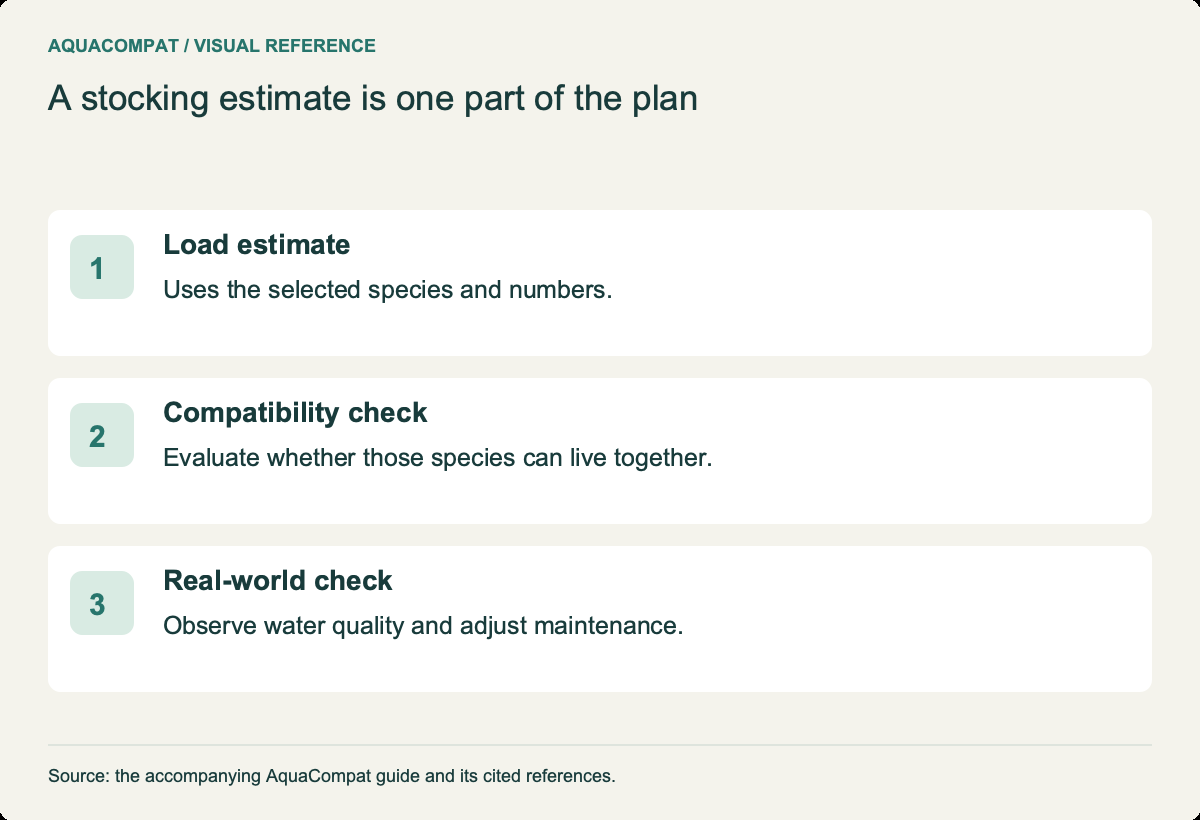
A stocking estimate is one part of the plan
SVG file · Appears in Aquarium Stocking Calculator: Will These Fish Fit Your Tank?
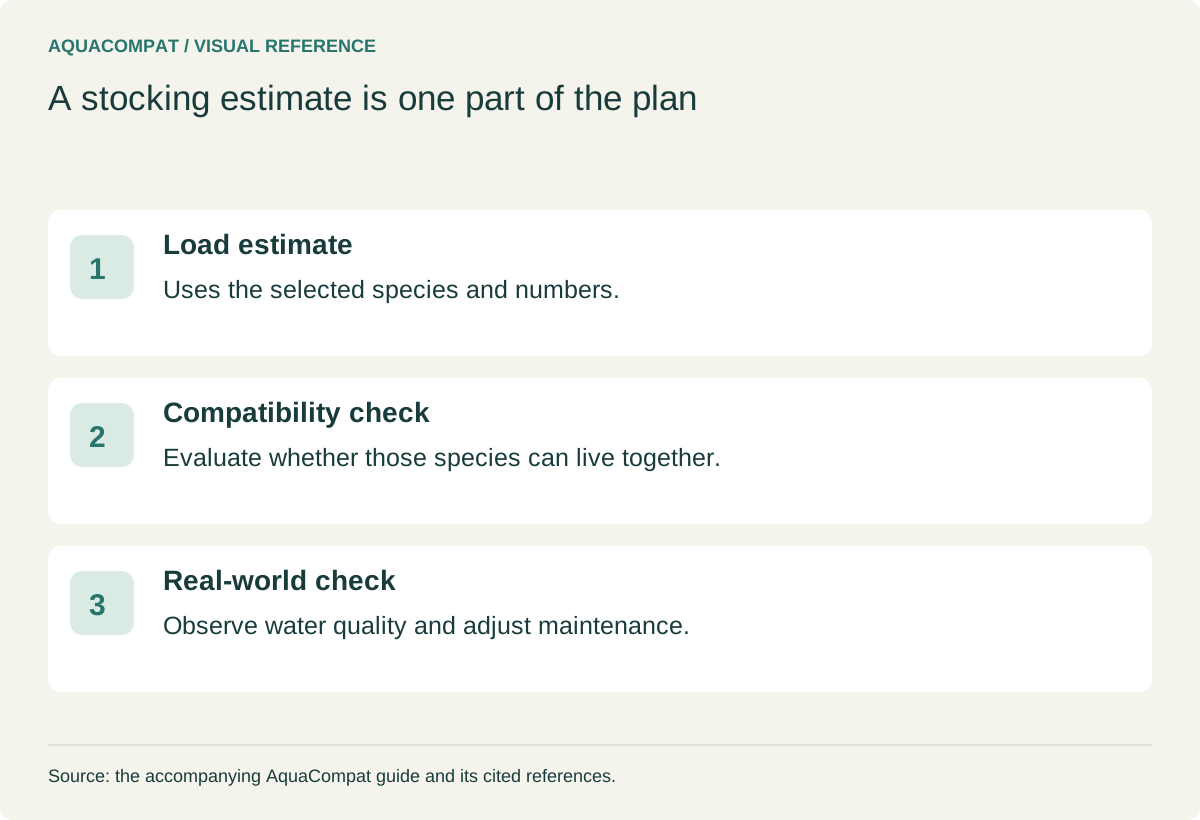
What can you do with the illustrations?
Under CC BY 4.0 you may use, copy, adapt and republish any illustration in this library, including for commercial purposes, with no fee and no need to ask first. That covers blog posts, club newsletters, school worksheets, slide decks, social posts, printed handouts, product manuals and shop signage. You may recolour, crop, translate or relabel a diagram to fit your own material.
The one condition is attribution. Credit each illustration you use with the line below, linking "AquaCompat" to that illustration's anchor on this page, which the copy-credit button fills in for you:
Illustration: <a href="https://aquacompat.com/image-library/#learn--nitrogen-cycle">AquaCompat</a> (CC BY 4.0)
If you have changed the illustration, add "adapted" to the credit. In print, where a link cannot be clicked, write out the address in full. Please do not imply that AquaCompat endorses your product, site or publication.
Are the illustrations accurate enough to quote numbers from?
The illustrations explain processes and relationships; they are not a data source. Most deliberately carry few or no numbers, and any values they do show are simplified for clarity. The sourced figures, with their ranges and citations, live on the guide each illustration links to. If you need a number, such as a temperature range for Discus or a nitrite threshold, cite that guide or the printable aquarium charts, not the diagram.
When a fact file changes, the guides and charts update first. An illustration is redrawn if the change affects what it shows. If you believe a diagram is wrong or misleading, report it through the contact page, naming the illustration and your source.
Can you request a new illustration?
Yes. If you write about fishkeeping, teach, or run a club or shop and need a diagram that is not here, send a short description of what it should show and where it would be used via the contact page for AquaCompat. Requests that fit an existing or planned guide are the most likely to be drawn, because each illustration is made to support a page and its sources. New illustrations join this library under the same CC BY 4.0 terms. The verdict logic behind the compatibility diagrams is documented in the methodology.